Test 16 — Categories ABC (cars, motorcycles, trucks)
Updated 2026-10-13 · official question bank of 2 October 2026
Test 16, Categories ABC (cars, motorcycles, trucks): 20 questions from the official bank of 2 October 2026 across all 10 topics. Under every question: the correct answer, the explanation (in Armenian) and the signs it mentions. In the app the same test is taken without hints, and the exam simulation runs on a 30-minute timer.
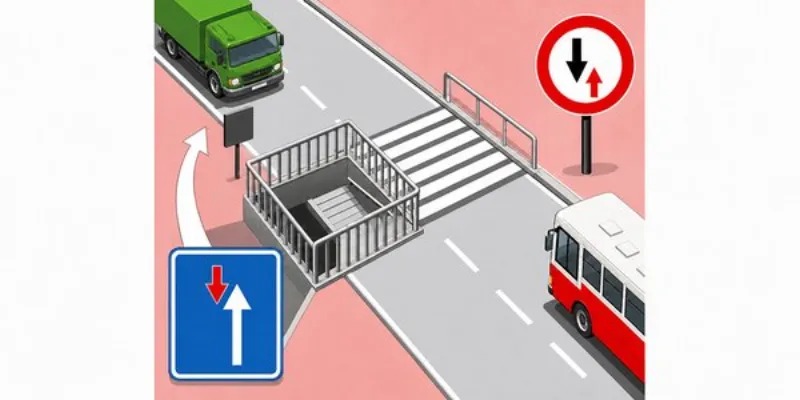
1. Which vehicle driver has the right-of-way?
The truck driver.
The bus driver.
Correct answer: The truck driver.ABC · D/T
Why: Նեղ կամրջի մոտ բեռնատարի կողմից տեղադրված է 2.7 «Առավելություն հանդիպակաց երթևեկության նկատմամբ» նշանը, իսկ ավտոբուսի կողմից՝ 2.6 «Հանդիպակաց երթևեկության առավելություն»։ Հետևաբար առաջնահերթությունը բեռնատարի վարորդինն է։
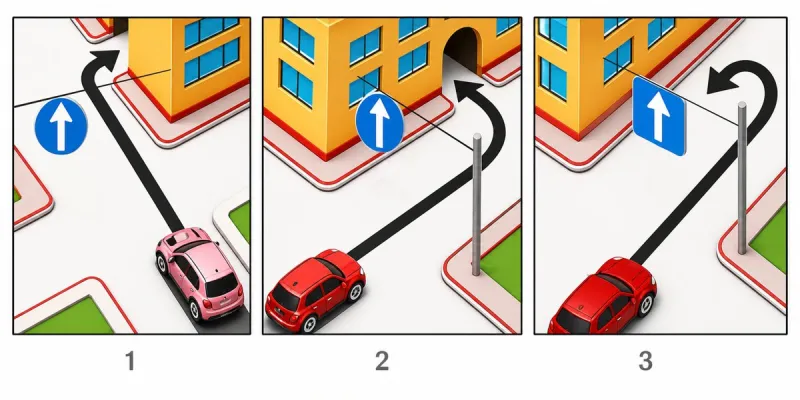
2. In which image is the driver performing the maneuver correctly?
1
2
3
Correct answer: Option 1ABC
Why: Նշան 4.1.1 «Երթևեկությունն ուղիղ»-ը չի արգելում աջ շրջադարձը դեպի բակ և մերձակա տարածքներ, ուստի 1-ին նկարի վարորդը ճիշտ է վարվում։ Ձախ շրջադարձը դեպի բակ (2) և հետադարձը (3) այս նշանի ազդման գոտում արգելված են։
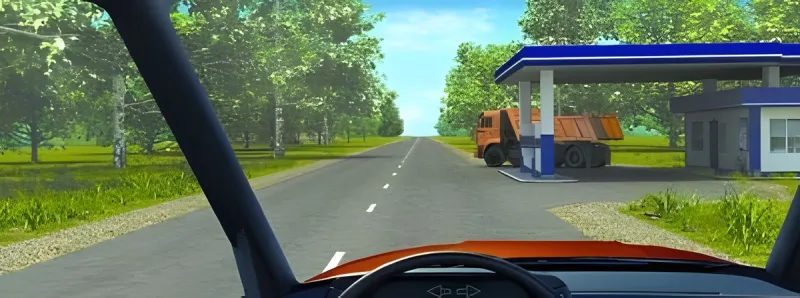
Yes, if the driver has given a hand signal indicating this.
No.
Correct answer: No.ABC · D/T
Why: Բեռնատարը լցակայանի տարածքից (մերձակա տարածքից) դուրս է գալիս ճանապարհ։ Կետ 38-ի համաձայն՝ մերձակա տարածքից ճանապարհ դուրս եկող վարորդն ինքն է զիջում ճանապարհով երթևեկողներին, ուստի մենք զիջելու պարտավորություն չունենք՝ անկախ նրա ազդանշանից։
4. According to the Law of the Republic of Armenia on Ensuring Road Traffic Safety, a sidewalk is:
A road element adjacent to the roadway and intended for pedestrian movement in accordance with the procedure established by law.
A road element separated from the roadway in any manner and intended for pedestrian movement in accordance with the procedure established by law.
Both of the listed cases.
Correct answer: Both of the listed cases.ABC · D/T
Why: ՀՀ օրենքի համաձայն՝ մայթ է հետիոտնի տեղաշարժվելու համար նախատեսված ճանապարհի տարրը, որը կամ հարում է երթևեկելի մասին, կամ որևէ եղանակով առանձնացված է դրանից, ուստի ճիշտ են նշված երկու դեպքերը։
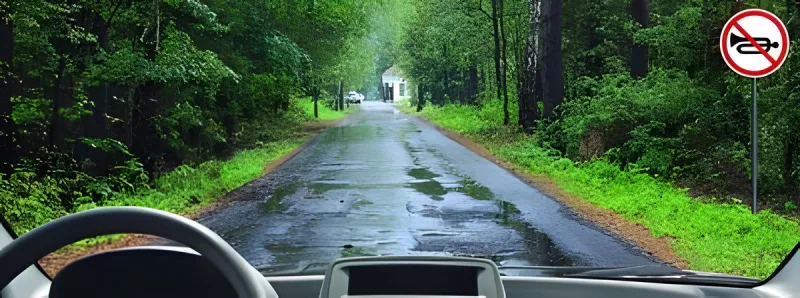
5. A vehicle may not be operated if:
The horn does not operate.
The windows provided by the vehicle’s design are missing.
In both cases.
Correct answer: In both cases.ABC · D/T
Why: Ձայնային ազդանշանի չաշխատելը 6.3 ենթակետով անսարքություն է, կառուցվածքով նախատեսված ապակիների բացակայությունը՝ 6.2 ենթակետով։ Երկու դեպքում էլ շահագործումն արգելվում է։
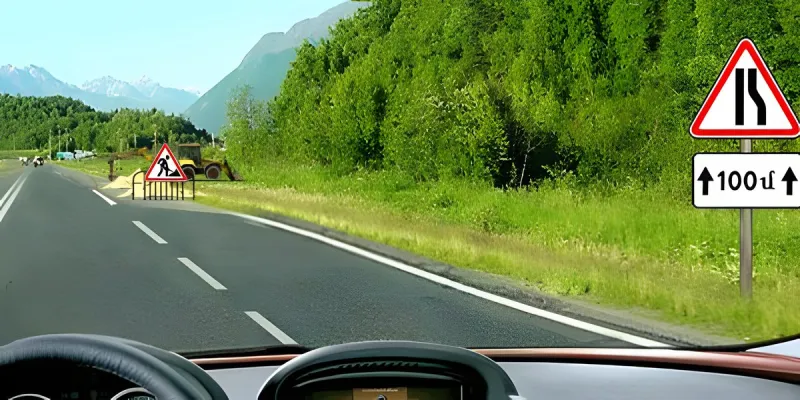
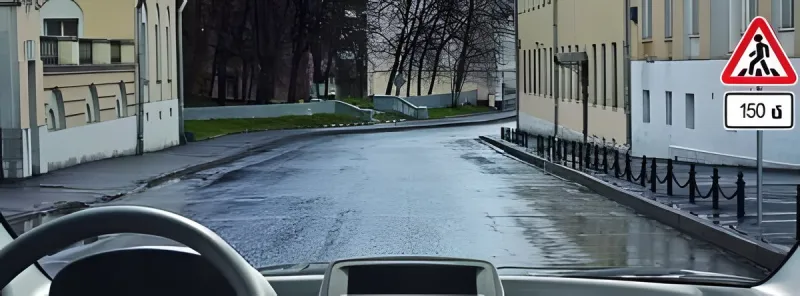
6. What do the following traffic signs indicate?
There is a narrowing of the road from the right 150–300 m beyond the sign, and the narrowed section is 100 m long.
There is a narrowing of the road from the right 100 m beyond the sign.
Correct answer: There is a narrowing of the road from the right 150–300 m beyond the sign, and the narrowed section is 100 m long.ABC · D/T
Why:1.20.2 «Ճանապարհի նեղացում» նշանը բնակավայրից դուրս տեղադրվում է 150–300 մ առաջ, իսկ 8.2.1 «Ազդման գոտի» (100 մ) ցուցանակը ցույց է տալիս աջ կողմի նեղացման երկարությունը։
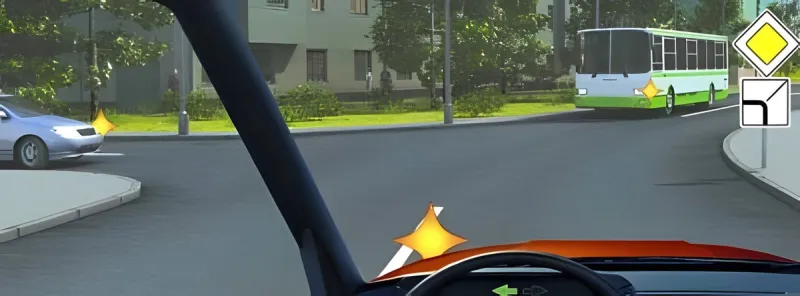
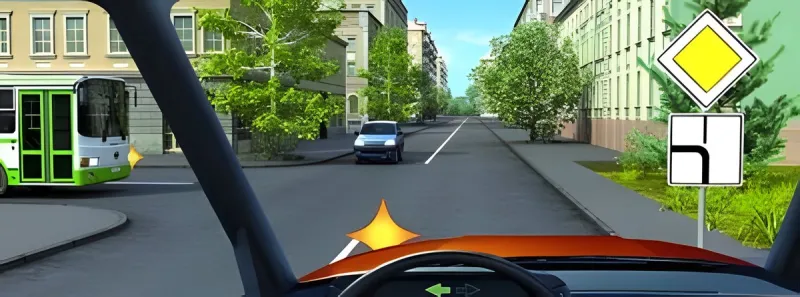
Why: Մեր դիմաց 2.1 «Գլխավոր ճանապարհ» նշանն է 8.13 «Գլխավոր ճանապարհի ուղղությունը» ցուցանակով. գլխավոր ճանապարհն անցնում է մեր թևով և թեքվում ձախ՝ թեթև մարդատարի թևը, դիմացի ավտոբուսը երկրորդական ճանապարհի վրա է։ Մեքենան գլխավոր ճանապարհով է, բայց մոտենում է ձախից և կետ 97, 98-ով զիջում է մեզ, ավտոբուսը զիջում է կետ 96-ով. ոչ ոքի չենք զիջում։
Why: Մեր դիմաց 2.1 «Գլխավոր ճանապարհ» նշանն է 8.13 «Գլխավոր ճանապարհի ուղղությունը» ցուցանակով. գլխավոր ճանապարհն անցնում է մեր թևով և թեքվում ձախ՝ ավտոբուսի թևը։ Ավտոբուսը գլխավոր ճանապարհով է, բայց մոտենում է մեր ձախից և կետ 97, 98-ով զիջում է մեզ, իսկ դիմացի թեթև մարդատարը երկրորդական ճանապարհից է (կետ 96). ոչ մեկին չենք զիջում։
Why: Նշաններ չկան՝ հավասարազոր ճանապարհների խաչմերուկ։ Ձախ շրջադարձի ժամանակ կետ 98-ով զիջում ենք աջից մոտեցող թեթև մարդատարին, կետ 99-ով՝ հանդիպակաց ուղիղ գնացող բեռնատարին. բոլոր վարորդներին։
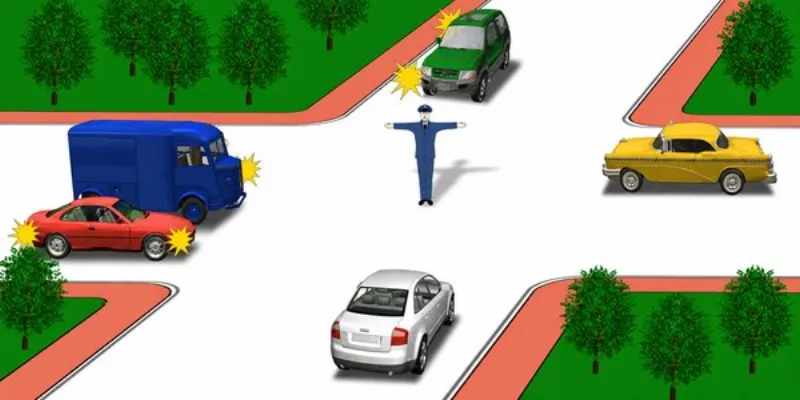
12. Traffic is prohibited for:
The green and white automobiles.
The white, blue, and green automobiles.
The white and yellow automobiles.
The green and yellow automobiles.
Correct answer: The white, blue, and green automobiles.ABC · D/T
Why: Կարգավորողի ձեռքերը պարզված են կողմ, լուսացույց և նշաններ չկան։ Կրծքի կողմի սպիտակին և թիկունքի կանաչին երթևեկությունն արգելված է (կետ 16, 2-րդ ենթակետ «բ»), կողքի կապույտ բեռնատարը ձախ է թեքվում, ինչը կողքից չի թույլատրվում («ա»)։ Աջ թեքվող կարմիրն ու ուղիղ գնացող դեղինը կարող են անցնել։ Սպիտակին, կապույտին և կանաչին։
13. If the traffic controller’s right arm is extended forward, traffic of non-rail vehicles is permitted:
From the left side, to the left and by making a U-turn.
From the right side, to the right only.
From the left side, in all directions.
From the rear, to the right only.
Correct answer: From the left side, in all directions.ABC · D/T
Why: Կարգավորողի աջ ձեռքն առաջ պարզված է. կետ 16.3-ով նրա ձախ կողմից ոչ ռելսագնաց տրանսպորտային միջոցների երթևեկությունը թույլատրվում է բոլոր ուղղություններով (տրամվայինը՝ դեպի ձախ)։
14. How many lanes does a road have when traffic flows in opposite directions are separated by double solid lines?
Two lanes.
Two or three lanes.
Three lanes.
Four or more lanes.
Correct answer: Four or more lanes.ABC · D/T
Why: Կրկնակի հոծ 1.3 գծանշումը հանդիպակաց հոսքերը բաժանում է չորս և ավելի երթևեկության գոտի ունեցող ճանապարհներին։
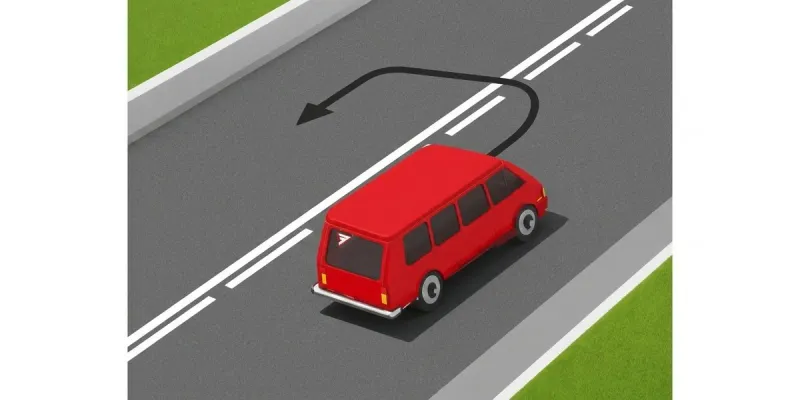
15. Is it permitted to make a U-turn at the indicated location?
Permitted.
Prohibited.
Correct answer: Permitted.ABC · D/T
Why: Ավտոմոբիլը ձախ եզրային գոտում է (կետ 40), իսկ առանցքային 1.5 ընդհատվող գիծը թույլատրվում է հատել։ Կետ 50-ով հետադարձն արգելող տեղերից որևէ մեկը այստեղ չկա, ուստի հետադարձը թույլատրվում է։
16. A truck whose driver holds a driver’s license for Categories B and C, and which meets the requirements for transporting people in a truck, may carry up to:
8 passengers.
9 passengers.
4 passengers.
Correct answer: 8 passengers.ABC
Why: Կետ 150-ով «C» կարգի բեռնատարներով թույլատրվում է փոխադրել մինչև 8 ուղևոր, ավելի շատի դեպքում պահանջվում է նաև «D» կամ «D1» կարգի վկայական։
17. Is towing motorcycles with sidecars permitted?
Permitted only with a rigid coupling.
Prohibited.
Permitted.
Correct answer: Permitted.ABC · D/T
Why: Կետ 143.2-ն արգելում է քարշակել միայն առանց կողային կցորդի մոտոցիկլները։ Կողային կցորդով մոտոցիկլների քարշակումը թույլատրվում է՝ առանց կցիչի տեսակի սահմանափակման։
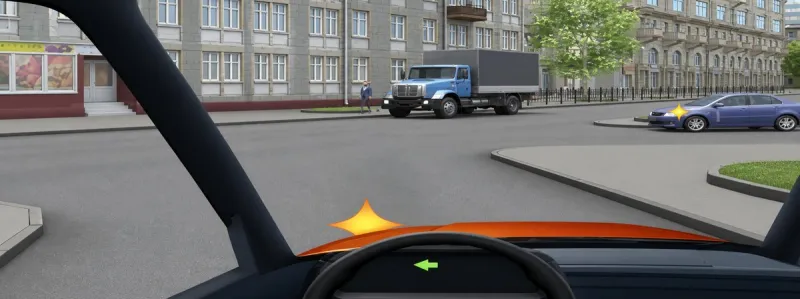
18. In this situation:
You will proceed through the intersection first.
You must yield to the driver approaching from the left.
Correct answer: You must yield to the driver approaching from the left.ABC · D/T
Why: Ձախից մոտեցող ոստիկանության ավտոմոբիլի կապույտ փարոսիկն ու հատուկ ձայնային ազդանշանը միացված են։ Կետ 28-ի համաձայն՝ պետք է զիջենք ճանապարհը։
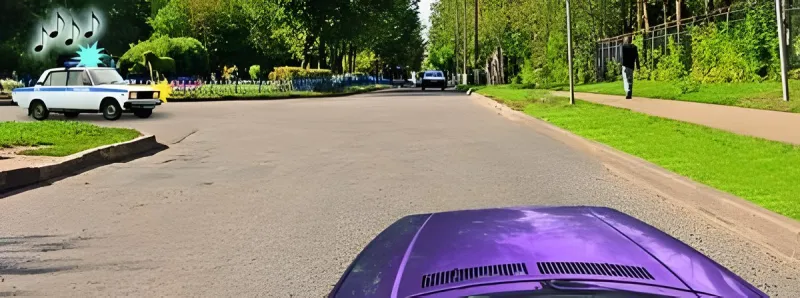
19. When a vehicle with a blue flashing beacon and a special audible signal activated is approaching, drivers must:
Yield to ensure the unobstructed passage of that vehicle.
Reduce speed and yield to ensure the unobstructed passage of that vehicle.
Correct answer: Yield to ensure the unobstructed passage of that vehicle.ABC · D/T
Why: Կետ 28-ով կապույտ փարոսիկ և հատուկ ձայնային ազդանշան միացրած մեքենային վարորդները զիջում են ճանապարհը։ Արագությունն իջեցնելը պահանջվում է միայն կապույտ և կարմիր փարոսիկների դեպքում (կետ 29)։
20. A driver had been crouching for a long time while changing a vehicle’s wheel. After suddenly standing up, the driver grabs the head, loses consciousness, and falls. What should be done?
Try to seat the driver.
Raise the driver’s legs.
Pour cold water on the driver’s face.
Slap the driver’s face.
Correct answer: Raise the driver’s legs.ABC · D/T
Why: Առաջին օգնություն. կտրուկ վեր կենալուց ուշագնացություն է։ Տուժածին պառկեցնում են և բարձրացնում ոտքերը, որպեսզի արյունը վերադառնա գլխուղեղ։ Նստեցնելը, ջուրն ու ապտակը չեն օգնում։
In Varordakan Tester the same tests are taken without hints, wrong answers are collected automatically, and there is an exam simulation (20 questions, 30 minutes, pass at 18), a 3D intersection simulator, video lessons and an AI assistant that cites the Traffic Rules point. Free.
Sources: questions from the official bank of the Road Police of Armenia (roadpolice.am, edition of 2 October 2026); rule points from the Traffic Rules of the Republic of Armenia (arlis.am). Varordakan Tester is an independent educational app, not affiliated with the Police of Armenia.