Updated 2026-10-13 · official question bank of 2 October 2026
Test 34, Categories D/T (bus, trolleybus): 20 questions from the official bank of 2 October 2026 across all 10 topics. Under every question: the correct answer, the explanation (in Armenian) and the signs it mentions. In the app the same test is taken without hints, and the exam simulation runs on a 30-minute timer.
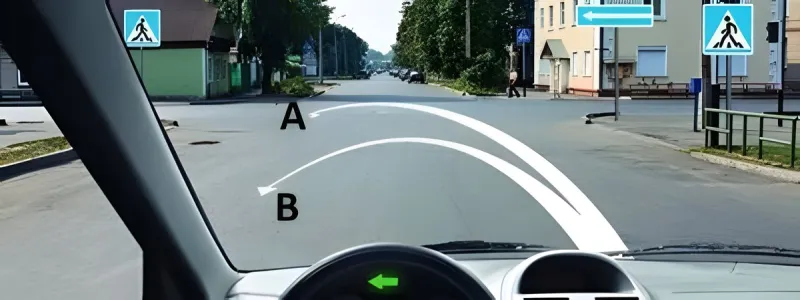
1. Along which path is the U-turn permitted?
Only A.
Only B.
Any of the paths.
Correct answer: Only A.ABC · D/T
Why: Հատվող ճանապարհը միակողմ երթևեկությամբ է (նշան 5.7.2), և անկյունում հետիոտնային անցում է (նշաններ 5.19.1, 5.19.2)։ Կետ 50-ի համաձայն՝ հետիոտնային անցումների վրա հետադարձն արգելվում է, իսկ B հետագիծն անցնում է անցումի վրայով, ուստի թույլատրված է միայն A հետագիծը։
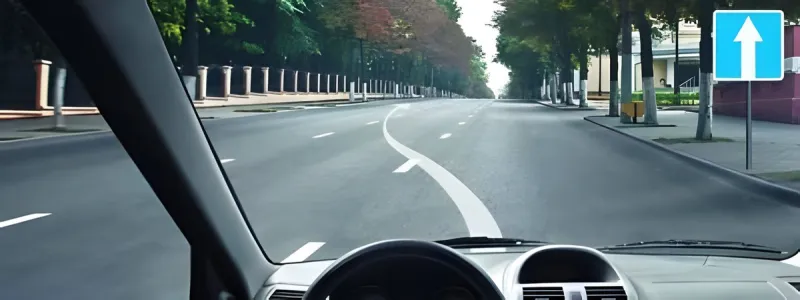
2. When stopping in this situation, which turn signal must the driver activate?
The right turn signal.
The right turn signal, and after changing lanes, the left turn signal.
The left turn signal.
Correct answer: The left turn signal.ABC · D/T
Why: Ճանապարհը միակողմ երթևեկությամբ է (նշան 5.5), որտեղ կանգառի նպատակով թույլատրվում է դուրս գալ ձախ եզրային գոտի (կետ 57)։ Կետ 36-ի համաձայն՝ մանևրից առաջ պետք է ազդանշան տալ համապատասխան ուղղության ցուցիչով, այսինքն՝ ձախ։
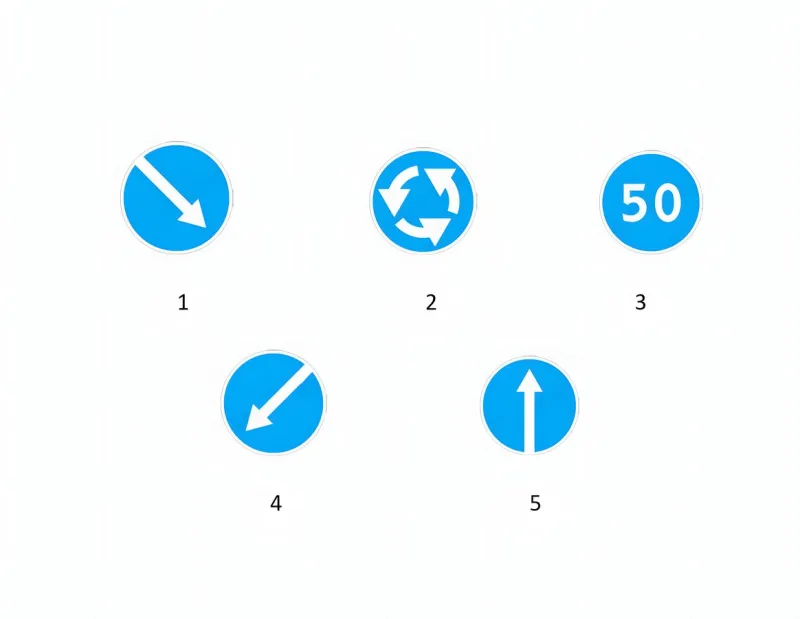
3. Which sign does not apply to public transit vehicles?
1.
2.
3.
4.
5.
Correct answer: Option 5.D/T
Why:4.1.1–4.1.6 նշանների ազդեցությունը չի տարածվում ընդհանուր օգտագործման տրանսպորտային միջոցների վրա. պատասխանը 5-րդ նշանն է՝ 4.1.1 «Երթևեկությունն ուղիղ»։ 1-ը 4.2.1, 2-ը 4.3, 3-ը 4.6, 4-ը 4.2.2 նշաններն են։
The moment a vehicle begins moving from a stopping or parking location, with or without changing to an adjacent traffic lane.
The moment a vehicle begins moving from a stopping or parking location while changing to an adjacent traffic lane.
Correct answer: The moment a vehicle begins moving from a stopping or parking location, with or without changing to an adjacent traffic lane.ABC · D/T
Why: Կետ 3-ի սահմանման համաձայն՝ երթևեկության սկիզբ է կանգառի կամ կայանման վայրից տրանսպորտային միջոցի շարժումն սկսելու պահը՝ հարևան գոտի վերադասավորվելով կամ առանց դրա։
5. A vehicle may not be operated if:
The threaded connections of the steering system are not tightened or secured in the prescribed manner.
The threaded connections of the steering system are secured in the prescribed manner.
In both cases.
Correct answer: The threaded connections of the steering system are not tightened or secured in the prescribed manner.D/T
Why: Ղեկային կառավարման չձգված կամ սահմանված ձևով չսևեռված պարուրակային միացումները 2.2 ենթակետով անսարքություն են։ Սահմանված ձևով սևեռված միացումները նորմալ վիճակ են։
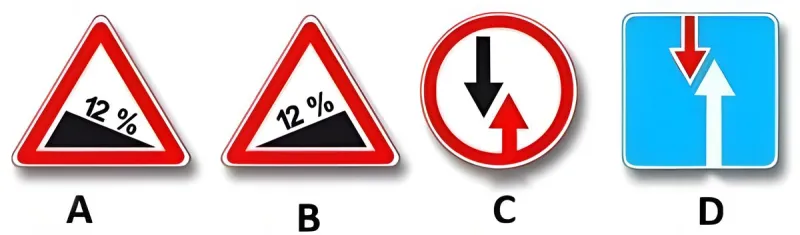
6. With which sign must you yield to oncoming traffic at a narrow section?
Only C.
A and C.
B and C.
Correct answer: A and C.ABC · D/T
Why: C-ն 2.6 «Հանդիպակաց երթևեկության առավելություն» նշանն է, որը պարտադրում է նեղ հատվածում զիջել հանդիպակացին։ A-ն 1.13 «Կտրուկ վայրէջք»-ն է, իսկ կետ 46-ով 1.13 և 1.14 նշաններով հատվածներում ճանապարհը զիջում է վայրէջքի ուղղությամբ ընթացողը. A և C։ B-ն 1.14 «Կտրուկ վերելք»-ն է, D-ն՝ 2.7-ը, որը մեզ առավելություն է տալիս։
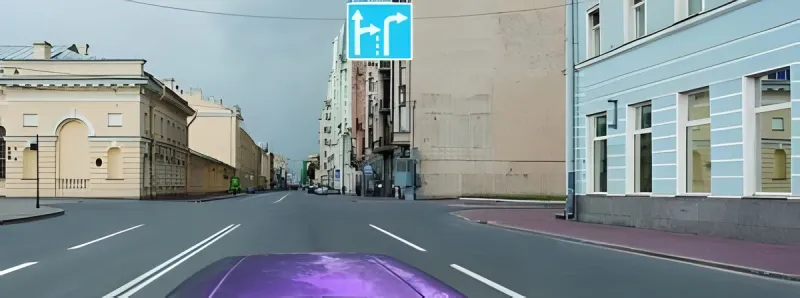
Why:5.15.1 «Երթևեկության ուղղությունները գոտիներով» նշանը սահմանում է գոտիների ուղղությունները։ Հետադարձը թույլատրվում է միայն այն գոտուց, որից նշանը թույլատրում է ձախ շրջադարձ. նշված գոտու համար այդպիսի թույլտվություն չկա, ուստի հետադարձն արգելվում է։
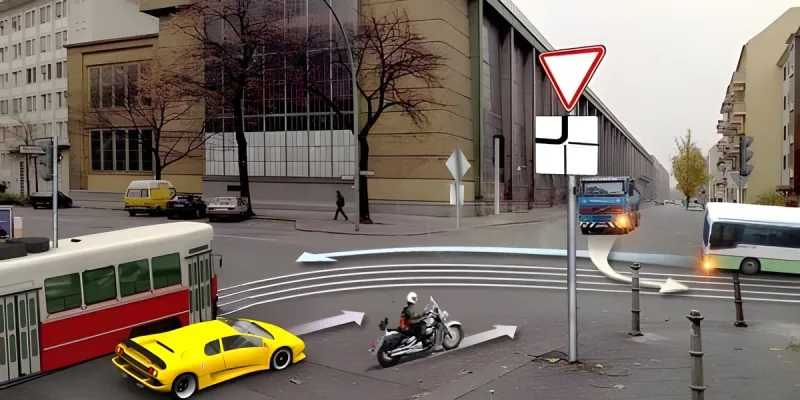
9. The vehicles will proceed through the intersection in the following order:
The truck, then the tram and the bus, then the motorcycle and the passenger car.
The tram and the bus, then the motorcycle and the passenger car, then the truck.
Correct answer: The truck, then the tram and the bus, then the motorcycle and the passenger car.ABC · D/T
Why: Մեր (դեղին) առջև 2.4 «Զիջեք ճանապարհը» նշանն է 8.13 ցուցանակով. գլխավոր ճանապարհն անցնում է դիմացի թևով (բեռնատար) և թեքվում ձախ, իսկ մեր, տրամվայի և ավտոբուսի ճանապարհները երկրորդական են։ Բեռնատարը գլխավոր ճանապարհով է և անցնում է առաջինը (կետ 96)։ Երկրորդական ճանապարհների միջև գործում են հավասարազոր խաչմերուկի կանոնները (կետ 97). տրամվայն առավելություն ունի ոչ ռելսագնաց տրանսպորտային միջոցների նկատմամբ, իսկ ավտոբուսը մոտենում է մեր և մոտոցիկլի աջից (կետ 98)։ Տրամվայն ու ավտոբուսը միմյանց չեն խանգարում և անցնում են միաժամանակ, ապա՝ մոտոցիկլն ու մենք։
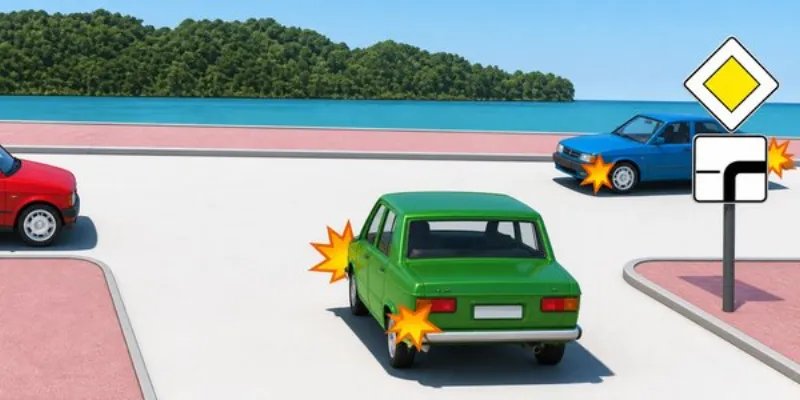
11. Which vehicle will proceed through the intersection second?
The green automobile.
The blue automobile.
The red automobile.
Correct answer: The green automobile.ABC · D/T
Why: Կապույտի մոտ 2.1 «Գլխավոր ճանապարհ» նշանն է 8.13 «Գլխավոր ճանապարհի ուղղությունը» ցուցանակով. գլխավոր ճանապարհն այս խաչմերուկում թեքվում է։ Գլխավոր ճանապարհով ընթացողներն անցնում են առաջ և միմյանց նկատմամբ գործում են աջի խոչընդոտի կանոնով (կետ 97, 98), երկրորդական ճանապարհի մեքենան կետ 96-ով զիջում է նրանց. կանաչն անցնում է երկրորդը։
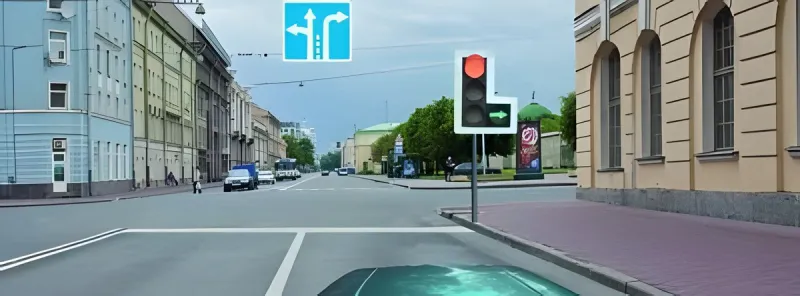
12. Proceeding straight ahead from the indicated lane is:
Permitted.
Permitted only after the main green signal turns on.
Prohibited.
Correct answer: Prohibited.ABC · D/T
Why: Հիմնական կարմիր՝ միայն աջ սլաքով սեկցիան միացված, 5.15.1 «Երթևեկության ուղղությունները գոտիներով» նշան, առջևում 1.12 «Կանգ-գիծ»։ Կարմիրն արգելում է ուղիղ երթևեկությունը (կետ 7, 5-րդ ենթակետ), սլաքը թույլատրում է միայն աջ (կետ 8). նշված գոտուց ուղիղ երթևեկությունն արգելված է։
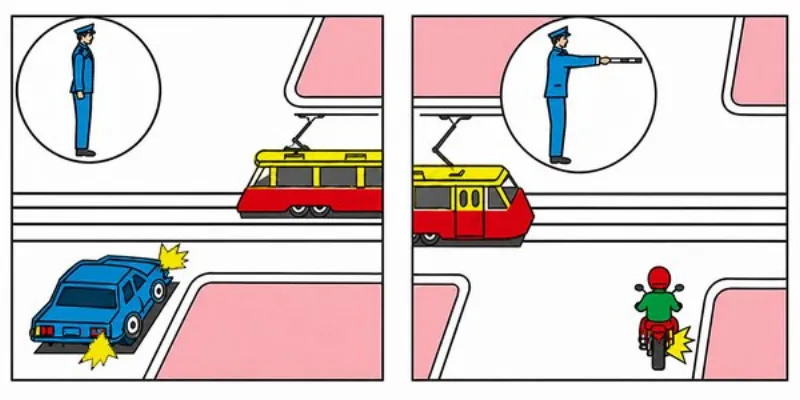
13. In which image is the driver making the turn correctly?
In the left image.
In the right image.
Correct answer: In the left image.ABC · D/T
Why: Ձախ նկարում կարգավորողի ձեռքերն իջեցված են, կողքի կապույտ ավտոմոբիլն աջ է թեքվում, ինչը թույլատրված է (կետ 16, 2-րդ ենթակետ «ա»)։ Աջ նկարում աջ ձեռքը պարզված է առաջ, կրծքի կողմի մոտոցիկլավարը ձախ է թեքվում, մինչդեռ կրծքի կողմից թույլատրվում է միայն աջ (կետ 16, 3-րդ ենթակետ «բ»)։ Ճիշտ է ձախ նկարը։
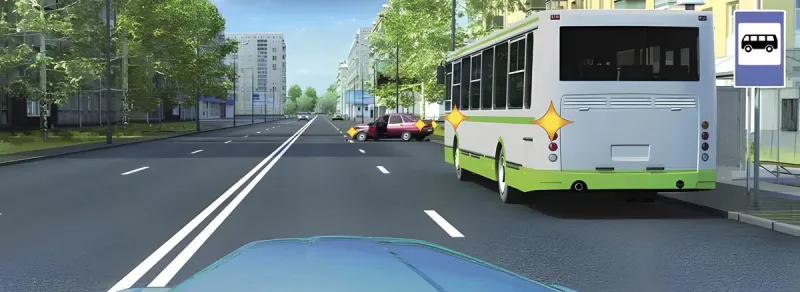
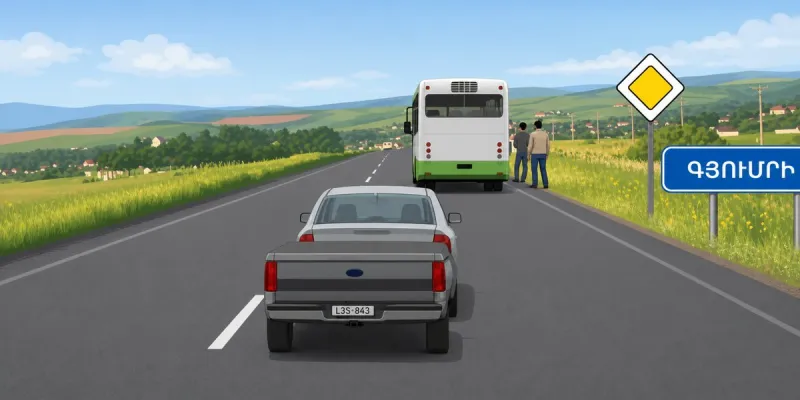
14. The bus driver has stopped to pick up passengers. The passenger car is proceeding at a speed of 70 km/h. Which vehicle driver is violating the requirements of the traffic rules?
Neither driver.
The bus driver.
The passenger-car driver.
Both drivers.
Correct answer: Neither driver.ABC · D/T
Why: Ճանապարհը բնակավայրից դուրս է (5.25 նշանը դեռ առջևում է) և գլխավոր է (նշան 2.1)։ Կետ 86-ը նման ճանապարհներին արգելում է կայանումը, ոչ թե ուղևորներ նստեցնելու կանգառը (կետ 78), իսկ 70 կմ/ժ արագությունը բնակավայրից դուրս թույլատրելի է։ Ոչ ոք չի խախտում։
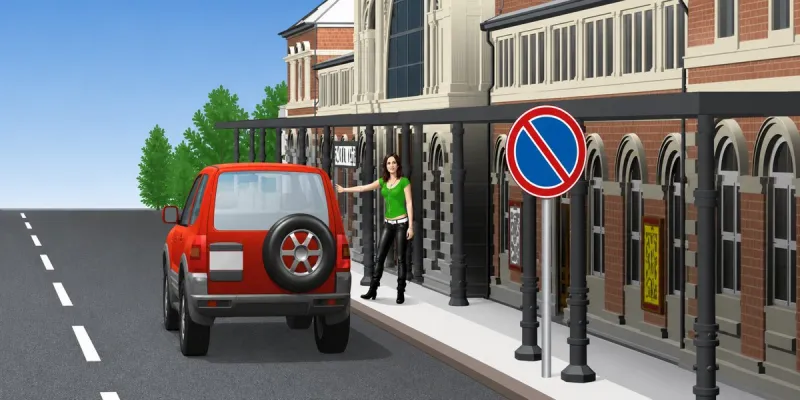
15. Is the automobile permitted to stop at this location?
Prohibited because the distance between the broken pavement marking and the stopped vehicle is less than 3 m.
Prohibited on even-numbered days of the month.
Permitted.
Correct answer: Permitted.ABC · D/T
Why: Նշանը 3.28 «Կայանելն արգելվում է»-ն է, որն արգելում է միայն կայանումը, ոչ թե կանգառը, ուստի ուղևոր իջեցնելու համար կանգ առնելը թույլատրվում է։ Կետ 84.3-ի 3 մ պահանջը վերաբերում է հոծ գծին, ոչ ընդհատվողին։
16. Is carrying people in a cargo trailer permitted?
Prohibited.
Permitted.
Permitted only for persons accompanying the cargo.
Correct answer: Prohibited.ABC · D/T
Why: Կետ 158.1-ով արգելվում է մարդկանց փոխադրումը բեռնատար կցորդում. բեռն ուղեկցող անձանց համար բացառություն չկա։
17. When towing with a rigid or flexible coupling, is carrying people in the towed bus permitted?
Permitted.
Prohibited.
Correct answer: Prohibited.D/T
Why: Կետ 139-ով կոշտ կամ ճկուն կցիչով քարշակվող ավտոբուսում մարդկանց փոխադրումն արգելվում է։
18. At night, on unlit sections of road, a moving motor vehicle must have the following activated:
High-beam or low-beam headlights.
Low-beam headlights only.
High-beam headlights only.
Correct answer: High-beam or low-beam headlights.ABC · D/T
Why: Կետ 127.1-ով օրվա մութ ժամանակ չլուսավորված հատվածներում մեխանիկական տրանսպորտային միջոցի վրա պետք է միացված լինի լապտերների հեռահար կամ մոտակա լույսը. երկուսն էլ թույլատրելի են։
19. At night and under conditions of insufficient visibility, regardless of road lighting, moving motor vehicles must have the following activated:
High-beam headlights.
Low-beam headlights.
High-beam or low-beam headlights.
Correct answer: High-beam or low-beam headlights.ABC · D/T
Why: Կետ 127.1-ով օրվա մութ ժամանակ և անբավարար տեսանելիության պայմաններում, անկախ ճանապարհի լուսավորվածությունից, մեխանիկական տրանսպորտային միջոցների վրա միացված է լինում լապտերների հեռահար կամ մոտակա լույսը։
20. What should be done if the scene cannot be made safe?
Provide assistance to everyone, but be careful.
Provide assistance to the injured person who is closest to you.
Do not approach; immediately call for emergency assistance and prevent bystanders from approaching the scene.
Do not approach; ask someone else to provide assistance.
Correct answer: Do not approach; immediately call for emergency assistance and prevent bystanders from approaching the scene.ABC · D/T
Why: Առաջին օգնություն. եթե դեպքի վայրի անվտանգությունն ապահովել հնարավոր չէ, չեն մոտենում, անմիջապես ահազանգում են և թույլ չեն տալիս կողմնակի մարդկանց մոտենալ. փրկողն ինքը չպետք է դառնա տուժած։
In Varordakan Tester the same tests are taken without hints, wrong answers are collected automatically, and there is an exam simulation (20 questions, 30 minutes, pass at 18), a 3D intersection simulator, video lessons and an AI assistant that cites the Traffic Rules point. Free.
Sources: questions from the official bank of the Road Police of Armenia (roadpolice.am, edition of 2 October 2026); rule points from the Traffic Rules of the Republic of Armenia (arlis.am). Varordakan Tester is an independent educational app, not affiliated with the Police of Armenia.