Updated 2026-11-14 · official question bank of 6 November 2026
Test 70, Categories D/T (bus, trolleybus): 20 questions from the official bank of 6 November 2026. Under every question: the correct answer, the explanation (in Armenian) and the signs it mentions. In the app the same test is taken without hints, and the exam simulation runs on a 30-minute timer.
1. A U-turn means:
Driving a vehicle in the opposite direction.
A maneuver performed for the purpose of changing the vehicle’s direction of movement to the opposite direction.
Correct answer: A maneuver performed for the purpose of changing the vehicle’s direction of movement to the opposite direction.ABC · D/T
Why: Կետ 3-ի սահմանման համաձայն՝ հետադարձ է տրանսպորտային միջոցի շարժման ուղղությունը հանդիպակաց ուղղությամբ փոխելու նպատակով իրականացվող մանևրը։
2. According to the Law of the Republic of Armenia on Ensuring Road Traffic Safety, is a holder of a subcategory D1 driving licence permitted to drive a 15-seat bus towing a trailer with a maximum authorised mass of 800 kg?
Yes, it is permitted.
No, it is not permitted.
Yes, provided the trailer is empty.
Correct answer: No, it is not permitted.D/T
Why: ՀՀ օրենքի համաձայն՝ «D1» վկայականով թույլատրվում է քարշակել միայն մինչև 750 կգ թույլատրելի առավելագույն զանգվածով կցորդ։ 800 կգ կցորդով վարելու համար անհրաժեշտ է «D1E» ենթակարգ, նույնիսկ եթե կցորդը դատարկ է։
3. A vehicle may not be operated if:
The engine-hood latch provided by the vehicle’s design does not operate.
The rear side windows are curtained and two side rear-view mirrors are installed.
In both cases.
Correct answer: The engine-hood latch provided by the vehicle’s design does not operate.ABC · D/T
Why: Շարժիչի ծածկոցի փականի չաշխատելը 6.6 ենթակետով անսարքություն է։ Հետևի կողային ապակիների վարագուրապատումն անսարքություն է միայն, երբ բացակայում են երկու կողային հայելիները (6.5). հայելիների առկայությամբ դա անսարքություն չէ։
4. The operation of a bus is prohibited if:
The door operating mechanism does not work.
Only one fire extinguisher is provided.
In both cases.
Correct answer: In both cases.D/T
Why: Երկուսն էլ անսարքություններ են։ Դռների կառավարման հաղորդակի չաշխատելը 6.6 ենթակետով անսարքություն է, իսկ 6.9 ենթակետով ավտոբուսում պետք է լինի առնվազն երկու կրակմարիչ՝ մեկը վարորդի խցիկում, մյուսը՝ սրահում, ուստի մեկ կրակմարիչը նույնպես անսարքություն է։
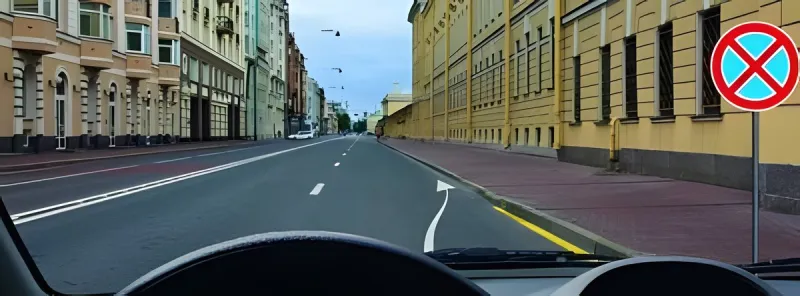
5. Stopping at the indicated location is:
Permitted.
Prohibited.
Correct answer: Permitted.ABC · D/T
Why:3.27 «Կանգառն արգելվում է» նշանը կիրառված է եզրաքարի երկայնքով գծված դեղին հոծ 1.4 գծանշման հետ, որը ցույց է տալիս, թե որտեղ է կանգառն արգելված։ Նշված տեղը դեղին գծանշման ավարտից հետո է, ուստի այնտեղ կանգառ կատարելը թույլատրվում է։
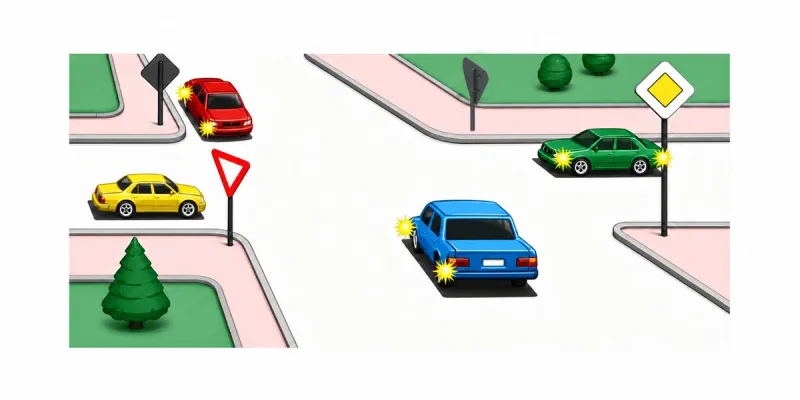
7. Which vehicle will proceed through the intersection third?
The blue automobile.
The yellow automobile.
The green automobile.
The red automobile.
Correct answer: The yellow automobile.ABC · D/T
Why: Դեղինի դիմաց 2.4 «Զիջեք ճանապարհը» նշանն է, կանաչի դիմաց՝ 2.1 «Գլխավոր ճանապարհ». կարմիրի և կապույտի մոտ նշանների թիկունքն է երևում, ուստի կարմիրը նույնպես երկրորդական, իսկ կապույտը՝ գլխավոր ճանապարհի վրա է։ Կետ 96-ով գլխավոր ճանապարհով ընթացողներն անցնում են առաջ, իսկ երկրորդական ճանապարհի մեքենաները միմյանց նկատմամբ գործում են աջի խոչընդոտի կանոնով (կետ 97, 98). դեղինն անցնում է երրորդը։
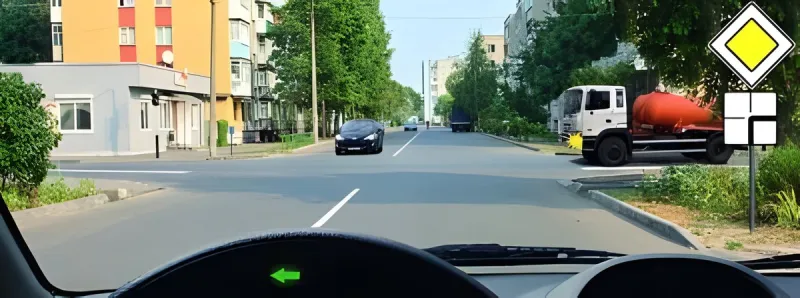
Why: Մեր դիմաց 2.1 «Գլխավոր ճանապարհ» նշանն է 8.13 «Գլխավոր ճանապարհի ուղղությունը» ցուցանակով. գլխավոր ճանապարհն անցնում է մեր թևով և թեքվում աջ՝ ավտոցիստեռնի թևը, դիմացի ճանապարհը հանդիպակաց թեթև մարդատարով երկրորդական է։ Հետադարձ կատարելիս զիջում ենք աջից մոտեցող բեռնատարին (կետ 97, 98), իսկ հանդիպակաց թեթև մարդատարը կետ 96-ով զիջում է մեզ. միայն բեռնատարի վարորդին։
9. According to traffic regulations, what is a bus driver prohibited from doing on a motorway?
Reversing.
Driving lessons.
Both are prohibited.
Correct answer: Both are prohibited.D/T
Why: Կետ 116-ով ավտոմայրուղիներում արգելվում են, ի թիվս այլնի, հետընթացը (116.6) և ուսումնական վարումը (116.7)։
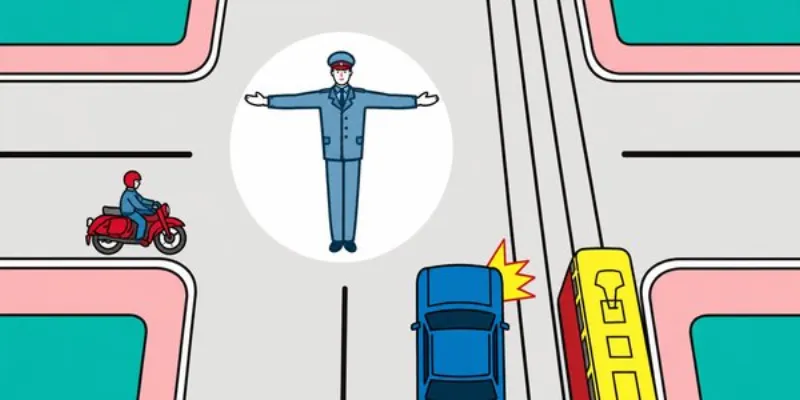
10. Traffic is permitted for:
All vehicles.
The motorcycle.
The automobile and the motorcycle.
Correct answer: The motorcycle.ABC · D/T
Why: Կարգավորողի ձեռքերը պարզված են կողմ, լուսացույց և նշաններ չկան։ Նրա կողքից մոտեցող մոտոցիկլին թույլատրվում է ուղիղ և աջ (կետ 16.2 «ա»), իսկ կրծքի կամ թիկունքի կողմից մոտեցող կապույտ ավտոմոբիլին և տրամվային երթևեկությունն արգելված է («բ»)։ Թույլատրվում է միայն մոտոցիկլին։
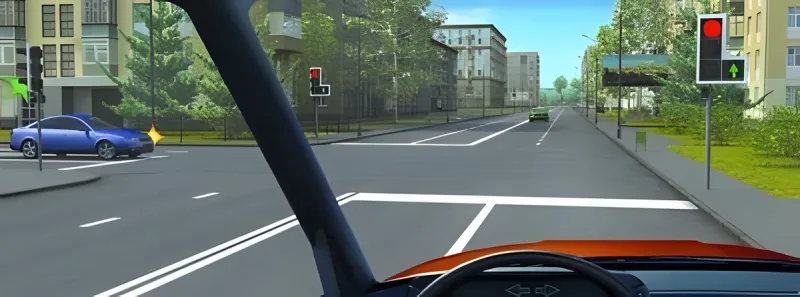
11. When proceeding straight through the intersection:
We may proceed first.
We must yield to the passenger-car driver.
Correct answer: We must yield to the passenger-car driver.ABC · D/T
Why: Մեր լուսացույցը կարմիր է՝ միացված ուղիղ սլաքով կանաչ սեկցիայով, առջևում 1.12 «Կանգ-գիծ» գծանշումն է, նշաններ չկան։ Կարմիրի հետ միացված լրացուցիչ սեկցիայի սլաքով ուղիղ անցնելիս կետ 91-ով զիջում ենք ձախից կանաչով մոտեցող թեթև մարդատարին։
12. What is the maximum permitted speed for a bus transporting an organized group of children outside built-up areas?
60 km/h.
90 km/h.
110 km/h.
Correct answer: 60 km/h.D/T
Why: Կետ 71.1-ով երեխաների կազմակերպված խմբեր փոխադրող տրանսպորտային միջոցներին թույլատրվում է ոչ ավելի, քան 60 կմ/ժ, այդ թվում՝ բնակավայրից դուրս։
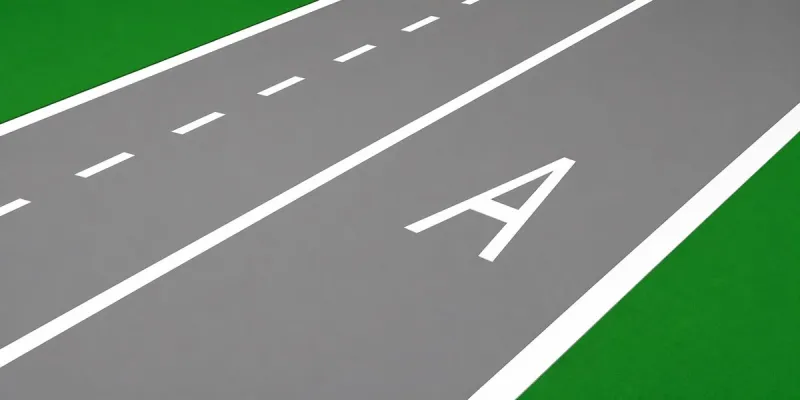
13. Which vehicles are permitted to proceed in the right lane of the roadway?
All motor vehicles.
Public transit vehicles and taxis.
Bicycles only.
Public transit vehicles only.
Correct answer: Public transit vehicles only.ABC · D/T
Why: Աջ գոտին նշված է «A» տառով (1.23.1 գծանշում)։ Կետ 124-ի համաձայն՝ ընդհանուր օգտագործման տրանսպորտային միջոցների գոտում այլ տրանսպորտային միջոցների երթևեկությունն արգելվում է։
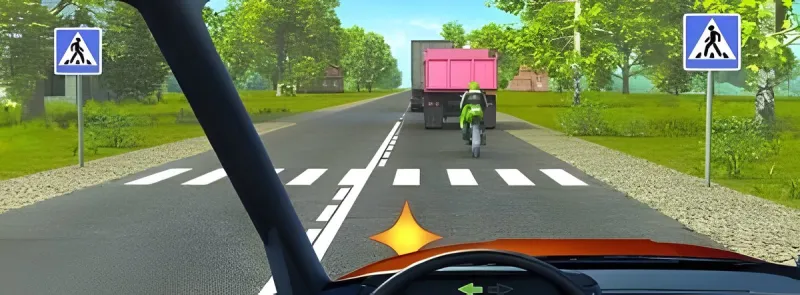
14. When is it permitted to cross the pavement marking?
Before the pedestrian crossing.
After the pedestrian crossing.
Correct answer: After the pedestrian crossing.ABC · D/T
Why: Հետիոտնային անցումից (նշաններ 5.19.1, 5.19.2) առաջ առանցքային գիծը հոծ է (1.1) և հատել չի թույլատրվում, իսկ անցումից հետո այն ընդհատվող է (1.5), որը թույլատրվում է հատել։
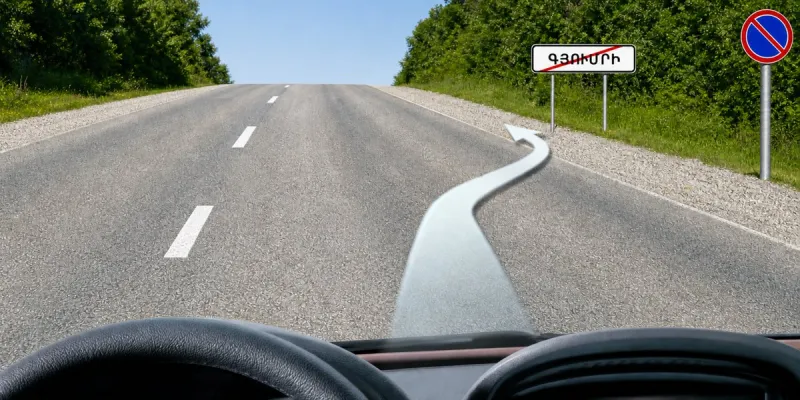
15. Is the driver of a tourist bus permitted to park at the indicated location for an extended rest?
No, the driver is not permitted.
Yes, the driver is permitted.
Correct answer: No, the driver is not permitted.D/T
Why: Բնակավայրի վերջից (նշան 5.24.1) հետո երկարատև հանգստի նպատակով կայանել թույլատրվում է միայն դրա համար նախատեսված հրապարակներում կամ ճանապարհի սահմաններից դուրս (կետ 82), բացի այդ, տեղադրված է 3.28 «Կայանելն արգելվում է» նշանը։ Ուստի իրավունք չունի։
16. In built-up areas, must drivers yield the right of way to public transport vehicles pulling away from designated and marked stops?
Yes.
No.
Correct answer: Yes.D/T
Why: Կետ 125-ով բնակավայրերում կահավորված և նշված կանգառի կետերի տարածքից երթևեկությունն սկսող ընդհանուր օգտագործման տրանսպորտային միջոցներն ունեն առավելություն, ուստի մյուս վարորդները պետք է զիջեն նրանց։ Իրենք էլ կարող են սկսել միայն՝ համոզվելով, որ հարևան գոտով մոտեցողները խոչընդոտ չեն։
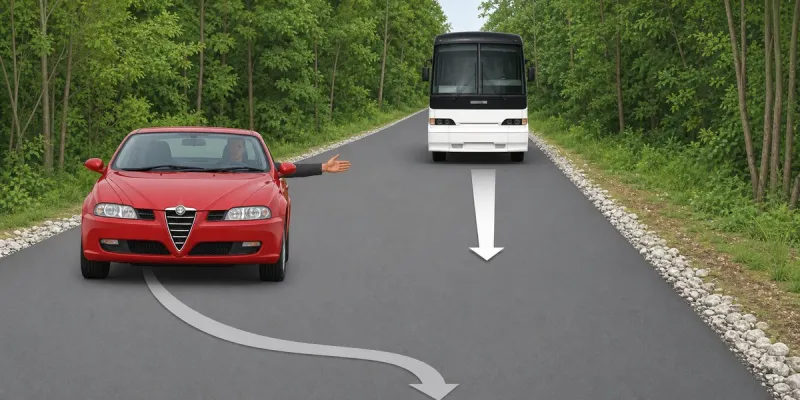
17. May a warning signal be given by hand in order to proceed along the indicated path?
Yes, if the turn signal is malfunctioning.
Yes, if the turn signal is malfunctioning during daylight hours.
Yes, in all cases.
Correct answer: Yes, if the turn signal is malfunctioning.ABC · D/T
Why: Կետ 36-ի համաձայն՝ մանևրի ազդանշանը տրվում է շրջադարձի լուսային ցուցիչով, իսկ ձեռքով՝ միայն այն դեպքում, երբ ցուցիչը բացակայում է կամ անսարք է։
18. When transporting organised groups of children during daylight hours, which lights must be switched on on the bus?
Main-beam headlights.
Dipped-beam headlights.
Hazard warning lights.
Interior passenger compartment lights.
Correct answer: Dipped-beam headlights.D/T
Why: Կետ 133.4-ով օրվա լուսավոր ժամերին երեխաների խմբերի կազմակերպված փոխադրումներ կատարելիս ավտոբուսի վրա միացված պետք է լինի լապտերների մոտակա լույսը։
19. Which light signal must be switched on when children board or alight from a bus displaying the 'Transportation of Children' identification sign?
No light signal is required.
The right turn indicator.
The hazard warning lights.
Correct answer: The hazard warning lights.D/T
Why: Կետ 156-ով «Երեխաների փոխադրում» նշանով տրանսպորտային միջոցի վրա երեխաների նստեցման և իջեցման ժամանակ պետք է միացված լինի վթարային լուսային ազդանշանը։
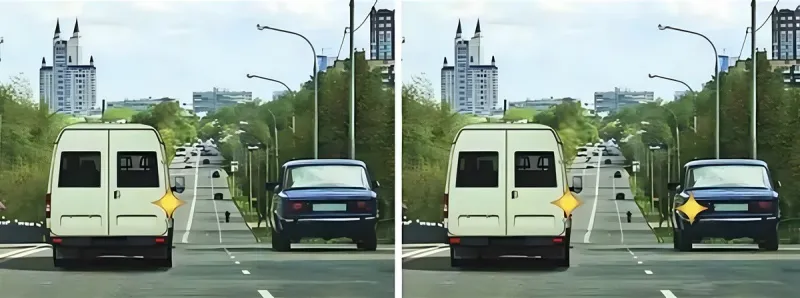
20. A bus driver travelling in the leftmost lane intends to change to the right lane. Which illustration shows a situation in which the driver must yield the right of way to the passenger car?
The illustration on the left.
The illustration on the right.
Both illustrations.
Correct answer: Both illustrations.D/T
Why: Կետ 39-ով վերադասավորվելիս վարորդը զիջում է հարևան գոտով առանց ուղղությունը փոխելու ընթացող տրանսպորտային միջոցներին, իսկ միաժամանակյա վերադասավորման դեպքում զիջում է ձախից ընթացողը։ Մի նկարում մարդատարն ընթանում է ուղիղ, մյուսում նույնպես վերադասավորվում է, բայց ավտոբուսը ձախից է, ուստի երկու դեպքում էլ ավտոբուսը զիջում է։
In Varordakan Tester the same tests are taken without hints, wrong answers are collected automatically, and there is an exam simulation (20 questions, 30 minutes, pass at 18), a 3D intersection simulator, video lessons and an AI assistant that cites the Traffic Rules point. Free.
Sources: questions from the official bank of the Road Police of Armenia (roadpolice.am, edition of 6 November 2026); rule points from the Traffic Rules of the Republic of Armenia (arlis.am). Varordakan Tester is an independent educational app, not affiliated with the Police of Armenia.