Test 19 — Categories ABC (cars, motorcycles, trucks)
Updated 2026-10-13 · official question bank of 2 October 2026
Test 19, Categories ABC (cars, motorcycles, trucks): 20 questions from the official bank of 2 October 2026 across all 10 topics. Under every question: the correct answer, the explanation (in Armenian) and the signs it mentions. In the app the same test is taken without hints, and the exam simulation runs on a 30-minute timer.
1. When making a left turn or U-turn outside an intersection, you must:
Yield to oncoming vehicles.
Yield to oncoming vehicles and to trams proceeding in the same direction.
Correct answer: Yield to oncoming vehicles and to trams proceeding in the same direction.ABC · D/T
Why: Կետ 44-ով խաչմերուկից դուրս ձախ շրջադարձի և հետադարձի ժամանակ ոչ ռելսագնաց տրանսպորտային միջոցի վարորդը զիջում է հանդիպակաց տրանսպորտային միջոցներին և համընթաց երթևեկող տրամվային։
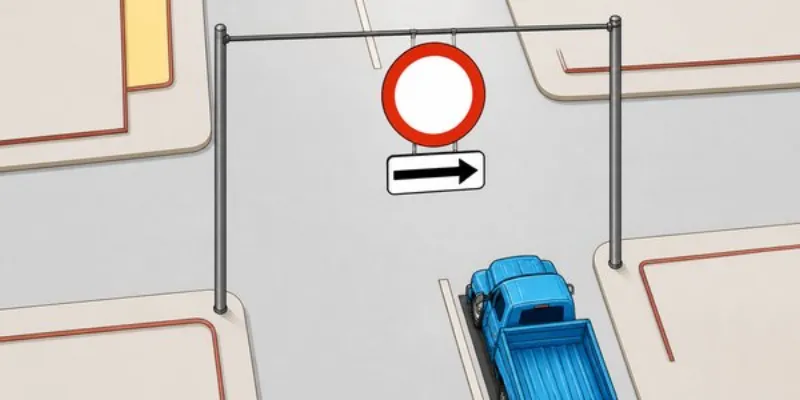
2. In which direction is traffic prohibited?
To the left only.
To the right only.
Straight ahead and to the left.
In all directions.
Correct answer: To the right only.ABC
Why: Նշան 3.2 «Երթևեկությունն արգելվում է»-ը 8.3.1 «Ազդման ուղղություններ» ցուցանակի հետ (սլաքը դեպի աջ) արգելում է երթևեկությունը միայն դեպի աջ։
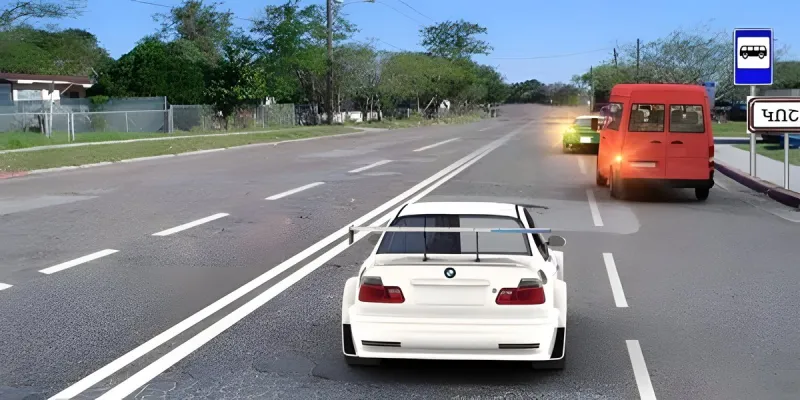
3. In this situation, the driver of the white passenger car:
Must yield to the fixed-route bus that is starting to move from the designated stop.
Has the right-of-way because the fixed-route bus is changing lanes into the second lane.
Correct answer: Must yield to the fixed-route bus that is starting to move from the designated stop.ABC
Why: Երթուղային ավտոբուսը բնակավայրում սկսում է երթևեկությունը նշված կանգառի կետից (նշան 5.16)։ Կետ 125-ի համաձայն՝ նման դեպքում ավտոբուսն ունի երթևեկության առավելություն, ուստի սպիտակ թեթև մարդատարի վարորդը պետք է զիջի ճանապարհը։
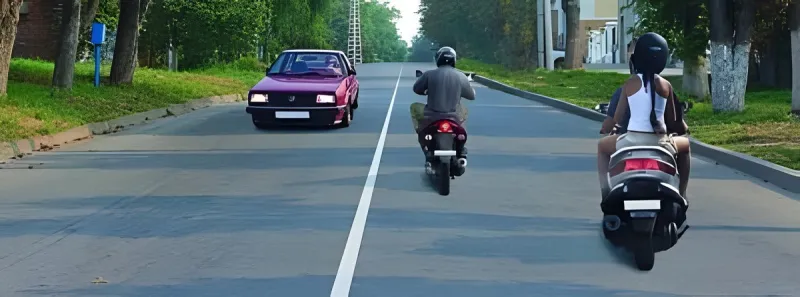
4. How many traffic lanes are there on this roadway?
One.
Two.
Three.
Correct answer: Two.ABC · D/T
Why: Երթևեկելի մասը բաժանված է միայն առանցքային գծով. կետ 51-ի համաձայն՝ գոտիների քանակը որոշվում է գծանշմամբ, ուստի այս երթևեկելի մասն ունի երկու գոտի։
5. A vehicle may not be operated if:
There is excessive play in the connections between the motorcycle frame and the sidecar frame.
Yellow-light fog lamps are installed at the front.
In both cases.
Correct answer: There is excessive play in the connections between the motorcycle frame and the sidecar frame.ABC
Why: Մոտոցիկլի և կողային կցորդի շրջանակների միացումներում խաղացքը հստակ նշված է 6.8 ենթակետում։ Առջևում դեղին հակամառախուղային լապտերները թույլատրված են (3.6՝ առջևում սպիտակ, դեղին, նարնջագույն), ուստի միայն առաջին տարբերակը։
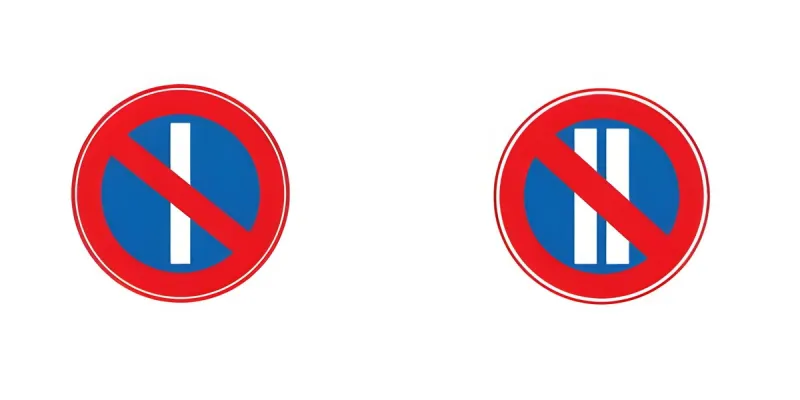
6. The effect of these traffic signs applies:
On the left side of the road.
On the right side of the road.
On the side of the road where they are installed.
Correct answer: On the side of the road where they are installed.ABC · D/T
Why:3.29 «Կայանելն արգելվում է ամսվա կենտ օրերին» և 3.30 «...զույգ օրերին» նշանների ազդեցությունը տարածվում է ճանապարհի այն կողմի վրա, որտեղ դրանք տեղադրված են։
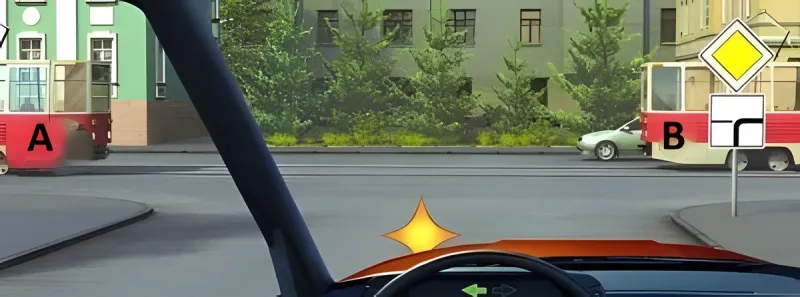
9. When proceeding through the intersection, the driver must yield to:
Only the tram operators.
The passenger-car driver and the operator of tram B.
No one.
Everyone.
Correct answer: The passenger-car driver and the operator of tram B.ABC · D/T
Why: Մեր դիմաց 2.1 «Գլխավոր ճանապարհ» նշանն է 8.13 «Գլխավոր ճանապարհի ուղղությունը» ցուցանակով. գլխավոր ճանապարհն անցնում է մեր թևով և թեքվում աջ, որտեղ թեթև մարդատարն ու Բ տրամվայն են, ձախի Ա տրամվայը երկրորդական ճանապարհի վրա է։ Թեքվող գլխավոր ճանապարհի վրա գործում են հավասարազոր խաչմերուկի կանոնները (կետ 97). թեթև մարդատարն ու Բ տրամվայը մոտենում են աջից՝ զիջում ենք երկուսին (կետ 98, տրամվայի առավելություն՝ կետ 100), իսկ Ա տրամվայը կետ 96-ով զիջում է գլխավոր ճանապարհով ընթացողներին։
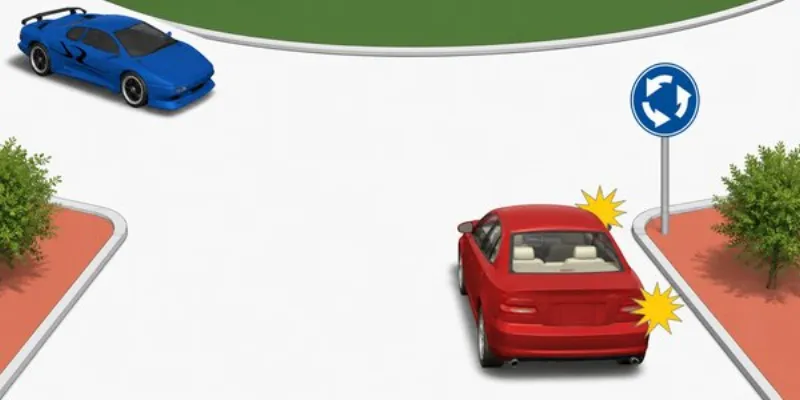
The red automobile, because it is entering the roundabout from the right of the blue automobile.
The blue automobile, because it is proceeding on the roundabout.
Correct answer: The blue automobile, because it is proceeding on the roundabout.ABC · D/T
Why:4.3 «Շրջանաձև երթևեկություն» նշան. կետ 98.1-ով մուտք գործող կարմիրը զիջում է շրջանաձև խաչմերուկում արդեն երթևեկող կապույտին։ Աջի խոչընդոտի կանոնն այստեղ չի գործում։
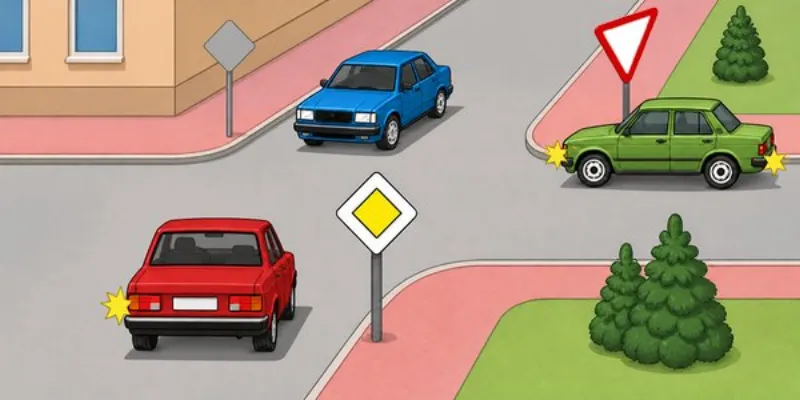
11. Which vehicle will proceed through the intersection last?
The red automobile.
The blue automobile.
The green automobile.
Correct answer: The green automobile.ABC · D/T
Why: Կարմիրի դիմաց 2.1 «Գլխավոր ճանապարհ» նշանն է, կանաչի դիմաց՝ 2.4 «Զիջեք ճանապարհը», կապույտի մոտ՝ հակառակ 2.1-ի թիկունքը։ Կարմիրն ու կապույտը գլխավոր ճանապարհով են, կանաչը կետ 96-ով զիջում է գլխավոր ճանապարհով ընթացողներին՝ անկախ նրանց ուղղությունից. կանաչն անցնում է վերջինը։
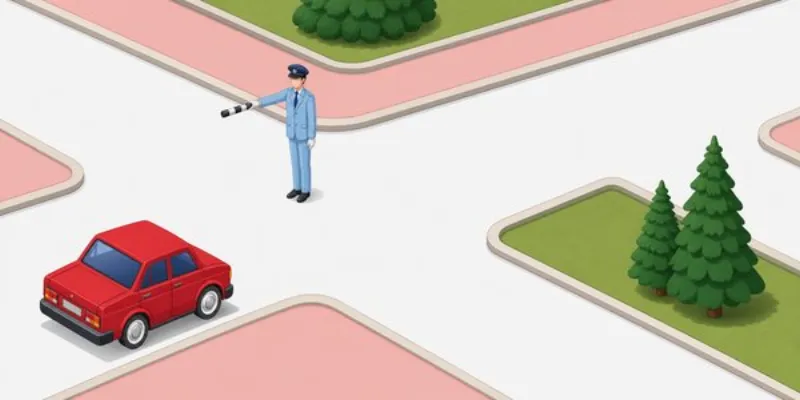
To the right through the first and second passages.
Correct answer: To the right through the first passage.ABC · D/T
Why: Կարգավորողը կրծքով դեպի կարմիր ավտոմոբիլն է, աջ ձեռքը պարզված է առաջ, լուսացույց և նշաններ չկան։ Կետ 16-ի 3-րդ ենթակետի «բ»-ով կրծքի կողմից թույլատրվում է միայն աջ շրջադարձ, այսինքն՝ դեպի աջ առաջին (մոտակա) անցումով. ուղիղ գնալը կամ երկրորդ անցումով թեքվելն արգելված է։
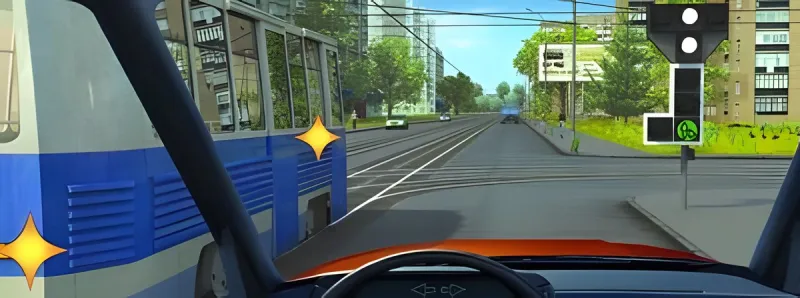
13. At this intersection, the driver:
Will proceed first.
Must yield to the tram.
Correct answer: Will proceed first.ABC · D/T
Why: Տրամվայի «T»-աձև լուսացույցի միայն վերևի ազդանշաններն են միացված՝ առանց ներքևի, ուստի կետ 14-ով տրամվայի երթևեկությունն արգելված է. մեր լուսացույցը կանաչ է՝ միացված ձախ սեկցիայով (կետ 8)։ Անցնում ենք առաջինը։
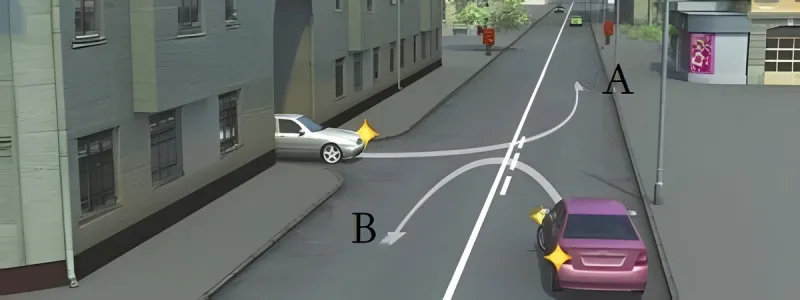
14. Which driver following the indicated path does not violate the pavement-marking requirements?
Only A.
Only B.
Both violate the requirements.
Neither violates the requirements.
Correct answer: Only B.ABC
Why:1.11 գծանշումը թույլատրվում է հատել միայն ընդհատվող գծի կողմից։ B հետագիծը հատում է ընդհատվող գծի կողմից, իսկ A-ն՝ հոծ գծի կողմից, ուստի գծանշման պահանջները չի խախտում միայն B վարորդը։
15. Within what distance of a railroad crossing is vehicle parking prohibited?
15 m.
50 m.
100 m.
150 m.
Correct answer: 15 m.ABC · D/T
Why: Կետ 86.4-ով կայանումն արգելվում է երկաթուղային գծանցներին 50 մ-ից մոտ։ Թվարկվածներից միայն 15 մ-ն է 50 մ-ից մոտ, ուստի այդ հեռավորության վրա կայանումն արգելվում է։ 50 մ-ի և ավելի հեռավորության վրա կայանումը թույլատրվում է։
16. When towing with a rigid coupling, the distance between the vehicles must not exceed:
2 m.
3 m.
4 m.
5 m.
6 m.
Correct answer: 4 m.ABC · D/T
Why: Կետ 140-ով կոշտ կցիչով քարշակելիս քարշակող և քարշակվող տրանսպորտային միջոցների միջև հեռավորությունը պետք է լինի 4 մ ոչ ավելի։
17. Children may be carried in the front seat of a passenger car that is not equipped with a child restraint system if they have reached the age of:
10 years.
11 years.
12 years.
Correct answer: 12 years.ABC
Why: Կետ 159.1-ով 7-ից մինչև 12 տարեկան երեխաներին թեթև մարդատարի առջևի նստատեղին կարելի է փոխադրել միայն մանկական պահող համակարգով։ Առանց դրա երեխան պետք է լինի առնվազն 12 տարեկան։
18. Before changing lanes, a warning signal must be given:
Immediately before beginning the maneuver.
Immediately after beginning the maneuver.
In advance, before beginning the maneuver.
Correct answer: In advance, before beginning the maneuver.ABC · D/T
Why: Կետ 36-ով ազդանշանը պետք է տրվի նախօրոք՝ մինչև երթևեկությունը կամ մանևրն սկսելը։
19. In which case do the rules not require a warning signal to be given?
Before stopping at the edge of the roadway.
Before a curve in the road within the area of effect of a “Dangerous Turn” sign.
Before changing to an adjacent traffic lane.
Correct answer: Before a curve in the road within the area of effect of a “Dangerous Turn” sign.ABC · D/T
Why: Կետ 36-ով ազդանշան տալը պարտադիր չէ, եթե տրանսպորտային միջոցն առանց վերադասավորման երթևեկում է ճանապարհի կորագծային հատվածով («Վտանգավոր շրջադարձ» նշանի գոտում)։ Եզրին կանգառը և վերադասավորումը մանևրներ են, որոնց համար ազդանշան պարտադիր է։
20. To check circulation in an injured limb, press and release the nail below the bandage. Circulation in the limb is impaired if:
The injured person feels pain.
The injured person feels discomfort.
The nail is difficult to blanch when pressed.
The nail is slow to return to a pink color.
Correct answer: The nail is slow to return to a pink color.ABC · D/T
Why: Առաջին օգնություն. եղունգի սեղմման փորձ. եթե բաց թողնելուց հետո եղունգը դժվարությամբ է կրկին վարդագույն դառնում, վիրակապից ներքև արյան շրջանառությունը խանգարված է։
In Varordakan Tester the same tests are taken without hints, wrong answers are collected automatically, and there is an exam simulation (20 questions, 30 minutes, pass at 18), a 3D intersection simulator, video lessons and an AI assistant that cites the Traffic Rules point. Free.
Sources: questions from the official bank of the Road Police of Armenia (roadpolice.am, edition of 2 October 2026); rule points from the Traffic Rules of the Republic of Armenia (arlis.am). Varordakan Tester is an independent educational app, not affiliated with the Police of Armenia.