Updated 2026-10-13 · official question bank of 2 October 2026
Test 23, Categories D/T (bus, trolleybus): 20 questions from the official bank of 2 October 2026 across all 10 topics. Under every question: the correct answer, the explanation (in Armenian) and the signs it mentions. In the app the same test is taken without hints, and the exam simulation runs on a 30-minute timer.
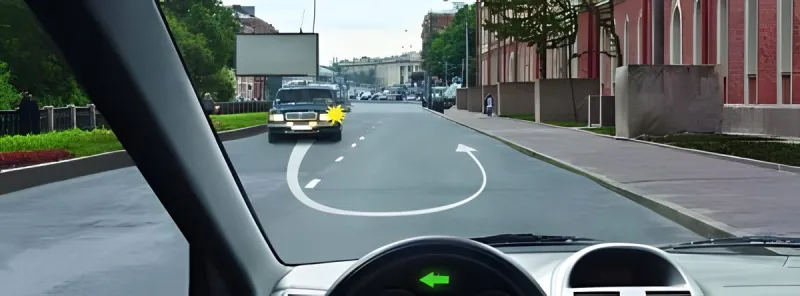
1. When starting to move, must you yield to the driver making a U-turn?
Yes.
No.
Correct answer: Yes.ABC · D/T
Why: Շարժումն սկսելիս մենք վերադասավորվում ենք երթևեկության գոտի, որտեղ արդեն երթևեկում է հետադարձ կատարող ավտոմոբիլը։ Կետ 39-ի համաձայն՝ վերադասավորվող վարորդը զիջում է այդ գոտիով երթևեկողներին, ուստի պարտավոր ենք զիջել։
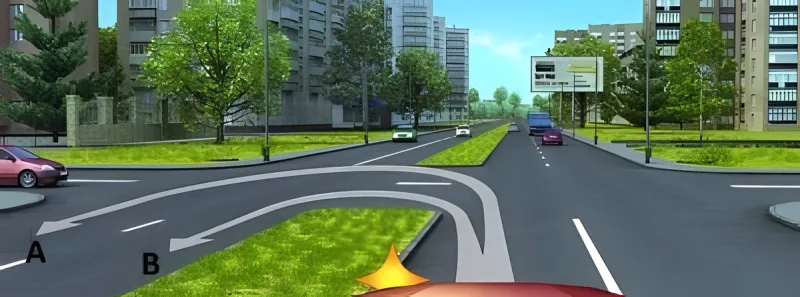
2. Along which path is the U-turn permitted?
Only A.
Only B.
Both paths are permitted.
Correct answer: Only A.ABC · D/T
Why: Բաժանարար գոտով ճանապարհին հետադարձը կատարվում է ձախ եզրային գոտուց՝ բաժանարար գոտու բացվածքով, այնպես, որ երթևեկելի մասերի փոխհատումից դուրս գալիս տրանսպորտային միջոցը չհայտնվի հանդիպակաց կողմում (կետեր 40 և 41)։ B հետագիծը հատում է բաժանարար գոտին, ուստի թույլատրված է միայն A հետագիծը։
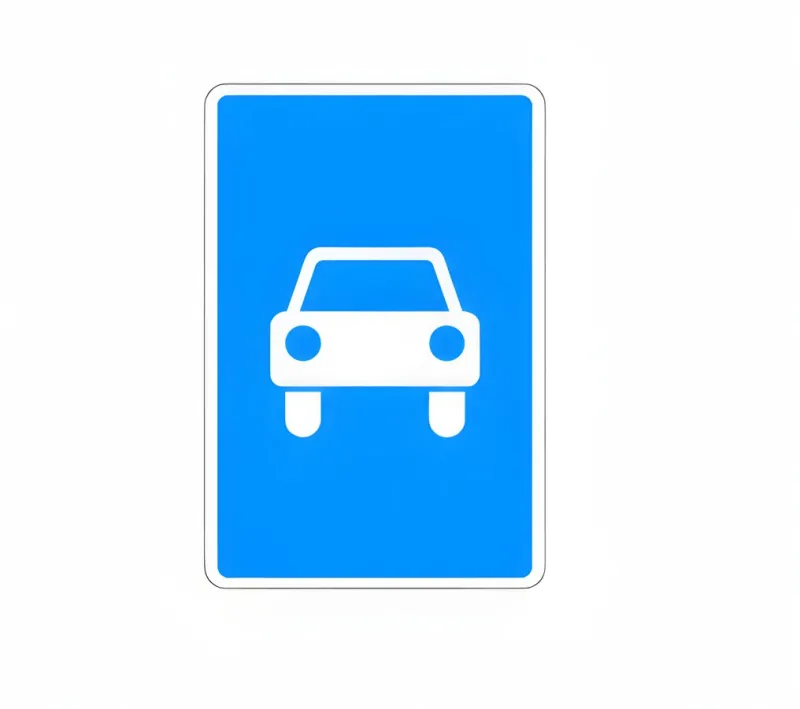
3. Are buses permitted to proceed on roads marked with the “Road for Motor Vehicles” sign?
Yes, without any restrictions.
No, such roads are intended only for passenger cars.
Yes, but they must not occupy any lane to the left of the second lane.
Correct answer: Yes, without any restrictions.D/T
Why:5.3 «Ճանապարհ ավտոմոբիլների համար» նշանով ճանապարհները նախատեսված են ավտոմոբիլների, այդ թվում ավտոբուսների, և մոտոցիկլների համար։ Երկրորդ գոտուց ձախ գոտիների սահմանափակումը (կետ 116.3, կետ 117) վերաբերում է միայն 3,5 տ-ից ծանր բեռնատարներին, ուստի ավտոբուսներին երթևեկելը թույլատրվում է առանց սահմանափակման։
4. According to the Law of the Republic of Armenia on Ensuring Road Traffic Safety, a sidewalk is:
A road element adjacent to the roadway and intended for pedestrian movement in accordance with the procedure established by law.
A road element separated from the roadway in any manner and intended for pedestrian movement in accordance with the procedure established by law.
Both of the listed cases.
Correct answer: Both of the listed cases.ABC · D/T
Why: ՀՀ օրենքի համաձայն՝ մայթ է հետիոտնի տեղաշարժվելու համար նախատեսված ճանապարհի տարրը, որը կամ հարում է երթևեկելի մասին, կամ որևէ եղանակով առանձնացված է դրանից, ուստի ճիշտ են նշված երկու դեպքերը։
5. A vehicle may not be operated if:
The horn does not operate.
The cooling system does not maintain a stable operating temperature for the engine.
In both cases.
Correct answer: The horn does not operate.ABC · D/T
Why: Ձայնային ազդանշանի սարքի չաշխատելը 6.3 ենթակետով անսարքություն է։ Հովացման համակարգի ջերմային ռեժիմը ցանկում չկա, ուստի միայն առաջին տարբերակը։
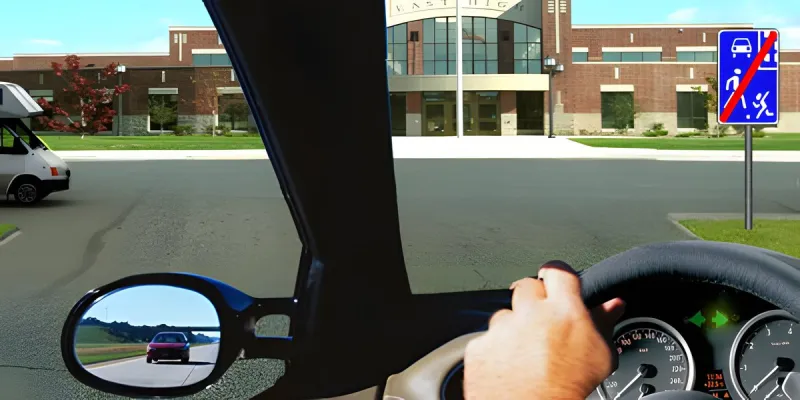
6. In this situation, must the driver yield to the truck?
Yes.
No.
Correct answer: Yes.ABC · D/T
Why: Նշան 5.22 «Բնակելի գոտու վերջ»-ը ցույց է տալիս, որ վարորդը դուրս է գալիս բնակելի գոտուց։ Կետ 120-ի համաձայն՝ բնակելի գոտուց դուրս գալիս վարորդները պետք է ճանապարհը զիջեն մյուս տրանսպորտային միջոցներին, ուստի բեռնատարին զիջելը պարտադիր է։
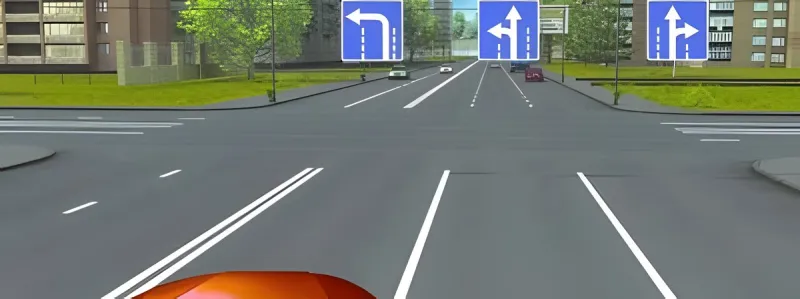
Correct answer: To the left and by making a U-turn.ABC · D/T
Why: Ձախ եզրային գոտու վերևում 5.15.2 «Երթևեկության ուղղությունները գոտիով» նշանը ցույց է տալիս ձախ սլաք։ Ձախ եզրային գոտուց ձախ շրջադարձը թույլատրող 5.15.2 նշանը թույլատրում է նաև հետադարձը, ուստի թույլատրվում է ձախ և հետադարձ։
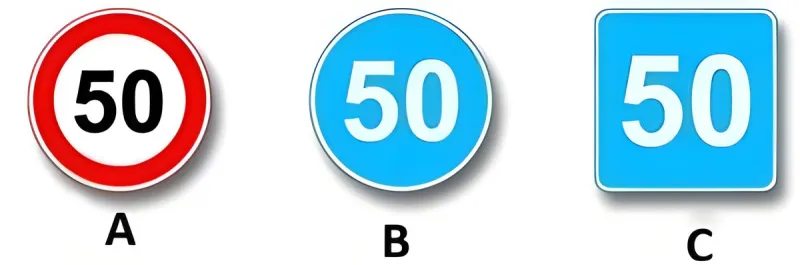
8. Within the area of effect of which sign may you proceed at a speed of 60 km/h?
Only B.
B and C.
None of them.
Correct answer: B and C.ABC · D/T
Why: A (3.24 «Առավելագույն արագության սահմանափակում») արգելում է 50-ից բարձր արագությունը։ B (4.6 «Նվազագույն արագության սահմանափակում») և C (6.2 «Առաջարկվող արագություն») նշանների գոտում 60 կմ/ժ արագությամբ երթևեկել կարելի է։
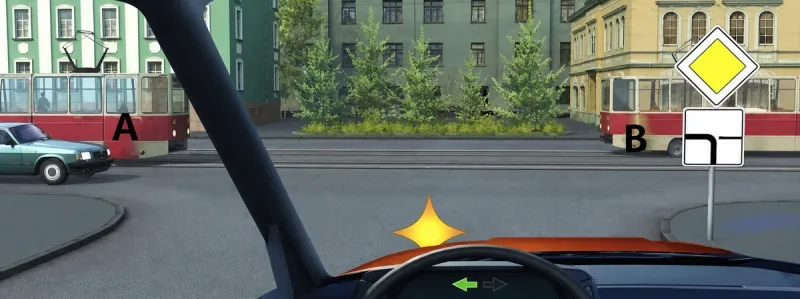
The passenger-car driver and the operator of tram A.
Only the operator of tram A.
The tram operators.
No one.
Correct answer: Only the operator of tram A.ABC · D/T
Why: Մեր դիմաց 2.1 «Գլխավոր ճանապարհ» նշանն է 8.13 «Գլխավոր ճանապարհի ուղղությունը» ցուցանակով. գլխավոր ճանապարհն անցնում է մեր թևով և թեքվում ձախ, որտեղ A տրամվայն ու թեթև մարդատարն են, B տրամվայը երկրորդական ճանապարհի վրա է։ Թեքվող գլխավոր ճանապարհի վրա գործում են հավասարազոր խաչմերուկի կանոնները (կետ 97). տրամվայն առավելություն ունի ոչ ռելսագնաց միջոցների նկատմամբ (կետ 96, 100), ուստի զիջում ենք A տրամվային, ձախից մոտեցող մեքենան զիջում է մեզ (կետ 98), իսկ երկրորդական ճանապարհի B տրամվայը զիջում է բոլորին (կետ 96)։
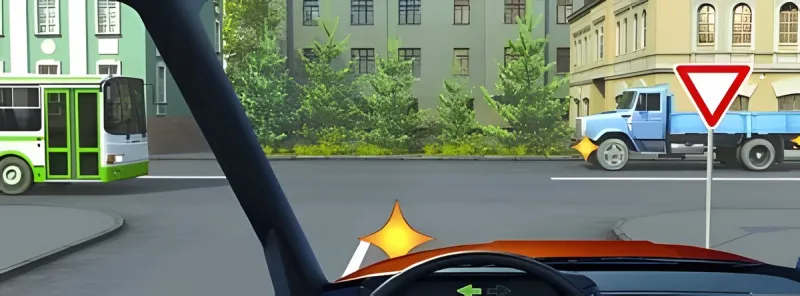
Why: Մեր դիմաց 2.4 «Զիջեք ճանապարհը» նշանն է առանց ցուցանակի. հատվող ճանապարհը գլխավորն է։ Ձախի ավտոբուսն ու աջի բեռնատարը երկուսն էլ դրանով են ընթանում, ուստի կետ 96-ով զիջում ենք երկուսին՝ անկախ նրանց ուղղությունից։
11. When entering a roundabout marked with the “Roundabout” traffic sign, the driver of a vehicle:
Must yield to vehicles proceeding within the roundabout.
Has the right-of-way over vehicles proceeding within the roundabout.
Correct answer: Must yield to vehicles proceeding within the roundabout.ABC · D/T
Why: Կետ 98.1-ով 4.3 «Շրջանաձև երթևեկություն» նշանով կահավորված խաչմերուկ մուտք գործող վարորդը պարտավոր է զիջել այդ խաչմերուկում արդեն երթևեկող տրանսպորտային միջոցներին։
12. Outside a populated area, in which lane must buses proceed?
As close as possible to the right edge of the roadway.
In any lane except the leftmost lane.
At the driver’s discretion, while ensuring traffic safety.
Correct answer: As close as possible to the right edge of the roadway.D/T
Why: Կետ 55-ով բնակավայրերից դուրս վարորդները պետք է տրանսպորտային միջոցները վարեն երթևեկելի մասի աջ եզրին հնարավորինս մոտ։
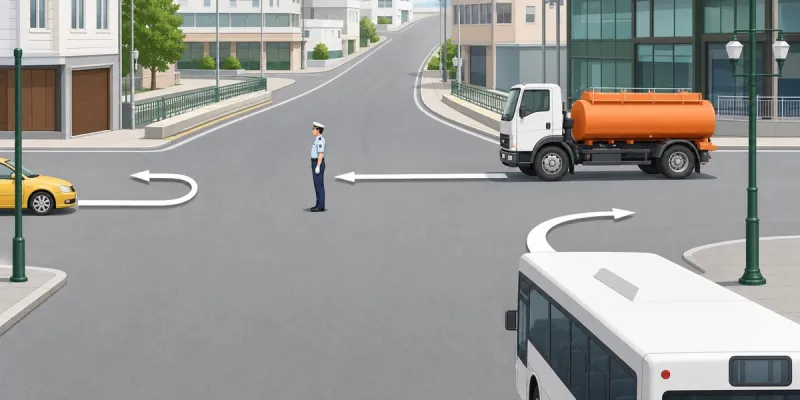
13. The following drivers are permitted to continue along the indicated paths:
The truck driver.
The bus driver and the truck driver.
The passenger-car driver and the bus driver.
The bus driver.
Correct answer: The bus driver.ABC · D/T
Why: Կարգավորողի ձեռքերն իջեցված են, կրծքով դեպի ավտոցիստեռնն է, լուսացույց և նշաններ չկան։ Կրծքի կողմի բեռնատարին և թիկունքի դեղին մեքենային երթևեկությունն արգելված է (կետ 16, 2-րդ ենթակետ «բ»), կողքի ավտոբուսին թույլատրվում է նշված աջ շրջադարձը («ա»)։ Միայն ավտոբուսի վարորդը։
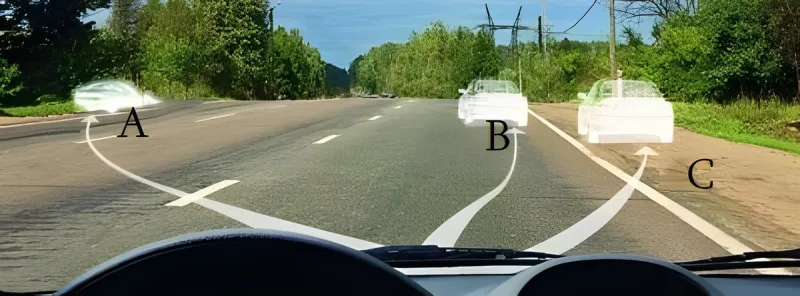
14. Which option shows a vehicle stopped correctly?
Only C.
Only A and C.
Only B and C.
In all three cases.
Correct answer: Only C.ABC · D/T
Why: Բնակավայրից դուրս կետ 78-ի համաձայն կանգառը կատարվում է կողնակին (C)։ Կողնակի առկայության դեպքում երթևեկելի մասի վրա կանգնելը (B) թույլատրված չէ, իսկ ձախ կողմում կանգառը (A) կետ 79-ով թույլատրվում է միայն բնակավայրերում։
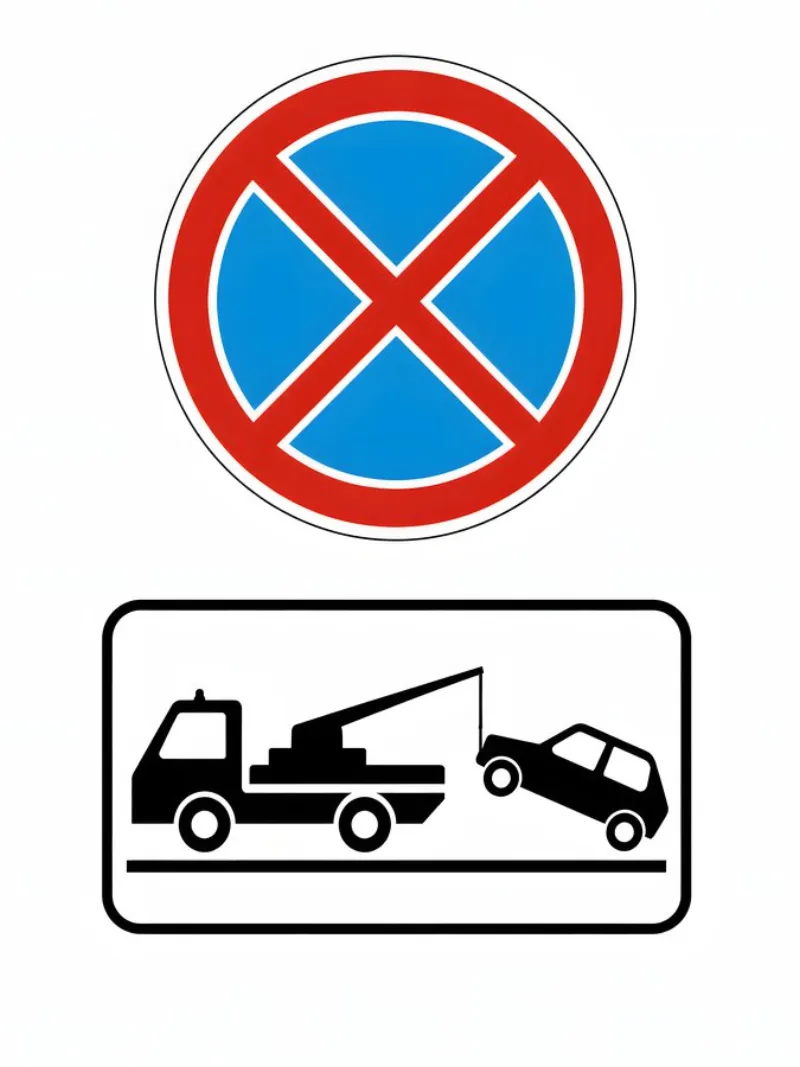
15. Is the driver of a tourist bus permitted to drop off a passenger in the zone where these signs are installed?
Yes, if the driver remains at the wheel and can immediately leave the area of effect of the sign.
Yes, because towing-away applies only to passenger cars.
Prohibited.
Correct answer: Prohibited.D/T
Why:3.27 «Կանգառն արգելվում է» նշանն արգելում է ցանկացած կանգառ, այդ թվում՝ ուղևոր իջեցնելու համար, և վերաբերում է բոլոր տրանսպորտային միջոցներին։ Ցուցանակը տեղեկացնում է, որ խախտողների տրանսպորտային միջոցները տարհանվում են. վարորդի ղեկին գտնվելը բացառություն չէ։
When approaching a vehicle displaying the “Transportation of Children” identification sign while children are boarding or exiting.
If blinded.
When an obstruction or danger to traffic arises.
When approaching a vehicle displaying flashing blue and red beacons and using a special audible signal, as well as when approaching a stationary vehicle displaying flashing blue or flashing blue and red beacons.
In all of the above cases.
Correct answer: In all of the above cases.ABC · D/T
Why: Յուրաքանչյուր դեպք ունի իր կանոնը. «Երեխաների փոխադրում» նշանով մեքենային մոտենալիս (կետ 156), շլանալիս (կետ 129), խոչընդոտի կամ վտանգի դեպքում (կետ 67), կապույտ և կարմիր փարոսիկներով մեքենա մոտենալիս (կետ 29) կամ կանգնած լինելիս (կետ 30)։ Բոլորը պահանջում են իջեցնել արագությունը։
17. Are buses permitted to proceed at a speed of 70 km/h outside populated areas?
Permitted.
Prohibited.
Correct answer: Permitted.D/T
Why: Բնակավայրերից դուրս մնացած ավտոբուսներին թույլատրվում է մինչև 70 կմ/ժ (կետ 69.3), միջքաղաքայիններին՝ մինչև 90 կմ/ժ (կետ 69.2)։ Ուստի ավտոբուսներով 70 կմ/ժ երթևեկելը թույլատրվում է։
18. The turn signal must be canceled
Immediately before the maneuver.
Immediately after the maneuver.
During the maneuver.
Correct answer: Immediately after the maneuver.ABC · D/T
Why: Կետ 36-ով լուսային ցուցիչով տրված ազդանշանը դադարեցվում է մանևրն ավարտելուց անմիջապես հետո (ձեռքով տրվողը՝ սկսելուց առաջ)։
19. The hazard warning lights on a vehicle must be activated:
In the event of a traffic accident.
During towing, on the towed motor vehicle.
In the event of a forced stop where stopping is prohibited.
In all of the listed cases.
Correct answer: In all of the listed cases.ABC · D/T
Why: Կետ 22-ով վթարային լուսային ազդանշանը միացվում է պատահարի դեպքում (22.1), քարշակվող մեքենայի վրա (22.4) և կանգառն արգելված տեղերում հարկադրված կանգառի դեպքում (22.2)։ Բոլոր երեքը ցանկում են։
20. A vehicle has struck a utility pole, and an electrical wire has fallen onto an unconscious injured person lying beside the vehicle. When providing assistance, the first action should be to:
Remove the injured person from the source of electrical current.
Perform a primary assessment.
Remove the wire from the injured person using an insulating object.
Look for electrical entry and exit points (burns) on the body.
Correct answer: Remove the wire from the injured person using an insulating object.ABC · D/T
Why: Առաջին օգնություն. տուժածի վրա հաղորդալար կա. առաջին հերթին այն հեռացնում են մեկուսիչ առարկայով։ Տուժածին անմիջապես դիպչելը կհարվածի նաև օգնողին. զննումն ու այրվածքների որոնումը հետո են։
In Varordakan Tester the same tests are taken without hints, wrong answers are collected automatically, and there is an exam simulation (20 questions, 30 minutes, pass at 18), a 3D intersection simulator, video lessons and an AI assistant that cites the Traffic Rules point. Free.
Sources: questions from the official bank of the Road Police of Armenia (roadpolice.am, edition of 2 October 2026); rule points from the Traffic Rules of the Republic of Armenia (arlis.am). Varordakan Tester is an independent educational app, not affiliated with the Police of Armenia.