Updated 2026-10-13 · official question bank of 2 October 2026
Test 50, Categories D/T (bus, trolleybus): 20 questions from the official bank of 2 October 2026 across all 10 topics. Under every question: the correct answer, the explanation (in Armenian) and the signs it mentions. In the app the same test is taken without hints, and the exam simulation runs on a 30-minute timer.
1. In populated areas, when there are three or more lanes for traffic in the same direction, may public transit vehicles occupy the leftmost lane?
Yes, when passing.
Yes, when making a left turn or a U-turn.
Yes, in all cases.
Correct answer: Yes, when making a left turn or a U-turn.D/T
Why: Կետ 57-ով միևնույն ուղղությամբ երեք և ավելի գոտիների դեպքում ուղևորների կանոնավոր փոխադրումներ իրականացնող տրանսպորտային միջոցներին ձախ եզրային գոտի զբաղեցնել թույլատրվում է միայն ձախ շրջադարձ կամ հետադարձ կատարելու համար։
2. What do prohibitory signs introduce or cancel?
Specific traffic regimes.
Specific traffic restrictions.
Correct answer: Specific traffic restrictions.D/T
Why: Արգելող նշանները (կետ 167, 3-րդ խումբ) մտցնում կամ վերացնում են երթևեկության որոշակի սահմանափակումներ։ Երթևեկության ռեժիմները մտցնում են հատուկ թելադրանքի նշանները։
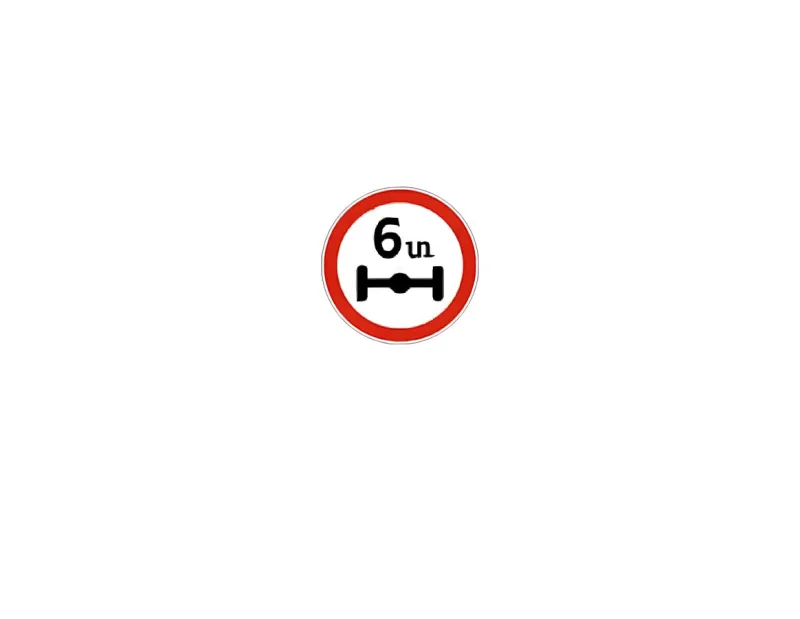
3. A bus driver sees this sign before reaching a bridge. The bus’s actual mass is 12 metric tons. May the driver cross the bridge?
Yes.
No.
Correct answer: No.D/T
Why: Նշանը 3.12 «Սռնու վրա բեռնվածության սահմանափակում» (6 տ) է։ Պաշտոնական պատասխանով 12 տ փաստացի զանգվածով ավտոբուսը չի կարող անցնել, քանի որ զանգվածը սռնիների վրա բաշխվում է անհավասարաչափ, և երկսռնի ավտոբուսի առնվազն մեկ սռնու բեռնվածությունը կգերազանցի 6 տ-ն։
4. According to the Law of the Republic of Armenia on Ensuring Road Traffic Safety, if a driver is involved in a road traffic crash, the driver must:
Immediately stop the vehicle.
Activate the hazard warning lights.
Not move objects related to the crash.
Perform all of the listed actions.
Correct answer: Perform all of the listed actions.D/T
Why: ՀՀ օրենքի համաձայն՝ պատահարին առնչություն ունեցող վարորդը պարտավոր է անմիջապես կանգնեցնել տրանսպորտային միջոցը, միացնել վթարային լուսային ազդանշանը և չտեղաշարժել պատահարի հետ կապված առարկաները՝ կատարել թվարկած բոլոր գործողությունները։
5. A vehicle may not be operated if:
Yellow reflectors are installed at the rear.
Yellow reflectors are installed at the front.
In both cases.
Correct answer: In both cases.ABC · D/T
Why: Առջևի լուսանդրադարձիչները պետք է լինեն միայն սպիտակ, հետևինը՝ միայն կարմիր (3.6)։ Դեղին լուսանդրադարձիչները և՛ առջևում, և՛ հետևում անսարքություն են։
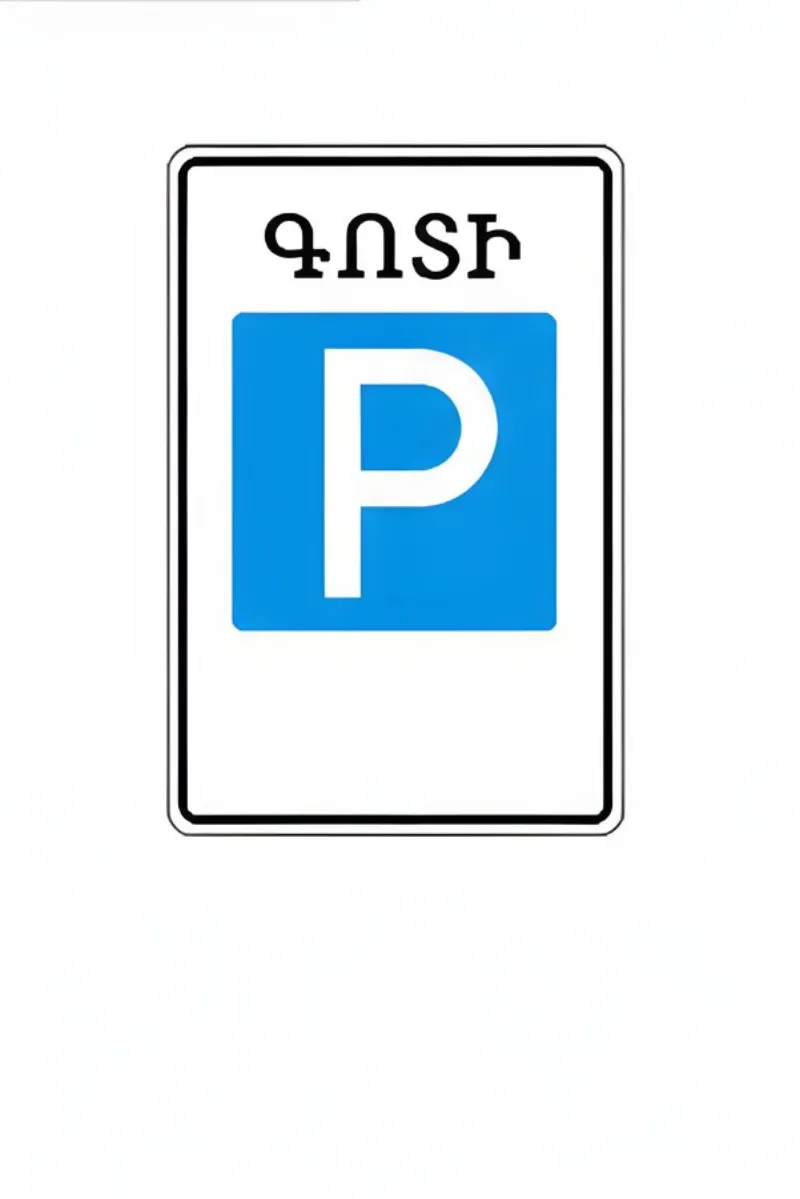
6. What does this sign indicate?
A location where an area (section of road) for permitted parking, regulated by signs and pavement markings, begins.
A location where an area (section of road) for parking passenger cars begins.
Correct answer: A location where an area (section of road) for permitted parking, regulated by signs and pavement markings, begins.D/T
Why: Սա 5.29 «Կարգավորվող կայանման գոտի» նշանն է. այն ցույց է տալիս վայրը, որտեղից սկսվում է թույլատրված և ցուցանակների ու գծանշումների օգնությամբ կարգավորվող կայանման տարածքը։
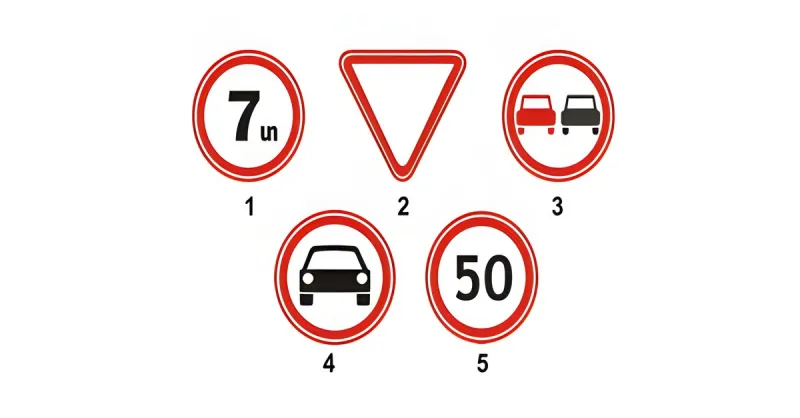
Why: Ընդհանուր օգտագործման տրանսպորտային միջոցների վրա տարածվում են 1-ին (3.11 «Զանգվածի սահմանափակում»), 2-րդ (2.4 «Զիջեք ճանապարհը»), 3-րդ (3.20 «Վազանցն արգելվում է») և 5-րդ (3.24 «Առավելագույն արագության սահմանափակում») նշանները, իսկ 4-րդի՝ 3.3 «Մեխանիկական տրանսպորտային միջոցների երթևեկությունն արգելվում է»-ի ազդեցությունը նրանց վրա չի տարածվում։
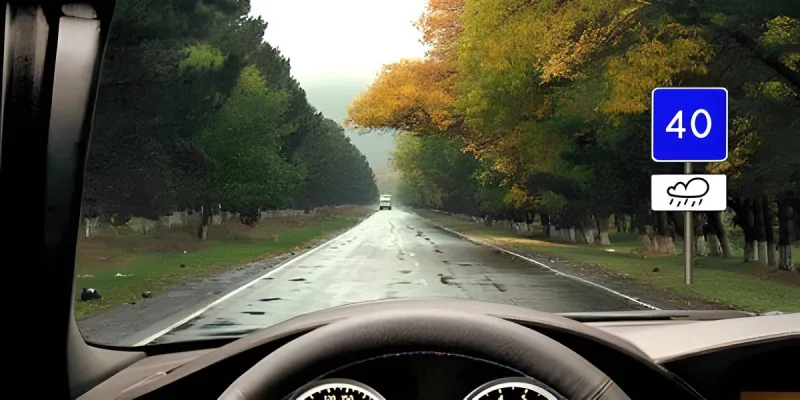
When the roadway surface is wet, a speed of 40 km/h is recommended.
When the roadway surface is wet, the maximum permitted speed is 40 km/h.
Correct answer: When the roadway surface is wet, a speed of 40 km/h is recommended.ABC · D/T
Why: Նշան 6.2 «Առաջարկվող արագություն» 40-ը 8.16 «Խոնավ ծածկույթ» ցուցանակով նշանակում է, որ թաց ճանապարհածածկույթի դեպքում առաջարկվում է երթևեկել 40 կմ/ժ արագությամբ։
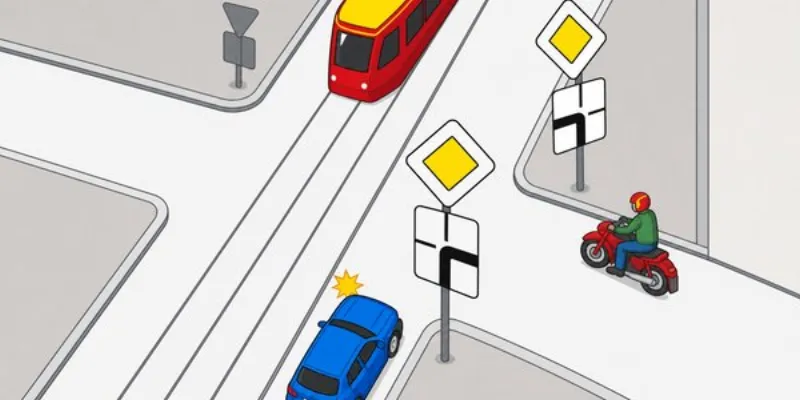
Why: Կապույտի և մոտոցիկլի դիմաց 2.1 «Գլխավոր ճանապարհ» նշաններն են 8.13 ցուցանակով. գլխավոր ճանապարհը թեքվում է նրանց թևերի միջև, իսկ տրամվայը երկրորդական ճանապարհի վրա է։ Գլխավոր ճանապարհով ընթացողները միմյանց նկատմամբ գործում են աջի խոչընդոտի կանոնով (կետ 97, 98)՝ մոտոցիկլ, ապա կապույտ, իսկ տրամվայը կետ 96-ով զիջում է նրանց և անցնում երրորդը։
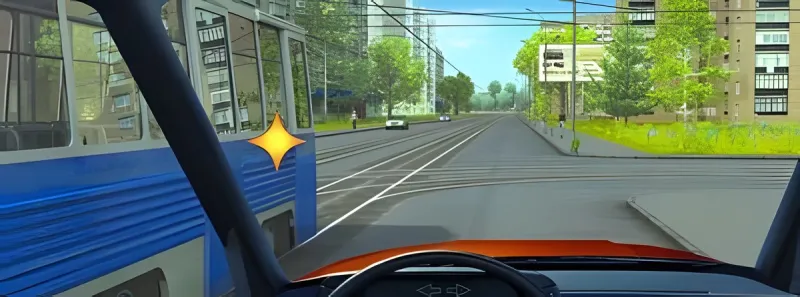
Why: Նշաններ և լուսացույց չկան՝ հավասարազոր ճանապարհների չկարգավորվող խաչմերուկ։ Ձախի տրամվայը կետ 100-ով առավելություն ունի ոչ ռելսագնաց միջոցների նկատմամբ՝ անկախ ուղղությունից. պարտավոր ենք զիջել։
11. In this situation, the driver of a public transit vehicle:
Has the right-of-way only over the bicyclist.
Has the right-of-way over the bicyclist and pedestrians.
Must yield to the bicyclist and must not interfere with pedestrians.
Correct answer: Must yield to the bicyclist and must not interfere with pedestrians.D/T
Why: Կետ 87-ով աջ շրջադարձ կատարելիս խաչմերուկից դուրս գալիս վարորդը պետք է խոչընդոտ չստեղծի երթևեկելի մասը հատող հետիոտների համար և պետք է զիջի հեծանվորդին։ Ընդհանուր օգտագործման տրանսպորտային միջոցը նման առավելություն չունի։
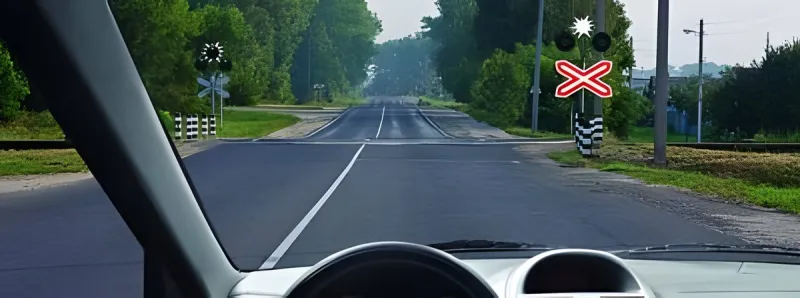
12. Proceeding across the railroad crossing is:
Permitted.
Prohibited.
Correct answer: Permitted.ABC · D/T
Why: Գծանցը նշված է 1.3.1 «Միագիծ երկաթուղի» նշանով, և գծանցի լուսացույցի լուսնասպիտակ թարթող ազդանշանն է միացված։ Կետ 15-ով լուսնասպիտակ թարթող ազդանշանը թույլատրում է գծանցով երթևեկությունը, ուստի գծանցն անցնելը թույլատրված է։
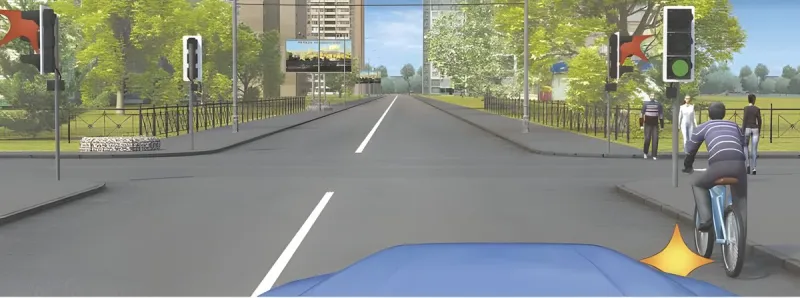
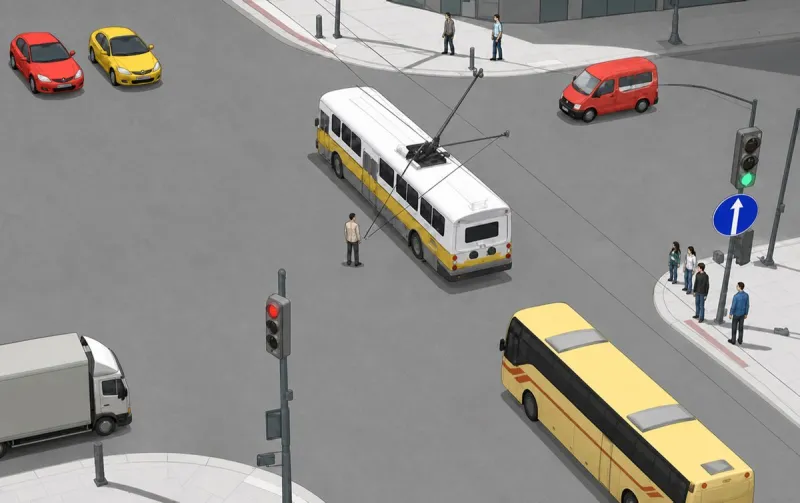
13. In this situation, is the bus driver permitted to proceed straight ahead?
Yes.
No.
Yes, if the bus is operating on an established route.
Correct answer: No.D/T
Why: Տրոլեյբուսի ուղղության լուսացույցը կարմիր է, որն արգելում է երթևեկությունը՝ անկախ երթուղուց (կետ 7, 5-րդ ենթակետ). աջի 4.1.1 «Երթևեկությունն ուղիղ» նշանը և հատվող ուղղության կանաչը դա չեն փոխում։ Ոչ։
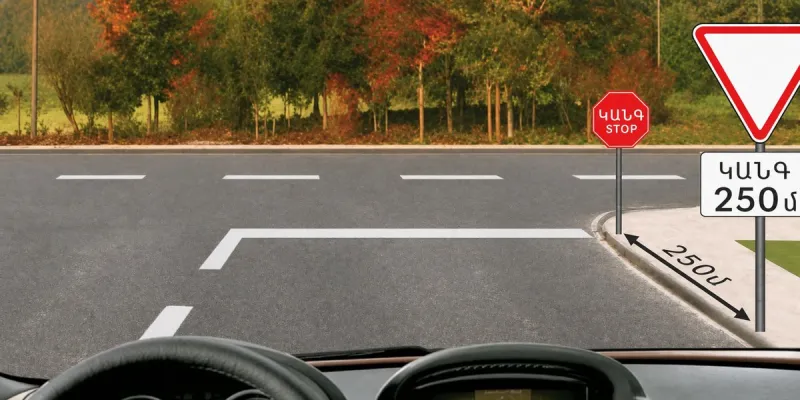
Correct answer: Before the “Stop Line” pavement marking.ABC · D/T
Why: Առաջին նշանը՝ 2.4 «Զիջեք ճանապարհը»-ն 8.1.2 ցուցանակով, միայն նախազգուշացնում է 250 մ հետո տեղադրված 2.5 «Երթևեկությունն առանց կանգառի արգելվում է» նշանի մասին։ 2.5 նշանի մոտ պարտադիր կանգառը կատարվում է «Կանգ-գիծ» 1.12 գծանշման առջև։
15. At what distance from railroad crossings is bus stopping prohibited?
Within 50 meters of the crossing.
Directly on railroad crossings.
Within 15 meters of the crossing.
In all of the listed cases.
Correct answer: Directly on railroad crossings.D/T
Why: Կետ 84.2-ով կանգառն արգելվում է անմիջապես երկաթուղային գծանցների վրա։ 50 մ-ի սահմանափակումը (կետ 86.4) վերաբերում է միայն կայանմանը։
16. Is carrying passengers in the towing bus permitted?
Prohibited.
Permitted.
Correct answer: Permitted.D/T
Why: Կետ 139-ը արգելում է ուղևորների փոխադրումը միայն քարշակվող ավտոբուսում։ Քարշակող ավտոբուսի համար արգելք չկա, ուստի այնտեղ թույլատրվում է։
17. Is a bus permitted to tow a vehicle whose windshield wipers and windshield washers provided by design do not operate?
Permitted, except when the towed vehicle is being controlled by a driver.
Prohibited in all weather conditions, because if the windshield wipers are inoperative, any movement of the vehicle on the roadway is prohibited.
Correct answer: Permitted, except when the towed vehicle is being controlled by a driver.D/T
Why: Կետ 143.4-ով արգելվում է քարշակել չաշխատող ապակեմաքրիչներով և ապակեողողիչներով տրանսպորտային միջոցը միայն այն դեպքում, երբ դրա ղեկավարումն իրականացնում է վարորդը։
18. In which cases must a bus driver activate the hazard warning lights?
When picking up or dropping off children during the organized transportation of groups of children.
In the event of a road traffic crash.
When transporting groups of children outside a populated area.
In cases 1 and 2.
In cases 2 and 3.
Correct answer: In cases 1 and 2.D/T
Why: Կետ 156-ով «Երեխաների փոխադրում» նշանով ավտոբուսի վրա երեխաների նստեցման և իջեցման ժամանակ պետք է միացված լինի վթարային լուսային ազդանշանը, իսկ կետ 22.1-ով՝ ճանապարհատրանսպորտային պատահարի դեպքում։ Բնակավայրից դուրս երեխաներ փոխադրելը ինքնին այդ պահանջը չի առաջացնում։
19. Must a bus driver activate the turn signal if the vehicle does not change lanes but the road changes direction at that section?
Yes, because the bus changes its direction of travel.
No.
Yes, but only if the road turns more than 90 degrees.
Correct answer: No.D/T
Why: Կետ 36-ով ազդանշան տալը պարտադիր չէ, եթե տրանսպորտային միջոցն առանց վերադասավորման երթևեկում է ճանապարհի կորագծային հատվածով, ուստի ավտոբուսի վարորդը պարտավոր չէ։
20. After a crash, an injured person should be removed from the vehicle if:
The injured person has serious injuries.
The scene is dangerous, for example, there is a risk of explosion.
An electrical wire has fallen onto the vehicle.
Correct answer: The scene is dangerous, for example, there is a risk of explosion.ABC · D/T
Why: Առաջին օգնություն. տուժածին մեքենայից տեղափոխում են միայն, երբ դեպքի վայրը վտանգավոր է, օրինակ՝ պայթյունի վտանգ կա։ Լուրջ վնասվածքի դեպքում տեղափոխելը վնասակար է, իսկ հաղորդալարի դեպքում մնում են մեքենայում։
In Varordakan Tester the same tests are taken without hints, wrong answers are collected automatically, and there is an exam simulation (20 questions, 30 minutes, pass at 18), a 3D intersection simulator, video lessons and an AI assistant that cites the Traffic Rules point. Free.
Sources: questions from the official bank of the Road Police of Armenia (roadpolice.am, edition of 2 October 2026); rule points from the Traffic Rules of the Republic of Armenia (arlis.am). Varordakan Tester is an independent educational app, not affiliated with the Police of Armenia.