Test 9 — Categories ABC (cars, motorcycles, trucks)
Updated 2026-10-13 · official question bank of 2 October 2026
Test 9, Categories ABC (cars, motorcycles, trucks): 20 questions from the official bank of 2 October 2026 across all 10 topics. Under every question: the correct answer, the explanation (in Armenian) and the signs it mentions. In the app the same test is taken without hints, and the exam simulation runs on a 30-minute timer.
1. A U-turn is prohibited:
On pedestrian crossings.
In tunnels.
On and under bridges, overpasses, and elevated roadways.
At railroad crossings.
In all of the listed cases.
Correct answer: In all of the listed cases.ABC · D/T
Why: Կետ 50-ը թվարկում է հետադարձի արգելման տեղերը՝ հետիոտնային անցումներ, թունելներ, կամուրջներ, ուղեկամուրջներ, էստակադներ և դրանց տակ, երկաթուղային գծանցներ։ Բոլոր չորս տարբերակներն այդ ցանկում են, ուստի ճիշտն է «թվարկած բոլոր դեպքերում»։
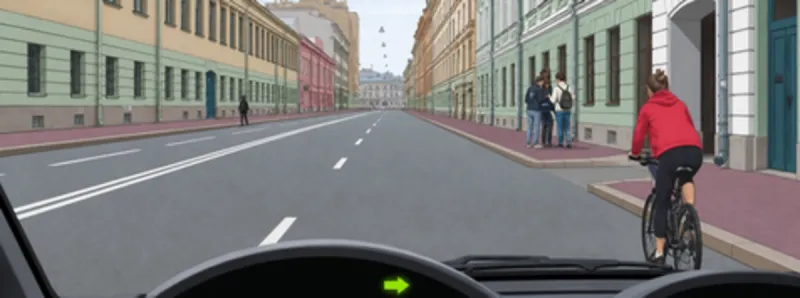
2. When entering a yard by making a right turn, we must yield to:
Pedestrians only.
The bicyclist only.
No one.
The bicyclist and the pedestrians.
Correct answer: The bicyclist and the pedestrians.ABC · D/T
Why: Կետ 38-ի համաձայն՝ ճանապարհից մերձակա տարածք (բակ) մուտք գործելիս վարորդը պետք է ճանապարհը զիջի հեծանվորդներին և խոչընդոտ չստեղծի հետիոտների համար, ուստի զիջում ենք և՛ հեծանվորդին, և՛ հետիոտներին։
3. In which case is backing permitted?
At intersections.
In lanes other than the rightmost lane.
At pedestrian crossings.
Correct answer: In lanes other than the rightmost lane.ABC · D/T
Why: Կետ 49-ով հետընթացն արգելվում է խաչմերուկներում, մերձակա տարածքից դուրս գալիս և կետ 50-ի տեղերում, այդ թվում՝ հետիոտնային անցումների վրա (50.1)։ Աջ եզրային չհանդիսացող գոտին արգելքների ցանկում չէ, ուստի միայն այդ տարբերակն է թույլատրված։
4. According to the Law of the Republic of Armenia on Ensuring Road Traffic Safety, a traffic lane is:
A marked longitudinal strip of the roadway wide enough for vehicles to proceed in a single line.
A marked or unmarked longitudinal strip of the roadway wide enough for vehicles to proceed in a single line.
Correct answer: A marked or unmarked longitudinal strip of the roadway wide enough for vehicles to proceed in a single line.ABC · D/T
Why: Օրենքի սահմանմամբ երթևեկության գոտին երթևեկելի մասի գծանշված ԿԱՄ չգծանշված երկայնական գոտին է, որի լայնությունը բավարար է տրանսպորտային միջոցների մեկ շարքով երթևեկության համար. գծանշումը պարտադիր չէ։
5. A vehicle may not be operated if:
Yellow reflectors are installed at the rear.
Yellow reflectors are installed at the front.
In both cases.
Correct answer: In both cases.ABC · D/T
Why: Առջևի լուսանդրադարձիչները պետք է լինեն միայն սպիտակ, հետևինը՝ միայն կարմիր (3.6)։ Դեղին լուսանդրադարձիչները և՛ առջևում, և՛ հետևում անսարքություն են։
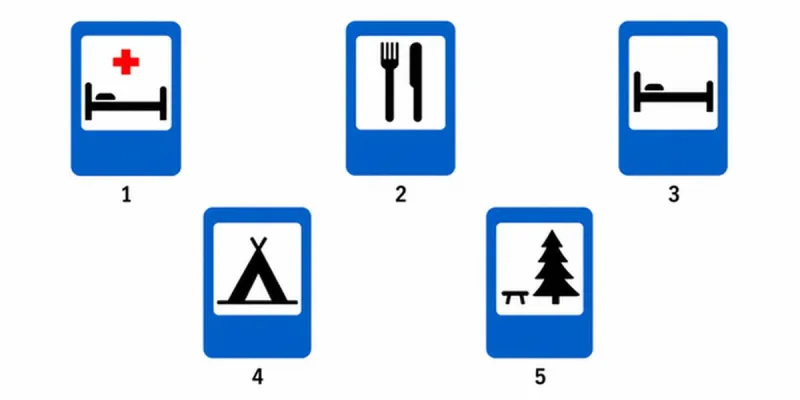
6. Which sign indicates a “Hotel” or “Motel”?
1
2
3
4
5
Correct answer: Option 3ABC · D/T
Why: «Հյուրանոց կամ մոթել» կոչվում է 3-րդ նշանը՝ 7.9-ը։ 1-ը 7.2 «Հիվանդանոց», 2-ը 7.7 «Սննդի կետ», 4-ը 7.10 «Հանգրվան», 5-ը 7.11 «Հանգստի վայր» նշաններն են։
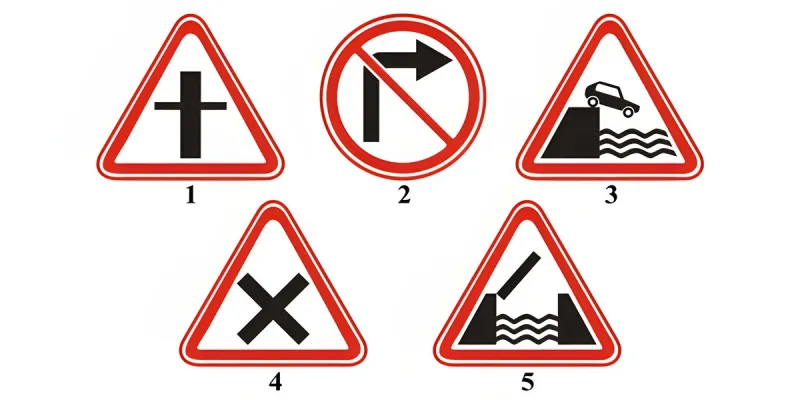
7. Which sign is installed immediately before the intersection of roadways?
1
2
3
4
5
Correct answer: Option 2ABC · D/T
Why: Երթևեկելի մասերի հատումից անմիջապես առաջ տեղադրվում է 2-րդ նշանը՝ 3.18.1 «Աջ շրջադարձն արգելվում է»։ Մյուսները նախազգուշացնող նշաններ են (2.3.1, 1.10 «Ելք դեպի առափ», 1.6, 1.9 «Բացվող կամուրջ»), որոնք տեղադրվում են նախապես։
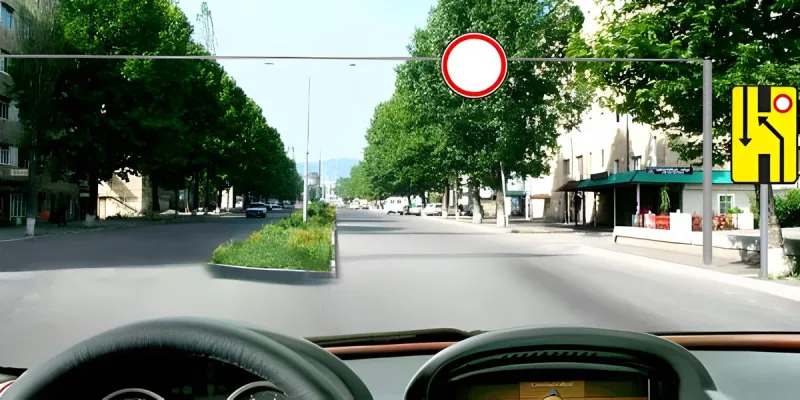
Move into the part of the roadway intended for oncoming traffic.
Correct answer: Move into the part of the roadway intended for oncoming traffic.ABC
Why: Ճանապարհի վրա կախված է 3.2 «Երթևեկությունն արգելվում է» նշանը, իսկ աջում՝ դեղին 6.19.1 «Այլ երթևեկելի մաս վերադասավորվելու նախնական ցուցիչ»-ը, որը ցույց է տալիս, որ փակ հատվածը պետք է շրջանցել՝ վերադասավորվելով բաժանարար գոտով առանձնացված հանդիպակաց երթևեկելի մաս։
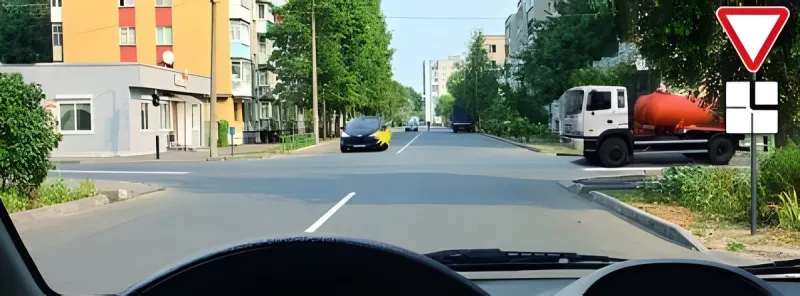
9. When proceeding straight through the intersection, you must yield to:
The truck driver.
The passenger-car driver.
Both drivers.
Correct answer: Both drivers.ABC · D/T
Why: Մեր դիմաց 2.4 «Զիջեք ճանապարհը» նշանն է 8.13 «Գլխավոր ճանապարհի ուղղությունը» ցուցանակով. գլխավոր ճանապարհն անցնում է դիմացի թևով (թեթև մարդատար) և թեքվում աջ (ավտոցիստեռն)։ Ուղիղ անցնելիս կետ 96-ով զիջում ենք երկուսին՝ անկախ նրանց ուղղությունից։
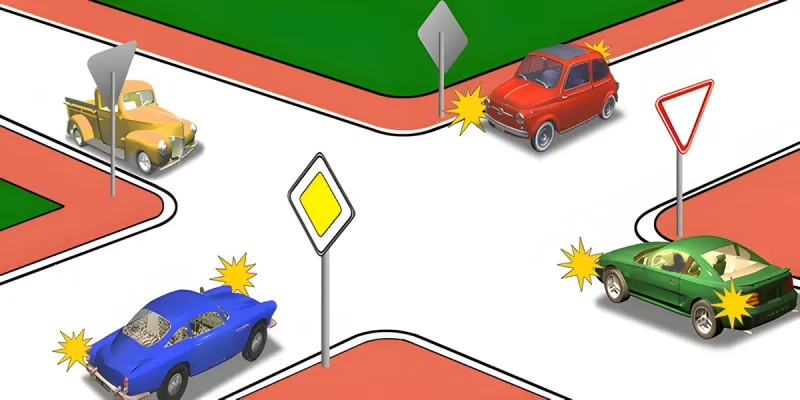
10. Which vehicle will proceed through the intersection first?
The green automobile.
The blue automobile.
The red automobile.
The yellow automobile.
Correct answer: The red automobile.ABC · D/T
Why: Կապույտի դիմաց 2.1 «Գլխավոր ճանապարհ» նշանն է, կանաչի դիմաց՝ 2.4 «Զիջեք ճանապարհը»։ Կետ 96-ով գլխավոր ճանապարհով ընթացողներն անցնում են առաջինը, իսկ նրանցից ձախ շրջադարձ կատարող կապույտը կետ 99-ով զիջում է ուղիղ գնացող կարմիրին. կարմիրն անցնում է առաջինը։
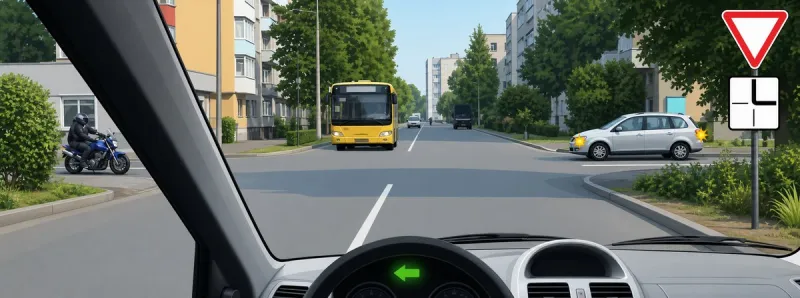
11. In this situation, when making a left turn, we must yield to:
All drivers.
Only the passenger-car driver.
The bus driver and the passenger-car driver.
Correct answer: The bus driver and the passenger-car driver.ABC · D/T
Why: Մեր դիմաց 2.4 «Զիջեք ճանապարհը» նշանն է 8.13 «Գլխավոր ճանապարհի ուղղությունը» ցուցանակով. գլխավոր ճանապարհն անցնում է դիմացի թևով (ավտոբուս) և թեքվում աջ (թեթև մարդատար)։ Ձախ շրջադարձի ժամանակ կետ 96-ով զիջում ենք երկուսին, իսկ ձախի մոտոցիկլը մյուս երկրորդական թևից է և, մեր ձախում լինելով, զիջում է մեզ (կետ 97, 98). ավտոբուսի և թեթև մարդատարի վարորդներին։
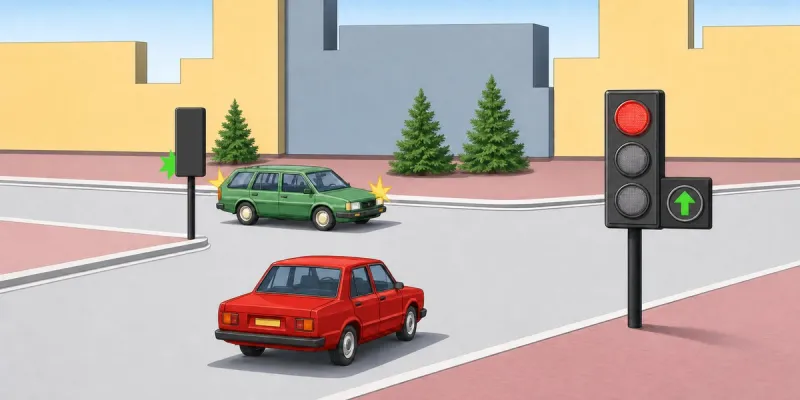
Why: Լուսացույցի հիմնական ազդանշանը կարմիր է, միացված է կանաչ լրացուցիչ սեկցիայի սլաքը, նշաններ չկան։ Կարմիր ավտոմոբիլն ընթանում է կարմիրի հետ միացված սլաքով, ուստի կետ 91-ով պետք է զիջի այլ ուղղությունից ընթացող կանաչ ավտոմոբիլին։
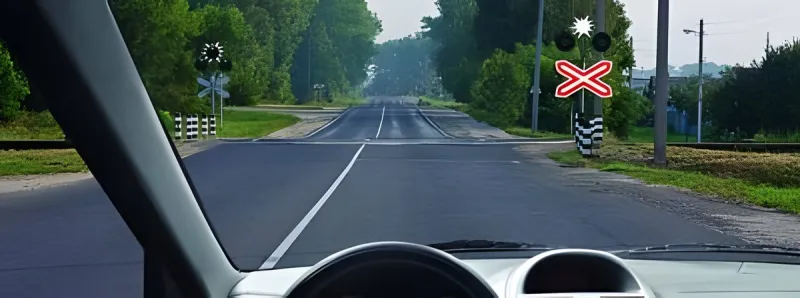
13. Proceeding across the railroad crossing is:
Permitted.
Prohibited.
Correct answer: Permitted.ABC · D/T
Why: Գծանցը նշված է 1.3.1 «Միագիծ երկաթուղի» նշանով, և գծանցի լուսացույցի լուսնասպիտակ թարթող ազդանշանն է միացված։ Կետ 15-ով լուսնասպիտակ թարթող ազդանշանը թույլատրում է գծանցով երթևեկությունը, ուստի գծանցն անցնելը թույլատրված է։
14. If traffic across a railroad crossing is prohibited and there are no traffic signals, traffic signs, pavement markings, or barrier gate, the driver must stop:
At least 5 m from the nearest rail.
At least 7 m from the nearest rail.
At least 10 m from the nearest rail.
Correct answer: At least 10 m from the nearest rail.ABC · D/T
Why: Կետ 111-ով, երբ բացակայում են լուսացույցը, նշանները, գծանշումն ու ուղեփակոցը, վարորդը կանգնում է մոտակա ռելսից ոչ պակաս, քան 10 մ հեռավորության վրա։
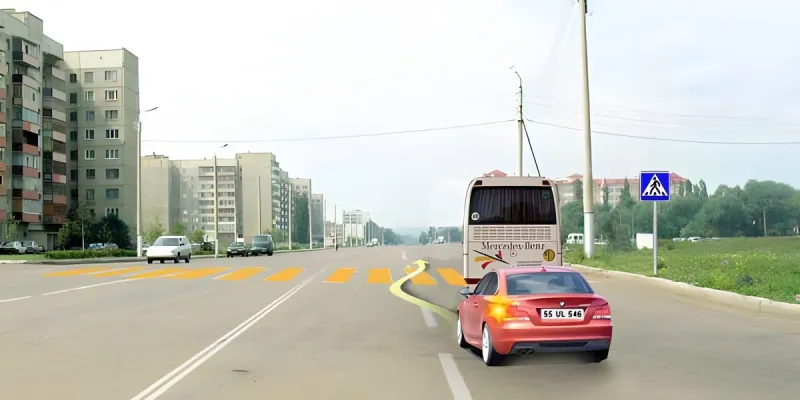
15. The bus has stopped to yield to a pedestrian. In this situation, is the passenger-car driver violating the requirements of the traffic rules?
Yes.
No.
Correct answer: Yes.ABC
Why: Ավտոբուսը կանգ է առել հետիոտնային անցումից (նշան 5.19.1, «զեբր») առաջ՝ հետիոտնին զիջելու համար։ Կետ 104-ի համաձայն՝ հարևան շարքով ընթացող թեթև մարդատարի վարորդը կարող է շարունակել միայն համոզվելով, որ ավտոբուսի առջևում հետիոտներ չկան, ուստի խախտում է։
Permitted only for persons accompanying the cargo.
Correct answer: Prohibited.ABC
Why: Կետ 158.1-ով մարդկանց փոխադրումը բեռնատար կցորդում արգելվում է՝ առանց բացառությունների։
17. A driver is prohibited from:
Crossing a railroad crossing at a speed greater than 30 km/h.
Crossing a railroad crossing at a speed below 30 km/h.
Proceeding across a railroad crossing, without the permission of the head of the railroad track section, in slow-moving vehicles with a speed below 8 km/h or in tractors coupled to sledges.
Correct answer: Proceeding across a railroad crossing, without the permission of the head of the railroad track section, in slow-moving vehicles with a speed below 8 km/h or in tractors coupled to sledges.ABC · D/T
Why: Կետ 114.4-ով արգելվում է առանց երկաթգծի ուղեմասի պետի թույլտվության գծանցով անցնել 8 կմ/ժ-ից ցածր արագությամբ դանդաղընթաց մեքենաներով և տափանների հետ կցված տրակտորներով։ Գծանցի համար 30 կմ/ժ կանոն չկա։
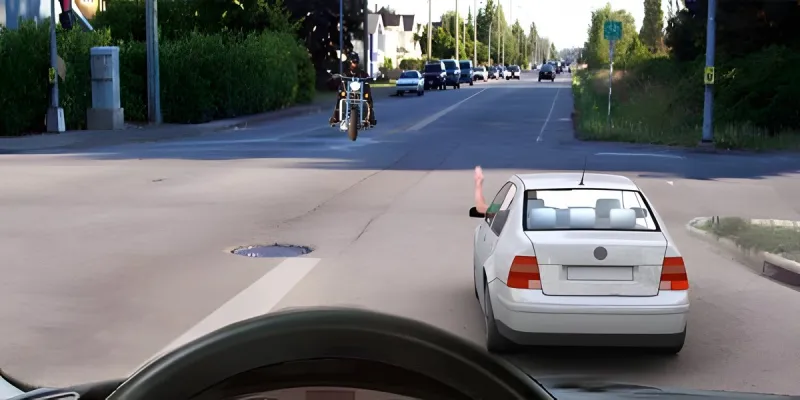
18. What does the hand signal given by the passenger-car driver indicate?
The driver is making a right turn.
The driver is continuing straight ahead.
The driver is braking in order to yield to the motorcycle.
Correct answer: The driver is making a right turn.ABC · D/T
Why: Կետ 37-ի համաձայն՝ արմունկում ուղիղ անկյան տակ դեպի վեր ծալված ձախ ձեռքն աջ շրջադարձի ազդանշանն է, ուստի թեթև մարդատարի վարորդն աջ շրջադարձ է կատարում։
19. The hazard warning lights on a vehicle must be activated:
In the event of a traffic accident.
During towing, on the towed motor vehicle.
In the event of a forced stop where stopping is prohibited.
In all of the listed cases.
Correct answer: In all of the listed cases.ABC · D/T
Why: Կետ 22-ով վթարային լուսային ազդանշանը միացվում է պատահարի դեպքում (22.1), քարշակվող մեքենայի վրա (22.4) և կանգառն արգելված տեղերում հարկադրված կանգառի դեպքում (22.2)։ Բոլոր երեքը ցանկում են։
20. How long may a tourniquet used to stop bleeding remain in place?
In warm weather, no more than half an hour; in cold weather, no more than one hour.
In warm weather, no more than one hour; in cold weather, no more than half an hour.
There is no limit on how long the tourniquet may remain in place.
Correct answer: In warm weather, no more than one hour; in cold weather, no more than half an hour.ABC · D/T
Why: Առաջին օգնություն. արյունահոսությունը դադարեցնող լարանը կարող է կապված մնալ տաք եղանակին ոչ ավելի, քան 1 ժամ, ցուրտ եղանակին՝ ոչ ավելի, քան կես ժամ. ավելի երկար հյուսվածքները մեռուկանում են։
In Varordakan Tester the same tests are taken without hints, wrong answers are collected automatically, and there is an exam simulation (20 questions, 30 minutes, pass at 18), a 3D intersection simulator, video lessons and an AI assistant that cites the Traffic Rules point. Free.
Sources: questions from the official bank of the Road Police of Armenia (roadpolice.am, edition of 2 October 2026); rule points from the Traffic Rules of the Republic of Armenia (arlis.am). Varordakan Tester is an independent educational app, not affiliated with the Police of Armenia.