Updated 2026-10-13 · official question bank of 2 October 2026
Test 32, Categories D/T (bus, trolleybus): 20 questions from the official bank of 2 October 2026 across all 10 topics. Under every question: the correct answer, the explanation (in Armenian) and the signs it mentions. In the app the same test is taken without hints, and the exam simulation runs on a 30-minute timer.
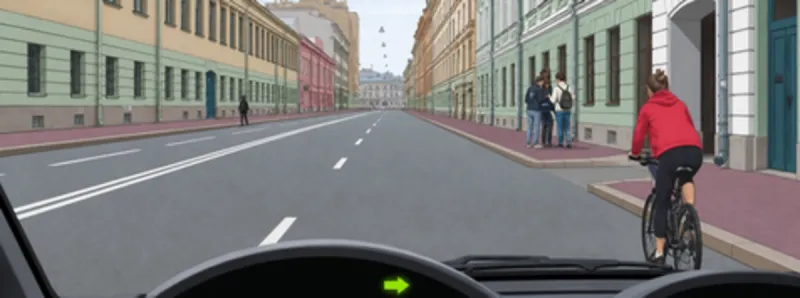
1. When entering a yard by making a right turn, we must yield to:
Pedestrians only.
The bicyclist only.
No one.
The bicyclist and the pedestrians.
Correct answer: The bicyclist and the pedestrians.ABC · D/T
Why: Կետ 38-ի համաձայն՝ ճանապարհից մերձակա տարածք (բակ) մուտք գործելիս վարորդը պետք է ճանապարհը զիջի հեծանվորդներին և խոչընդոտ չստեղծի հետիոտների համար, ուստի զիջում ենք և՛ հեծանվորդին, և՛ հետիոտներին։
2. A roundabout is established at the intersection. The roadway on which you are approaching the intersection has two traffic lanes. When entering the intersection to make a turn, which lane are you required to occupy?
The right lane.
The left lane.
Either the right or the left lane.
Correct answer: Either the right or the left lane.ABC · D/T
Why: Կետ 40-ով շրջադարձից առաջ պետք է նախապես զբաղեցնել եզրային գոտին, բացառությամբ թվարկված դեպքերի։ Շրջանաձև երթևեկությամբ խաչմերուկ մուտք գործելը (40.1) այդ բացառություններից է, ուստի կարելի է մուտք գործել և՛ աջ, և՛ ձախ գոտուց։
3. When entering an adjacent area, the driver must yield to:
Pedestrians only.
Bicyclists only.
Bicyclists and must not interfere with pedestrians.
Correct answer: Bicyclists and must not interfere with pedestrians.ABC · D/T
Why: Կետ 38-ով ճանապարհից մերձակա տարածք մուտք գործելիս վարորդը զիջում է հեծանվորդներին, և երկու դեպքում էլ չպետք է խոչընդոտ ստեղծի հետիոտների համար։
4. According to the Law of the Republic of Armenia on Ensuring Road Traffic Safety, a public transit vehicle is:
A vehicle that operates along a route, has designated stops, and carries passengers and/or baggage, including a tram, trolleybus, or bus, as well as a passenger taxi.
A vehicle that operates along a route, has designated stops, and carries passengers and/or baggage, including a tram, trolleybus, or bus.
A vehicle operating on a tourist route and carrying passengers and/or baggage.
Correct answer: A vehicle that operates along a route, has designated stops, and carries passengers and/or baggage, including a tram, trolleybus, or bus.D/T
Why: ՀՀ օրենքի համաձայն՝ ընդհանուր օգտագործման տրանսպորտային միջոց է կանգառի կետեր ունեցող երթուղով շարժվող, ուղևորներ և (կամ) ուղեբեռ փոխադրող տրանսպորտային միջոցը. զբոսաշրջային երթուղով շարժվողն այդպիսին չէ։
5. A bus may not be operated if:
The total steering-system play of a bus with a maximum authorized mass exceeding 5 metric tons is 15 degrees.
The total steering-system play of a bus built on the chassis of a passenger car is 15 degrees.
In both cases.
Correct answer: The total steering-system play of a bus built on the chassis of a passenger car is 15 degrees.D/T
Why: Ավտոբուսների ղեկի գումարային խաղացքի սահմանը 20 աստիճան է, իսկ թեթև մարդատարի բազայի վրա պատրաստված ավտոբուսներինը՝ 10 աստիճան (2.1)։ 15 աստիճանը անսարքություն է միայն թեթև մարդատարի բազայով ավտոբուսի համար։
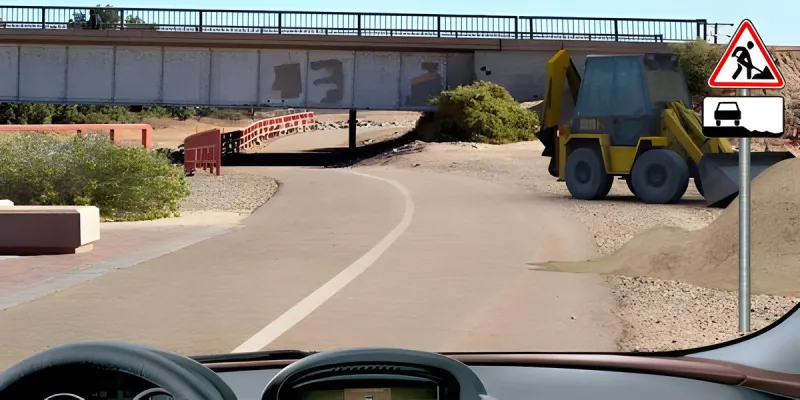
6. What do these traffic signs indicate?
Entering the shoulder is dangerous because of roadwork.
Roadwork is being carried out on the road.
Correct answer: Entering the shoulder is dangerous because of roadwork.ABC · D/T
Why:1.25 «Ճանապարհային աշխատանքներ» նշանը 8.12 «Վտանգավոր կողնակ» ցուցանակով նախազգուշացնում է, որ նորոգման աշխատանքների պատճառով կողնակ մուտք գործելը վտանգավոր է։
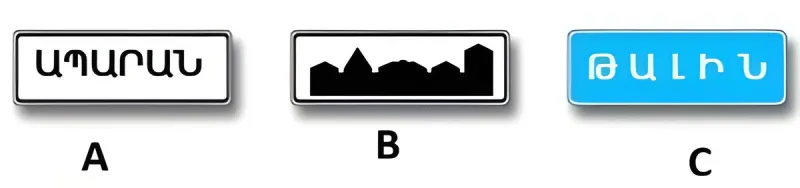
7. Within the area of effect of which sign do the traffic rules applicable in populated areas not apply?
Only A.
Only C.
B and C.
Correct answer: Only C.ABC · D/T
Why: Բնակավայրում երթևեկության կանոնները չեն գործում միայն C նշանի՝ կապույտ հիմնագույնով 5.25 «Բնակավայրի սկիզբ»-ի ազդման գոտում։ A-ն (բնակավայրի անվանումով) և B-ն (ուրվագծով) սպիտակ հիմնագույնով 5.23.1 և 5.23.2 «Բնակավայրի սկիզբ» նշաններն են, որոնցից հետո բնակավայրի կանոնները գործում են։
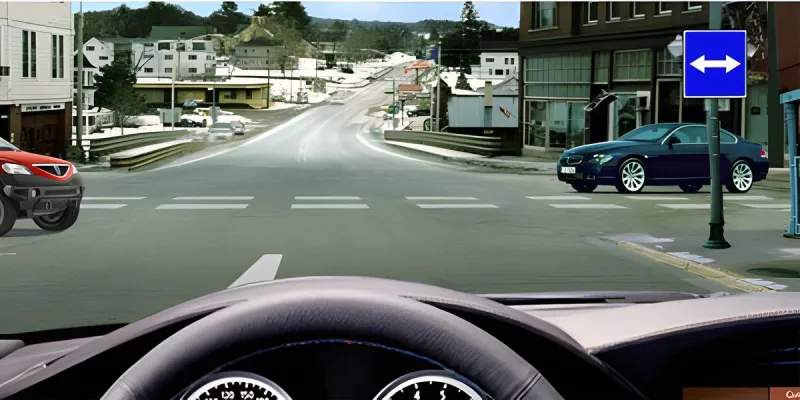
At the intersection, traffic must proceed to the left or to the right.
Reversible traffic is established on the intersecting road.
One-way traffic is established on the intersecting road.
Correct answer: Reversible traffic is established on the intersecting road.ABC · D/T
Why: Սա 5.10 «Ելք դեպի դարձափոխային երթևեկությամբ ճանապարհ» նշանն է. այն ցույց է տալիս, որ հատվող ճանապարհին կազմակերպված է դարձափոխային երթևեկություն։
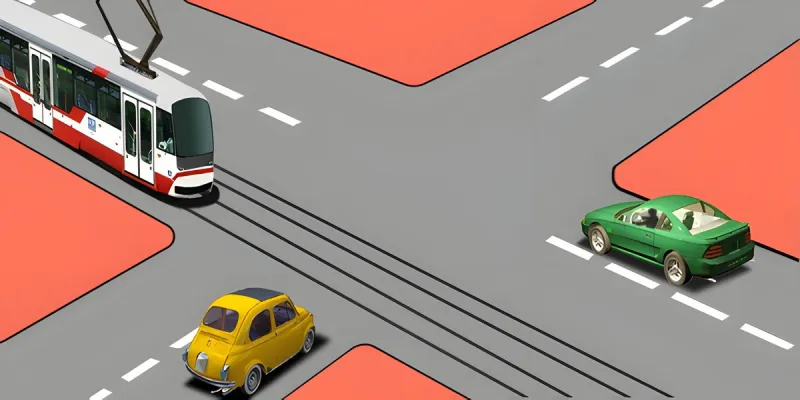
9. The vehicles will proceed through the intersection in the following order:
The tram, the yellow automobile, the green automobile.
The tram and the green automobile, then the yellow automobile.
The green automobile, the yellow automobile, the tram.
Correct answer: The tram and the green automobile, then the yellow automobile.ABC · D/T
Why: Նշաններ և լուսացույց չկան՝ հավասարազոր ճանապարհների չկարգավորվող խաչմերուկ (կետ 95)։ Տրամվայն առավելություն ունի ոչ ռելսագնացների նկատմամբ՝ անկախ ուղղությունից (կետ 98)։ Դեղին մեքենային կանաչը մոտենում է աջից, ուստի դեղինը զիջում է (կետ 98)։ Հերթականությունը՝ տրամվայն ու կանաչը, ապա դեղինը։
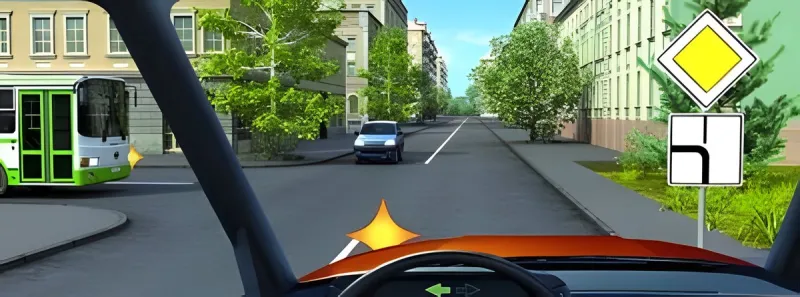
10. To whom must you yield in this situation?
Only to the bus.
To the passenger car.
To no one.
Correct answer: To no one.ABC · D/T
Why: Մեր դիմաց 2.1 «Գլխավոր ճանապարհ» նշանն է 8.13 «Գլխավոր ճանապարհի ուղղությունը» ցուցանակով. գլխավոր ճանապարհն անցնում է մեր թևով և թեքվում ձախ՝ ավտոբուսի թևը։ Ավտոբուսը գլխավոր ճանապարհով է, բայց մոտենում է մեր ձախից և կետ 97, 98-ով զիջում է մեզ, իսկ դիմացի թեթև մարդատարը երկրորդական ճանապարհից է (կետ 96). ոչ մեկին չենք զիջում։
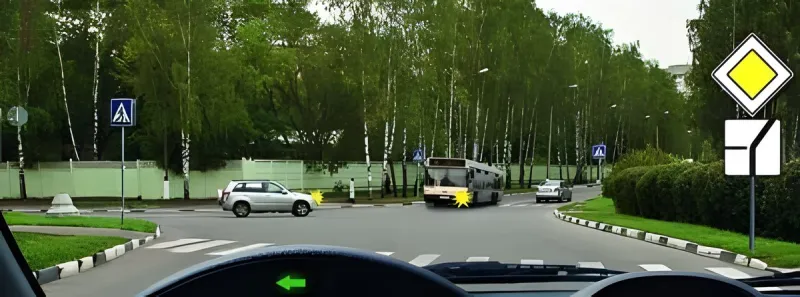
11. When making a left turn, to whom must the driver yield?
The bus driver.
The passenger-car driver.
No one.
Correct answer: The bus driver.ABC · D/T
Why: Մեր դիմաց 2.1 «Գլխավոր ճանապարհ» նշանն է 8.13 «Գլխավոր ճանապարհի ուղղությունը» ցուցանակով. գլխավոր ճանապարհն անցնում է մեր թևով և թեքվում աջ՝ ավտոբուսի թևը, ձախի թեթև մարդատարը երկրորդական ճանապարհի վրա է։ 5.19.1 «Հետիոտնային անցում» նշանները միայն անցումներն են նշում։ Ձախ շրջադարձի ժամանակ զիջում ենք աջից մոտեցող ավտոբուսին (կետ 97, 98), իսկ թեթև մարդատարը կետ 96-ով զիջում է մեզ. միայն ավտոբուսի վարորդին։
12. If the traffic controller’s right arm is extended forward, traffic of non-rail vehicles from the controller’s left side is permitted:
Straight ahead and to the left.
In all directions.
Correct answer: In all directions.ABC · D/T
Why: Կետ 16.3-ով, երբ կարգավորողի աջ ձեռքն առաջ է պարզված, նրա ձախ կողմից ոչ ռելսագնաց տրանսպորտային միջոցների երթևեկությունը թույլատրվում է բոլոր ուղղություններով։
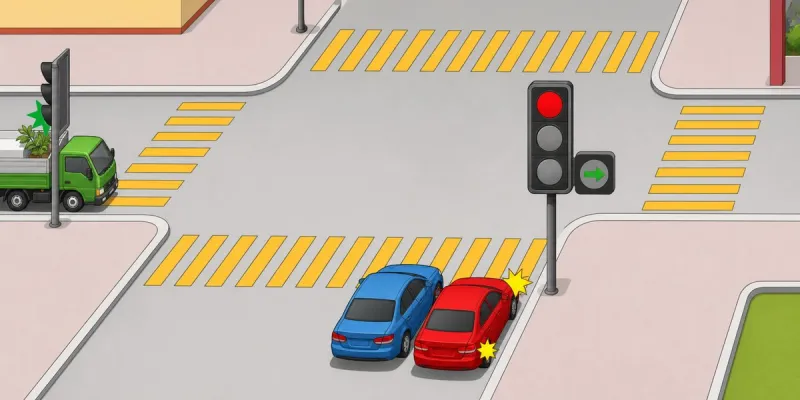
13. Which vehicle will proceed through the intersection first?
The red automobile.
The blue automobile.
The green automobile.
Correct answer: The green automobile.ABC · D/T
Why: Երկու լուսացույց, նշաններ չկան, անցումները նշված են 1.14.1 «Զեբր» գծանշմամբ։ Կանաչ ավտոմոբիլն ընթանում է հիմնական կանաչով (կետ 7, 1-ին ենթակետ)։ Կարմիրն աջ է թեքվում կարմիրի հետ միացված լրացուցիչ սեկցիայի սլաքով և կետ 91-ով զիջում է այլ ուղղություններից ընթացողներին, կապույտի ազդանշանը կարմիր է (կետ 7, 5-րդ ենթակետ)։ Առաջինն անցնում է կանաչը։
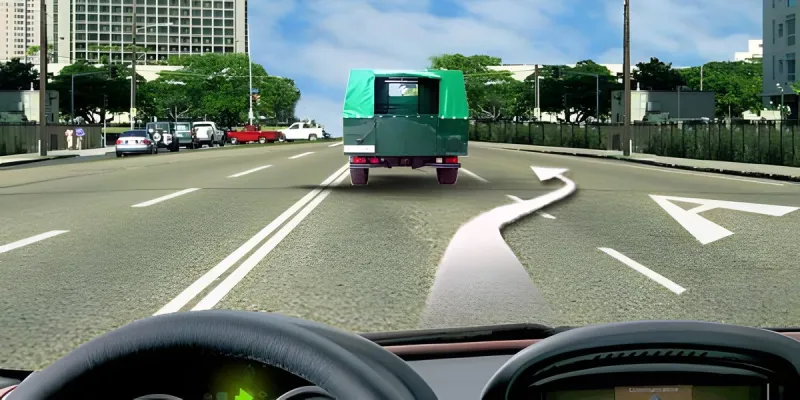
14. Is it permitted to continue in the direction indicated by the arrow?
Prohibited.
Permitted in all cases.
Permitted for the purpose of stopping to drop off passengers.
Permitted for the purpose of passing the truck.
Correct answer: Permitted for the purpose of stopping to drop off passengers.ABC · D/T
Why: Սլաքն ուղղված է դեպի «A» գոտին (1.23.1 գծանշում), որը բաժանված է ընդհատվող գծով։ Կետ 124-ի համաձայն՝ նման գոտի թույլատրվում է մուտք գործել միայն ուղևորներ իջեցնելու-նստեցնելու կամ շրջադարձի համար, ոչ թե վազանցի։
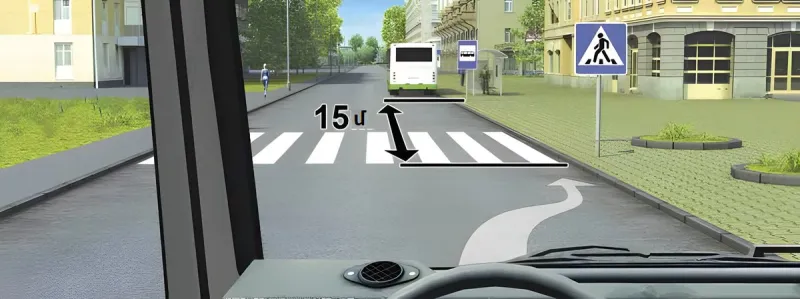
15. Is the driver of a tourist bus permitted to stop at the indicated location if the distance to the pedestrian crossing is 3 meters?
Yes.
No.
Correct answer: No.D/T
Why: Կետ 84.4-ով կանգառն արգելվում է հետիոտնային անցումների վրա և շարժման ուղղությամբ անցումից առաջ՝ 5 մ-ից մոտ վայրում։ 3 մ-ը 5 մ-ից պակաս է, ուստի զբոսաշրջային ավտոբուսին այնտեղ կանգառ կատարելն արգելվում է։
Exceeding the maximum speed specified by the technical characteristics of the vehicle.
Exceeding the speed specified by the “Speed Limit” identification sign displayed on the vehicle.
Driving at an unnecessarily low speed and thereby impeding the movement of other vehicles.
Braking suddenly unless necessary to prevent a traffic accident.
All of the above actions.
Correct answer: All of the above actions.ABC · D/T
Why: Կետ 72-ը արգելում է բոլոր չորսը՝ գերազանցել տեխնիկական բնութագրի արագությունը (72.1), «Արագության սահմանափակում» նշանի արագությունը (72.2), անհարկի շատ ցածր արագությամբ ընթանալ (72.4) և առանց անհրաժեշտության կտրուկ արգելակել (72.5)։
17. Under icy road conditions, towing a bus is prohibited:
With a flexible coupling.
With a rigid coupling.
Correct answer: With a flexible coupling.D/T
Why: Կետ 143.3-ով մերկասառույցի պայմաններում արգելվում է ճկուն կցիչով քարշակումը, կոշտ կցիչով քարշակելը թույլատրվում է։
18. The following combination of horn signals constitutes the general alarm signal given at a railroad crossing:
Two long and two short.
One long and three short.
Three long and three short.
Three long and one short.
Correct answer: One long and three short.ABC · D/T
Why: Կետ 112.4-ով երկաթուղային գծանցի վրա ընդհանուր տագնապի ազդանշանն է մեկ երկար և երեք կարճ ձայնային ազդանշանների համակցությունը։
19. What must the driver follow when approaching a railroad crossing?
The position of the barrier gate and the traffic signals.
The requirements of traffic signs and pavement markings.
The instructions of the railroad crossing attendant.
All of the listed requirements.
Correct answer: All of the listed requirements.ABC · D/T
Why: Կետ 110-ը թվարկում է բոլորը. գծանցին մոտենալիս վարորդը ղեկավարվում է հերթապահի ցուցումներով, լուսացույցի, նշանների և գծանշման պահանջներով ու ուղեփակոցի դիրքով։
20. You see a person lying on the ground and notice a bone protruding from the lower leg with bleeding. If the scene is safe, what should be done first?
Call emergency medical services.
Check consciousness and breathing.
Immobilize the leg.
Correct answer: Check consciousness and breathing.ABC · D/T
Why: Առաջին օգնություն. անվտանգ վայրում առաջին հերթին ստուգում են գիտակցությունն ու շնչառությունը. կյանքին սպառնացող վիճակները առաջնային են կոտրվածքից և ահազանգից։
In Varordakan Tester the same tests are taken without hints, wrong answers are collected automatically, and there is an exam simulation (20 questions, 30 minutes, pass at 18), a 3D intersection simulator, video lessons and an AI assistant that cites the Traffic Rules point. Free.
Sources: questions from the official bank of the Road Police of Armenia (roadpolice.am, edition of 2 October 2026); rule points from the Traffic Rules of the Republic of Armenia (arlis.am). Varordakan Tester is an independent educational app, not affiliated with the Police of Armenia.