Updated 2026-11-14 · official question bank of 6 November 2026
Test 57, Categories D/T (bus, trolleybus): 20 questions from the official bank of 6 November 2026. Under every question: the correct answer, the explanation (in Armenian) and the signs it mentions. In the app the same test is taken without hints, and the exam simulation runs on a 30-minute timer.
1. According to the Law of the Republic of Armenia on Ensuring Road Traffic Safety, a pedestrian is:
A person who is outside a vehicle and on the road, except a person authorized to perform work on the road and performing that work in accordance with the procedure established by law.
A person who is outside a vehicle and on the road, including a person authorized to perform work on the road and performing that work in accordance with the procedure established by law.
Correct answer: A person who is outside a vehicle and on the road, except a person authorized to perform work on the road and performing that work in accordance with the procedure established by law.ABC · D/T
Why: ՀՀ օրենքի համաձայն՝ հետիոտն է տրանսպորտային միջոցից դուրս՝ ճանապարհի վրա գտնվող անձը, որը ճանապարհին աշխատանք չի կատարում։
2. According to the Law of the Republic of Armenia 'On Ensuring Road Traffic Safety', what is considered parking?
Intentionally bringing a vehicle to a standstill for more than five minutes when this is not connected with passengers boarding or alighting, or with loading or unloading.
Intentionally bringing a vehicle to a standstill for more than five minutes, except when necessary to avoid a collision with another road user or an obstacle, for passengers to board or alight and/or for loading or unloading, or in other cases provided for by law.
Correct answer: Intentionally bringing a vehicle to a standstill for more than five minutes, except when necessary to avoid a collision with another road user or an obstacle, for passengers to board or alight and/or for loading or unloading, or in other cases provided for by law.D/T
Why: ՀՀ օրենքի համաձայն՝ կայանում է տրանսպորտային միջոցը 5 րոպեից ավելի կանխամտածված անշարժ վիճակի բերելը, բացառությամբ այլ մասնակցի կամ արգելքի հետ ընդհարումը կանխելու, ուղևորի նստելու, իջնելու, բեռնելու, բեռնաթափելու և օրենսդրությամբ նախատեսված այլ դեպքերի։ Առաջին տարբերակը չի ներառում այդ բոլոր բացառությունները։
3. A vehicle may not be operated if:
The engine crankcase ventilation system is not leak-tight.
The engine fuel system is not leak-tight.
In both cases.
Correct answer: In both cases.ABC · D/T
Why: Հենատուփի (կարտերի) օդափոխության համակարգի հերմետիկության խախտումը 5.4 ենթակետով անսարքություն է, սնման համակարգի հերմետիկության խախտումը՝ 5.2 ենթակետով։ Երկու դեպքում էլ շահագործումն արգելվում է։
4. A vehicle may not be operated if:
Lamps or lenses are missing from the lighting devices.
Lenses or lamps that do not correspond to the type of the lighting device are used.
In both cases.
Correct answer: In both cases.ABC · D/T
Why:3.4 ենթակետը ներառում է և՛ լամպերի կամ ցրիչների բացակայությունը, և՛ լուսային սարքի տեսակին չհամապատասխանող լամպերի ու ցրիչների օգտագործումը։ Երկու դեպքում էլ շահագործումն արգելվում է։
5. The operation of a bus is prohibited if:
The remaining tyre tread depth is 2.2 mm.
The hydraulic brake system is not airtight.
In both cases.
Correct answer: The hydraulic brake system is not airtight.D/T
Why: Հիդրավլիկ արգելակային հաղորդակի հերմետիկության խախտումը 1.2 ենթակետով անսարքություն է։ 2,2 մմ պահպանաշերտը ավտոբուսների 2,0 մմ նվազագույնից (4.1) բարձր է, ուստի միայն երկրորդ տարբերակը։
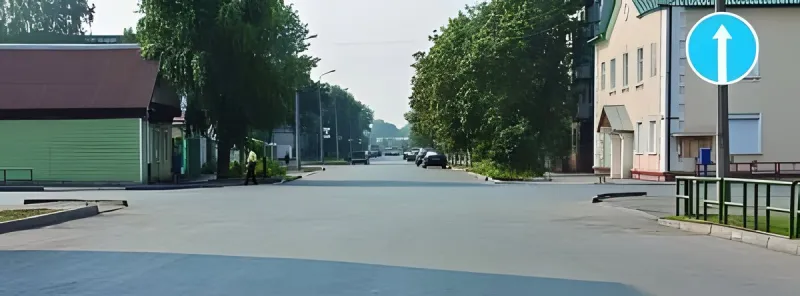
6. What should you do if you need to reverse your direction of movement?
Make a U-turn at this intersection.
Proceed straight through the intersection and then make a U-turn.
Both options are permitted.
Correct answer: Proceed straight through the intersection and then make a U-turn.ABC · D/T
Why: Խաչմերուկից առաջ տեղադրված 4.1.1 «Երթևեկությունն ուղիղ» նշանն արգելում է հետադարձն այս խաչմերուկում։ Նշանը գործում է միայն այդ հատման վրա, ուստի խաչմերուկն ուղիղ անցնելուց հետո հետադարձը թույլատրվում է։
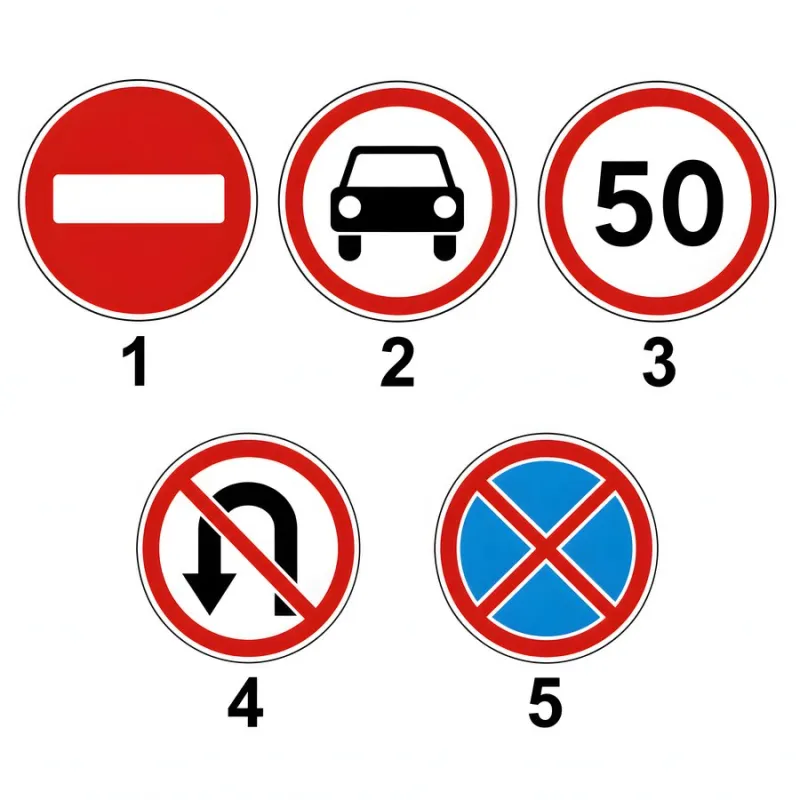
7. Which of the following road signs must the driver of a public transport vehicle operating on a regular route comply with?
1 and 3
2 and 4
4 and 5
3 and 5
1 and 5
Correct answer: 3 and 5D/T
Why: Պաշտոնական պատասխանով ընդհանուր օգտագործման տրանսպորտային միջոցի վարորդը պետք է կատարի 3-րդ (3.24 «Առավելագույն արագության սահմանափակում») և 5-րդ (3.27 «Կանգառն արգելվում է») նշանների պահանջները, իսկ 1-ին (3.1), 2-րդ (3.3) և 4-րդ (3.19) նշանների ազդեցությունը նրա վրա չի տարածվում։
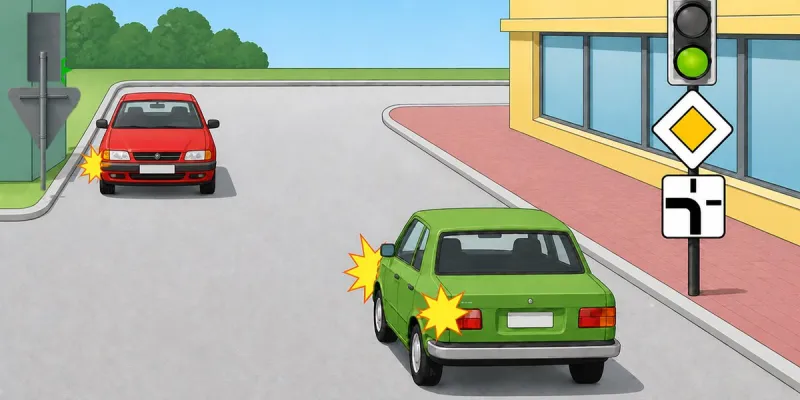
8. The red automobile will proceed through the intersection:
First.
Second.
Correct answer: First.ABC · D/T
Why: Նկարում և՛ աշխատող լուսացույց է (կանաչ), և՛ 2.1 «Գլխավոր ճանապարհ» նշան 8.13 ցուցանակով։ Աշխատող լուսացույցի դեպքում խաչմերուկը կարգավորվող է (կետ 89), և լուսացույցի ազդանշանները գերակայում են առավելության նշաններին (կետ 173). նշանները հաշվի չեն առնվում։ Կանաչ ազդանշանի դեպքում ձախ շրջադարձ կատարող կանաչը կետ 90-ով զիջում է հանդիպակաց ուղիղ գնացող կարմիրին. կարմիրն անցնում է առաջինը։
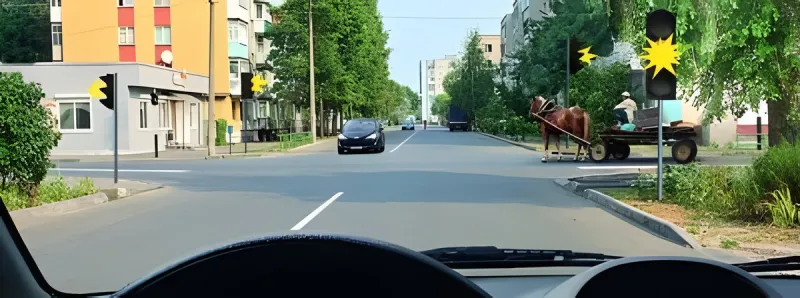
We will proceed through the intersection after yielding to the driver of the animal-drawn cart.
You will proceed through the intersection simultaneously with the passenger car.
Correct answer: We will proceed through the intersection after yielding to the driver of the animal-drawn cart.ABC · D/T
Why: Լուսացույցը դեղին թարթող է. այն թույլատրում է երթևեկությունը և խաչմերուկը դարձնում չկարգավորվող (կետ 7, 4-րդ ենթակետ, կետ 95), ուստի կանաչին սպասել պետք չէ։ Առավելության նշաններ չկան, ուստի կետ 98-ով զիջում ենք աջից մոտեցող լծասայլին և դրանից հետո անցնում խաչմերուկը։
10. What is the maximum permitted speed for tourist buses on motorways?
70 km/h.
90 km/h.
100 km/h.
110 km/h.
Correct answer: 90 km/h.D/T
Why: Կետ 69.3-ով ավտոմայրուղիներով ավտոբուսներին թույլատրվում է երթևեկել ոչ ավելի, քան 90 կմ/ժ արագությամբ։
11. Traffic is prohibited for:
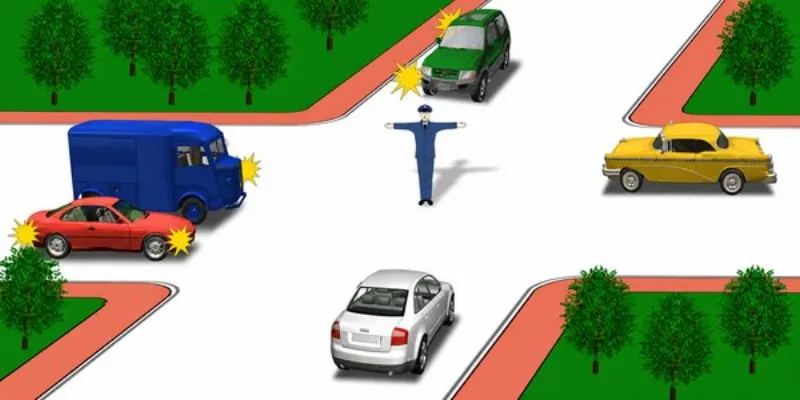
The green and white automobiles.
The white, blue, and green automobiles.
The white and yellow automobiles.
The green and yellow automobiles.
Correct answer: The white, blue, and green automobiles.ABC · D/T
Why: Կարգավորողի ձեռքերը պարզված են կողմ, լուսացույց և նշաններ չկան։ Կրծքի կողմի սպիտակին և թիկունքի կանաչին երթևեկությունն արգելված է (կետ 16, 2-րդ ենթակետ «բ»), կողքի կապույտ բեռնատարը ձախ է թեքվում, ինչը կողքից չի թույլատրվում («ա»)։ Աջ թեքվող կարմիրն ու ուղիղ գնացող դեղինը կարող են անցնել։ Սպիտակին, կապույտին և կանաչին։
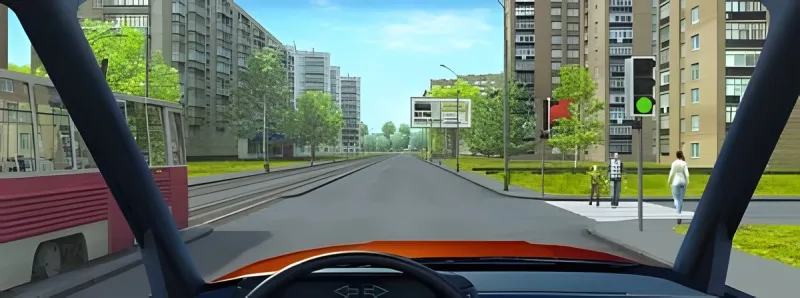
12. In which case may you proceed through the intersection without yielding to another road user?
When proceeding straight ahead.
When making a right turn.
When making a left turn.
Correct answer: When proceeding straight ahead.ABC · D/T
Why: Կանաչ լուսացույց, ձախում տրամվայ, աջի կողմնային փողոցի 1.14.1 «Զեբր» անցումին՝ հետիոտներ, նշաններ չկան։ Ուղիղ անցնելիս ոչ մեկի հետ չենք հատվում։ Ձախ շրջադարձի դեպքում պետք է զիջեինք տրամվային (կետ 92), աջ շրջադարձի դեպքում՝ անցնող հետիոտներին (կետ 87)։ Միայն ուղիղ անցնելու դեպքում։
13. If a bus displays a 'Speed Limit' identification sign, is its driver permitted to exceed the speed shown?
Yes, but only on a road section where a road sign indicates a higher speed limit.
No, exceeding the speed shown on the identification sign is prohibited.
Yes, when driving on a motorway.
Yes, by up to 20 km/h if necessary to complete an overtaking manoeuvre.
Correct answer: No, exceeding the speed shown on the identification sign is prohibited.D/T
Why: Կետ 72.2-ով արգելվում է գերազանցել տրանսպորտային միջոցի վրա տեղադրված «Արագության սահմանափակում» ճանաչման նշանով նախատեսված արագությունը՝ անկախ ճանապարհի տեսակից կամ վազանցից։
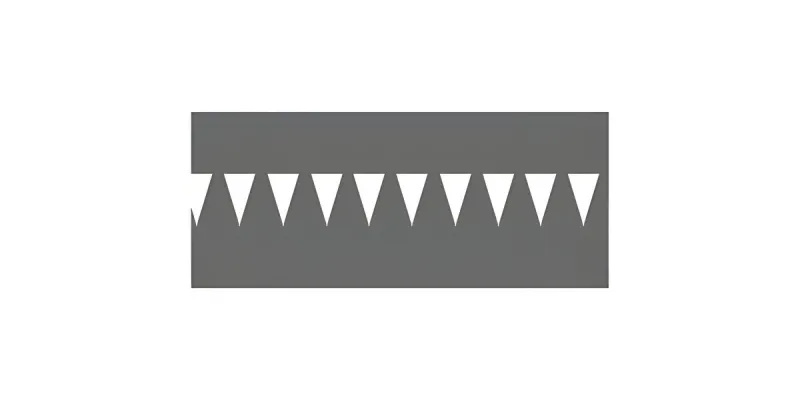
14. Where must the driver stop the vehicle when this pavement marking is present?
At the pavement marking.
On the pavement marking.
At least 5 m before the pavement marking.
Correct answer: At the pavement marking.ABC · D/T
Why: Սա 1.13 գծանշումն է (եռանկյունների շարք). ցույց է տալիս այն տեղը, որտեղ վարորդն անհրաժեշտության դեպքում պետք է կանգ առնի և զիջի հատող ճանապարհով երթևեկողներին։ Կանգ են առնում գծանշման մոտ, ոչ դրա վրա և ոչ 5 մ առաջ։
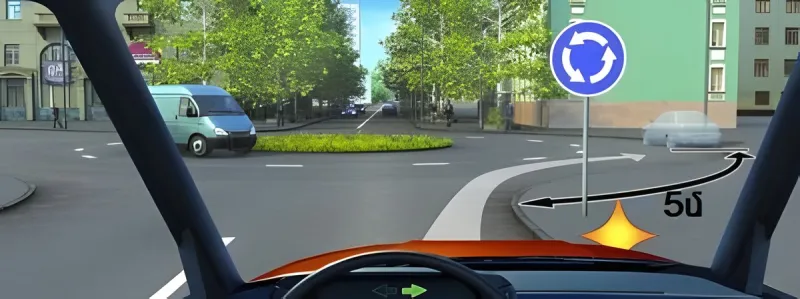
15. Is stopping permitted at the indicated location?
No.
Yes.
Correct answer: No.ABC · D/T
Why: Կանգառը նշված է շրջանաձև երթևեկությամբ խաչմերուկից (նշան 4.3) դուրս գալու տեղում՝ երթևեկելի մասերի հատման հատվածում, հատվող երթևեկելի մասի եզրից 5 մ-ից մոտ, ինչը կետ 84-ով արգելված է։
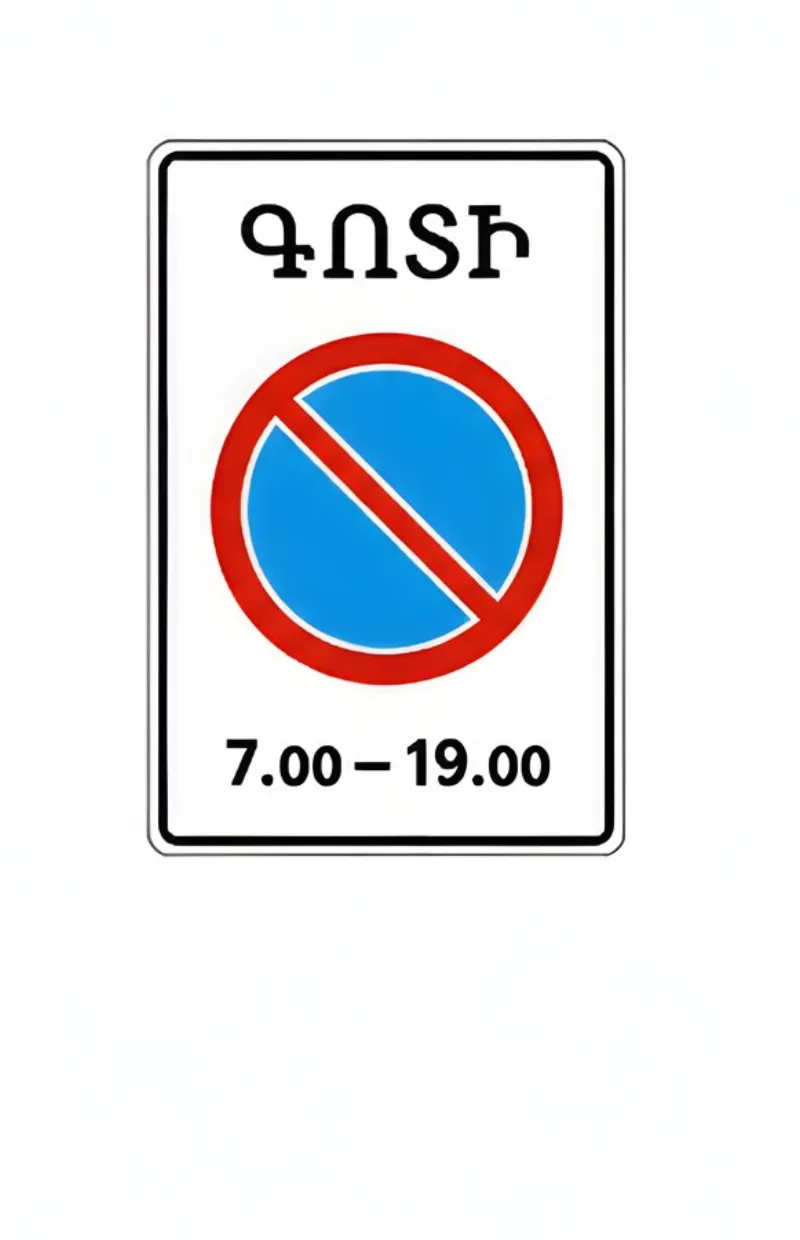
16. What is the main difference between a “Zone with Parking Restrictions” sign and ordinary prohibitory signs?
It prohibits both parking and stopping for any purpose.
It applies only to trucks.
It applies across the entire width of the road, on both sides, and its effect is not interrupted by an intersection.
Correct answer: It applies across the entire width of the road, on both sides, and its effect is not interrupted by an intersection.D/T
Why:5.27 «Կայանման սահմանափակումով գոտի» նշանը նշում է կայանումն արգելված տարածքի սկիզբը։ Ի տարբերություն սովորական արգելող նշանների, որոնք գործում են միայն ճանապարհի իրենց կողմում և մինչև մոտակա խաչմերուկը, գոտու նշանը տարածվում է ճանապարհի ամբողջ լայնությամբ (երկու կողմերում) և չի ընդհատվում խաչմերուկով՝ մինչև 5.28 «Կայանման սահմանափակումով գոտու վերջ» նշանը։
17. Are public transport vehicles permitted to stop outside designated stopping places?
Yes, at a passenger's request.
Yes, in the event of a forced stop.
Correct answer: Yes, in the event of a forced stop.D/T
Why: Կետ 85-ով ընդհանուր օգտագործման տրանսպորտային միջոցների կանգառն արգելվում է կանգառի կետերից դուրս՝ բացառությամբ հարկադրված կանգառի դեպքերի. ուղևորի պահանջը բացառություն չէ։
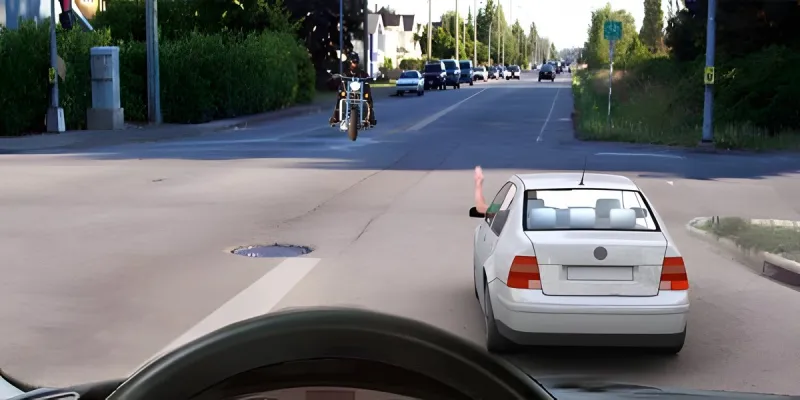
18. What does the hand signal given by the passenger-car driver indicate?
The driver is making a right turn.
The driver is continuing straight ahead.
The driver is braking in order to yield to the motorcycle.
Correct answer: The driver is making a right turn.ABC · D/T
Why: Կետ 37-ի համաձայն՝ արմունկում ուղիղ անկյան տակ դեպի վեր ծալված ձախ ձեռքն աջ շրջադարձի ազդանշանն է, ուստի թեթև մարդատարի վարորդն աջ շրջադարձ է կատարում։
19. Is a bus driver permitted to stop within the area of effect of a “No Stopping” sign by switching on the hazard warning lights?
Only public transport buses may do so to pick up or set down passengers.
Only in the event of a compulsory stop.
No, it is not permitted.
Correct answer: Only in the event of a compulsory stop.D/T
Why: Կետ 25-ով արգելվում է վթարային ազդանշանն օգտագործել կանգառն արգելված վայրերում կանգառ կատարելու համար, բացառությամբ հարկադրված կանգառի։ Ուստի 3.27 նշանի գոտում կանգառը թույլատրվում է միայն հարկադրված կանգառի դեպքում։
20. Is it permitted to drive with only the fog lights switched on in conditions of poor visibility?
Yes, if they are factory-fitted.
Yes.
No. Dipped-beam or main-beam headlights must also be switched on.
Correct answer: No. Dipped-beam or main-beam headlights must also be switched on.D/T
Why: Կետ 127.1-ով անբավարար տեսանելիության պայմաններում մեխանիկական տրանսպորտային միջոցների վրա պետք է միացված լինի հեռահար կամ մոտակա լույսը, իսկ հակամառախուղային լապտերները (կետ 132) դրանց լրացում են։ Պաշտոնական պատասխանով միայն հակամառախուղային լապտերներով երթևեկելը չի թույլատրվում։
In Varordakan Tester the same tests are taken without hints, wrong answers are collected automatically, and there is an exam simulation (20 questions, 30 minutes, pass at 18), a 3D intersection simulator, video lessons and an AI assistant that cites the Traffic Rules point. Free.
Sources: questions from the official bank of the Road Police of Armenia (roadpolice.am, edition of 6 November 2026); rule points from the Traffic Rules of the Republic of Armenia (arlis.am). Varordakan Tester is an independent educational app, not affiliated with the Police of Armenia.