Tests › Topics
Topic 5. Passing intersections (with signs, without signs)
Updated 2026-10-13 · official question bank of 2 October 2026
Topic 5: "Passing intersections (with signs, without signs)". 214 questions from the official bank of 2 October 2026 (categories ABC and D/T), each with the correct answer and an explanation.
1. The vehicles will proceed through the intersection in the following order:
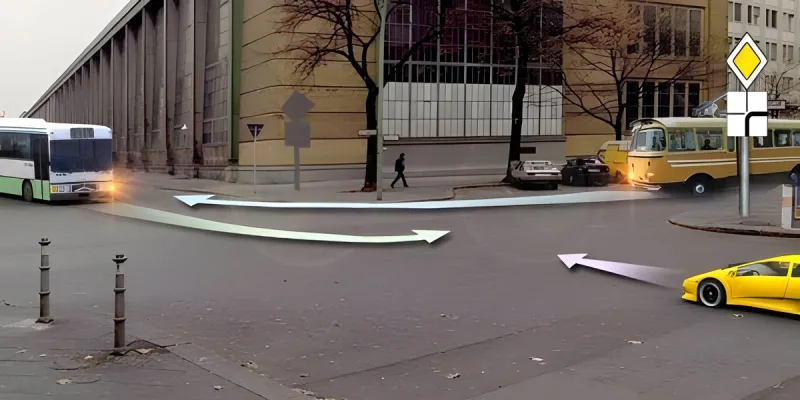
- The passenger car, the bus, then the trolleybus.
- The trolleybus and the bus, then the passenger car.
- The trolleybus, the passenger car, then the bus.
Correct answer: The trolleybus, the passenger car, then the bus. ABC · D/T
Why: Դեղին թեթև մարդատարի առջև
2.1 «Գլխավոր ճանապարհ» նշանն է
8.13 «Գլխավոր ճանապարհի ուղղություն» ցուցանակով. գլխավոր ճանապարհն անցնում է նրա թևով և թեքվում աջ՝ տրոլեյբուսի թևը, իսկ ավտոբուսը երկրորդական ճանապարհից է։ Գլխավոր ճանապարհով ընթացողները միմյանց նկատմամբ գործում են հավասարազոր խաչմերուկի կանոններով (կետ 97). տրոլեյբուսը մոտենում է թեթև մարդատարի աջից, ուստի այն զիջում է տրոլեյբուսին (կետ 98)։ Ավտոբուսը կետ 96-ով զիջում է երկուսին. տրոլեյբուս, թեթև մարդատար, ավտոբուս։
Signs in this question: 2.1, 8.13
In tests: ABC 27, ABC 52, D/T 22
2. Which vehicle will proceed through the intersection first?
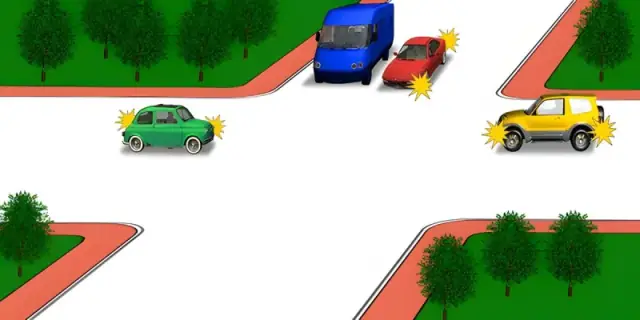
- The red automobile.
- The blue automobile.
- The yellow automobile.
- The green automobile.
Correct answer: The green automobile. ABC · D/T
Why: Նշաններ չկան՝ հավասարազոր ճանապարհների խաչմերուկ, կետ 98-ով զիջում են աջից մոտեցողին։ Կանաչի աջից ոչ ոք չկա, կապույտ ֆուրգոնը զիջում է կանաչին, դեղինը՝ ֆուրգոնին. կանաչն անցնում է առաջինը։
In tests: ABC 25, D/T 8
3. Which vehicle will proceed through the intersection last?
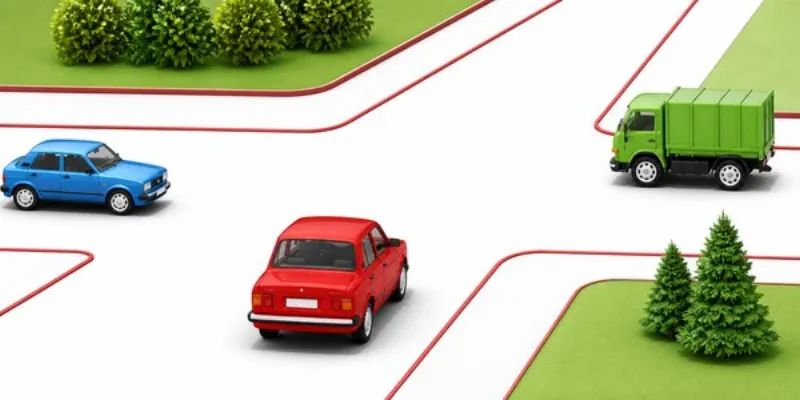
- The blue automobile.
- The green automobile.
- The red automobile.
Correct answer: The blue automobile. ABC · D/T
Why: Նշաններ չկան՝ հավասարազոր ճանապարհների խաչմերուկ, կետ 98-ով զիջում են աջից մոտեցողին։ Բեռնատարի աջից ոչ ոք չկա, կարմիրը զիջում է բեռնատարին, կապույտը՝ կարմիրին. կապույտն անցնում է վերջինը։
In tests: ABC 33, D/T 51
4. The blue automobile will proceed through the intersection:
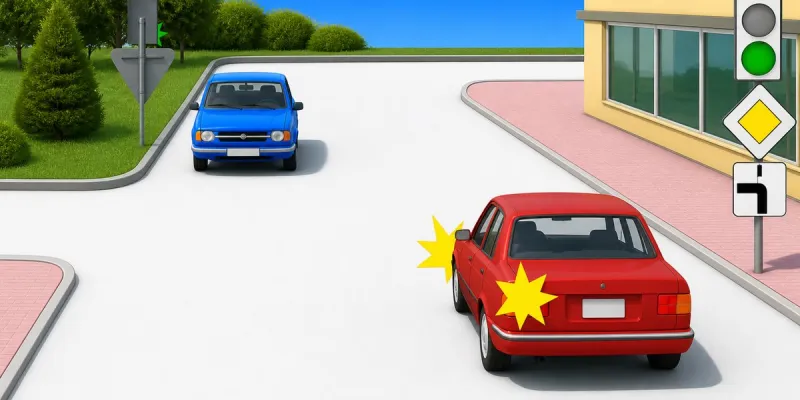
- First.
- Second.
Correct answer: First. ABC · D/T
Why: Նկարում և՛ աշխատող լուսացույց է (կանաչ), և՛
2.1 «Գլխավոր ճանապարհ» նշան
8.13 ցուցանակով։ Աշխատող լուսացույցի դեպքում խաչմերուկը կարգավորվող է (կետ 89), և լուսացույցի ազդանշանները գերակայում են առավելության նշանին (կետ 173)։ Կանաչով ձախ թեքվող կարմիրը կետ 90-ով զիջում է հանդիպակաց ուղիղ գնացող կապույտին. կապույտն անցնում է առաջինը։
Signs in this question: 2.1, 8.13
In tests: ABC 10, D/T 38
5. Which answer correctly states the order in which the vehicles will proceed through the intersection?
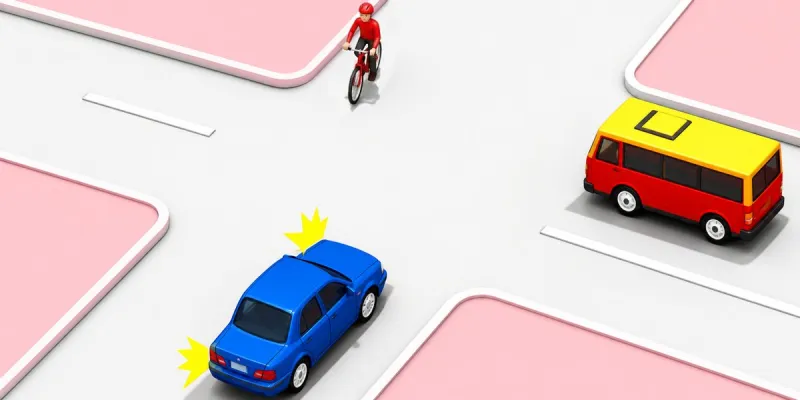
- The bus, the passenger car, the bicycle.
- The passenger car, the bus, the bicycle.
- The bicycle, the bus, the passenger car.
Correct answer: The bicycle, the bus, the passenger car. ABC · D/T
Why: Նշաններ չկան՝ հավասարազոր ճանապարհների խաչմերուկ։ Հեծանվորդի աջից ոչ ոք չկա՝ անցնում է առաջինը, ավտոբուսը կետ 98-ով զիջում է աջից մոտեցող հեծանվորդին, ձախ թեքվող կապույտը զիջում է աջի ավտոբուսին և հանդիպակաց հեծանվորդին (կետ 99). հեծանիվ, ավտոբուս, թեթև մարդատար։
In tests: ABC 24, D/T 54
6. Which vehicle will proceed through the intersection second?
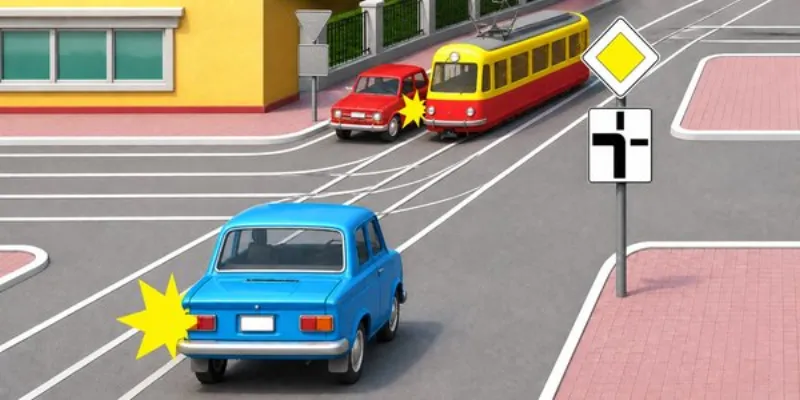
- The tram.
- The red automobile.
- The blue automobile.
Correct answer: The tram. ABC · D/T
Why: Կապույտի դիմաց
2.1 «Գլխավոր ճանապարհ» նշանն է
8.13 «Գլխավոր ճանապարհի ուղղությունը» ցուցանակով. այն գլխավոր ճանապարհով է և անցնում է առաջինը։ Տրամվայն ու կարմիրը երկրորդական ճանապարհի վրա են, և հավասարազոր ճանապարհի վրա տրամվայն առավելություն ունի ոչ ռելսագնաց մեքենայի նկատմամբ (կետ 96). տրամվայն անցնում է երկրորդը։
Signs in this question: 2.1, 8.13
In tests: ABC 12
7. In which direction is traffic prohibited?
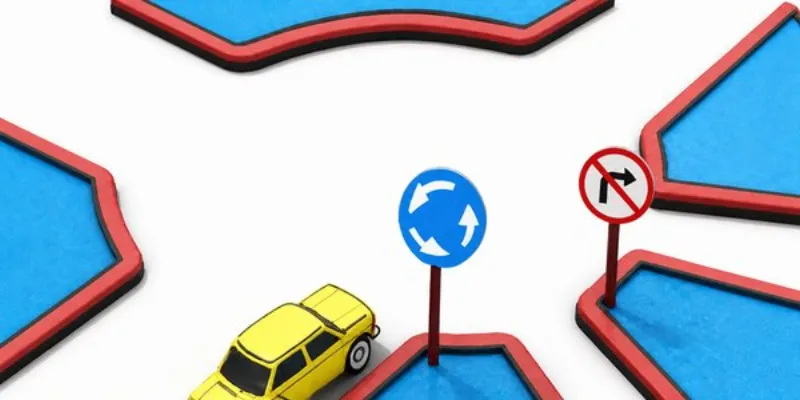
- To the right through the first passage.
- To the right through the second passage.
- To the right through the first and second passages.
Correct answer: To the right through the second passage. ABC · D/T
Why: 4.3 «Շրջանաձև երթևեկություն» նշանը նշում է խաչմերուկը, իսկ
3.18.1 «Աջ շրջադարձն արգելվում է» նշանը տեղադրված է միայն երկրորդ ելքից առաջ. աջ շրջադարձն արգելված է երկրորդ անցումով, առաջինով՝ թույլատրված։
Signs in this question: 4.3, 3.18.1
In tests: ABC 7, D/T 29
8. Which vehicle will proceed through the intersection second?
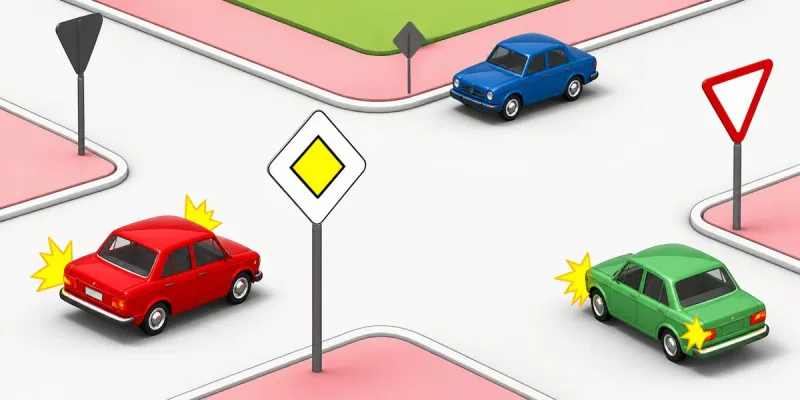
- The green automobile.
- The red automobile.
- The blue automobile.
Correct answer: The red automobile. ABC · D/T
Why: 2.1 «Գլխավոր ճանապարհ» նշանը կապույտի ճանապարհինն է, կանաչի դիմաց՝
2.4 «Զիջեք ճանապարհը». կարմիրն ու կանաչը երկրորդական ճանապարհի վրա են։ Կապույտն անցնում է առաջինը (կետ 96), իսկ երկրորդական ճանապարհի մեքենաների միջև (կետ 97) ձախ թեքվող կանաչը կետ 99-ով զիջում է հանդիպակաց աջ թեքվող կարմիրին. կարմիրն անցնում է երկրորդը։
Signs in this question: 2.1, 2.4
In tests: ABC 31, ABC 50
9. Which vehicle will proceed through the intersection second?
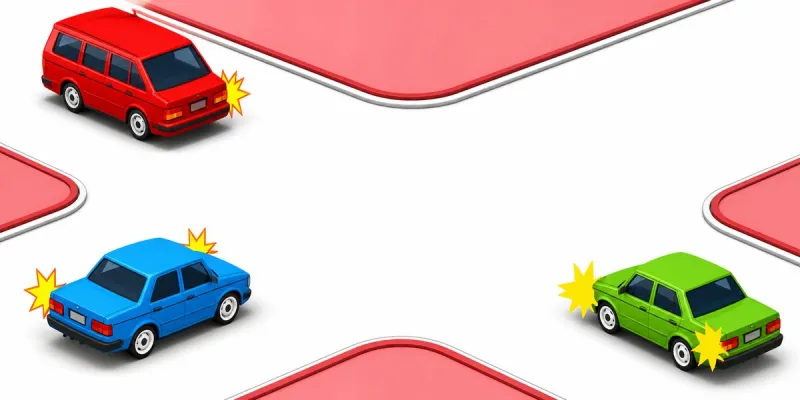
- The blue automobile.
- The green automobile.
- The red automobile.
Correct answer: The blue automobile. ABC · D/T
Why: Նշաններ չկան՝ հավասարազոր ճանապարհների խաչմերուկ։ Կետ 98-ով զիջում են աջից մոտեցողին, կետ 99-ով ձախ շրջադարձ կատարողը զիջում է հանդիպակաց ուղիղ կամ աջ գնացողին. կապույտն անցնում է երկրորդը։
In tests: ABC 37, D/T 26
10. Which vehicle will proceed through the intersection second?
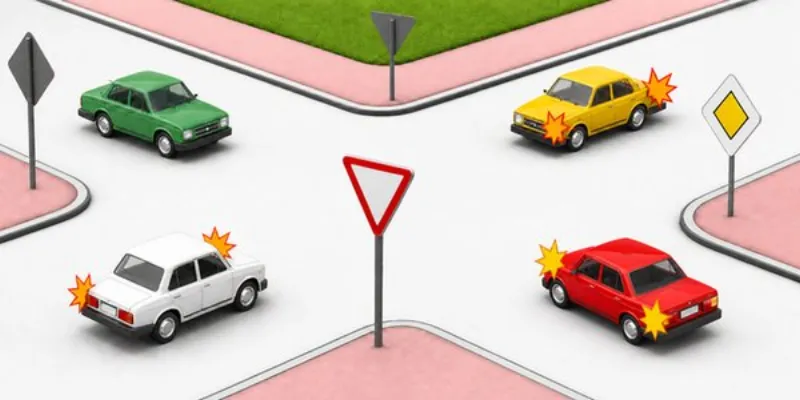
- The white automobile, simultaneously with the yellow automobile.
- The red automobile.
- The green automobile.
Correct answer: The red automobile. ABC · D/T
Why: Նկարում սպիտակի դիմաց
2.4 «Զիջեք ճանապարհը» նշանն է, կարմիրի դիմաց՝
2.1 «Գլխավոր ճանապարհ»։ Կետ 96-ով երկրորդական ճանապարհից մոտեցողները զիջում են գլխավոր ճանապարհով ընթացողներին, իսկ գլխավոր ճանապարհի վրա ձախ շրջադարձ կատարողը կետ 99-ով զիջում է հանդիպակաց ուղիղ գնացողին. կարմիրն անցնում է երկրորդը։
Signs in this question: 2.4, 2.1
In tests: ABC 8, ABC 50
11. Which vehicle will proceed through the intersection last?
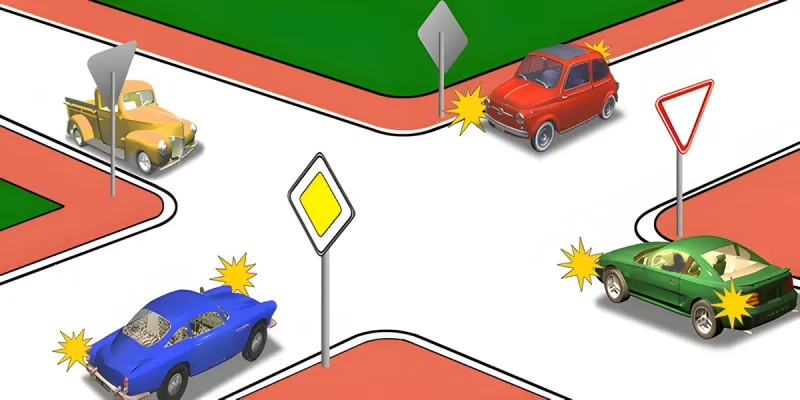
- The blue automobile.
- The yellow automobile.
- The green automobile.
- The red automobile.
Correct answer: The green automobile. ABC · D/T
Why: Կապույտի առջև
2.1 «Գլխավոր ճանապարհ» նշանն է, կանաչի առջև՝
2.4 «Զիջեք ճանապարհը», իսկ մյուս երկու թևերում նշանների թիկունքն է երևում։ Գլխավոր ճանապարհով ընթացող կապույտն ու կարմիրն անցնում են առաջ (կետ 96)։ Երկրորդական ճանապարհի մեքենաները միմյանց նկատմամբ գործում են հավասարազոր խաչմերուկի կանոններով (կետ 97). ձախ շրջադարձ կատարող կանաչը կետ 99-ով զիջում է հանդիպակաց ուղղությունից ուղիղ ընթացող դեղինին. կանաչն անցնում է վերջինը։
Signs in this question: 2.1, 2.4
In tests: ABC 17, D/T 14
12. Which vehicle driver must yield?
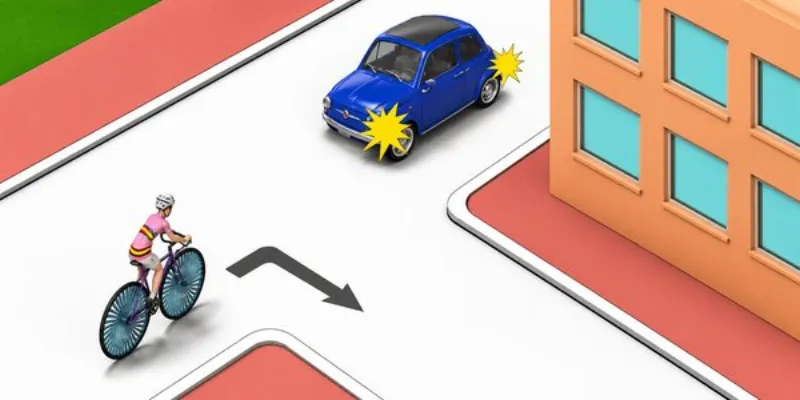
- The bicyclist.
- The automobile driver.
Correct answer: The automobile driver. ABC · D/T
Why: Առավելության նշաններ չկան՝ հավասարազոր ճանապարհների խաչմերուկ։ Ավտոմոբիլը ձախ շրջադարձ է կատարում, իսկ հեծանվորդը հանդիպակաց ուղղությունից թեքվում է աջ՝ նույն ճանապարհը։ Կետ 99-ով ձախ շրջադարձ կատարողը զիջում է հանդիպակաց ուղղությունից ուղիղ կամ դեպի աջ ընթացողներին, ուստի ճանապարհը զիջում է ավտոմոբիլի վարորդը։
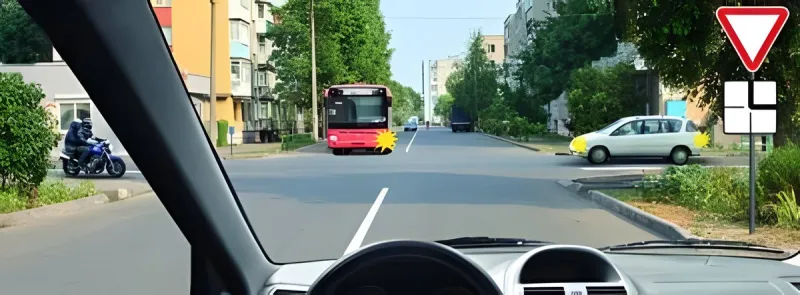
In tests: ABC 40, D/T 2
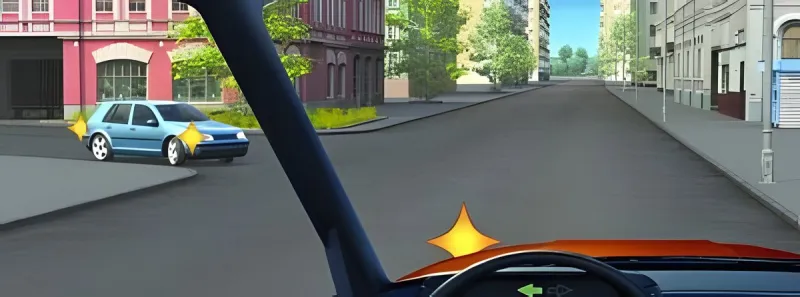
13. Which vehicle will proceed through the intersection first?
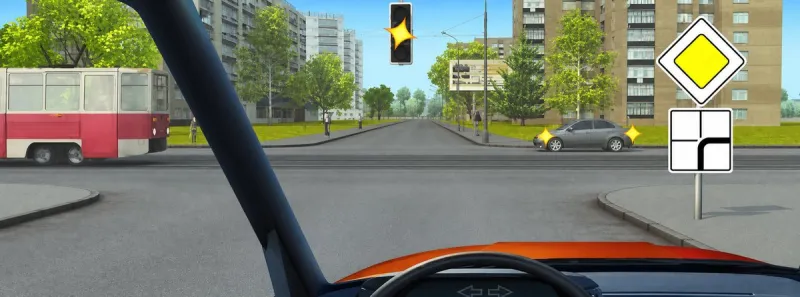
- The green automobile.
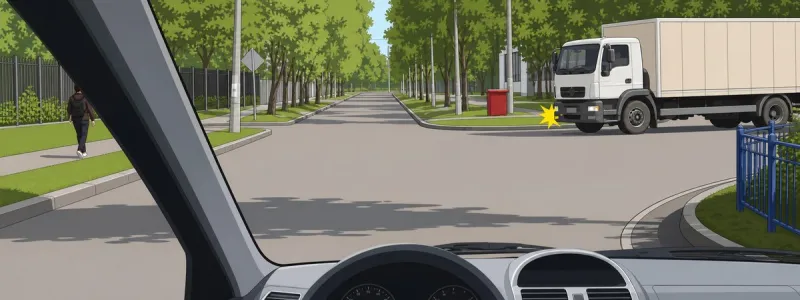
- The blue automobile.
- The red automobile.
- The yellow automobile.
Correct answer: The red automobile. ABC · D/T
Why: Կապույտի դիմաց
2.1 «Գլխավոր ճանապարհ» նշանն է, կանաչի դիմաց՝
2.4 «Զիջեք ճանապարհը»։ Կետ 96-ով գլխավոր ճանապարհով ընթացողներն անցնում են առաջինը, իսկ նրանցից ձախ շրջադարձ կատարող կապույտը կետ 99-ով զիջում է ուղիղ գնացող կարմիրին. կարմիրն անցնում է առաջինը։
Signs in this question: 2.1, 2.4
In tests: ABC 9, D/T 29
14. In what order will the vehicles proceed through the intersection?
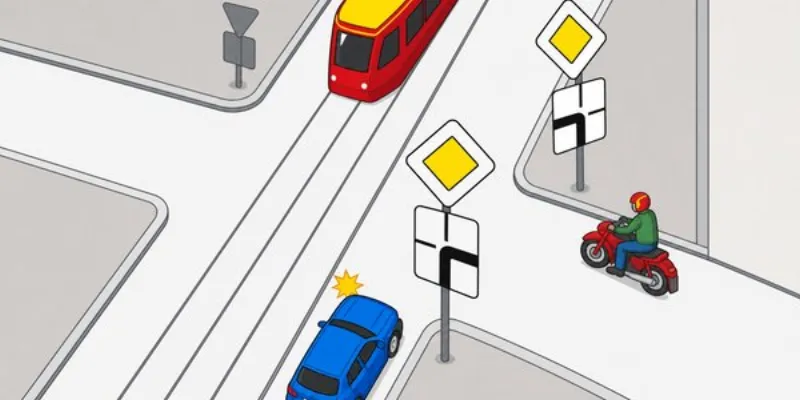
- The motorcycle, the automobile, the tram.
- The tram, the automobile, the motorcycle.
- The tram, the motorcycle, the automobile.
Correct answer: The motorcycle, the automobile, the tram. ABC · D/T
Why: Կապույտի և մոտոցիկլի դիմաց
2.1 «Գլխավոր ճանապարհ» նշաններն են
8.13 «Գլխավոր ճանապարհի ուղղությունը» ցուցանակով. գլխավոր ճանապարհը թեքվում է նրանց միջև, տրամվայը երկրորդական ճանապարհի վրա է։ Կետ 96-ով գլխավոր ճանապարհով ընթացողներն անցնում են առաջ, իսկ գլխավոր ճանապարհն ուղղություն փոխելիս կետ 97-ով նրանք միմյանց նկատմամբ գործում են աջի խոչընդոտի կանոնով (կետ 98). մոտոցիկլ, ավտոմոբիլ, տրամվայ։
Signs in this question: 2.1, 8.13
In tests: ABC 14
15. Which vehicle will proceed through the intersection second?
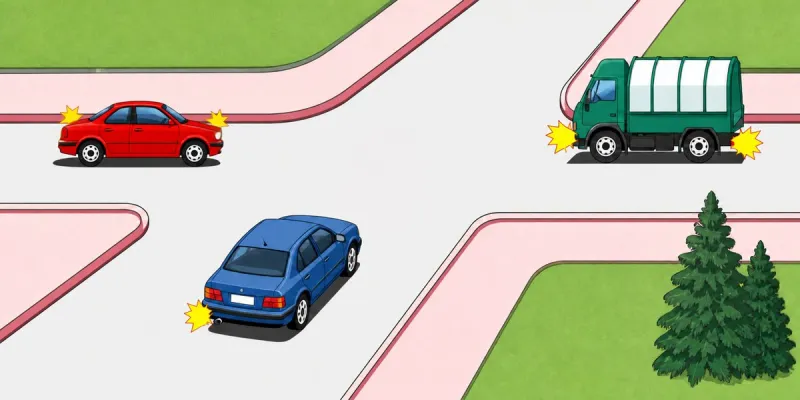
- The red automobile.
- The blue automobile.
- The green automobile.
Correct answer: The blue automobile. ABC · D/T
Why: Նշաններ չկան՝ հավասարազոր ճանապարհների խաչմերուկ։ Կետ 98-ով զիջում են աջից մոտեցողին, կետ 99-ով ձախ շրջադարձ կատարողը զիջում է հանդիպակաց ուղիղ կամ աջ գնացողին. կապույտն անցնում է երկրորդը։
In tests: ABC 34
16. Which vehicle will proceed through the intersection last?
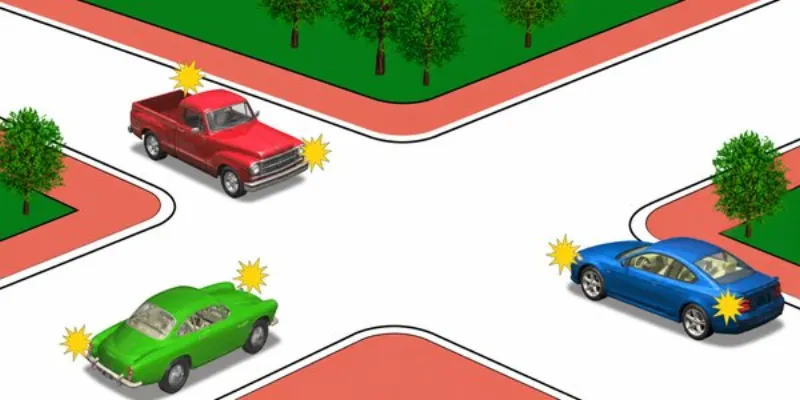
- The green automobile.
- The blue automobile.
- The red automobile.
Correct answer: The red automobile. ABC · D/T
Why: Նշաններ չկան՝ հավասարազոր ճանապարհների խաչմերուկ։ Կետ 98-ով զիջում են աջից մոտեցողին, կետ 99-ով ձախ շրջադարձ կատարողը զիջում է հանդիպակաց ուղիղ կամ աջ գնացողին. կարմիրն անցնում է վերջինը։
In tests: ABC 28
17. Which automobile will proceed through the intersection last?
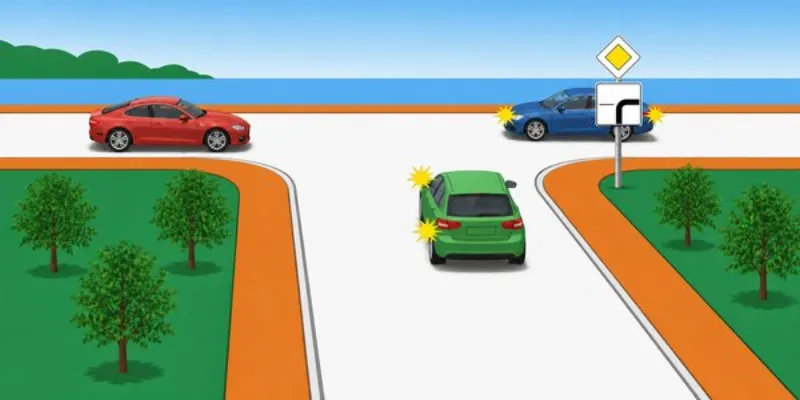
- The blue automobile.
- The red automobile.
- The green automobile.
Correct answer: The red automobile. ABC · D/T
Why: Կապույտի մոտ
2.1 «Գլխավոր ճանապարհ» նշանն է
8.13 «Գլխավոր ճանապարհի ուղղությունը» ցուցանակով. գլխավոր ճանապարհը թեքվում է կապույտի և կանաչի միջև, կարմիրը երկրորդական ճանապարհի վրա է։ Կետ 96-ով երկրորդական ճանապարհից մոտեցողը զիջում է գլխավոր ճանապարհով ընթացողներին, իսկ վերջիններս միմյանց նկատմամբ գործում են կետ 97-ով. կարմիրն անցնում է վերջինը։
Signs in this question: 2.1, 8.13
In tests: ABC 12, D/T 24
18. Which vehicle will proceed through the intersection first?
- The green automobile.
- The red automobile.
- The blue automobile.
Correct answer: The green automobile. ABC · D/T
Why: Նշաններ չկան՝ հավասարազոր ճանապարհների խաչմերուկ։ Կետ 98-ով զիջում են աջից մոտեցողին, կետ 99-ով ձախ շրջադարձ կատարողը զիջում է հանդիպակաց ուղիղ գնացողին. կանաչ բեռնատարի աջից ոչ ոք չկա, այն անցնում է առաջինը։
In tests: ABC 6, D/T 39
19. Which vehicle driver must yield?
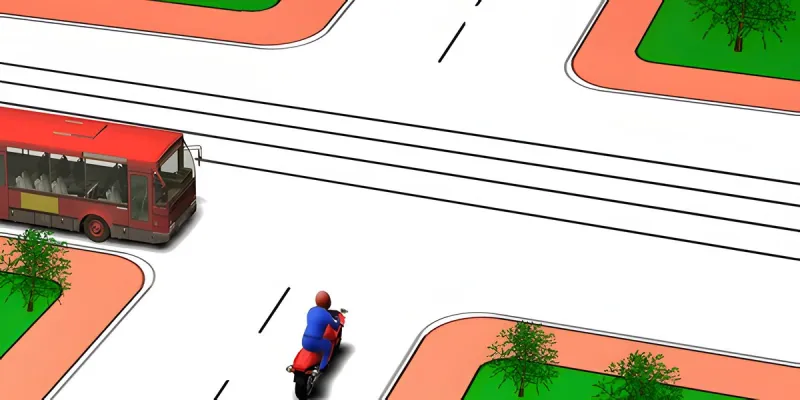
- The bus driver.
- The motorcycle operator.
Correct answer: The bus driver. ABC · D/T
Why: Առավելության նշաններ և լուսացույց չկան՝ հավասարազոր ճանապարհների խաչմերուկ։ Մոտոցիկլը մոտենում է ավտոբուսի աջ կողմից, ուստի կետ 98-ով ճանապարհը զիջում է ավտոբուսի վարորդը։
In tests: ABC 40, D/T 11
20. Which vehicle will proceed through the intersection first?
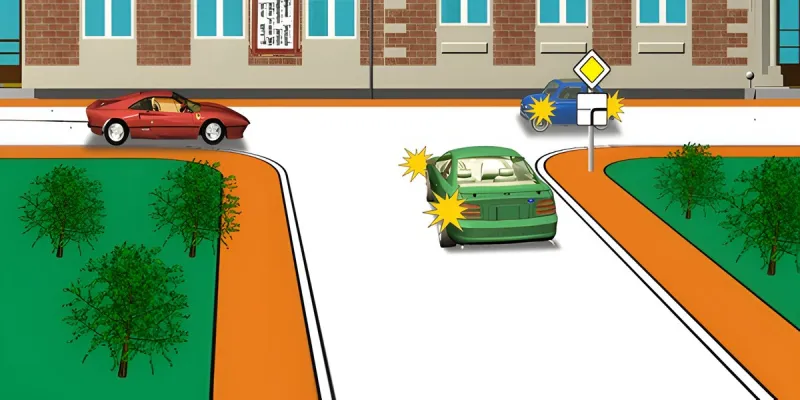
- The red automobile.
- The green automobile.
- The blue automobile.
Correct answer: The blue automobile. ABC · D/T
Why: Կապույտի մոտ
2.1 «Գլխավոր ճանապարհ» նշանն է
8.13 «Գլխավոր ճանապարհի ուղղությունը» ցուցանակով. գլխավոր ճանապարհը թեքվում է կապույտի և կանաչի միջև։ Կարմիրը երկրորդական ճանապարհից է և կետ 96-ով զիջում է, իսկ գլխավոր ճանապարհի վրա կետ 97-ով գործում է աջի խոչընդոտի կանոնը. կապույտն անցնում է առաջինը։
Signs in this question: 2.1, 8.13
In tests: ABC 6, ABC 47, D/T 41
21. Which vehicle will proceed through the intersection second?
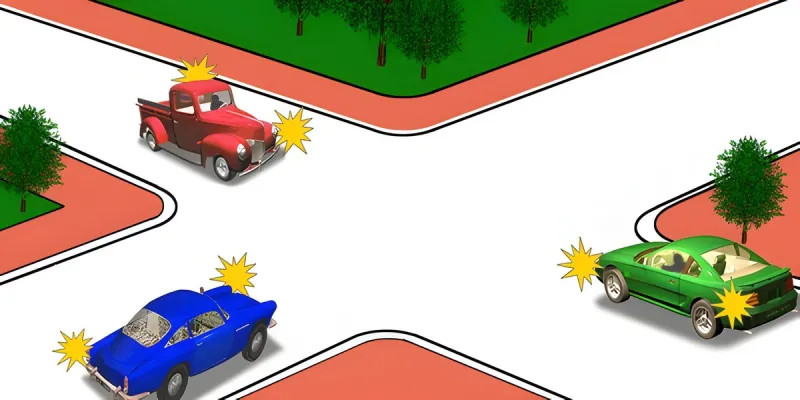
- The blue automobile.
- The green automobile.
- The red automobile.
Correct answer: The blue automobile. ABC · D/T
Why: Նշաններ չկան՝ հավասարազոր ճանապարհների խաչմերուկ։ Կետ 98-ով զիջում են աջից մոտեցողին, կետ 99-ով ձախ շրջադարձ կատարողը զիջում է հանդիպակաց ուղիղ կամ աջ գնացողին. կապույտն անցնում է երկրորդը։
In tests: ABC 36, D/T 54
22. Which vehicle will proceed through the intersection third?
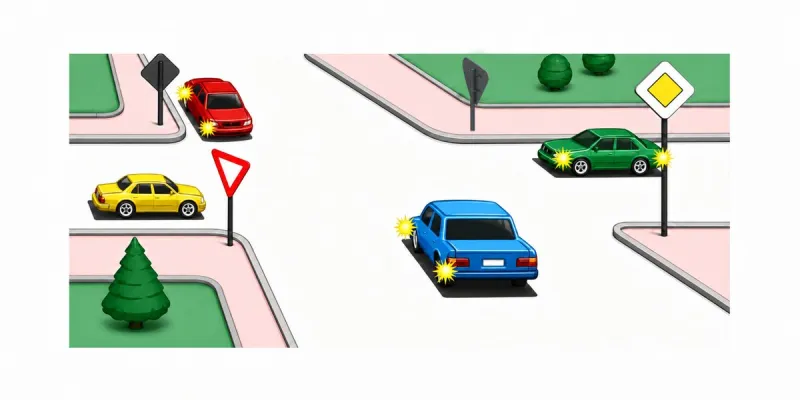
- The blue automobile.
- The yellow automobile.
- The green automobile.
- The red automobile.
Correct answer: The yellow automobile. ABC · D/T
Why: Դեղինի դիմաց
2.4 «Զիջեք ճանապարհը» նշանն է, կանաչի դիմաց՝
2.1 «Գլխավոր ճանապարհ». կարմիրի և կապույտի մոտ նշանների թիկունքն է երևում, ուստի կարմիրը նույնպես երկրորդական, իսկ կապույտը՝ գլխավոր ճանապարհի վրա է։ Կետ 96-ով գլխավոր ճանապարհով ընթացողներն անցնում են առաջ, իսկ երկրորդական ճանապարհի մեքենաները միմյանց նկատմամբ գործում են աջի խոչընդոտի կանոնով (կետ 97, 98). դեղինն անցնում է երրորդը։
Signs in this question: 2.4, 2.1
In tests: ABC 41
23. The red automobile:
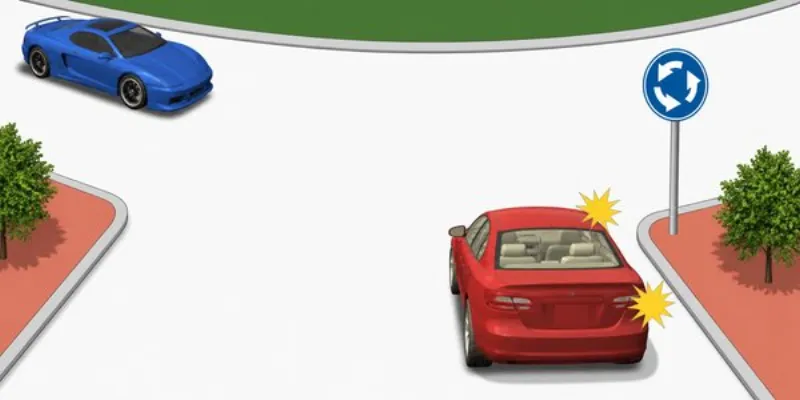
- Has the right-of-way because it approached the roundabout from the right of the blue automobile.
- Must yield to the blue automobile proceeding on the roundabout.
Correct answer: Must yield to the blue automobile proceeding on the roundabout. ABC · D/T
Why: Խաչմերուկը կահավորված է
4.3 «Շրջանաձև երթևեկություն» նշանով։ Կետ 98.1-ով մուտք գործող վարորդը պարտավոր է զիջել շրջանաձև խաչմերուկում արդեն երթևեկողներին. կարմիրը զիջում է կապույտին՝ անկախ աջի խոչընդոտի կանոնից։
Signs in this question: 4.3
In tests: ABC 24, ABC 53
24. The automobiles will proceed through the intersection in the following order:
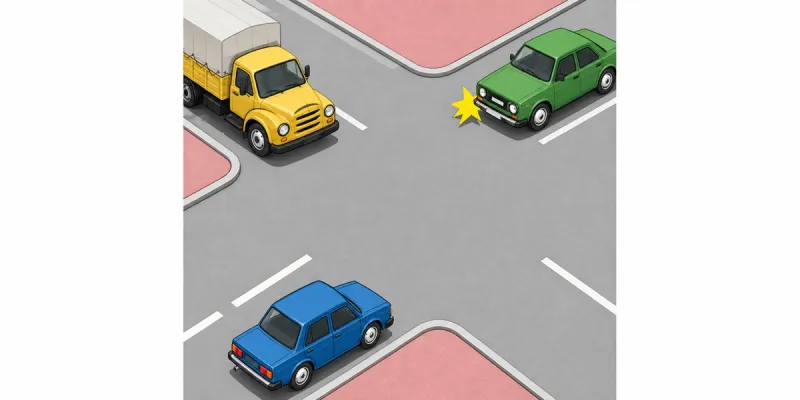
- The yellow automobile, the green automobile, the blue automobile.
- The blue automobile simultaneously with the green automobile, then the yellow automobile.
Correct answer: The blue automobile simultaneously with the green automobile, then the yellow automobile. ABC · D/T
Why: Նշաններ չկան՝ հավասարազոր ճանապարհների խաչմերուկ։ Կետ 98-ով զիջում են աջից մոտեցողին, կետ 99-ով ձախ շրջադարձ կատարողը զիջում է հանդիպակաց ուղիղ գնացողին. կապույտի և կանաչի ուղիները չեն հատվում, նրանք անցնում են միաժամանակ, հետո՝ դեղինը։
In tests: ABC 33, ABC 52, D/T 35
25. Which vehicle will proceed through the intersection third?
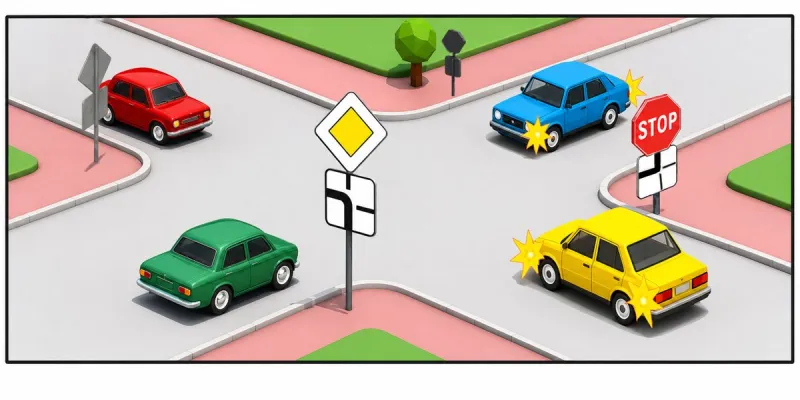
- The yellow automobile.
- The red automobile.
- The blue automobile.
- The green automobile.
Correct answer: The blue automobile. ABC · D/T
Why: Կանաչի դիմաց
2.1 «Գլխավոր ճանապարհ» նշանն է
8.13 «Գլխավոր ճանապարհի ուղղությունը» ցուցանակով. գլխավոր ճանապարհն անցնում է կանաչի և կարմիրի թևերով։ Դեղինի դիմաց
2.5 «Երթևեկությունն առանց կանգառի արգելվում է» նշանն է։ Կետ 96-ով կապույտն ու դեղինը զիջում են գլխավոր ճանապարհով ընթացողներին, իսկ միմյանց նկատմամբ գործում են աջի խոչընդոտի կանոնով (կետ 97, 98). կապույտն անցնում է երրորդը։
Signs in this question: 2.1, 8.13, 2.5
In tests: ABC 45, D/T 30
26. Which vehicle will proceed through the intersection first?
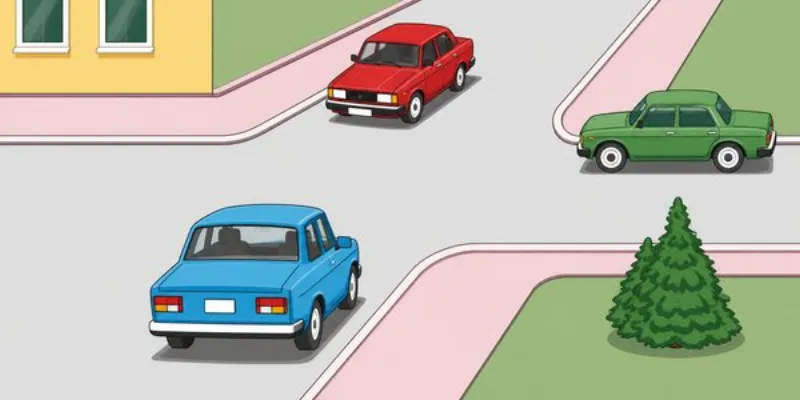
- The green automobile.
- The blue automobile.
- The red automobile.
Correct answer: The red automobile. ABC · D/T
Why: Նշաններ չկան՝ հավասարազոր ճանապարհների խաչմերուկ, կետ 98-ով զիջում են աջից մոտեցողին։ Կապույտը զիջում է կանաչին, կանաչը՝ կարմիրին, կարմիրի աջից ոչ ոք չկա. այն անցնում է առաջինը։
In tests: ABC 34, ABC 54, D/T 42
27. The vehicles will proceed through the intersection in the following order:
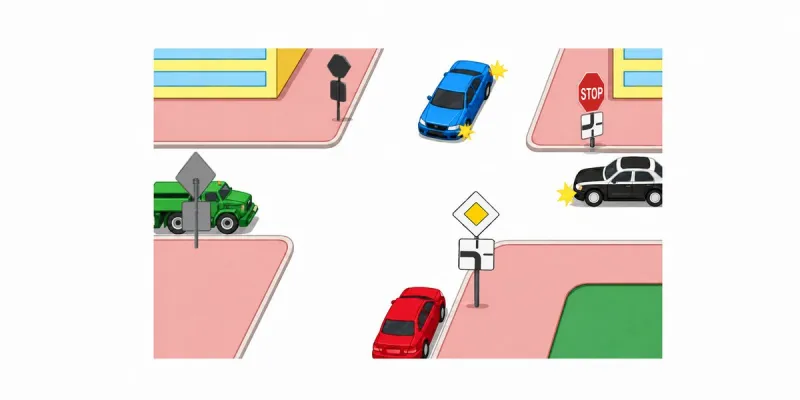
- The red automobile, the green automobile, the blue automobile, the black automobile.
- The green automobile, the red automobile, the black automobile, the blue automobile.
- The green automobile, the red automobile, the blue automobile, the black automobile.
Correct answer: The red automobile, the green automobile, the blue automobile, the black automobile. ABC
Why: Կարմիրի դիմաց
2.1 «Գլխավոր ճանապարհ» նշանն է
8.13 «Գլխավոր ճանապարհի ուղղությունը» ցուցանակով. գլխավոր ճանապարհն անցնում է կարմիրի և կանաչի թևերով, սևի դիմաց
2.5 «Երթևեկությունն առանց կանգառի արգելվում է» նշանն է։ Գլխավոր ճանապարհով ընթացողներն անցնում են առաջ (կետ 96), նրանց միջև՝ աջի խոչընդոտի կանոնով (կետ 97, 98), ապա երկրորդական ճանապարհի մեքենաները՝ նույն կանոնով. կարմիր, կանաչ, կապույտ, սև։
Signs in this question: 2.1, 8.13, 2.5
In tests: ABC 7
28. The vehicles will proceed through the intersection in the following order:
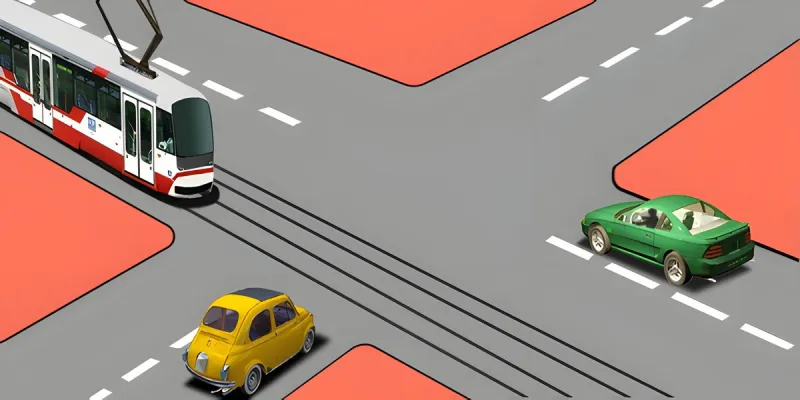
- The tram, the yellow automobile, the green automobile.
- The tram and the green automobile, then the yellow automobile.
- The green automobile, the yellow automobile, the tram.
Correct answer: The tram and the green automobile, then the yellow automobile. ABC · D/T
Why: Նշաններ և լուսացույց չկան՝ հավասարազոր ճանապարհների չկարգավորվող խաչմերուկ (կետ 95)։ Տրամվայն առավելություն ունի ոչ ռելսագնացների նկատմամբ՝ անկախ ուղղությունից (կետ 98)։ Դեղին մեքենային կանաչը մոտենում է աջից, ուստի դեղինը զիջում է (կետ 98)։ Հերթականությունը՝ տրամվայն ու կանաչը, ապա դեղինը։
In tests: ABC 22, D/T 32
29. Which driver has the right-of-way?
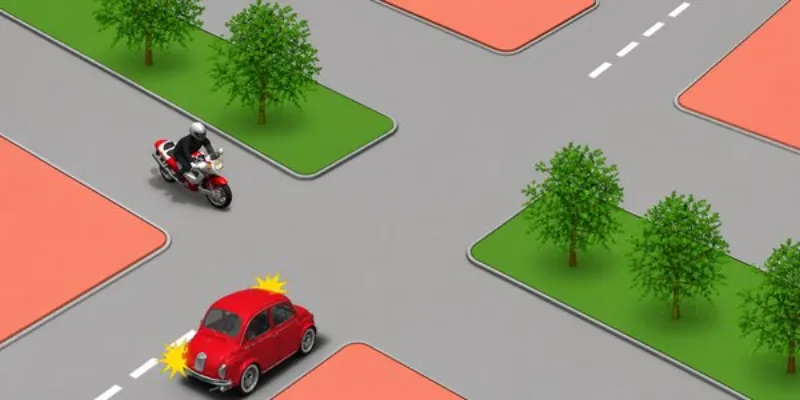
- The motorcycle operator.
- The automobile driver.
Correct answer: The automobile driver. ABC · D/T
Why: Առավելության նշաններ և լուսացույց չկան՝ հավասարազոր ճանապարհների խաչմերուկ։ Ավտոմոբիլը մոտենում է մոտոցիկլի աջ կողմից, ուստի կետ 98-ով մոտոցիկլը զիջում է, առաջնահերթությունն ավտոմոբիլի վարորդինն է։
In tests: ABC 35, D/T 55
30. Which vehicle will proceed through the intersection second?
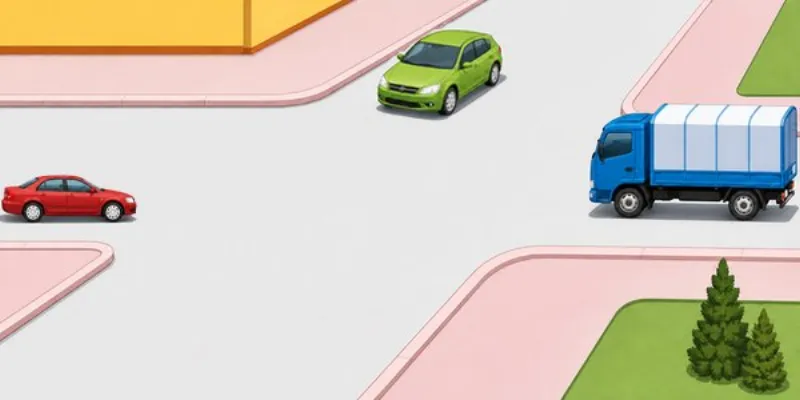
- The red automobile.
- The blue automobile.
- The green automobile.
Correct answer: The green automobile. ABC · D/T
Why: Նշաններ չկան՝ հավասարազոր ճանապարհների խաչմերուկ, կետ 98-ով զիջում են աջից մոտեցողին։ Բեռնատարը զիջում է կանաչին, կանաչը՝ կարմիրին, կարմիրի աջից ոչ ոք չկա. կարմիր, կանաչ, բեռնատար։ Կանաչն անցնում է երկրորդը։
In tests: ABC 33, D/T 22
31. Which vehicle driver must yield?
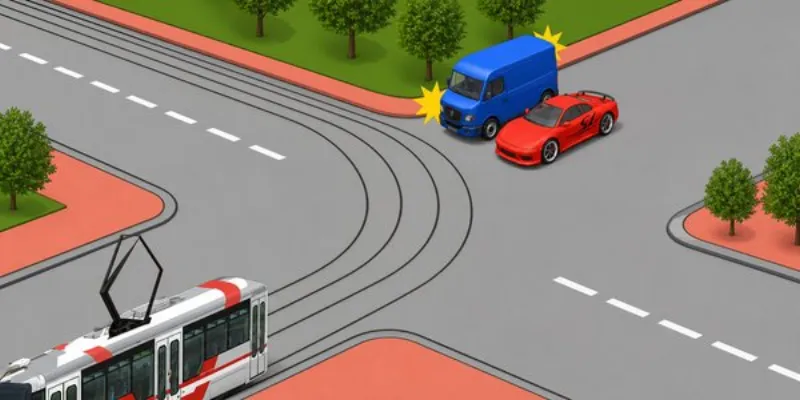
- The tram operator.
- The truck driver.
- The automobile drivers.
Correct answer: The automobile drivers. ABC · D/T
Why: Նշաններ և լուսացույց չկան՝ հավասարազոր ճանապարհների չկարգավորվող խաչմերուկ։ Կետ 100-ով (նաև կետ 98) տրամվայն այստեղ առավելություն ունի ոչ ռելսագնաց տրանսպորտային միջոցների նկատմամբ՝ անկախ երթևեկության ուղղությունից. ճանապարհը զիջում են բեռնատարի և թեթև մարդատարի վարորդները։
In tests: ABC 4, D/T 21
32. The red automobile will proceed through the intersection:
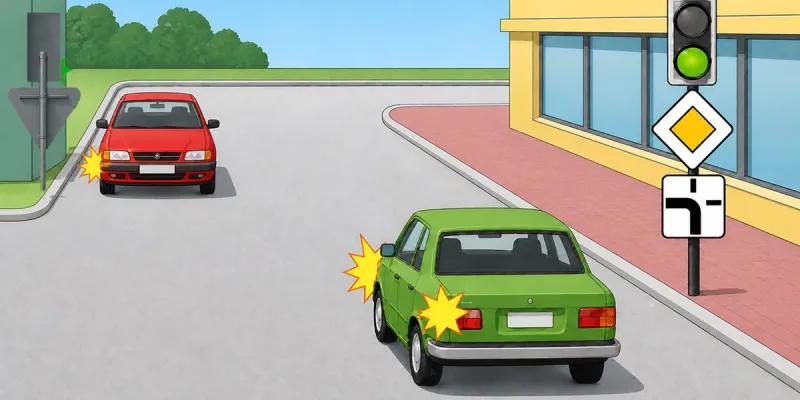
- First.
- Second.
Correct answer: First. ABC · D/T
Why: Նկարում և՛ աշխատող լուսացույց է (կանաչ), և՛
2.1 «Գլխավոր ճանապարհ» նշան
8.13 ցուցանակով։ Աշխատող լուսացույցի դեպքում խաչմերուկը կարգավորվող է (կետ 89), և լուսացույցի ազդանշանները գերակայում են առավելության նշաններին (կետ 173). նշանները հաշվի չեն առնվում։ Կանաչ ազդանշանի դեպքում ձախ շրջադարձ կատարող կանաչը կետ 90-ով զիջում է հանդիպակաց ուղիղ գնացող կարմիրին. կարմիրն անցնում է առաջինը։
Signs in this question: 2.1, 8.13
In tests: ABC 23
33. The vehicles will proceed through the intersection in the following order:
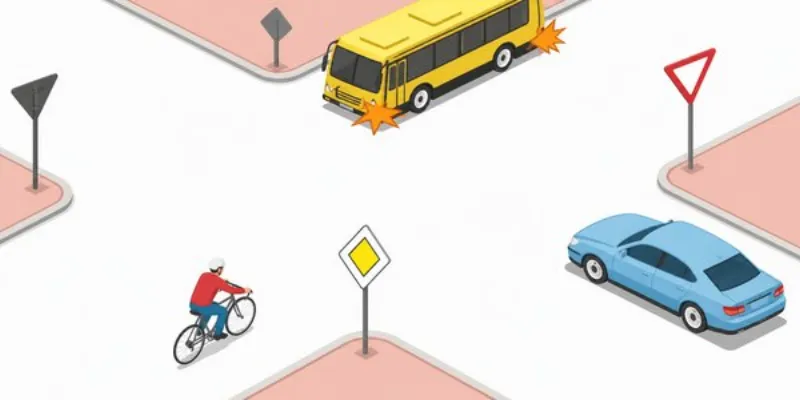
- The passenger car, the bus, the bicycle.
- The bus, the bicycle, the passenger car.
- The bus, the passenger car, the bicycle.
- The bicycle, the bus, the passenger car.
Correct answer: The bicycle, the bus, the passenger car. ABC · D/T
Why: Հեծանվորդի դիմաց
2.1 «Գլխավոր ճանապարհ» նշանն է, կապույտի դիմաց՝
2.4 «Զիջեք ճանապարհը», ավտոբուսի մոտ և ձախում նշանների թիկունքն է երևում։ Կապույտը երկրորդական ճանապարհից է և կետ 96-ով զիջում է գլխավոր ճանապարհով ընթացողներին։ Հեծանվորդն անցնում է առաջինը, ավտոբուսը, որի ուղին հատում է հեծանվորդինը, սպասում է նրան (կետ 99, 98) և անցնում կապույտից առաջ. հեծանիվ, ավտոբուս, թեթև մարդատար։
Signs in this question: 2.1, 2.4
In tests: ABC 35
34. Which vehicle driver has the right-of-way?
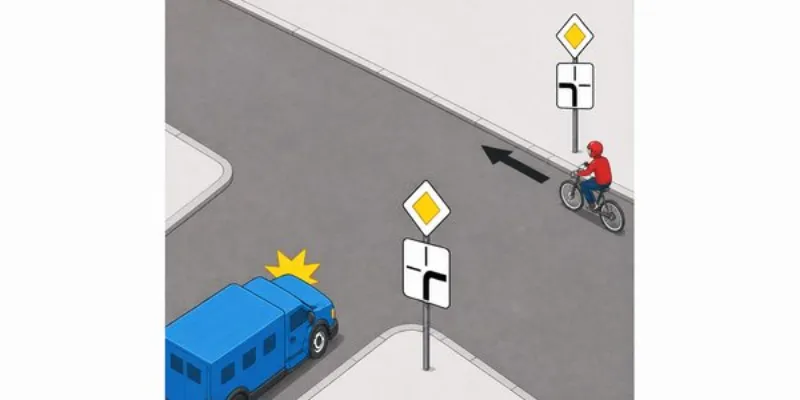
- The automobile driver.
- The bicyclist.
Correct answer: The bicyclist. ABC · D/T
Why: Երկու
2.1 «Գլխավոր ճանապարհ» նշան՝
8.13 «Գլխավոր ճանապարհի ուղղությունը» ցուցանակով. գլխավոր ճանապարհն անցնում է և՛ ավտոմոբիլի, և՛ հեծանվորդի թևերով։ Կետ 97-ով թեքվող գլխավոր ճանապարհի վրա գործում են հավասարազոր խաչմերուկի կանոնները, իսկ հեծանվորդը մոտենում է ավտոմոբիլի աջից (կետ 98). առաջնահերթությունը հեծանվորդինն է։
Signs in this question: 2.1, 8.13
In tests: ABC 13, D/T 4
35. The vehicles will proceed through the intersection in the following order:
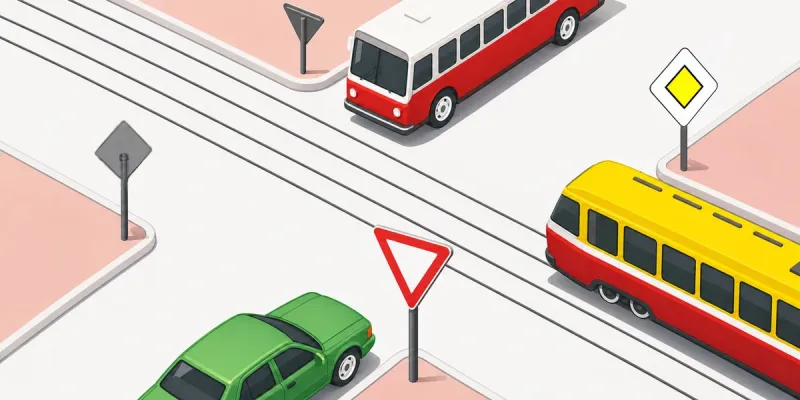
- The tram, then the automobile and the bus simultaneously.
- The tram, the bus, the automobile.
- The bus, the tram, the automobile.
Correct answer: The tram, then the automobile and the bus simultaneously. ABC · D/T
Why: Տրամվայի դիմաց
2.1 «Գլխավոր ճանապարհ» նշանն է, կանաչի դիմաց՝
2.4 «Զիջեք ճանապարհը», ավտոբուսի մոտ նշանի թիկունքն է։ Տրամվայը գլխավոր ճանապարհով է և անցնում է առաջինը, ավտոմոբիլն ու ավտոբուսը կետ 96-ով զիջում են նրան, ապա անցնում միաժամանակ, քանի որ նրանց ուղիները չեն հատվում (կետ 97)։
Signs in this question: 2.1, 2.4
In tests: ABC 23, ABC 48, D/T 27
36. Which vehicle driver must yield?
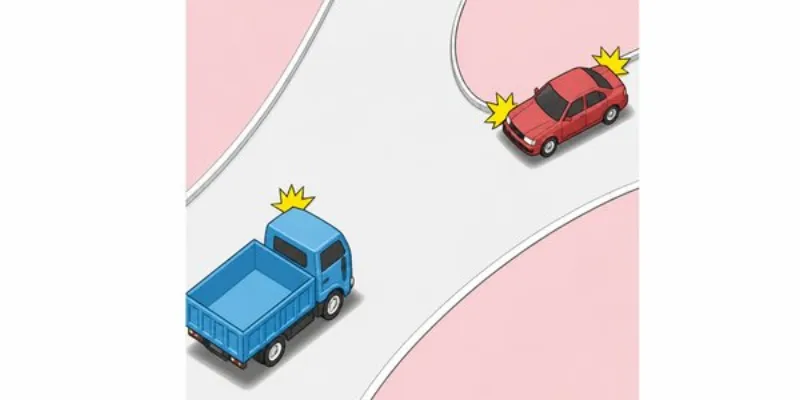
- The driver of the blue automobile.
- The driver of the red automobile.
Correct answer: The driver of the blue automobile. ABC · D/T
Why: Նշաններ չկան՝ հավասարազոր ճանապարհների խաչմերուկ։ Ձախ շրջադարձ կատարող կապույտ բեռնատարը կետ 99-ով զիջում է հանդիպակաց ուղիղ կամ աջ ընթացող կարմիր ավտոմոբիլին։
In tests: ABC 1, D/T 19
37. Which vehicle driver must yield?
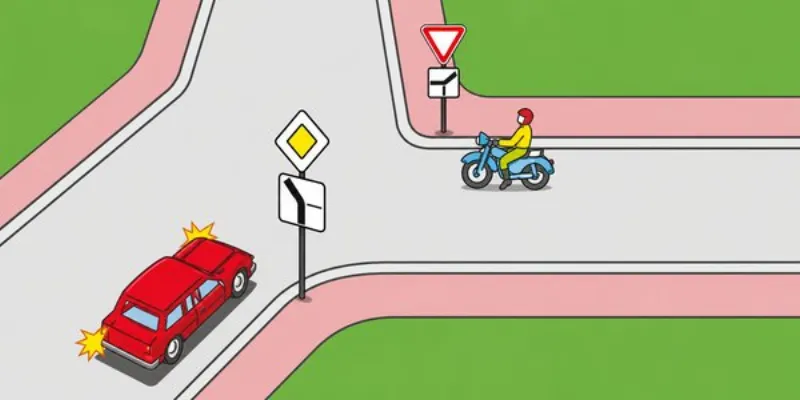
- The automobile driver.
- The motorcycle operator.
Correct answer: The motorcycle operator. ABC · D/T
Why: Կարմիրի դիմաց
2.1 «Գլխավոր ճանապարհ» նշանն է
8.13 «Գլխավոր ճանապարհի ուղղությունը» ցուցանակով, մոտոցիկլի դիմաց՝
2.4 «Զիջեք ճանապարհը»։ Կետ 96-ով երկրորդական ճանապարհից մոտեցող մոտոցիկլի վարորդը զիջում է գլխավոր ճանապարհով ընթացողին։
Signs in this question: 2.1, 8.13, 2.4
In tests: ABC 38, ABC 47, D/T 10
38. Which vehicle driver is entering the roundabout correctly?
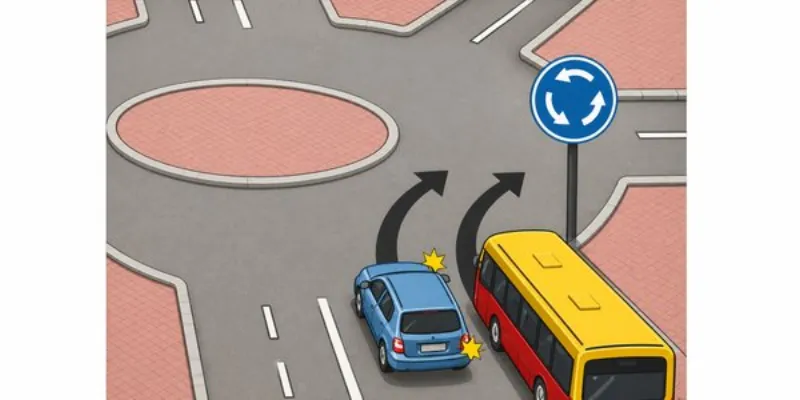
- Both drivers.
- Only the bus driver.
- Only the passenger-car driver.
Correct answer: Both drivers. ABC · D/T
Why: 4.3 «Շրջանաձև երթևեկություն» նշան։ Կետ 40-ի 1-ին ենթակետով շրջանաձև խաչմերուկ մուտք գործելիս եզրային գոտի զբաղեցնելը պարտադիր չէ, ուստի և՛ ձախ գոտուց մուտք գործող ավտոմոբիլը, և՛ աջ գոտուց մուտք գործող ավտոբուսը ճիշտ են։
Signs in this question: 4.3
In tests: ABC 22
39. Which vehicle has the right-of-way?
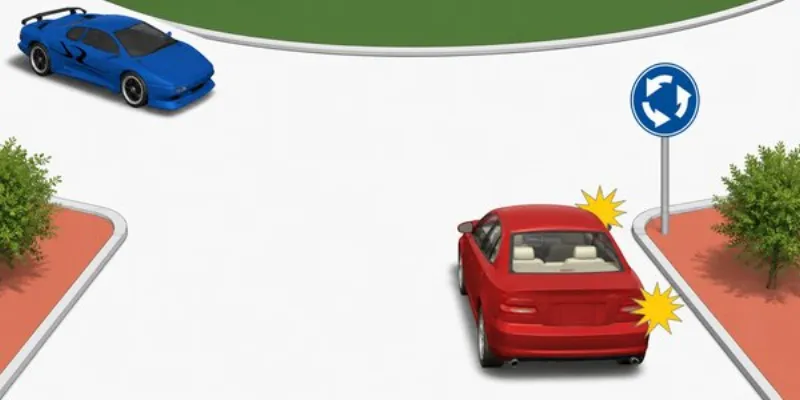
- The red automobile, because it is entering the roundabout from the right of the blue automobile.
- The blue automobile, because it is proceeding on the roundabout.
Correct answer: The blue automobile, because it is proceeding on the roundabout. ABC · D/T
Why: 4.3 «Շրջանաձև երթևեկություն» նշան. կետ 98.1-ով մուտք գործող կարմիրը զիջում է շրջանաձև խաչմերուկում արդեն երթևեկող կապույտին։ Աջի խոչընդոտի կանոնն այստեղ չի գործում։
Signs in this question: 4.3
In tests: ABC 19, ABC 51, D/T 24
40. Indicate the order in which the vehicles will proceed through the intersection:
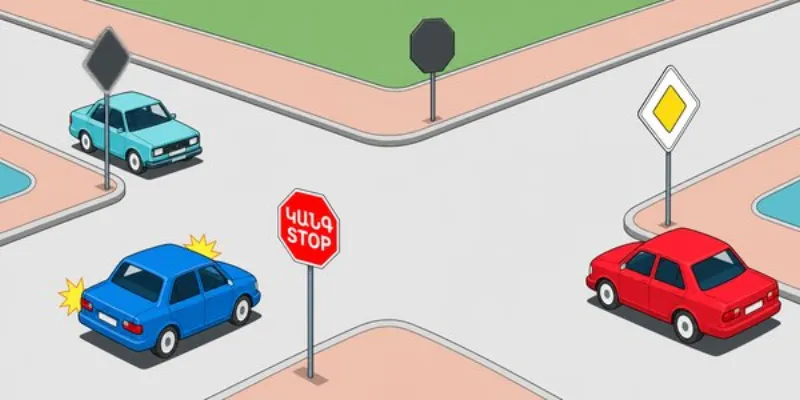
- The blue automobile, then the red and green automobiles simultaneously.
- The red automobile, the blue automobile, the green automobile.
- The red and green automobiles simultaneously, then the blue automobile.
Correct answer: The red and green automobiles simultaneously, then the blue automobile. ABC · D/T
Why: Կապույտի դիմաց
2.5 «Երթևեկությունն առանց կանգառի արգելվում է» նշանն է, կարմիրի դիմաց՝
2.1 «Գլխավոր ճանապարհ». բաց գույնի մեքենայի մոտ
2.1-ի, իսկ վերևի թևում՝ STOP-ի թիկունքն է, այսինքն՝ գլխավոր ճանապարհն անցնում է կարմիրի և բաց գույնի մեքենայի թևերով։ Նրանց ուղիները չեն հատվում՝ անցնում են միաժամանակ, կապույտը կետ 96-ով զիջում է նրանց։
Signs in this question: 2.5, 2.1
In tests: ABC 44, D/T 31
41. The driver of the green automobile:
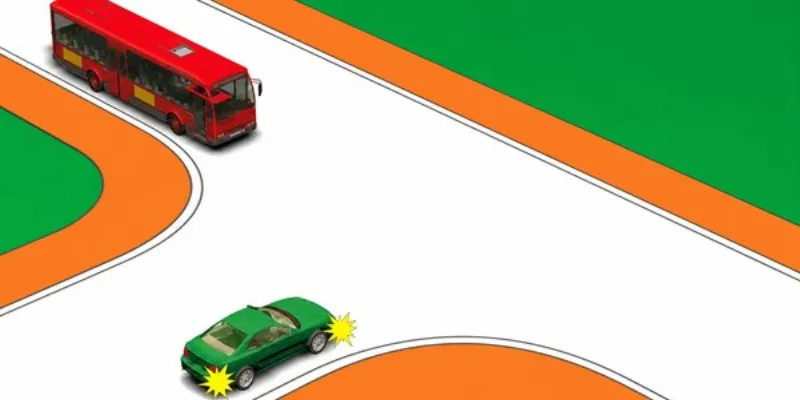
- Has the right-of-way.
- Must yield.
Correct answer: Has the right-of-way. ABC · D/T
Why: Առավելության նշաններ և լուսացույց չկան՝ հավասարազոր ճանապարհների խաչմերուկ։ Կանաչը մոտենում է ավտոբուսի աջ կողմից, ուստի կետ 98-ով ավտոբուսը զիջում է. առաջնահերթությունը կանաչինն է։
In tests: ABC 1, D/T 24
42. Which vehicle will proceed through the intersection last?
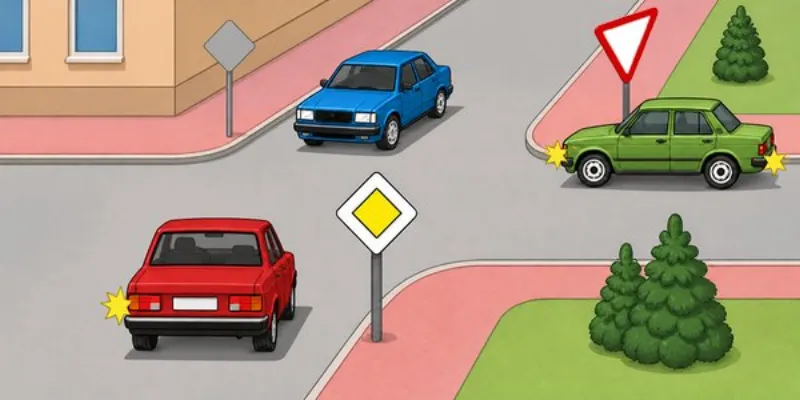
- The red automobile.
- The blue automobile.
- The green automobile.
Correct answer: The green automobile. ABC · D/T
Why: Կարմիրի դիմաց
2.1 «Գլխավոր ճանապարհ» նշանն է, կանաչի դիմաց՝
2.4 «Զիջեք ճանապարհը», կապույտի մոտ՝ հակառակ
2.1-ի թիկունքը։ Կարմիրն ու կապույտը գլխավոր ճանապարհով են, կանաչը կետ 96-ով զիջում է գլխավոր ճանապարհով ընթացողներին՝ անկախ նրանց ուղղությունից. կանաչն անցնում է վերջինը։
Signs in this question: 2.1, 2.4
In tests: ABC 19
43. Which vehicle will proceed through the intersection second?
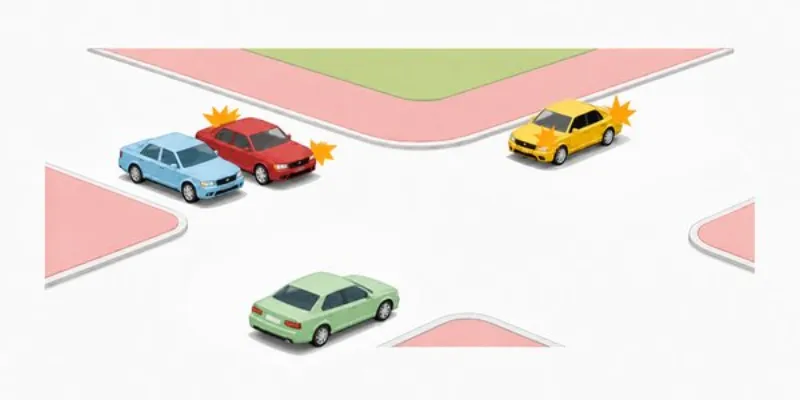
- The green automobile.
- The red automobile simultaneously with the blue automobile.
- The yellow automobile.
Correct answer: The red automobile simultaneously with the blue automobile. ABC · D/T
Why: Նշաններ չկան՝ հավասարազոր ճանապարհների խաչմերուկ։ Կետ 98-ով զիջում են աջից մոտեցողին, կետ 99-ով ձախ շրջադարձ կատարողը զիջում է հանդիպակաց ուղիղ կամ աջ գնացողին. կարմիրի և կապույտի ուղիները չեն հատվում, նրանք անցնում են երկրորդը՝ միաժամանակ։
In tests: ABC 5, D/T 40
44. The automobiles will proceed through the intersection in the following order:
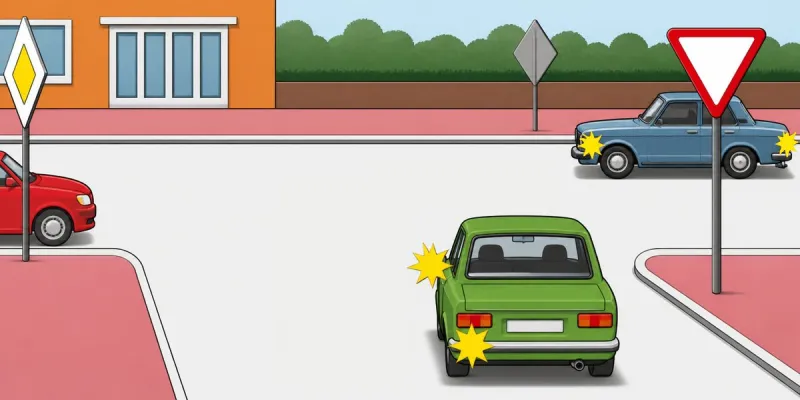
- The blue automobile, the green automobile, the red automobile.
- The red automobile, the blue automobile, the green automobile.
- The green automobile, the red automobile, the blue automobile.
Correct answer: The red automobile, the blue automobile, the green automobile. ABC · D/T
Why: Կարմիրի առջև
2.1 «Գլխավոր ճանապարհ» նշանն է, կապույտի համար՝ նույն նշանը (երևում է թիկունքը), իսկ կանաչի առջև՝
2.4 «Զիջեք ճանապարհը»։ Կարմիրն ու կապույտը գլխավոր ճանապարհով են և միմյանց նկատմամբ գործում են հավասարազոր խաչմերուկի կանոններով (կետ 97). ձախ թեքվող կապույտը կետ 99-ով զիջում է հանդիպակաց ուղիղ ընթացող կարմիրին։ Կանաչը կետ 96-ով զիջում է երկուսին. կարմիր, կապույտ, կանաչ։
Signs in this question: 2.1, 2.4
In tests: ABC 5, ABC 53, D/T 5
45. Which vehicle will proceed through the intersection second?
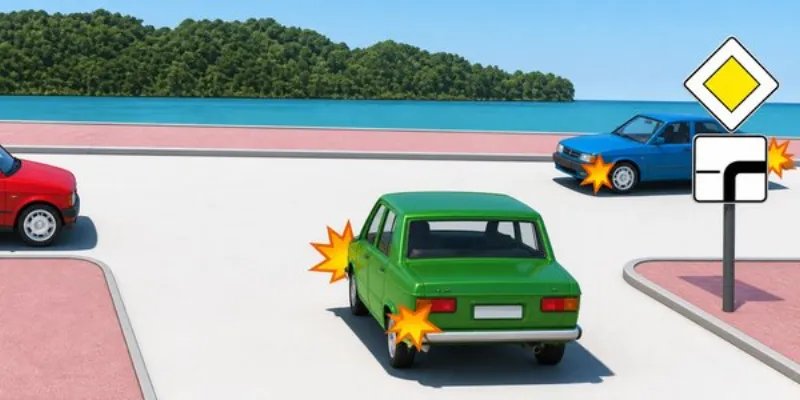
- The green automobile.
- The blue automobile.
- The red automobile.
Correct answer: The green automobile. ABC · D/T
Why: Կապույտի մոտ
2.1 «Գլխավոր ճանապարհ» նշանն է
8.13 «Գլխավոր ճանապարհի ուղղությունը» ցուցանակով. գլխավոր ճանապարհն այս խաչմերուկում թեքվում է։ Գլխավոր ճանապարհով ընթացողներն անցնում են առաջ և միմյանց նկատմամբ գործում են աջի խոչընդոտի կանոնով (կետ 97, 98), երկրորդական ճանապարհի մեքենան կետ 96-ով զիջում է նրանց. կանաչն անցնում է երկրորդը։
Signs in this question: 2.1, 8.13
In tests: ABC 28, D/T 34
46. The red automobile will proceed through the intersection:
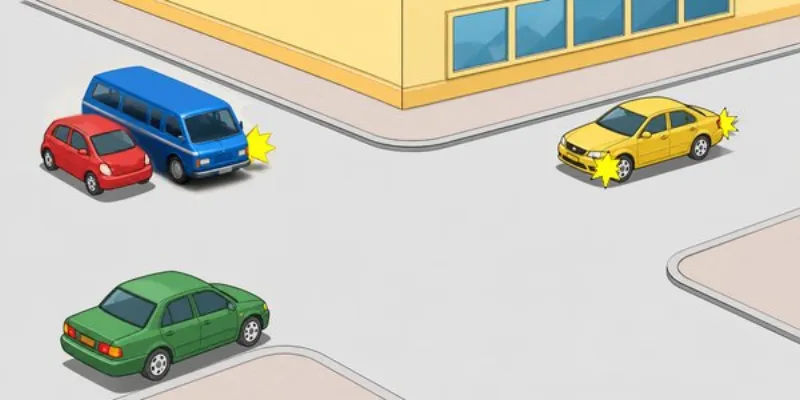
- Second, simultaneously with the blue automobile.
- Second, after the yellow automobile.
- Third, after the green and yellow automobiles.
Correct answer: Second, simultaneously with the blue automobile. ABC · D/T
Why: Նշաններ չկան՝ հավասարազոր ճանապարհների խաչմերուկ։ Կետ 98-ով զիջում են աջից մոտեցողին, կետ 99-ով ձախ շրջադարձ կատարողը զիջում է հանդիպակաց ուղիղ կամ աջ գնացողին. կարմիրի և կապույտի ուղիները չեն հատվում, նրանք անցնում են երկրորդը՝ միաժամանակ։
In tests: ABC 40, ABC 49, D/T 48
47. The yellow automobile will proceed through the intersection:
- First.
- Second.
- Third.
- Last.
Correct answer: Last. ABC · D/T
Why: Կանաչի դիմաց
2.1 «Գլխավոր ճանապարհ» նշանն է
8.13 «Գլխավոր ճանապարհի ուղղությունը» ցուցանակով, դեղինի դիմաց՝
2.5 «Երթևեկությունն առանց կանգառի արգելվում է» նույն ցուցանակով, կարմիրի և կապույտի մոտ նշանների թիկունքն է։ Գլխավոր ճանապարհը դեղինի թևով չի անցնում. դեղինը կետ 96-ով զիջում է գլխավոր ճանապարհով ընթացողներին, իսկ երկրորդական ճանապարհի մյուս մեքենային՝ աջի խոչընդոտի կանոնով (կետ 97, 98). այն անցնում է վերջինը։
Signs in this question: 2.1, 8.13, 2.5
In tests: ABC 26
48. Which answer correctly states the order in which the vehicles will proceed?
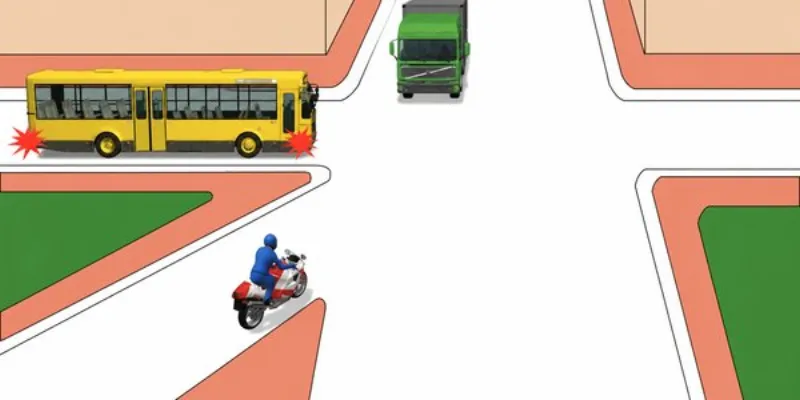
- The motorcycle, the bus, the truck.
- The bus, the motorcycle, the truck.
- The bus, the truck, the motorcycle.
Correct answer: The motorcycle, the bus, the truck. ABC · D/T
Why: Նշաններ չկան՝ հավասարազոր ճանապարհների խաչմերուկ, կետ 98-ով զիջում են աջից մոտեցողին։ Ավտոբուսը զիջում է աջից մոտեցող մոտոցիկլին, բեռնատարը՝ ավտոբուսին, մոտոցիկլի աջից ոչ ոք չկա. մոտոցիկլ, ավտոբուս, բեռնատար։
In tests: ABC 21, D/T 44
49. The vehicles will proceed through the intersection in the following order:
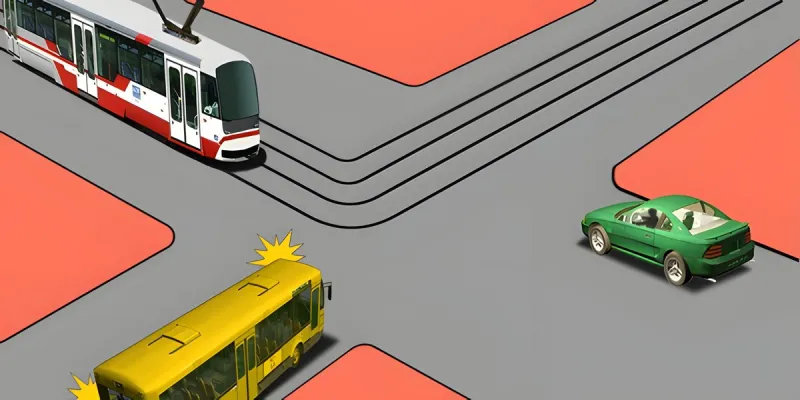
- The passenger car, the bus, the tram.
- The tram, the bus, the passenger car.
- The tram, the passenger car, the bus.
Correct answer: The tram, the passenger car, the bus. ABC · D/T
Why: Նշաններ և լուսացույց չկան՝ հավասարազոր ճանապարհների չկարգավորվող խաչմերուկ։ Կետ 100-ով տրամվայն անցնում է առաջինը՝ անկախ ուղղությունից, ապա ավտոբուսը կետ 98-ով զիջում է աջից մոտեցող թեթև մարդատարին. տրամվայ, թեթև մարդատար, ավտոբուս։
In tests: ABC 6, D/T 15
50. Which vehicle driver must yield?
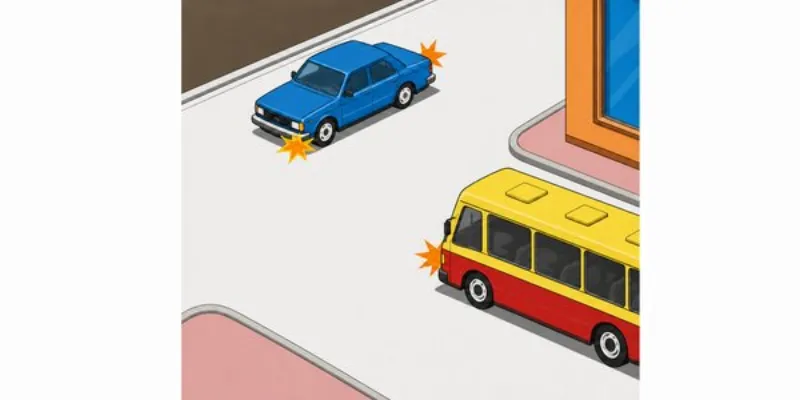
- The passenger-car driver.
- The bus driver.
Correct answer: The bus driver. ABC · D/T
Why: Ավտոբուսը բակից (մերձակա տարածքից) դուրս է գալիս այն ճանապարհը, որով ընթանում է կապույտը։ Կետ 38-ով մերձակա տարածքից ճանապարհ դուրս գալիս վարորդը զիջում է ճանապարհով երթևեկողներին. ճանապարհը ելքի նկատմամբ գլխավոր է (կետ 3, 1-ին ենթակետ)։
In tests: ABC 41, ABC 52
51. Which vehicle must yield?
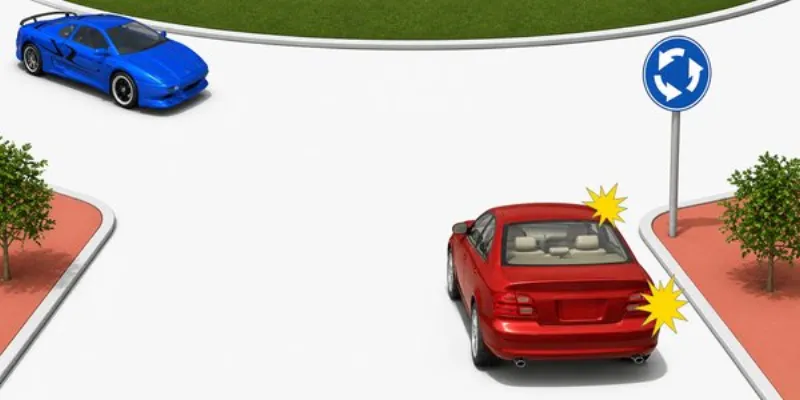
- The blue automobile.
- The red automobile.
Correct answer: The red automobile. ABC · D/T
Why: 4.3 «Շրջանաձև երթևեկություն» նշան. կետ 98.1-ով մուտք գործող կարմիրը զիջում է շրջանաձև խաչմերուկում արդեն երթևեկող կապույտին։
Signs in this question: 4.3
In tests: ABC 5, ABC 50
52. The vehicles will proceed through the intersection in the following order:
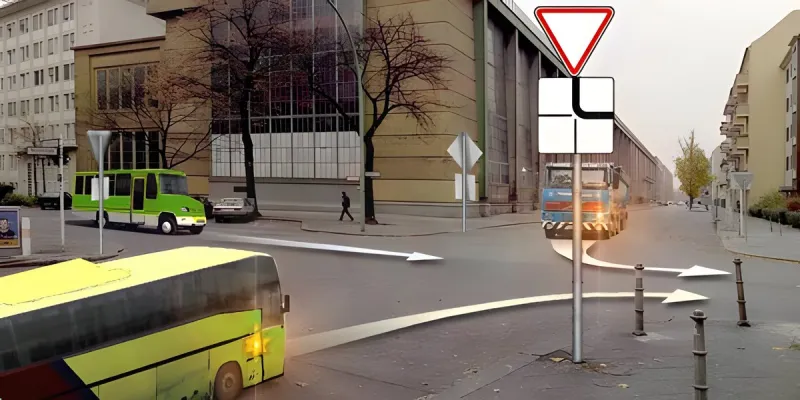
- The yellow bus, the truck, the green bus.
- The truck, the yellow bus, the green bus.
- The yellow bus, the green bus, the truck.
Correct answer: The truck, the yellow bus, the green bus. ABC · D/T
Why: Դեղին ավտոբուսի դիմաց
2.4 «Զիջեք ճանապարհը» նշանն է
8.13 «Գլխավոր ճանապարհի ուղղությունը» ցուցանակով. գլխավոր ճանապարհն անցնում է դիմացի թևով (բեռնատար) և թեքվում աջ։ Բեռնատարը գլխավոր ճանապարհով է և անցնում է առաջինը, երկու ավտոբուսները կետ 96-ով զիջում են նրան, իսկ միմյանց նկատմամբ գործում են աջի խոչընդոտի կանոնով (կետ 97, 98). բեռնատար, դեղին ավտոբուս, կանաչ ավտոբուս։
Signs in this question: 2.4, 8.13
In tests: ABC 38, D/T 43
53. The vehicles will proceed through the intersection in the following order:
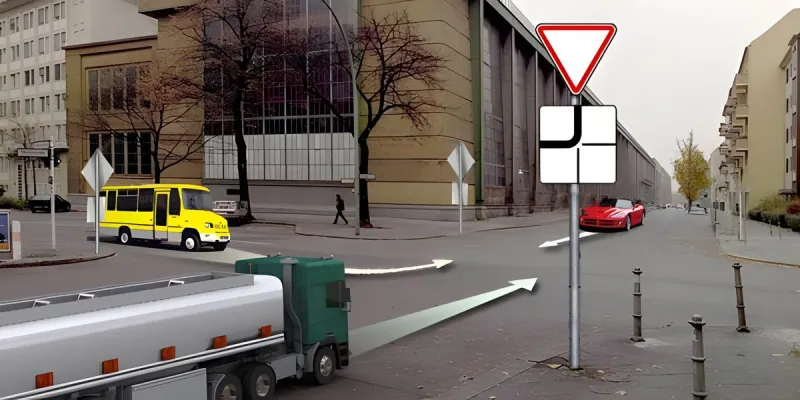
- The bus, then the passenger car and the truck simultaneously.
- The passenger car and the truck simultaneously, then the bus.
Correct answer: The bus, then the passenger car and the truck simultaneously. ABC · D/T
Why: Ավտոցիստեռնի դիմաց
2.4 «Զիջեք ճանապարհը» նշանն է
8.13 «Գլխավոր ճանապարհի ուղղությունը» ցուցանակով. գլխավոր ճանապարհն անցնում է ձախ թևից (ավտոբուս) և թեքվում դեպի դիմաց։ Ավտոբուսը գլխավոր ճանապարհով է և անցնում է առաջինը, թեթև մարդատարն ու բեռնատարը կետ 96-ով զիջում են նրան և անցնում միաժամանակ, քանի որ նրանց ուղիները չեն հատվում (կետ 97)։
Signs in this question: 2.4, 8.13
In tests: ABC 4, ABC 46, D/T 8
54. In what order will the vehicles proceed through the intersection if the traffic signals are not operating?
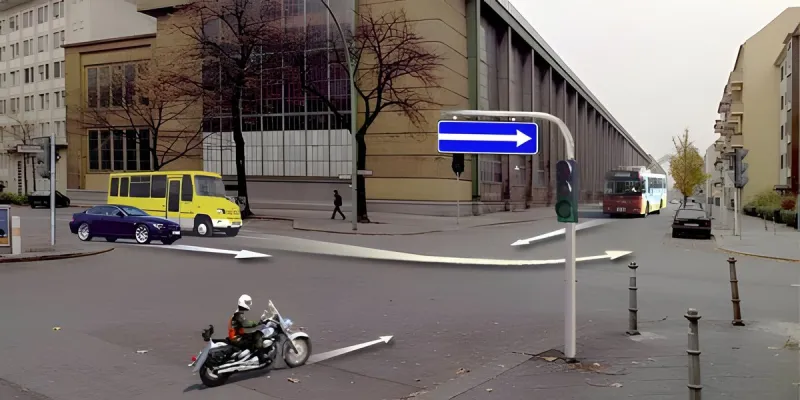
- The trolleybus and the motorcycle, then the bus and the passenger car.
- The motorcycle, then the bus and the passenger car, then the trolleybus.
- The bus and the passenger car, then the trolleybus and the motorcycle.
Correct answer: The motorcycle, then the bus and the passenger car, then the trolleybus. ABC · D/T
Why: Լուսացույցները չեն աշխատում, ուստի խաչմերուկը չկարգավորվող է (կետ 95)։ Միակ նշանը
5.7.1 «Ելք դեպի միակողմ երթևեկությամբ ճանապարհ» է, որն առավելություն չի սահմանում, ուստի գործում է աջի խոչընդոտի կանոնը (կետ 98), իսկ ձախ շրջադարձ կատարողը զիջում է հանդիպակացին (կետ 99). մոտոցիկլ, ապա ավտոբուսն ու թեթև մարդատարը, որոնց ուղիները չեն հատվում, վերջում՝ տրոլեյբուսը։
Signs in this question: 5.7.1
In tests: ABC 42, D/T 46
55. The vehicles will proceed through the intersection in the following order:
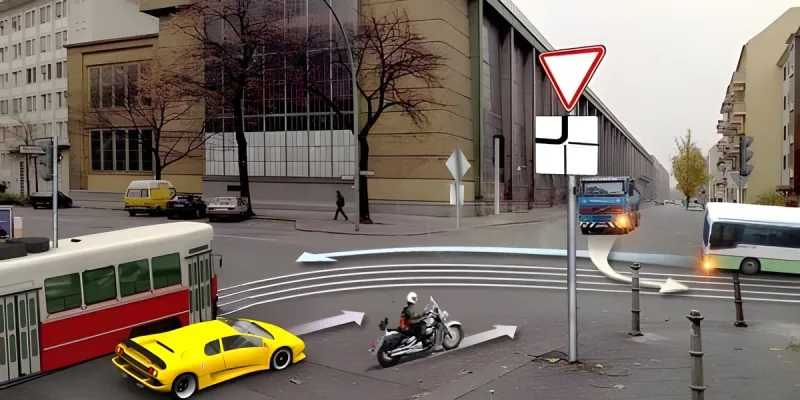
- The truck, then the tram and the bus, then the motorcycle and the passenger car.
- The tram and the bus, then the motorcycle and the passenger car, then the truck.
Correct answer: The truck, then the tram and the bus, then the motorcycle and the passenger car. ABC · D/T
Why: Մեր (դեղին) առջև
2.4 «Զիջեք ճանապարհը» նշանն է
8.13 ցուցանակով. գլխավոր ճանապարհն անցնում է դիմացի թևով (բեռնատար) և թեքվում ձախ, իսկ մեր, տրամվայի և ավտոբուսի ճանապարհները երկրորդական են։ Բեռնատարը գլխավոր ճանապարհով է և անցնում է առաջինը (կետ 96)։ Երկրորդական ճանապարհների միջև գործում են հավասարազոր խաչմերուկի կանոնները (կետ 97). տրամվայն առավելություն ունի ոչ ռելսագնաց տրանսպորտային միջոցների նկատմամբ, իսկ ավտոբուսը մոտենում է մեր և մոտոցիկլի աջից (կետ 98)։ Տրամվայն ու ավտոբուսը միմյանց չեն խանգարում և անցնում են միաժամանակ, ապա՝ մոտոցիկլն ու մենք։
Signs in this question: 2.4, 8.13
In tests: ABC 45, D/T 34
56. The vehicles will proceed through the intersection in the following order:
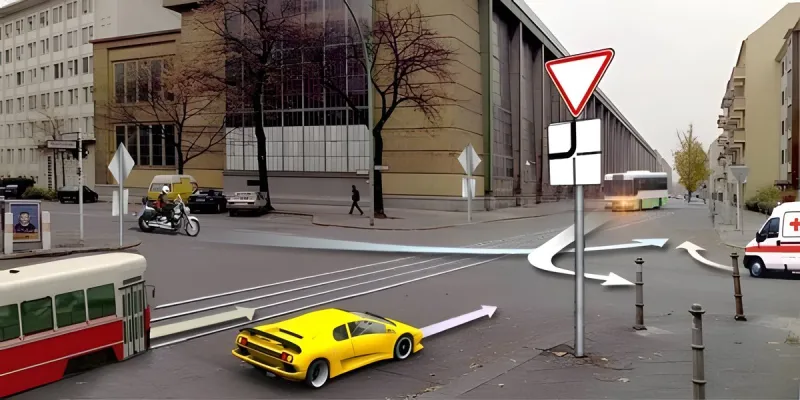
- The ambulance, the tram, the motorcycle, the bus, the passenger car.
- The motorcycle, the bus, then the tram and the ambulance, then the passenger car.
Correct answer: The motorcycle, the bus, then the tram and the ambulance, then the passenger car. ABC · D/T
Why: Դեղին մեքենայի դիմաց
2.4 «Զիջեք ճանապարհը» նշանն է
8.13 «Գլխավոր ճանապարհի ուղղությունը» ցուցանակով. գլխավոր ճանապարհն անցնում է դիմացի թևով և թեքվում ձախ։ «Շտապ օգնության» մեքենայի փարոսիկն ու ձայնային ազդանշանը միացված չեն, ուստի առավելություն չունի (կետ 28-ը գործում է միայն միացված ազդանշաններով)։ Գլխավոր ճանապարհով ընթացողները՝ մոտոցիկլն ու ավտոբուսը, անցնում են առաջ (կետ 96), ապա տրամվայն ու «Շտապ օգնությունը» միաժամանակ, երկրորդական ճանապարհի մեր մեքենան՝ վերջինը (կետ 97, 98)։
Signs in this question: 2.4, 8.13
In tests: ABC 21, D/T 7
57. The vehicles will proceed through the intersection in the following order:
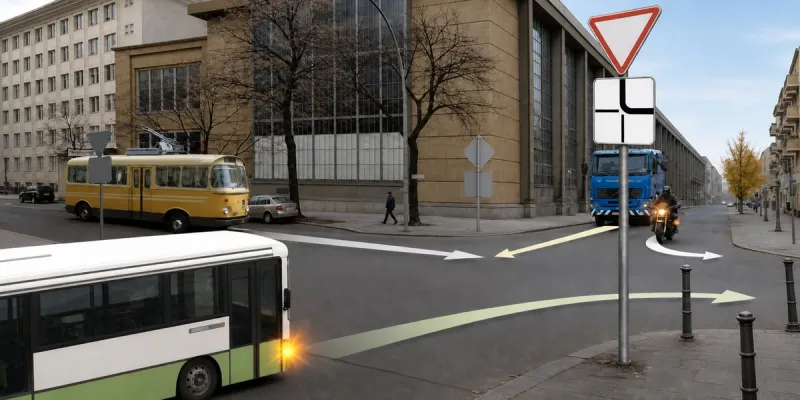
- The truck and the motorcycle, then the bus, then the trolleybus.
- The truck and the bus, then the motorcycle, then the trolleybus.
Correct answer: The truck and the motorcycle, then the bus, then the trolleybus. ABC · D/T
Why: Ավտոբուսի դիմաց
2.4 «Զիջեք ճանապարհը» նշանն է
8.13 «Գլխավոր ճանապարհի ուղղությունը» ցուցանակով. գլխավոր ճանապարհն անցնում է դիմացի թևով, որտեղ բեռնատարն ու մոտոցիկլն են, նրանք անցնում են առաջինը (կետ 96)։ Ավտոբուսն ու ձախի տրոլեյբուսը երկրորդական ճանապարհի վրա են, տրոլեյբուսը զիջում է աջից մոտեցող ավտոբուսին (կետ 97, 98). բեռնատար և մոտոցիկլ, ավտոբուս, տրոլեյբուս։
Signs in this question: 2.4, 8.13
In tests: ABC 8, D/T 45
58. The vehicles will proceed through the intersection in the following order:
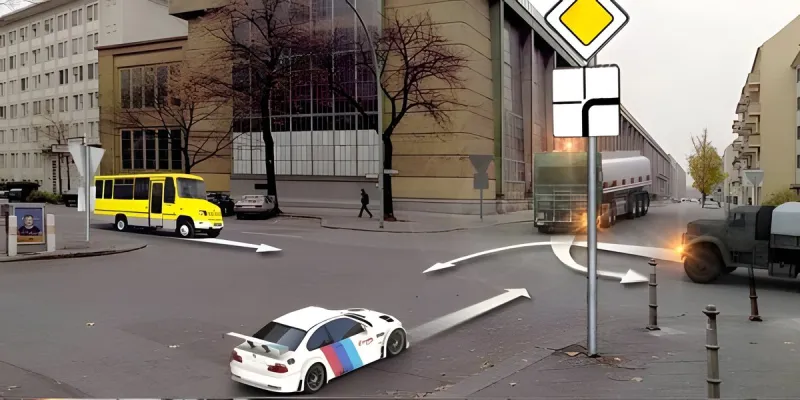
- The truck, the passenger car, the bus, the tanker truck.
- The truck, the bus, the passenger car, the tanker truck.
Correct answer: The truck, the passenger car, the bus, the tanker truck. ABC · D/T
Why: Մեր (սպիտակ թեթև մարդատարի) առջև
2.1 «Գլխավոր ճանապարհ» նշանն է
8.13 ցուցանակով. գլխավոր ճանապարհն անցնում է մեր թևով և թեքվում աջ՝ բեռնատարի թևը։ Բեռնատարն ու մենք միմյանց նկատմամբ գործում ենք հավասարազոր խաչմերուկի կանոններով (կետ 97). բեռնատարը մոտենում է աջից, ուստի զիջում ենք նրան (կետ 98)։ Ձախի ավտոբուսն ու դիմացի ավտոցիստեռնը երկրորդական ճանապարհից են և զիջում են մեզ (կետ 96), իսկ իրենց միջև ձախ թեքվող ավտոցիստեռնը զիջում է աջից մոտեցող ավտոբուսին։ Բեռնատար, թեթև մարդատար, ավտոբուս, ավտոցիստեռն։
Signs in this question: 2.1, 8.13
In tests: ABC 27, D/T 27
59. The passenger car will proceed through the intersection:
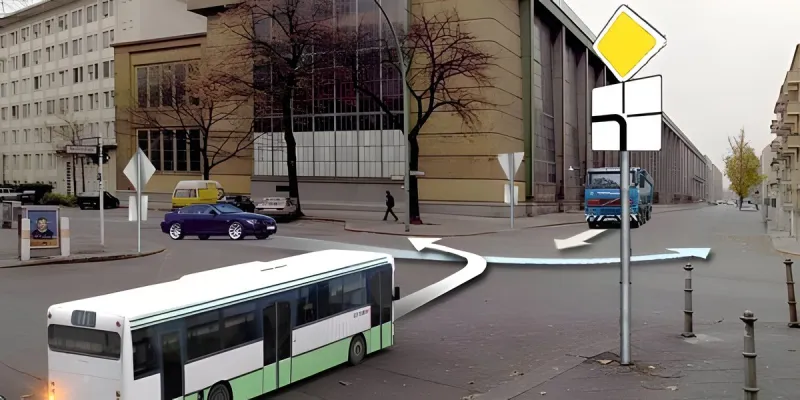
- First.
- Second, after the bus.
- Third.
Correct answer: Second, after the bus. ABC
Why: Մեր (ավտոբուսի) առջև
2.1 «Գլխավոր ճանապարհ» նշանն է
8.13 ցուցանակով. գլխավոր ճանապարհն անցնում է մեր թևով և թեքվում ձախ՝ թեթև մարդատարի թևը, իսկ դիմացի բեռնատարը երկրորդական ճանապարհից է։ Գլխավոր ճանապարհով ընթացողները միմյանց նկատմամբ գործում են հավասարազոր խաչմերուկի կանոններով (կետ 97). ավտոբուսը մոտենում է թեթև մարդատարի աջից, ուստի այն զիջում է ավտոբուսին (կետ 98)։ Բեռնատարը զիջում է երկուսին (կետ 96). թեթև մարդատարն անցնում է երկրորդը՝ ավտոբուսից հետո։
Signs in this question: 2.1, 8.13
In tests: ABC 35
60. The vehicles will proceed through the intersection in the following order:
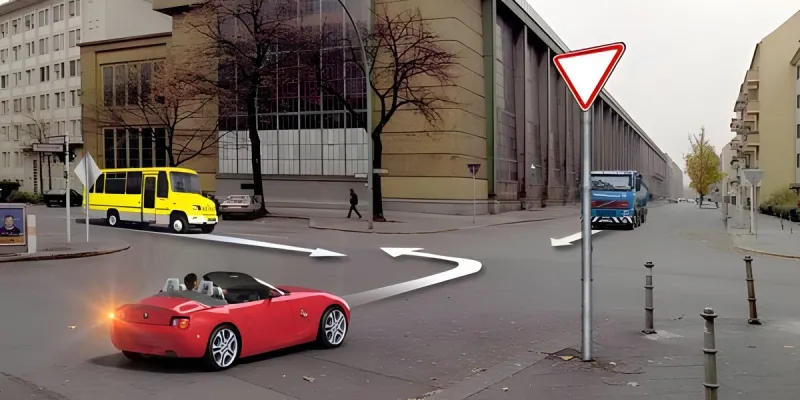
- The passenger car, the bus, the truck.
- The bus, the truck, the passenger car.
- The bus, the passenger car, the truck.
Correct answer: The bus, the truck, the passenger car. ABC · D/T
Why: Մեր առջև
2.4 «Զիջեք ճանապարհը» նշանն է՝ առանց ցուցանակի, ուստի հատվող ճանապարհը գլխավորն է, իսկ մերն ու դիմացինը՝ երկրորդական։ Ավտոբուսը գլխավոր ճանապարհով է և անցնում է առաջինը (կետ 96)։ Երկրորդական ճանապարհների միջև գործում են հավասարազոր խաչմերուկի կանոնները (կետ 97). մենք ձախ ենք թեքվում և կետ 99-ով զիջում ենք հանդիպակաց ուղղությունից աջ թեքվող բեռնատարին։ Ավտոբուս, բեռնատար, թեթև մարդատար։
Signs in this question: 2.4
In tests: ABC 4, D/T 35
61. The vehicles will proceed through the intersection in the following order:
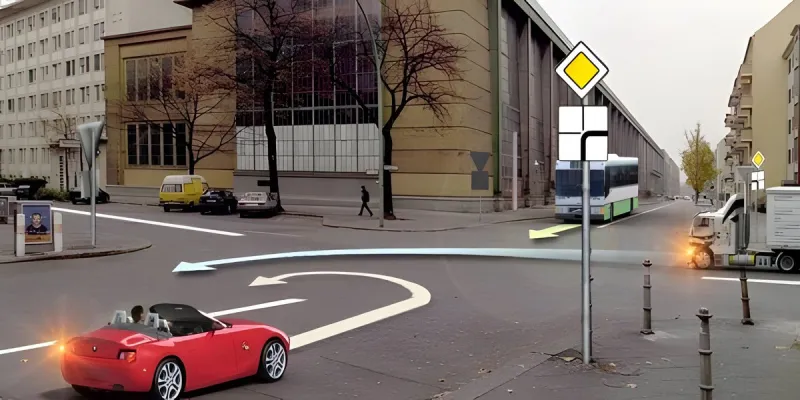
- The truck, the passenger car, the bus.
- The bus, the truck, the passenger car.
- The bus, the passenger car, the truck.
Correct answer: The truck, the passenger car, the bus. ABC · D/T
Why: Մեր դիմաց
2.1 «Գլխավոր ճանապարհ» նշանն է
8.13 «Գլխավոր ճանապարհի ուղղությունը» ցուցանակով. գլխավոր ճանապարհն անցնում է մեր թևով և թեքվում աջ՝ բեռնատարի թևը։ Բեռնատարն ու մեր մեքենան գլխավոր ճանապարհով են, բեռնատարը մոտենում է աջից և անցնում է առաջինը (կետ 97, 98), ապա մենք, իսկ դիմացի ավտոբուսը երկրորդական ճանապարհից է (կետ 96). բեռնատար, թեթև մարդատար, ավտոբուս։
Signs in this question: 2.1, 8.13
In tests: ABC 32, D/T 43
62. May the vehicles make left turns simultaneously?
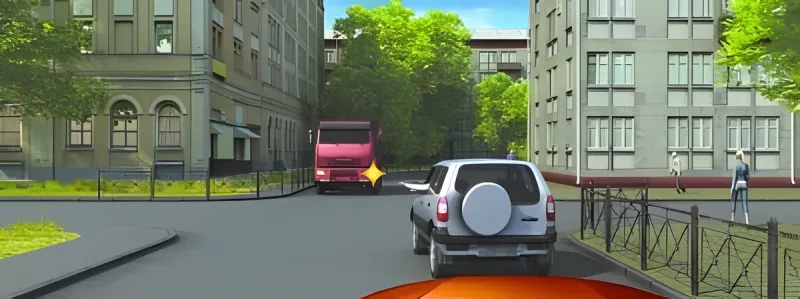
- Yes.
- No. The passenger-car driver must yield.
- No. The truck driver must yield.
Correct answer: Yes. ABC
Why: Ձախ շրջադարձ կատարող երկու տրանսպորտային միջոցները հանդիպակաց ուղղություններից են, և նրանց ուղիները չեն հատվում՝ նրանք շրջանցում են միմյանց ձախ կողմով։ Կետ 99-ով ձախ թեքվողը զիջում է միայն հանդիպակաց ուղղությունից ուղիղ կամ դեպի աջ ընթացողներին, ուստի երկուսն էլ կարող են շրջադարձը կատարել միաժամանակ։
In tests: ABC 18, ABC 55
63. To whom must you yield in this situation?
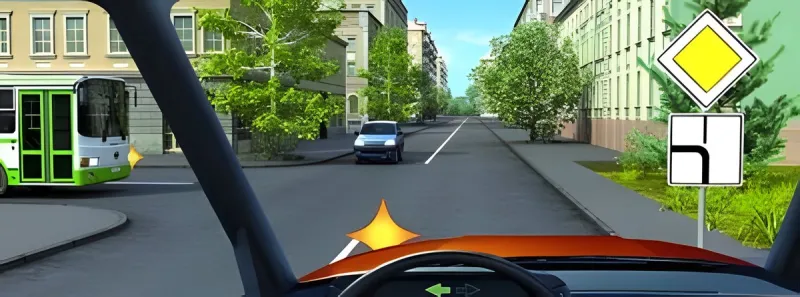
- Only to the bus.
- To the passenger car.
- To no one.
Correct answer: To no one. ABC · D/T
Why: Մեր դիմաց
2.1 «Գլխավոր ճանապարհ» նշանն է
8.13 «Գլխավոր ճանապարհի ուղղությունը» ցուցանակով. գլխավոր ճանապարհն անցնում է մեր թևով և թեքվում ձախ՝ ավտոբուսի թևը։ Ավտոբուսը գլխավոր ճանապարհով է, բայց մոտենում է մեր ձախից և կետ 97, 98-ով զիջում է մեզ, իսկ դիմացի թեթև մարդատարը երկրորդական ճանապարհից է (կետ 96). ոչ մեկին չենք զիջում։
Signs in this question: 2.1, 8.13
In tests: ABC 16, D/T 32
64. In this situation, when making a left turn:
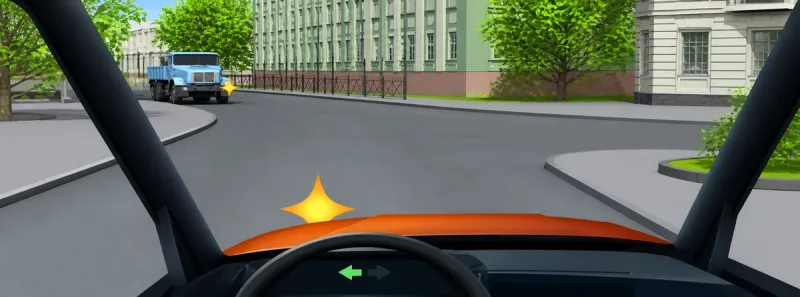
- You will proceed through the intersection first.
- You must yield to the truck driver.
Correct answer: You will proceed through the intersection first. ABC · D/T
Why: Առավելության նշաններ չկան՝ հավասարազոր ճանապարհների խաչմերուկ։ Բեռնատարը մոտենում է մեր ձախից և կետ 98-ով զիջում է մեզ, հանդիպակաց երթևեկություն չկա (կետ 99). անցնում ենք առաջինը։
In tests: ABC 3, D/T 13
65. In this situation, when making a right turn:
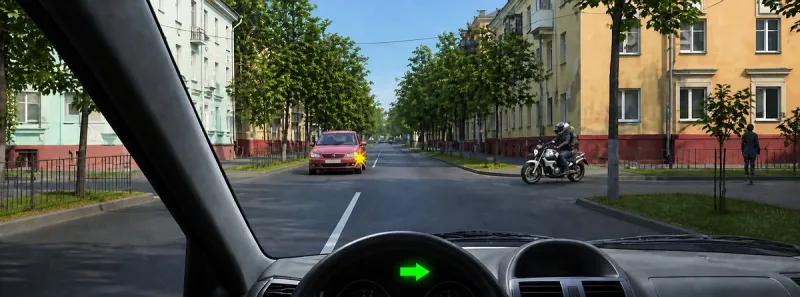
- You will proceed through the intersection first.
- You must yield to the passenger-car driver.
Correct answer: You will proceed through the intersection first. ABC · D/T
Why: Առավելության նշաններ չկան՝ հավասարազոր ճանապարհների խաչմերուկ։ Հանդիպակաց կարմիր թեթև մարդատարը ձախ է թեքվում այն նույն փողոցը, ուր մենք աջ ենք թեքվում, և կետ 99-ով պետք է զիջի մեզ։ Աջ շրջադարձի մեր հետագիծը չի հատում աջ փողոցով երթևեկող մոտոցիկլի ուղին, ուստի խաչմերուկն անցնում ենք առաջինը։
In tests: ABC 14, ABC 47, D/T 2
66. When making a left turn, you must yield to:
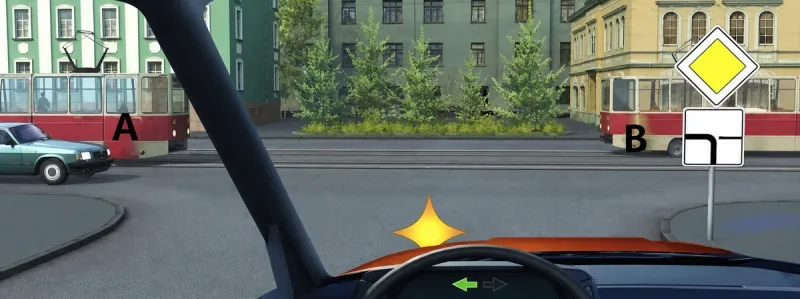
- The passenger-car driver and the operator of tram A.
- Only the operator of tram A.
- The tram operators.
- No one.
Correct answer: Only the operator of tram A. ABC · D/T
Why: Մեր դիմաց
2.1 «Գլխավոր ճանապարհ» նշանն է
8.13 «Գլխավոր ճանապարհի ուղղությունը» ցուցանակով. գլխավոր ճանապարհն անցնում է մեր թևով և թեքվում ձախ, որտեղ A տրամվայն ու թեթև մարդատարն են, B տրամվայը երկրորդական ճանապարհի վրա է։ Թեքվող գլխավոր ճանապարհի վրա գործում են հավասարազոր խաչմերուկի կանոնները (կետ 97). տրամվայն առավելություն ունի ոչ ռելսագնաց միջոցների նկատմամբ (կետ 96, 100), ուստի զիջում ենք A տրամվային, ձախից մոտեցող մեքենան զիջում է մեզ (կետ 98), իսկ երկրորդական ճանապարհի B տրամվայը զիջում է բոլորին (կետ 96)։
Signs in this question: 2.1, 8.13
In tests: ABC 15, D/T 23
67. If continuing straight ahead:
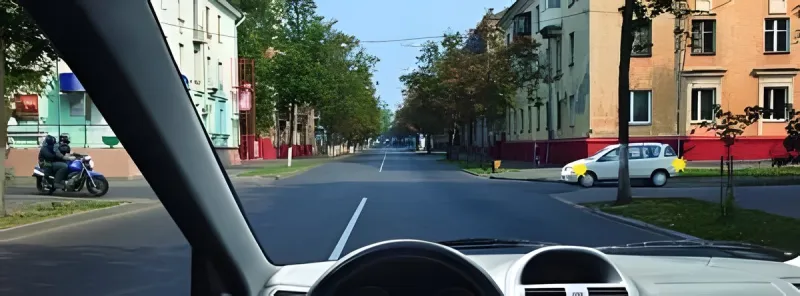
- You will proceed through the intersection first.
- You will proceed after the passenger car has passed.
Correct answer: You will proceed after the passenger car has passed. ABC · D/T
Why: Առավելության նշաններ չկան՝ հավասարազոր ճանապարհների խաչմերուկ։ Թեթև մարդատարը մոտենում է մեր աջից, կետ 98-ով զիջում ենք նրան և անցնում նրանից հետո. ձախի մոտոցիկլը զիջում է մեզ։
In tests: ABC 3, D/T 52
68. In this situation, when making a U-turn, you must yield to:
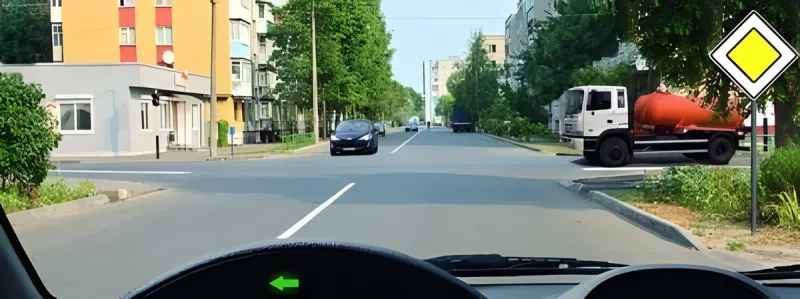
- The passenger car.
- Both drivers.
Correct answer: The passenger car. ABC · D/T
Why: 2.1 «Գլխավոր ճանապարհ» նշան. գլխավոր ճանապարհով ենք։ Հետադարձ կատարելիս կետ 99-ով զիջում ենք նույն ճանապարհով հանդիպակաց ուղիղ գնացող թեթև մարդատարին, իսկ աջի երկրորդական ճանապարհի ավտոցիստեռնը կետ 96-ով զիջում է մեզ. միայն թեթև մարդատարին։
Signs in this question: 2.1
In tests: ABC 18
69. In this situation, must we avoid interfering with pedestrians?
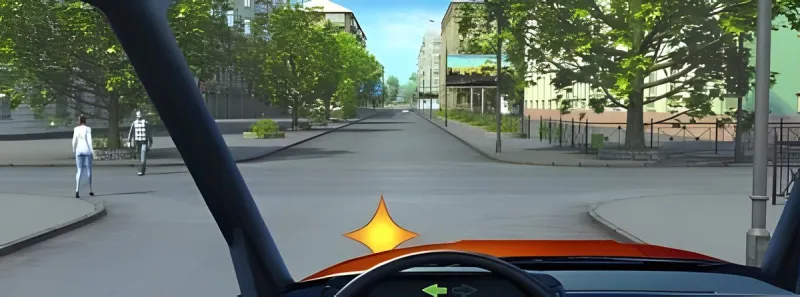
- Yes.
- No.
Correct answer: Yes. ABC · D/T
Why: Խաչմերուկում ձախ շրջադարձ կատարելիս վարորդը կետ 87-ով խոչընդոտ չպետք է ստեղծի երթևեկելի մասը հատող հետիոտների համար. պարտավոր ենք։
In tests: ABC 15, D/T 14
70. When congestion has formed immediately beyond the intersection, entering the intersection is permitted:
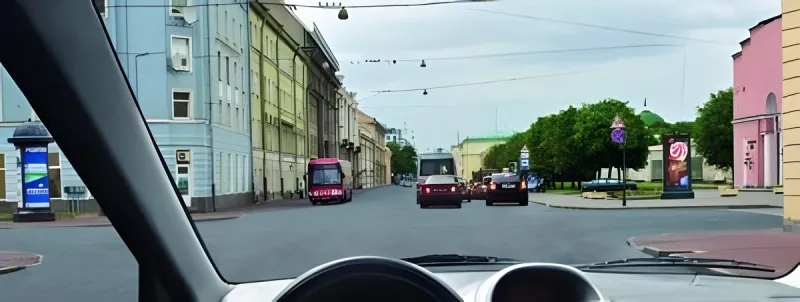
- If you intend to continue straight ahead.
- If you intend to make a turn or a U-turn.
- In all of the listed cases.
Correct answer: If you intend to make a turn or a U-turn. ABC · D/T
Why: Կետ 88-ով արգելվում է մուտք գործել խաչմերուկ, եթե առջևի խցանումը կհարկադրի կանգնել՝ խոչընդոտելով լայնական երթևեկությանը, բացառությամբ աջ կամ ձախ շրջադարձ կատարելու դեպքերի։
In tests: ABC 29, D/T 19
71. We must yield to:
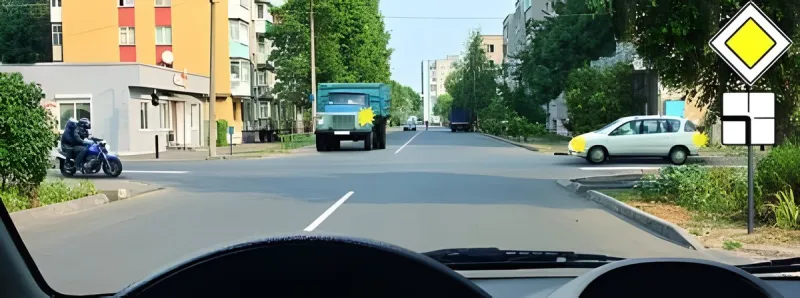
- The motorcycle operator.
- The passenger-car driver.
- No one.
Correct answer: No one. ABC · D/T
Why: Մեր դիմաց
2.1 «Գլխավոր ճանապարհ» նշանն է
8.13 «Գլխավոր ճանապարհի ուղղությունը» ցուցանակով. գլխավոր ճանապարհն անցնում է մեր թևով և թեքվում ձախ՝ մոտոցիկլի թևը։ Մոտոցիկլը գլխավոր ճանապարհով է, բայց մոտենում է ձախից և կետ 97, 98-ով զիջում է մեզ, իսկ դիմացի բեռնատարն ու աջի թեթև մարդատարը երկրորդական ճանապարհից են (կետ 96). ոչ ոքի չենք զիջում։
Signs in this question: 2.1, 8.13
In tests: ABC 32, D/T 37
72. When proceeding through the intersection, the driver must yield to:
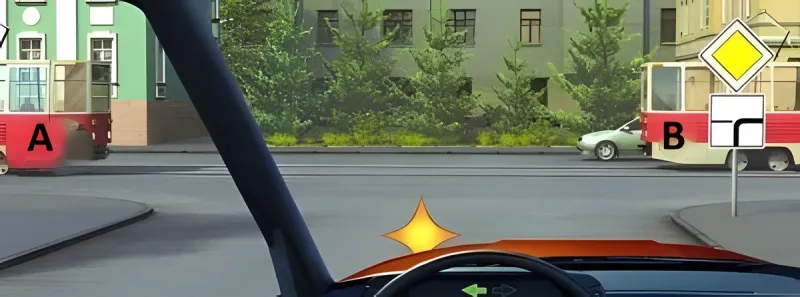
- Only the tram operators.
- The passenger-car driver and the operator of tram B.
- No one.
- Everyone.
Correct answer: The passenger-car driver and the operator of tram B. ABC · D/T
Why: Մեր դիմաց
2.1 «Գլխավոր ճանապարհ» նշանն է
8.13 «Գլխավոր ճանապարհի ուղղությունը» ցուցանակով. գլխավոր ճանապարհն անցնում է մեր թևով և թեքվում աջ, որտեղ թեթև մարդատարն ու Բ տրամվայն են, ձախի Ա տրամվայը երկրորդական ճանապարհի վրա է։ Թեքվող գլխավոր ճանապարհի վրա գործում են հավասարազոր խաչմերուկի կանոնները (կետ 97). թեթև մարդատարն ու Բ տրամվայը մոտենում են աջից՝ զիջում ենք երկուսին (կետ 98, տրամվայի առավելություն՝ կետ 100), իսկ Ա տրամվայը կետ 96-ով զիջում է գլխավոր ճանապարհով ընթացողներին։
Signs in this question: 2.1, 8.13
In tests: ABC 19, ABC 54, D/T 49
73. In this situation, when making a left turn, we must yield to:
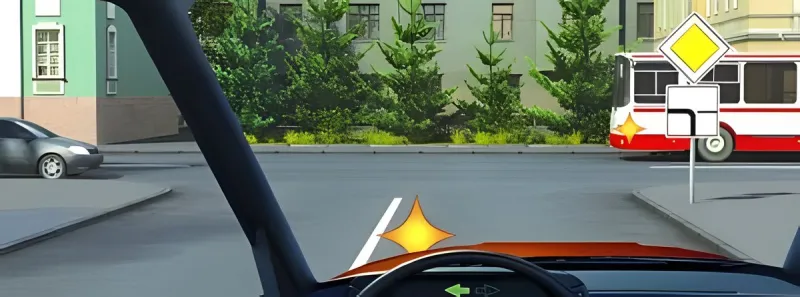
- The passenger-car driver.
- The bus driver.
- No one.
Correct answer: No one. ABC · D/T
Why: Մեր դիմաց
2.1 «Գլխավոր ճանապարհ» նշանն է
8.13 «Գլխավոր ճանապարհի ուղղությունը» ցուցանակով. գլխավոր ճանապարհն անցնում է մեր թևով և թեքվում ձախ՝ թեթև մարդատարի թևը, աջի տրամվայը երկրորդական ճանապարհի վրա է։ Ձախ շրջադարձի ժամանակ ձախից մոտեցող մեքենան կետ 97, 98-ով զիջում է մեզ, իսկ տրամվայը՝ կետ 96-ով. ոչ ոքի չենք զիջում։
Signs in this question: 2.1, 8.13
In tests: ABC 11, D/T 8
74. We must yield to:
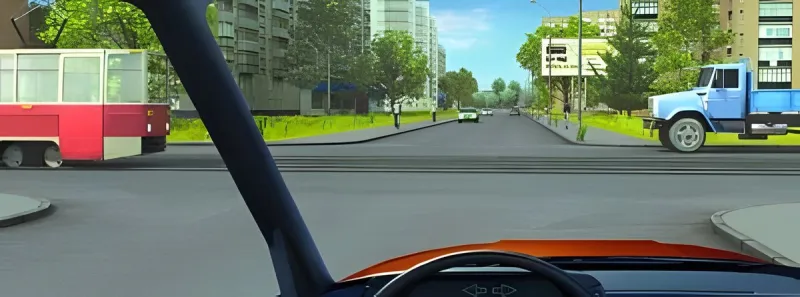
- Only the tram operator.
- The truck driver.
- Both drivers.
Correct answer: Both drivers. ABC · D/T
Why: Նշաններ չկան՝ հավասարազոր ճանապարհների խաչմերուկ։ Կետ 100-ով տրամվայն առավելություն ունի ոչ ռելսագնաց միջոցների նկատմամբ՝ անկախ ուղղությունից, իսկ բեռնատարը մոտենում է մեր աջից (կետ 98). զիջում ենք երկուսին։
In tests: ABC 21, D/T 25
75. We must yield to:
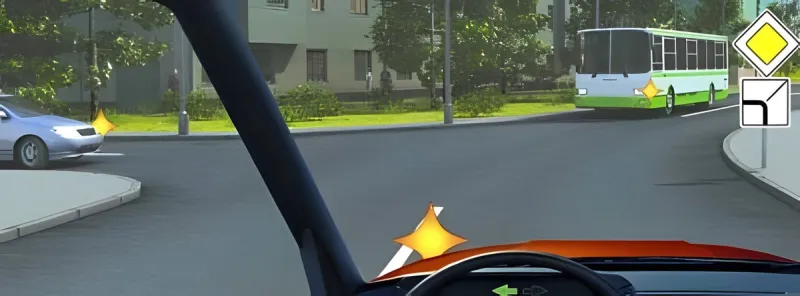
- The bus driver.
- Both drivers.
- No one.
Correct answer: No one. ABC · D/T
Why: Մեր դիմաց
2.1 «Գլխավոր ճանապարհ» նշանն է
8.13 «Գլխավոր ճանապարհի ուղղությունը» ցուցանակով. գլխավոր ճանապարհն անցնում է մեր թևով և թեքվում ձախ՝ թեթև մարդատարի թևը, դիմացի ավտոբուսը երկրորդական ճանապարհի վրա է։ Մեքենան գլխավոր ճանապարհով է, բայց մոտենում է ձախից և կետ 97, 98-ով զիջում է մեզ, ավտոբուսը զիջում է կետ 96-ով. ոչ ոքի չենք զիջում։
Signs in this question: 2.1, 8.13
In tests: ABC 16, D/T 49
76. In this situation, when proceeding through the intersection, must you yield?
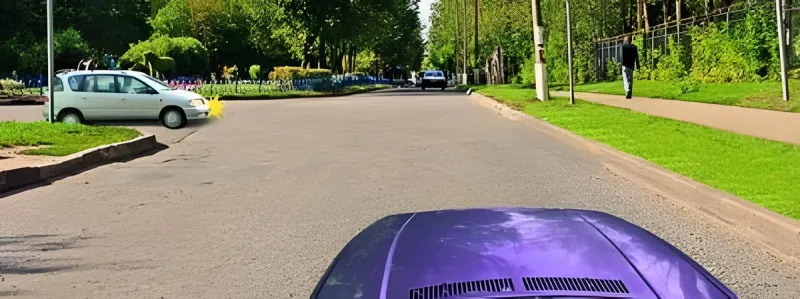
- Yes.
- No.
Correct answer: No. ABC · D/T
Why: Նշաններ չկան։ Մենք ծածկույթով ճանապարհով ենք, թեթև մարդատարը դուրս է գալիս գրունտային ճանապարհից. ծածկույթով ճանապարհը գրունտայինի նկատմամբ գլխավոր է (կետ 3, 1-ին ենթակետ), ուստի կետ 96-ով զիջում է մյուս վարորդը. պարտավոր չենք։
In tests: ABC 42, D/T 9
77. In this situation, when proceeding through the intersection:
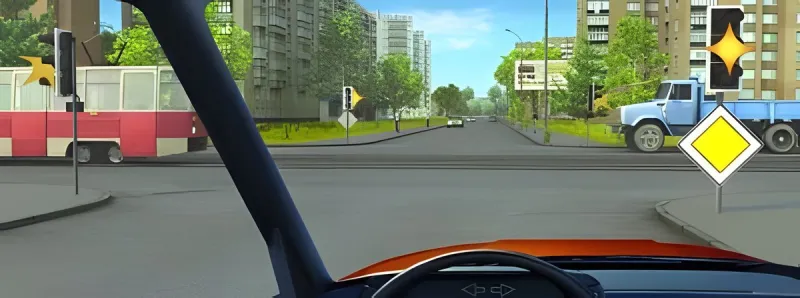
- We have the right-of-way to proceed first.
- We must yield to the tram operator.
- We must yield to the truck driver.
- We must yield to all drivers.
Correct answer: We have the right-of-way to proceed first. ABC · D/T
Why: Նկարում և՛ լուսացույց է, և՛
2.1 «Գլխավոր ճանապարհ» նշան, բայց լուսացույցը դեղին թարթող է. այդ ազդանշանը թույլատրում է երթևեկությունը և նշանակում է չկարգավորվող խաչմերուկ (կետ 7, 4-րդ ենթակետ, կետ 95), ուստի առաջնահերթությունը որոշում են նշանները։ Մենք գլխավոր ճանապարհով ենք, տրամվայն ու բեռնատարը երկրորդական ճանապարհից կետ 96-ով զիջում են մեզ. անցնում ենք առաջինը։
Signs in this question: 2.1
In tests: ABC 24, D/T 27
78. When entering a roundabout marked with the “Roundabout” traffic sign, the driver of a vehicle:
- Must yield to vehicles proceeding within the roundabout.
- Has the right-of-way over vehicles proceeding within the roundabout.
Correct answer: Must yield to vehicles proceeding within the roundabout. ABC · D/T
Why: Կետ 98.1-ով
4.3 «Շրջանաձև երթևեկություն» նշանով կահավորված խաչմերուկ մուտք գործող վարորդը պարտավոր է զիջել այդ խաչմերուկում արդեն երթևեկող տրանսպորտային միջոցներին։
Signs in this question: 4.3
In tests: ABC 44, D/T 23
79. In this situation, when making a left turn, we must yield to:
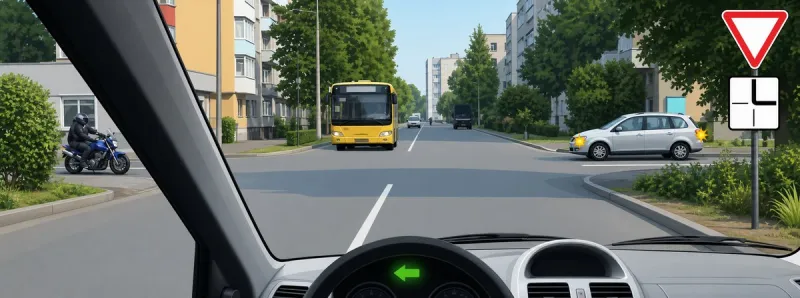
- All drivers.
- Only the passenger-car driver.
- The bus driver and the passenger-car driver.
Correct answer: The bus driver and the passenger-car driver. ABC · D/T
Why: Մեր դիմաց
2.4 «Զիջեք ճանապարհը» նշանն է
8.13 «Գլխավոր ճանապարհի ուղղությունը» ցուցանակով. գլխավոր ճանապարհն անցնում է դիմացի թևով (ավտոբուս) և թեքվում աջ (թեթև մարդատար)։ Ձախ շրջադարձի ժամանակ կետ 96-ով զիջում ենք երկուսին, իսկ ձախի մոտոցիկլը մյուս երկրորդական թևից է և, մեր ձախում լինելով, զիջում է մեզ (կետ 97, 98). ավտոբուսի և թեթև մարդատարի վարորդներին։
Signs in this question: 2.4, 8.13
In tests: ABC 9, ABC 53, D/T 52
80. Which driver must not interfere with pedestrians?
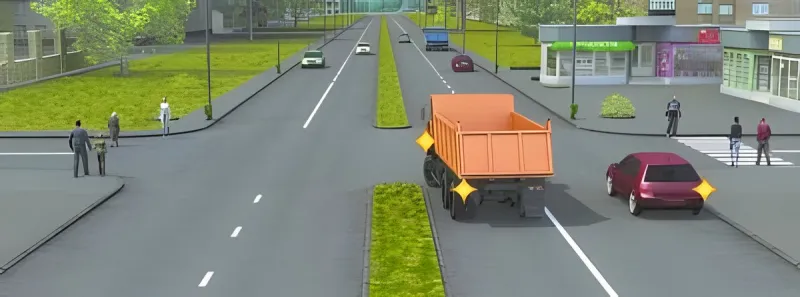
- The passenger-car driver.
- The truck driver.
- Both drivers.
Correct answer: Both drivers. ABC
Why: Բեռնատարն էլ, թեթև մարդատարն էլ շրջադարձ են կատարում խաչմերուկում, իսկ կետ 87-ով շրջադարձ կատարող յուրաքանչյուր վարորդ խոչընդոտ չպետք է ստեղծի երթևեկելի մասը հատող հետիոտների համար. երկու վարորդներն էլ։
In tests: ABC 3
81. In this situation, may the driver make a left turn?
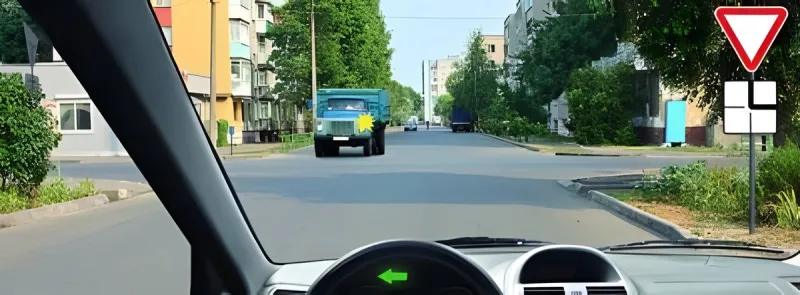
- Yes.
- Yes, if the driver does not interfere with the truck driver.
- No.
Correct answer: Yes, if the driver does not interfere with the truck driver. ABC · D/T
Why: Մեր դիմաց
2.4 «Զիջեք ճանապարհը» նշանն է
8.13 «Գլխավոր ճանապարհի ուղղությունը» ցուցանակով. դիմացի բեռնատարը գլխավոր ճանապարհով է։ Ձախ շրջադարձը թույլատրվում է միայն, եթե կետ 96-ով բեռնատարին խոչընդոտ չենք ստեղծի։
Signs in this question: 2.4, 8.13
In tests: ABC 27, D/T 25
82. In this situation, when making a left turn, the driver:
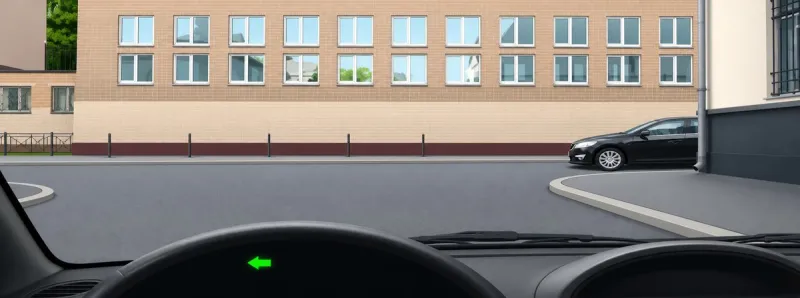
- Must yield.
- Will proceed through the intersection first.
Correct answer: Must yield. ABC · D/T
Why: Առավելության նշաններ չկան՝ հավասարազոր ճանապարհների խաչմերուկ։ Թեթև մարդատարը մոտենում է մեր աջից, ուստի կետ 98-ով ձախ շրջադարձ կատարելիս պարտավոր ենք զիջել նրան։
In tests: ABC 22, D/T 44
83. The signs indicate that:
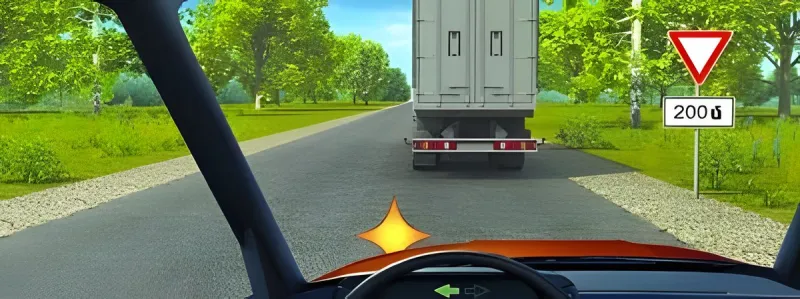
- After 200 m, you must yield to traffic proceeding on the intersecting road.
- Over the next 200 m, you must yield to all vehicles.
Correct answer: After 200 m, you must yield to traffic proceeding on the intersecting road. ABC · D/T
Why: 2.4 «Զիջեք ճանապարհը» նշանը
8.1.1 «Հեռավորություն մինչև օբյեկտ» ցուցանակով նախազգուշացնում է, որ 200 մ հետո՝ խաչմերուկում, պետք է զիջել հատվող ճանապարհով երթևեկողներին։ Նշանը 200 մ-անոց հատվածում զիջելու պահանջ չի սահմանում։
Signs in this question: 2.4, 8.1.1
In tests: ABC 45, D/T 41
84. When making a left turn at the second crossing, the driver:
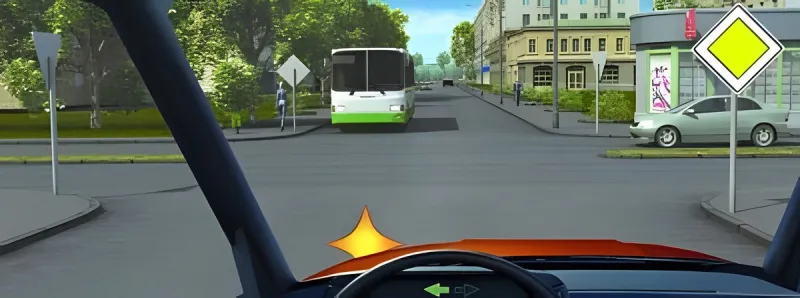
- Has the right-of-way.
- Must yield to the other drivers.
- Must yield to the bus driver.
Correct answer: Must yield to the bus driver. ABC · D/T
Why: 2.1 «Գլխավոր ճանապարհ» նշան. գլխավոր ճանապարհով ենք։ Երկրորդ խաչմերուկում ձախ շրջադարձ կատարելիս կետ 99-ով զիջում ենք նույն ճանապարհով հանդիպակաց ուղիղ գնացող ավտոբուսին, իսկ երկրորդական ճանապարհի թեթև մարդատարը կետ 96-ով զիջում է մեզ. միայն ավտոբուսի վարորդին։
Signs in this question: 2.1
In tests: ABC 39, D/T 47
85. When proceeding straight through the intersection, the driver:
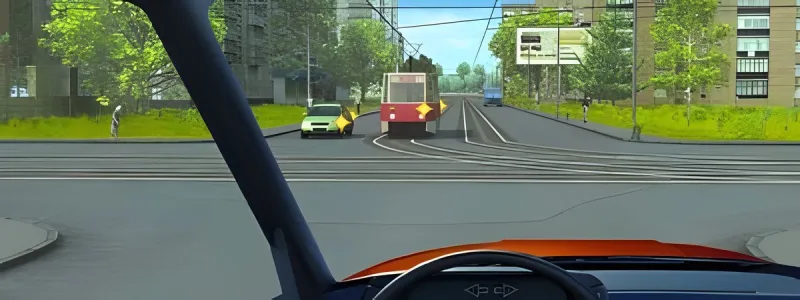
- May proceed first.
- Must yield to the tram.
- Must yield to both drivers.
Correct answer: Must yield to the tram. ABC · D/T
Why: Նշաններ չկան՝ հավասարազոր ճանապարհների խաչմերուկ։ Կետ 100-ով տրամվայն առավելություն ունի ոչ ռելսագնաց միջոցների նկատմամբ՝ անկախ ուղղությունից, ուստի ուղիղ անցնելիս զիջում ենք տրամվային, իսկ ձախ թեքվող հանդիպակաց թեթև մարդատարը կետ 99-ով զիջում է մեզ։
In tests: ABC 20, ABC 51, D/T 4
86. When making a left turn, to whom must the driver yield?
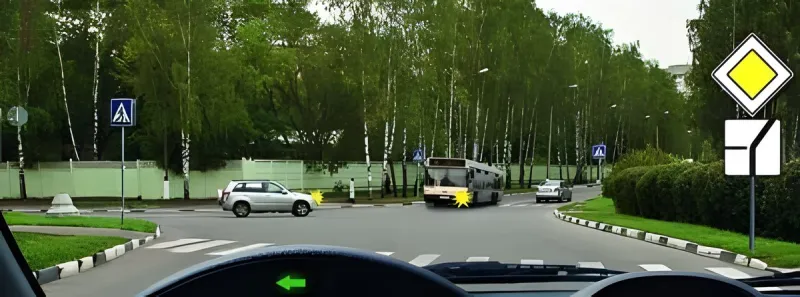
- The bus driver.
- The passenger-car driver.
- No one.
Correct answer: The bus driver. ABC · D/T
Why: Մեր դիմաց
2.1 «Գլխավոր ճանապարհ» նշանն է
8.13 «Գլխավոր ճանապարհի ուղղությունը» ցուցանակով. գլխավոր ճանապարհն անցնում է մեր թևով և թեքվում աջ՝ ավտոբուսի թևը, ձախի թեթև մարդատարը երկրորդական ճանապարհի վրա է։
5.19.1 «Հետիոտնային անցում» նշանները միայն անցումներն են նշում։ Ձախ շրջադարձի ժամանակ զիջում ենք աջից մոտեցող ավտոբուսին (կետ 97, 98), իսկ թեթև մարդատարը կետ 96-ով զիջում է մեզ. միայն ավտոբուսի վարորդին։
Signs in this question: 2.1, 8.13, 5.19.1
In tests: ABC 10, D/T 32
87. When entering this intersection, the driver:
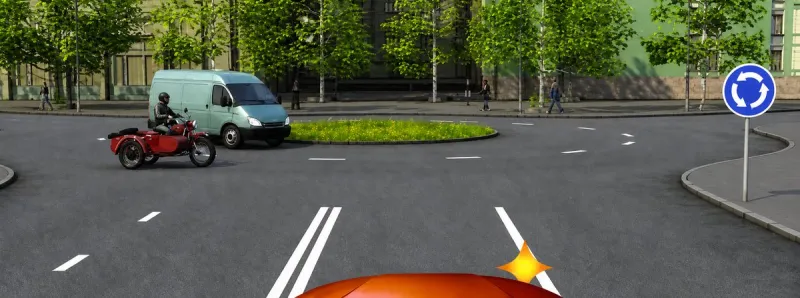
- Has the right-of-way.
- Must yield to the truck.
- Must yield to both drivers.
Correct answer: Must yield to both drivers. ABC · D/T
Why: 4.3 «Շրջանաձև երթևեկություն» նշան. մուտք գործելիս կետ 98.1-ով զիջում ենք շրջանաձև խաչմերուկում արդեն երթևեկող բոլորին՝ և՛ մոտոցիկլին, և՛ բեռնատարին։
Signs in this question: 4.3
In tests: ABC 39, ABC 46, D/T 33
88. When making a left turn, to whom must the driver yield?
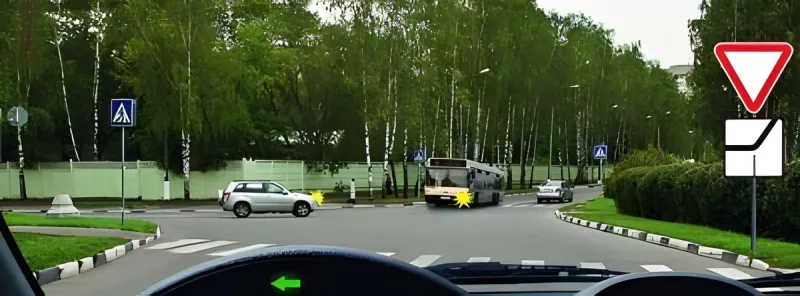
- Both drivers.
- The passenger-car driver.
- The bus driver.
Correct answer: Both drivers. ABC · D/T
Why: Մեր դիմաց
2.4 «Զիջեք ճանապարհը» նշանն է
8.13 «Գլխավոր ճանապարհի ուղղությունը» ցուցանակով. հատվող ճանապարհը գլխավորն է՝ ձախ թևից աջ։ Թե՛ ձախի թեթև մարդատարը, թե՛ աջի ավտոբուսը գլխավոր ճանապարհով են, ուստի ձախ շրջադարձի ժամանակ կետ 96-ով զիջում ենք երկուսին՝ անկախ նրանց ուղղությունից։
5.19.1 «Հետիոտնային անցում» նշանները միայն անցումներն են նշում։
Signs in this question: 2.4, 8.13, 5.19.1
In tests: ABC 17
89. In this situation, we must yield to:
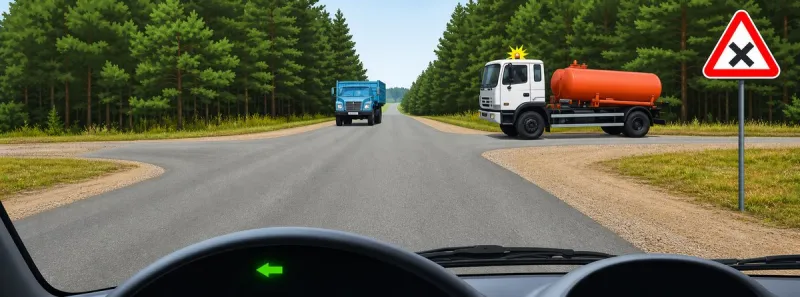
- Both drivers.
- Only the truck approaching in the oncoming lane.
Correct answer: Both drivers. ABC · D/T
Why: 1.6 «Հավասարազոր ճանապարհների խաչմերուկ» նշան։ Ձախ շրջադարձի ժամանակ կետ 98-ով զիջում ենք աջից մոտեցող ավտոցիստեռնին, կետ 99-ով՝ հանդիպակաց ուղիղ գնացող բեռնատարին. երկու վարորդներին։
Signs in this question: 1.6
In tests: ABC 29, ABC 54, D/T 33
90. When making a left turn:
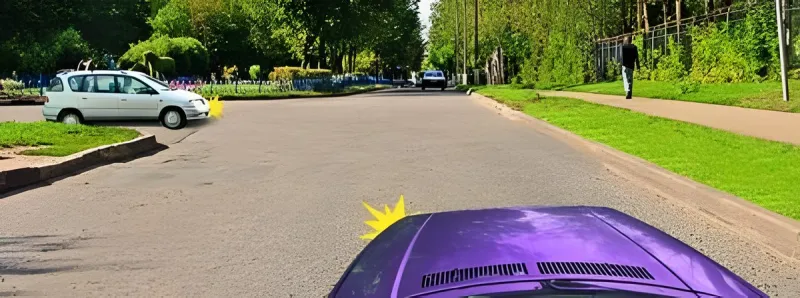
- You will proceed through the intersection first.
- You will yield.
Correct answer: You will proceed through the intersection first. ABC · D/T
Why: Նշաններ չկան։ Թեթև մարդատարը մոտենում է մեր ձախի կողմնային ճանապարհից. թե՛ հավասարազոր ճանապարհների դեպքում (աջի խոչընդոտ, կետ 98), թե՛ գրունտային երկրորդական ճանապարհի դեպքում (կետ 3, 1-ին ենթակետ) զիջում է մյուս վարորդը. ձախ շրջադարձը կատարում ենք առաջինը։
In tests: ABC 17, D/T 13
91. In this situation, when making a right turn, we:
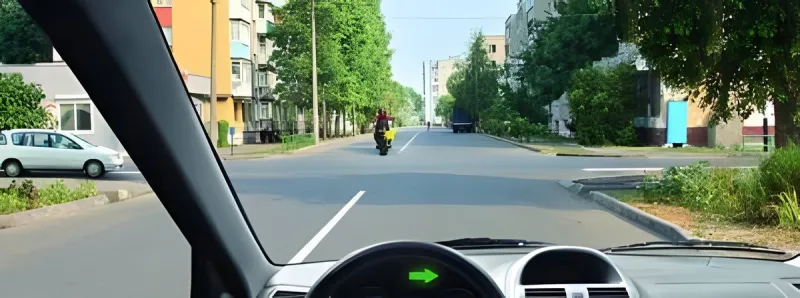
- Proceed through the intersection first.
- Yield to the passenger-car driver.
- Yield to both drivers.
Correct answer: Proceed through the intersection first. ABC · D/T
Why: Նշաններ չկան՝ հավասարազոր ճանապարհների խաչմերուկ։ Ձախի թեթև մարդատարը կետ 98-ով զիջում է մեզ, իսկ հանդիպակաց ուղիղ գնացող մոտոցիկլն աջ շրջադարձի հետ չի հատվում (կետ 99-ը վերաբերում է միայն ձախ շրջադարձին). անցնում ենք առաջինը։
In tests: ABC 30, D/T 18
92. When making a right turn:
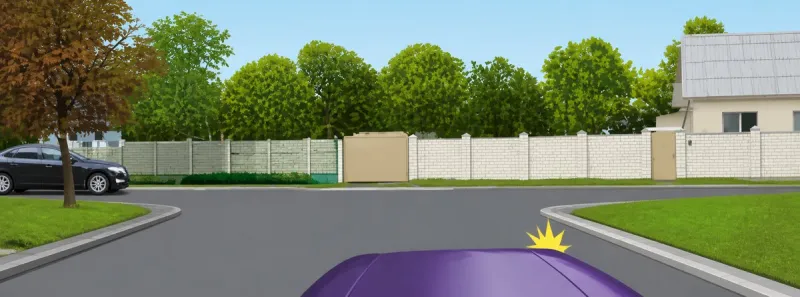
- You must yield.
- You may proceed first.
Correct answer: You may proceed first. ABC · D/T
Why: Առավելության նշաններ չկան՝ հավասարազոր ճանապարհների խաչմերուկ։ Միակ մեքենան մոտենում է մեր ձախից և կետ 98-ով զիջում է մեզ. աջ շրջադարձը կատարում ենք առաջինը։
In tests: ABC 20, ABC 55
93. When making a left turn, you must yield to:
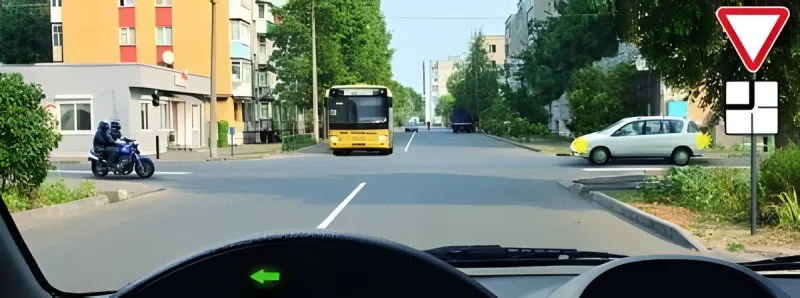
- The bus driver and the driver of the motorcycle.
- The bus driver.
- Everyone.
Correct answer: Everyone. ABC · D/T
Why: Մեր դիմաց
2.4 «Զիջեք ճանապարհը» նշանն է
8.13 «Գլխավոր ճանապարհի ուղղությունը» ցուցանակով. գլխավոր ճանապարհն անցնում է դիմացի թևով (ավտոբուս) և թեքվում ձախ (մոտոցիկլ)։ Ձախ շրջադարձի ժամանակ կետ 96-ով զիջում ենք երկուսին, իսկ աջի թեթև մարդատարը մյուս երկրորդական թևից է և մոտենում է մեր աջից, ուստի կետ 97, 98-ով զիջում ենք նաև նրան. բոլորին։
Signs in this question: 2.4, 8.13
In tests: ABC 23, D/T 20
94. When making a left turn:
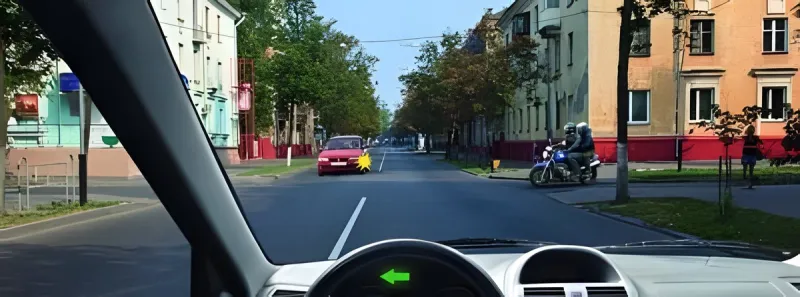
- You will proceed first, simultaneously with the passenger car.
- You will proceed after the motorcycle.
Correct answer: You will proceed after the motorcycle. ABC · D/T
Why: Նշաններ չկան՝ հավասարազոր ճանապարհների խաչմերուկ։ Ձախ շրջադարձի ժամանակ կետ 98-ով զիջում ենք աջից մոտեցող մոտոցիկլին, իսկ հանդիպակաց թեթև մարդատարը նույնպես ձախ է թեքվում և մեզ չի խանգարում (կետ 99). անցնում ենք մոտոցիկլից հետո։
In tests: ABC 30, ABC 55, D/T 15
95. When proceeding straight ahead, you must yield to:
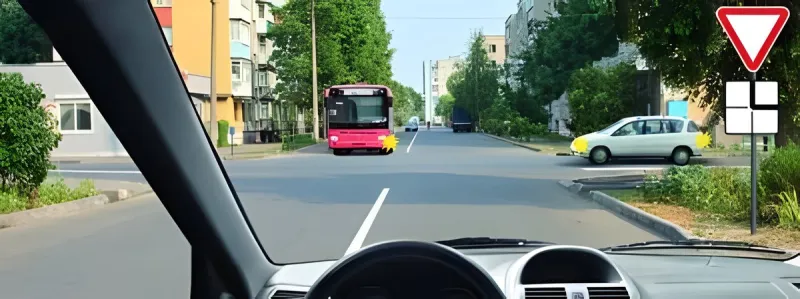
- Both drivers.
- Only the passenger car.
- No one.
Correct answer: Both drivers. ABC · D/T
Why: Մեր դիմաց
2.4 «Զիջեք ճանապարհը» նշանն է
8.13 «Գլխավոր ճանապարհի ուղղությունը» ցուցանակով. գլխավոր ճանապարհն անցնում է դիմացի թևով (ավտոբուս) և թեքվում աջ (թեթև մարդատար)։ Ուղիղ երթևեկելիս կետ 96-ով զիջում ենք երկուսին՝ անկախ նրանց ուղղությունից։
Signs in this question: 2.4, 8.13
In tests: ABC 12, D/T 31
96. Must we yield to the tram?
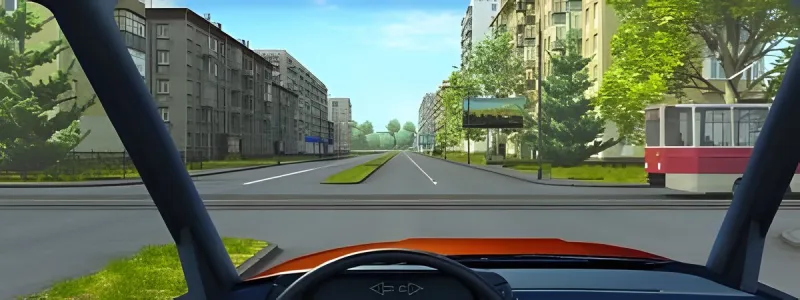
- Yes.
- No.
Correct answer: Yes. ABC · D/T
Why: Նշաններ և լուսացույց չկան՝ հավասարազոր ճանապարհների չկարգավորվող խաչմերուկ։ Կետ 100-ով տրամվայն առավելություն ունի ոչ ռելսագնաց միջոցների նկատմամբ՝ անկախ ուղղությունից, բացի այդ մոտենում է մեր աջից (կետ 98). պարտավոր ենք զիջել։
In tests: ABC 43
97. In this situation, when is a right turn permitted?
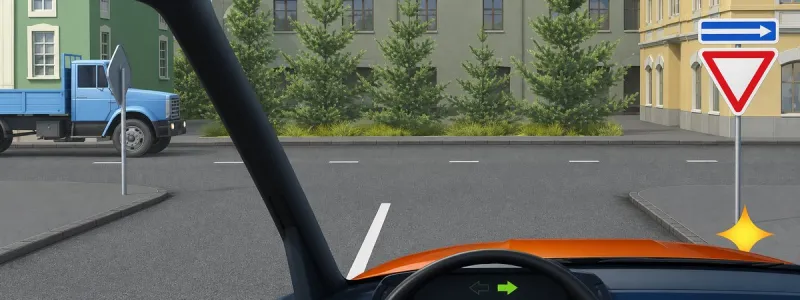
- Immediately.
- At the same time as the truck passes, provided you do not interfere with the truck.
- After the truck has passed.
Correct answer: At the same time as the truck passes, provided you do not interfere with the truck. ABC · D/T
Why: Մեր դիմաց
2.4 «Զիջեք ճանապարհը» նշանն է, վերևում՝
5.7.1 «Ելք դեպի միակողմ երթևեկությամբ ճանապարհ»։ Ձախի բեռնատարը գլխավոր ճանապարհով է, ուստի աջ շրջադարձը թույլատրվում է նրա անցման հետ միաժամանակ միայն այն դեպքում, եթե կետ 96-ով բեռնատարին խոչընդոտ չենք ստեղծի.
5.7.1-ը առավելություն չի սահմանում։
Signs in this question: 2.4, 5.7.1
In tests: ABC 15
98. When proceeding straight through the intersection, you must yield to:
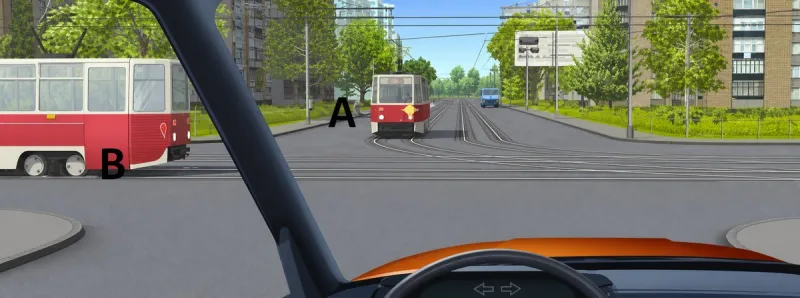
- Only the operator of tram A.
- Only the operator of tram B.
- Both drivers.
- No one.
Correct answer: Both drivers. ABC · D/T
Why: Նշաններ չկան՝ հավասարազոր ճանապարհների չկարգավորվող խաչմերուկ։ Կետ 100-ով տրամվայներն առավելություն ունեն ոչ ռելսագնաց միջոցների նկատմամբ՝ անկախ ուղղությունից, ուստի ուղիղ անցնելիս զիջում ենք և՛ A, և՛ B տրամվայներին։
In tests: ABC 26, D/T 26
99. When making a left turn, you must yield to:
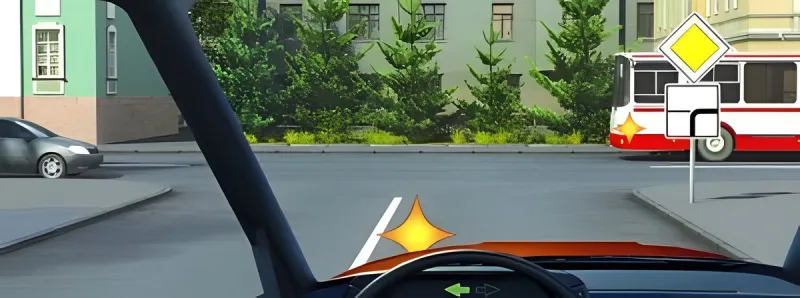
- Only the bus driver.
- Both drivers.
- No one.
Correct answer: Only the bus driver. ABC · D/T
Why: Մեր դիմաց
2.1 «Գլխավոր ճանապարհ» նշանն է
8.13 «Գլխավոր ճանապարհի ուղղությունը» ցուցանակով. գլխավոր ճանապարհն անցնում է մեր թևով և թեքվում աջ՝ ավտոբուսի թևը, ձախի թեթև մարդատարը երկրորդական ճանապարհի վրա է։ Ձախ շրջադարձի ժամանակ զիջում ենք աջից մոտեցող ավտոբուսին (կետ 97, 98), իսկ թեթև մարդատարը կետ 96-ով զիջում է մեզ. միայն ավտոբուսի վարորդին։
Signs in this question: 2.1, 8.13
In tests: ABC 36, D/T 16
100. Who will proceed through the intersection first?
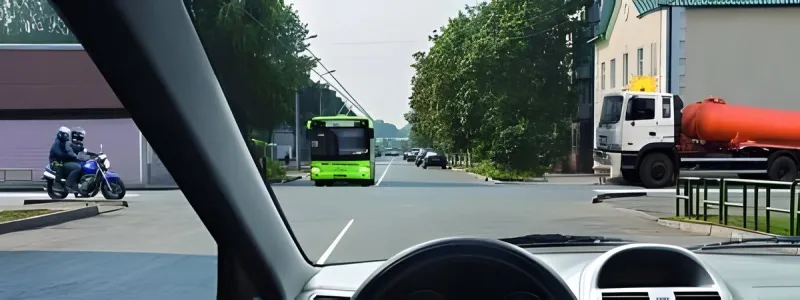
- The truck driver.
- The trolleybus driver.
- The rules do not regulate this situation. The drivers should proceed while showing mutual respect.
Correct answer: The rules do not regulate this situation. The drivers should proceed while showing mutual respect. ABC · D/T
Why: Նշաններ չկան՝ հավասարազոր ճանապարհների խաչմերուկ։ Մոտոցիկլը, տրոլեյբուսն ու բեռնատարը յուրաքանչյուրն իր աջում ունեն այլ մեքենա (կետ 98), ուստի աջի խոչընդոտի կանոնը հերթականություն չի տալիս. կանոնները այս դեպքը չեն կանոնակարգում, վարորդներն անցնում են փոխադարձ համաձայնությամբ։
In tests: ABC 13, D/T 28
101. The driver must not interfere with pedestrians:
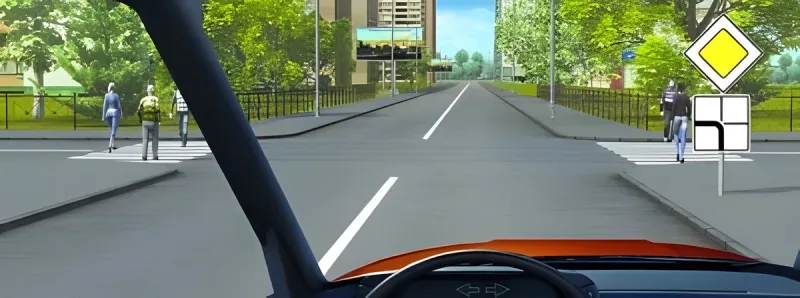
- Only when making a left turn.
- Only when making a right turn.
- In both cases.
Correct answer: In both cases. ABC · D/T
Why: 2.1 «Գլխավոր ճանապարհ» նշանը
8.13 ցուցանակով մեզ գլխավոր ճանապարհի վրա է դնում, բայց երկու կողմնային փողոցներում էլ հետիոտներ են անցնում
1.14.1 «Զեբր» գծանշմամբ։ Կետ 87-ով թե՛ աջ, թե՛ ձախ շրջադարձի ժամանակ խաչմերուկից դուրս գալիս վարորդը խոչընդոտ չպետք է ստեղծի երթևեկելի մասը հատող հետիոտների համար. գլխավոր ճանապարհը դա չի փոխում։ Երկու դեպքում նմանապես։
Signs in this question: 2.1, 8.13
In tests: ABC 18, D/T 12
102. When making a right turn, you must yield to:
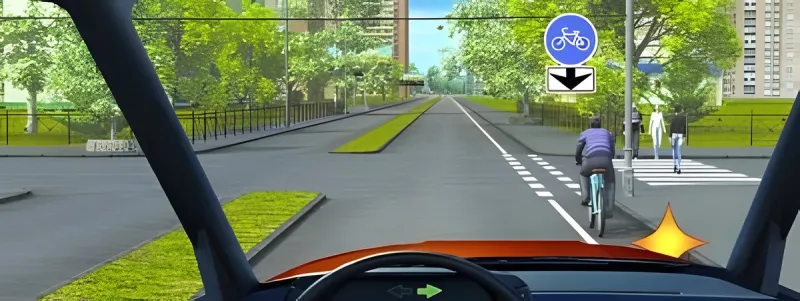
- Pedestrians and bicyclists.
- Pedestrians only.
Correct answer: Pedestrians and bicyclists. ABC · D/T
Why: 4.4 «Հեծանվային արահետ» նշանը
8.2.3 «Ազդման գոտի» ցուցանակով նշում է կողմնային փողոցի հեծանվային արահետը, կողքին՝
1.14.1 «Զեբր» հետիոտնային անցումն է։ Աջ շրջադարձի ժամանակ հատում ենք երկուսն էլ. կետ 87-ով վարորդը խոչընդոտ չպետք է ստեղծի հետիոտներին և պետք է ճանապարհը զիջի հեծանվային արահետով ընթացող հեծանվորդներին։
Signs in this question: 4.4, 8.2.3
In tests: ABC 10, D/T 47
103. When making a left turn, you must yield to:
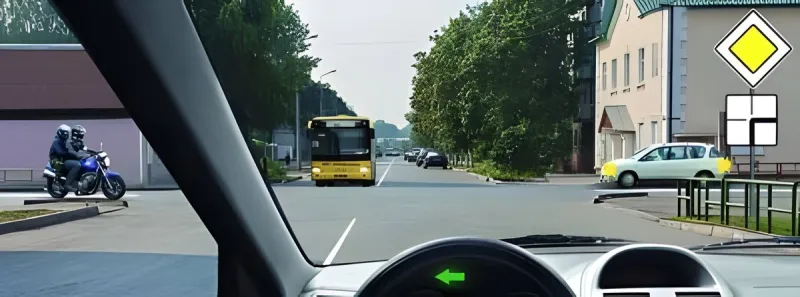
- Only the passenger-car driver.
- The passenger-car driver and the bus driver.
- No one.
Correct answer: Only the passenger-car driver. ABC · D/T
Why: Մեր դիմաց
2.1 «Գլխավոր ճանապարհ» նշանն է
8.13 «Գլխավոր ճանապարհի ուղղությունը» ցուցանակով. գլխավոր ճանապարհն անցնում է մեր թևով և թեքվում աջ՝ թեթև մարդատարի թևը։ Ձախ շրջադարձի ժամանակ զիջում ենք աջից մոտեցող թեթև մարդատարին (կետ 97, 98), իսկ դիմացի ավտոբուսն ու ձախի մոտոցիկլը երկրորդական ճանապարհից են և կետ 96-ով զիջում են մեզ. միայն թեթև մարդատարի վարորդին։
Signs in this question: 2.1, 8.13
In tests: ABC 7, D/T 42
104. When a driver cannot determine whether the road has a paved surface (at night, because of mud, snow, etc.) and there are no priority signs:
- The driver must consider that he/she is on a secondary road.
- The driver must follow the rules for proceeding through an intersection of roads of equal priority.
Correct answer: The driver must consider that he/she is on a secondary road. ABC · D/T
Why: Կետ 101-ով, երբ վարորդը չի կարող որոշել ծածկույթի առկայությունը (մութ, ցեխ, ձյուն) և առավելության նշաններ չկան, նա պետք է համարի, որ գտնվում է երկրորդական ճանապարհի վրա։
In tests: ABC 26, D/T 21
105. In this situation, we must yield to:
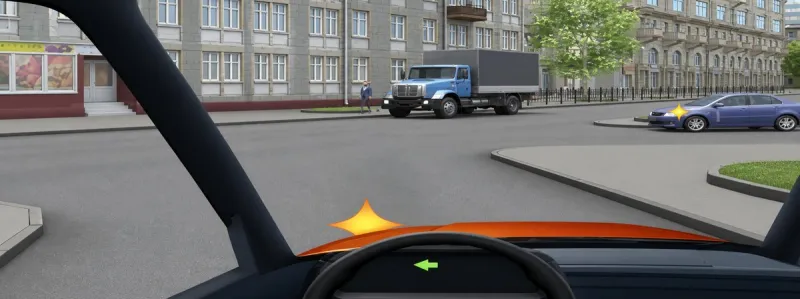
- All drivers.
- Only the truck driver.
- Only the passenger-car driver.
Correct answer: All drivers. ABC · D/T
Why: Նշաններ չկան՝ հավասարազոր ճանապարհների խաչմերուկ։ Ձախ շրջադարձի ժամանակ կետ 98-ով զիջում ենք աջից մոտեցող թեթև մարդատարին, կետ 99-ով՝ հանդիպակաց ուղիղ գնացող բեռնատարին. բոլոր վարորդներին։
In tests: ABC 16, D/T 7
106. We must yield to:
- The passenger-car driver.
- The bus driver and the passenger-car driver.
- All drivers.
Correct answer: The bus driver and the passenger-car driver. ABC · D/T
Why: Մեր դիմաց
2.4 «Զիջեք ճանապարհը» նշանն է
8.13 «Գլխավոր ճանապարհի ուղղությունը» ցուցանակով. գլխավոր ճանապարհն անցնում է դիմացի թևով (ավտոբուս) և թեքվում աջ (թեթև մարդատար)։ Կետ 96-ով զիջում ենք երկուսին, իսկ ձախի մոտոցիկլը մյուս երկրորդական թևից է և, մեր ձախում լինելով, զիջում է մեզ (կետ 97, 98). ավտոբուսի և թեթև մարդատարի վարորդներին։
Signs in this question: 2.4, 8.13
In tests: ABC 1
107. When making a U-turn at this intersection:
- I will perform the maneuver first.
- I must yield to the other driver.
Correct answer: I must yield to the other driver. ABC · D/T
Why: Նշաններ և լուսացույց չկան՝ հավասարազոր ճանապարհների խաչմերուկ։ Կապույտ ավտոմոբիլը ձախ փողոցից աջ է թեքվում և մտնում է այն նույն գոտին, որտեղ ավարտվում է մեր հետադարձը, ուստի մեր հետագծերը հատվում են։ Հետադարձի ընթացքում մենք շրջվում ենք հակառակ ուղղությամբ, և հատման կետում կապույտը մոտենում է մեր աջ կողմից։ Կետ 45-ով, երբ հետագծերը հատվում են, զիջում է այն վարորդը, որին տրանսպորտային միջոցը մոտենում է աջից, ուստի նախ բաց ենք թողնում կապույտին, ապա ավարտում հետադարձը։
In tests: ABC 2, D/T 29
108. When the traffic signal is flashing yellow, while proceeding straight through the intersection we must:
- Stop and wait for the permissive green signal.
- Yield to the passenger-car driver.
- Yield to the tram operator.
Correct answer: Yield to the passenger-car driver. ABC · D/T
Why: Նկարում և՛ լուսացույց է, և՛
2.1 «Գլխավոր ճանապարհ» նշան
8.13 ցուցանակով։ Լուսացույցը դեղին թարթող է. այն թույլատրում է երթևեկությունը և խաչմերուկը դարձնում չկարգավորվող (կետ 7, 4-րդ ենթակետ, կետ 95), ուստի գործում են նշանները. գլխավոր ճանապարհն անցնում է մեր թևով և թեքվում աջ՝ թեթև մարդատարի թևը, զիջում ենք նրան (կետ 97, 98), իսկ ձախի տրամվայը երկրորդական ճանապարհից է և կետ 96-ով զիջում է մեզ։ Կանաչին սպասելու կարիք չկա։
Signs in this question: 2.1, 8.13
In tests: ABC 28, D/T 43
109. When proceeding straight ahead:
- We may proceed through the intersection first.
- We must yield.
Correct answer: We must yield. ABC · D/T
Why: Առավելության նշաններ և լուսացույց չկան՝ հավասարազոր ճանապարհների չկարգավորվող խաչմերուկ (կետ 95)։ Բեռնատարը մոտենում է մեր աջից, ուստի ուղիղ երթևեկելիս պետք է զիջենք ճանապարհը (կետ 98)։
In tests: ABC 25, D/T 48
110. When making a U-turn, to whom must you yield?
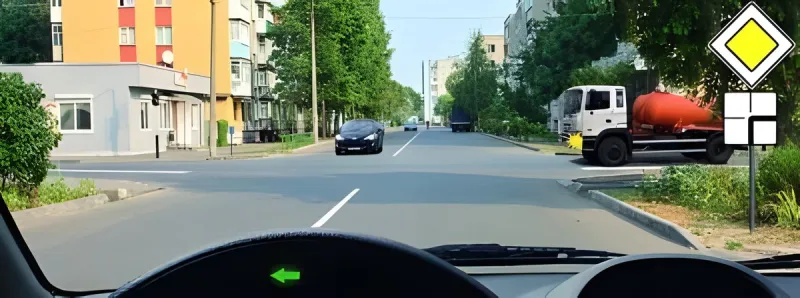
- The truck driver.
- The passenger-car driver.
- Both drivers.
Correct answer: The truck driver. ABC · D/T
Why: Մեր դիմաց
2.1 «Գլխավոր ճանապարհ» նշանն է
8.13 «Գլխավոր ճանապարհի ուղղությունը» ցուցանակով. գլխավոր ճանապարհն անցնում է մեր թևով և թեքվում աջ՝ ավտոցիստեռնի թևը, դիմացի ճանապարհը հանդիպակաց թեթև մարդատարով երկրորդական է։ Հետադարձ կատարելիս զիջում ենք աջից մոտեցող բեռնատարին (կետ 97, 98), իսկ հանդիպակաց թեթև մարդատարը կետ 96-ով զիջում է մեզ. միայն բեռնատարի վարորդին։
Signs in this question: 2.1, 8.13
In tests: ABC 20
111. When making a left turn, must we yield to the tram?
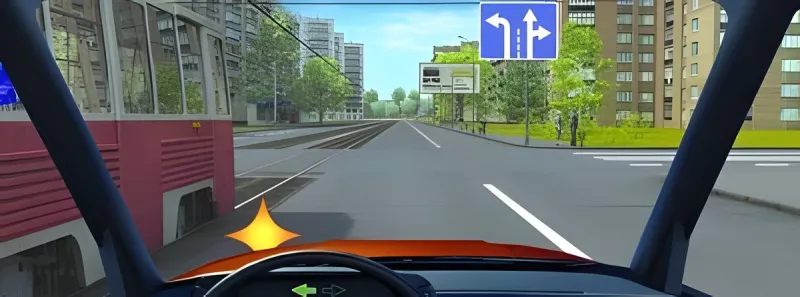
- Yes.
- No.
Correct answer: Yes. ABC · D/T
Why: Առավելության նշաններ չկան, միակ նշանը
5.15.1 «Երթևեկության ուղղությունները գոտիներով» է, որն առաջնահերթությունը չի փոխում։ Հավասարազոր ճանապարհների չկարգավորվող խաչմերուկում տրամվայն առավելություն ունի ոչ ռելսագնաց միջոցների նկատմամբ՝ անկախ ուղղությունից (կետ 100, 96), ուստի ձախ շրջադարձի ժամանակ պարտավոր ենք զիջել։
Signs in this question: 5.15.1
In tests: ABC 30, D/T 30
112. At this intersection, we do not have to yield to the truck approaching from the unpaved road because:
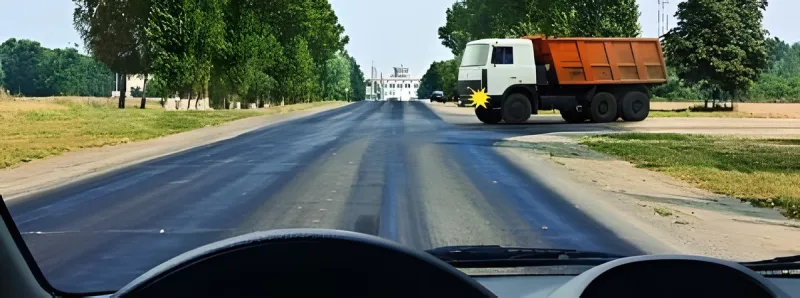
- We must yield because it is approaching from our right.
- A paved road is considered the priority road relative to an unpaved road.
Correct answer: A paved road is considered the priority road relative to an unpaved road. ABC · D/T
Why: Նշաններ չկան։ Կոշտ ծածկույթով ճանապարհը գրունտայինի նկատմամբ գլխավոր է (կետ 3, 1-ին ենթակետ), ուստի գրունտային ճանապարհից մոտեցող բեռնատարը կետ 96-ով զիջում է մեզ, թեև մոտենում է աջից. պարտավոր չենք։
In tests: ABC 31
113. When the traffic signal is flashing yellow:
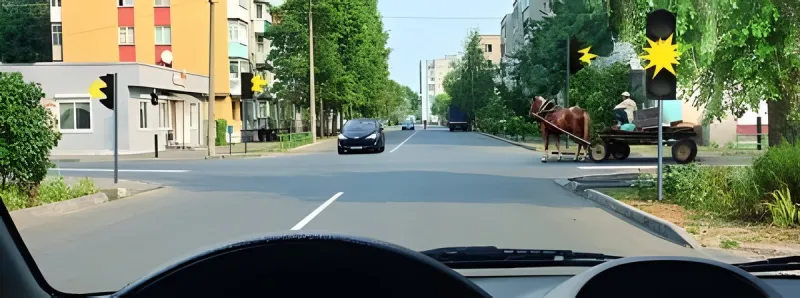
- We must wait for the green signal.
- We will proceed through the intersection after yielding to the driver of the animal-drawn cart.
- You will proceed through the intersection simultaneously with the passenger car.
Correct answer: We will proceed through the intersection after yielding to the driver of the animal-drawn cart. ABC · D/T
Why: Լուսացույցը դեղին թարթող է. այն թույլատրում է երթևեկությունը և խաչմերուկը դարձնում չկարգավորվող (կետ 7, 4-րդ ենթակետ, կետ 95), ուստի կանաչին սպասել պետք չէ։ Առավելության նշաններ չկան, ուստի կետ 98-ով զիջում ենք աջից մոտեցող լծասայլին և դրանից հետո անցնում խաչմերուկը։
In tests: ABC 37
114. When making a left turn, we must yield to:
- The passenger-car driver.
- The bus driver.
- The driver of the motorcycle.
- No one.
Correct answer: No one. ABC · D/T
Why: Մեր դիմաց
2.1 «Գլխավոր ճանապարհ» նշանն է
8.13 «Գլխավոր ճանապարհի ուղղությունը» ցուցանակով. գլխավոր ճանապարհն անցնում է մեր թևով և թեքվում ձախ՝ մոտոցիկլի թևը։ Ձախ շրջվելիս մոտոցիկլը, թեև գլխավոր ճանապարհով է, մոտենում է ձախից և կետ 97, 98-ով զիջում է մեզ, իսկ դիմացի ավտոբուսն ու աջի թեթև մարդատարը երկրորդական ճանապարհից են (կետ 96). ոչ ոքի չենք զիջում։
Signs in this question: 2.1, 8.13
In tests: ABC 25, D/T 3
115. In this situation:
- We must yield to the truck driver.
- We may proceed through the intersection simultaneously with the tram.
Correct answer: We must yield to the truck driver. ABC · D/T
Why: Առավելության նշաններ չկան՝ հավասարազոր ճանապարհների խաչմերուկ։ Բեռնատարը մոտենում է մեր աջից, կետ 98-ով պարտավոր ենք զիջել նրան, իսկ ձախի տրամվայն էլ առավելություն ունի (կետ 100), ուստի նրա հետ միաժամանակ անցնել չենք կարող։
In tests: ABC 37, D/T 3
116. When proceeding through the intersection, we must yield to:
- The driver of the motorcycle.
- The driver of the motorcycle and the bus driver.
- The bus driver and the passenger-car driver.
- All drivers.
Correct answer: All drivers. ABC · D/T
Why: Մեր դիմաց
2.4 «Զիջեք ճանապարհը» նշանն է
8.13 «Գլխավոր ճանապարհի ուղղությունը» ցուցանակով. գլխավոր ճանապարհն անցնում է դիմացի թևով (ավտոբուս) և թեքվում ձախ (մոտոցիկլ)։ Կետ 96-ով զիջում ենք երկուսին, իսկ աջի թեթև մարդատարը մյուս երկրորդական թևից է և մոտենում է մեր աջից, ուստի կետ 97, 98-ով զիջում ենք նաև նրան. բոլոր վարորդներին։
Signs in this question: 2.4, 8.13
In tests: ABC 2, D/T 37
117. In this situation, you must yield to:
- Only the tram operator.
- The passenger-car driver.
- The passenger-car driver and the tram operator.
- All drivers.
Correct answer: The passenger-car driver and the tram operator. ABC · D/T
Why: Մեր դիմաց
2.1 «Գլխավոր ճանապարհ» նշանն է
8.13 «Գլխավոր ճանապարհի ուղղությունը» ցուցանակով. գլխավոր ճանապարհն անցնում է մեր թևով և թեքվում աջ՝ թեթև մարդատարի թևը, դիմացի թևը մոտոցիկլով երկրորդական է։ Ձախի տրամվայը մեր գլխավոր ճանապարհով է և հավասարազոր ճանապարհի վրա առավելություն ունի ոչ ռելսագնաց միջոցների նկատմամբ (կետ 96, 100), թեթև մարդատարը մոտենում է աջից (կետ 97, 98). զիջում ենք թեթև մարդատարին և տրամվային, մոտոցիկլը զիջում է մեզ։
Signs in this question: 2.1, 8.13
In tests: ABC 39, D/T 53
118. In this situation, when making a left turn:
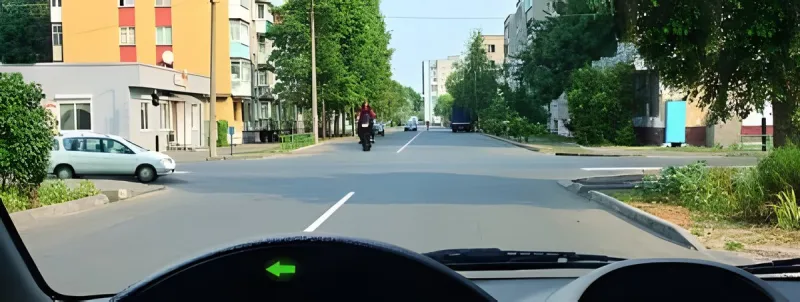
- You will proceed through the intersection first.
- After entering the intersection, you will yield to the driver of the motorcycle and then complete the maneuver.
Correct answer: After entering the intersection, you will yield to the driver of the motorcycle and then complete the maneuver. ABC · D/T
Why: Նշաններ չկան՝ հավասարազոր ճանապարհների խաչմերուկ։ Ձախ շրջադարձի ժամանակ կետ 99-ով զիջում ենք հանդիպակաց ուղիղ գնացող մոտոցիկլին. մուտք ենք գործում խաչմերուկ, թողնում նրան անցնել և ավարտում մանևրը։
In tests: ABC 11, D/T 42
119. When proceeding straight through the intersection, you must yield to:
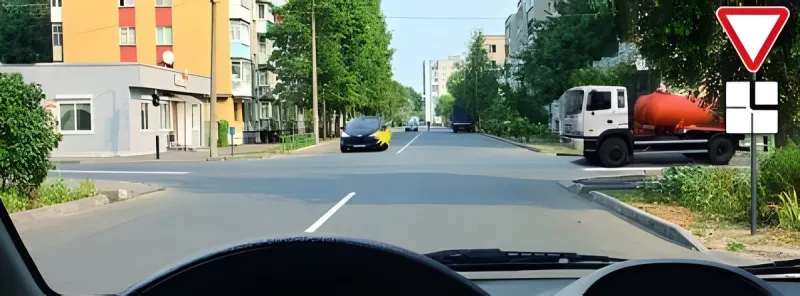
- The truck driver.
- The passenger-car driver.
- Both drivers.
Correct answer: Both drivers. ABC · D/T
Why: Մեր դիմաց
2.4 «Զիջեք ճանապարհը» նշանն է
8.13 «Գլխավոր ճանապարհի ուղղությունը» ցուցանակով. գլխավոր ճանապարհն անցնում է դիմացի թևով (թեթև մարդատար) և թեքվում աջ (ավտոցիստեռն)։ Ուղիղ անցնելիս կետ 96-ով զիջում ենք երկուսին՝ անկախ նրանց ուղղությունից։
Signs in this question: 2.4, 8.13
In tests: ABC 9
120. In this situation:
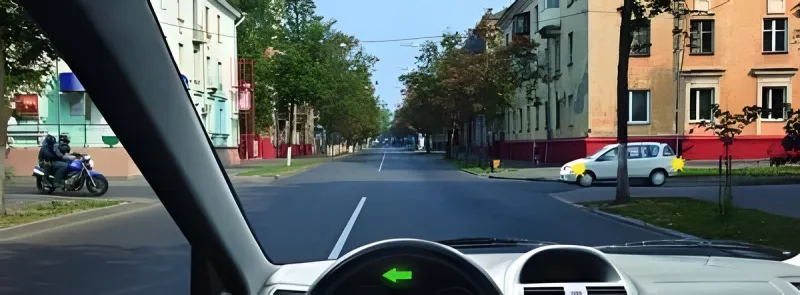
- You will proceed through the intersection first.
- You will yield to the passenger-car driver.
- You will yield to both drivers.
Correct answer: You will yield to the passenger-car driver. ABC · D/T
Why: Նշաններ չկան՝ հավասարազոր ճանապարհների խաչմերուկ։ Կետ 98-ով զիջում ենք աջից մոտեցող թեթև մարդատարին, իսկ ձախի մոտոցիկլը զիջում է մեզ. միայն թեթև մարդատարի վարորդին։
In tests: ABC 41, ABC 48, D/T 36
121. We must yield to:
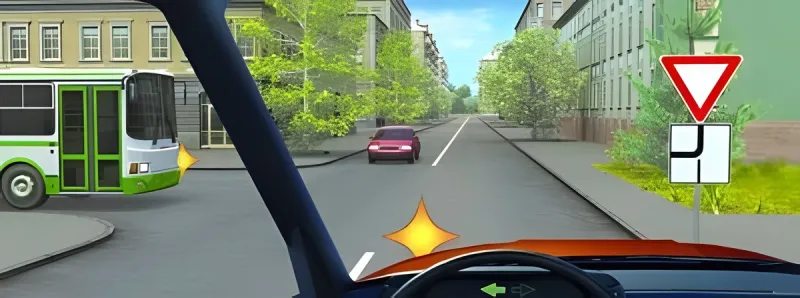
- Both drivers.
- The passenger-car driver.
- The bus driver.
Correct answer: Both drivers. ABC · D/T
Why: Մեր դիմաց
2.4 «Զիջեք ճանապարհը» նշանն է
8.13 «Գլխավոր ճանապարհի ուղղությունը» ցուցանակով. գլխավոր ճանապարհն անցնում է ձախ թևից (ավտոբուս) և թեքվում դեպի դիմաց (թեթև մարդատար)։ Ձախ շրջադարձի ժամանակ կետ 96-ով զիջում ենք երկուսին։
Signs in this question: 2.4, 8.13
In tests: ABC 43, D/T 15
122. At this intersection:
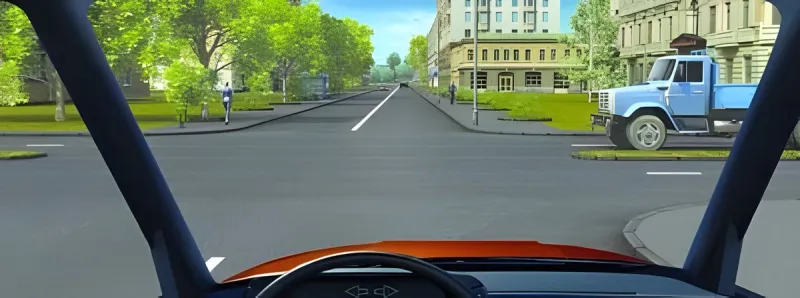
- You will proceed first.
- You will yield to the truck.
Correct answer: You will yield to the truck. ABC · D/T
Why: Առավելության նշաններ չկան՝ հավասարազոր ճանապարհների խաչմերուկ։ Բեռնատարը մոտենում է մեր աջից, կետ 98-ով զիջում ենք նրան։
In tests: ABC 13, D/T 11
123. Must we yield to the tram operator?
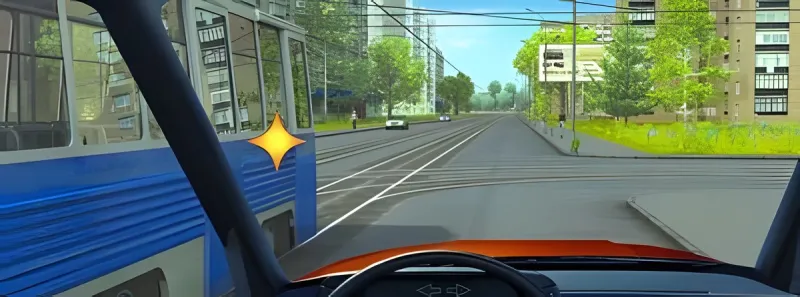
- Yes.
- No.
Correct answer: Yes. ABC · D/T
Why: Նշաններ և լուսացույց չկան՝ հավասարազոր ճանապարհների չկարգավորվող խաչմերուկ։ Ձախի տրամվայը կետ 100-ով առավելություն ունի ոչ ռելսագնաց միջոցների նկատմամբ՝ անկախ ուղղությունից. պարտավոր ենք զիջել։
In tests: ABC 43, D/T 50
124. When making a left turn, you must yield to:
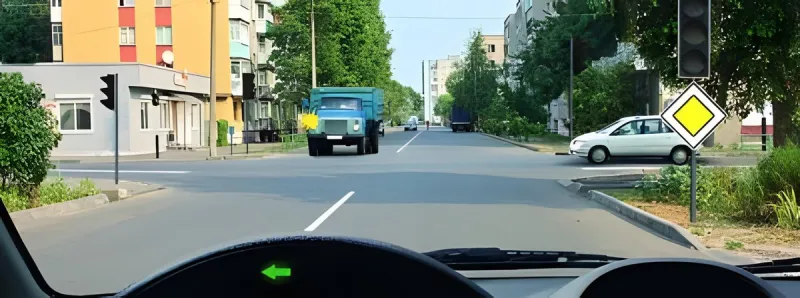
- The truck driver.
- Both drivers.
- No one.
Correct answer: The truck driver. ABC · D/T
Why: Նկարում և՛ լուսացույց է, և՛
2.1 «Գլխավոր ճանապարհ» նշան, բայց լուսացույցն անջատված է, ուստի խաչմերուկը չկարգավորվող է (կետ 95) և գործում է նշանը. մենք ու հանդիպակաց բեռնատարը գլխավոր ճանապարհով ենք, աջի թեթև մարդատարը՝ երկրորդական։ Ձախ շրջադարձի ժամանակ կետ 99-ով զիջում ենք հանդիպակաց ուղիղ գնացող բեռնատարին, իսկ թեթև մարդատարը կետ 96-ով զիջում է մեզ. միայն բեռնատարի վարորդին։
Signs in this question: 2.1
In tests: ABC 46, D/T 46
125. At this intersection:
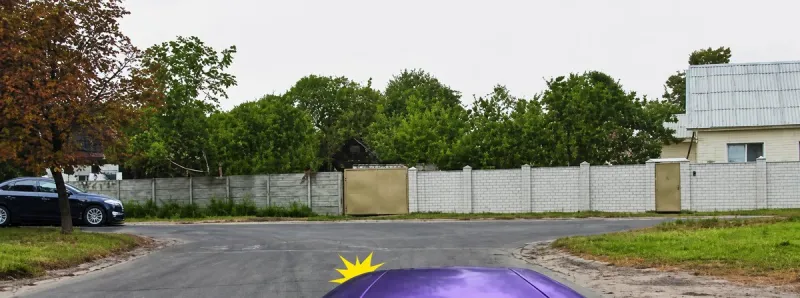
- You will yield.
- You will proceed first.
Correct answer: You will proceed first. ABC · D/T
Why: Առավելության նշաններ չկան՝ հավասարազոր ճանապարհների խաչմերուկ։ Միակ մեքենան մոտենում է մեր ձախից և կետ 98-ով զիջում է մեզ. անցնում ենք առաջինը։
In tests: ABC 8, ABC 49
126. When proceeding straight ahead, must we yield to the tram?
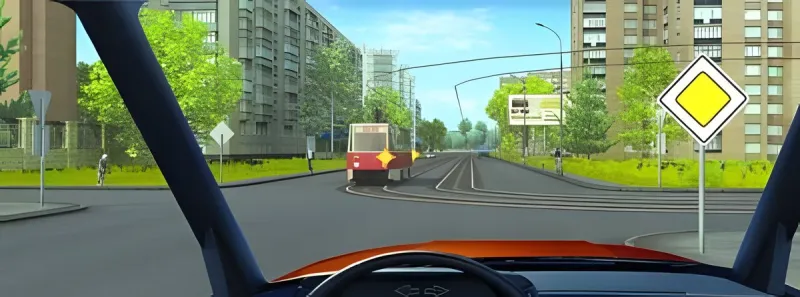
- We must.
- We must not.
Correct answer: We must. ABC
Why: Մենք
2.1 «Գլխավոր ճանապարհ» նշանով ճանապարհին ենք, իսկ հանդիպակաց տրամվայը նույն գլխավոր ճանապարհով է և ձախ է թեքվում։ Կետ 96-ով անհավասարազոր ճանապարհների խաչմերուկում տրամվայն առավելություն ունի նույն ճանապարհով համընթաց կամ հանդիպակաց ուղղությամբ երթևեկող ոչ ռելսագնաց տրանսպորտային միջոցների նկատմամբ, ուստի ուղիղ երթևեկելիս պարտավոր ենք զիջել նրան։
Signs in this question: 2.1
In tests: ABC 44
127. Must we yield to the tram?
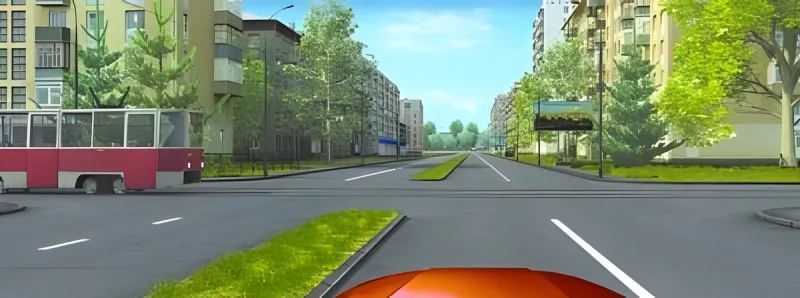
- Yes.
- No.
Correct answer: Yes. ABC · D/T
Why: Նշաններ և լուսացույց չկան՝ հավասարազոր ճանապարհների չկարգավորվող խաչմերուկ։ Կետ 100-ով տրամվայն առավելություն ունի ոչ ռելսագնաց միջոցների նկատմամբ՝ անկախ ուղղությունից. պարտավոր ենք զիջել։
In tests: ABC 11, ABC 49
128. In this situation, a right turn is permitted:
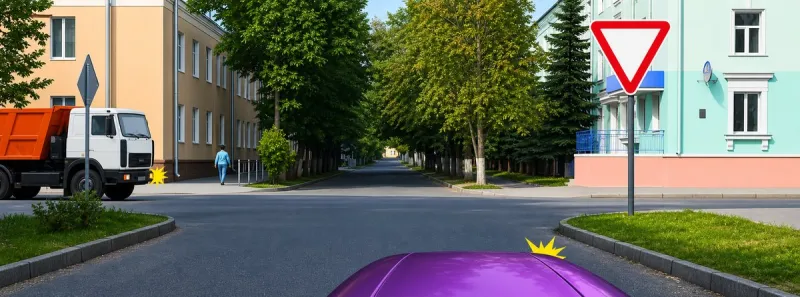
- Only after the truck has passed.
- At the same time as the truck, provided this does not interfere with the truck driver.
Correct answer: At the same time as the truck, provided this does not interfere with the truck driver. ABC · D/T
Why: Մեր դիմաց
2.4 «Զիջեք ճանապարհը» նշանն է, ձախի բեռնատարը գլխավոր ճանապարհով է։ Աջ շրջադարձը թույլատրվում է բեռնատարի հետ միաժամանակ միայն այն դեպքում, եթե կետ 96-ով նրան խոչընդոտ չենք ստեղծի։
Signs in this question: 2.4
In tests: ABC 31, ABC 51, D/T 53
129. To which tram operator must we yield?
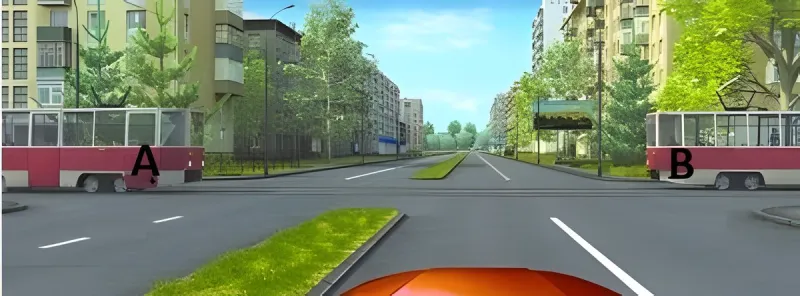
- Only A.
- Only B.
- Both tram operators.
Correct answer: Both tram operators. ABC · D/T
Why: Նշաններ չկան՝ հավասարազոր ճանապարհների չկարգավորվող խաչմերուկ։ Կետ 100-ով տրամվայներն առավելություն ունեն ոչ ռելսագնաց միջոցների նկատմամբ՝ անկախ ուղղությունից. զիջում ենք և՛ A, և՛ B տրամվայներին։
In tests: ABC 34
130. When proceeding straight ahead, you must yield to:
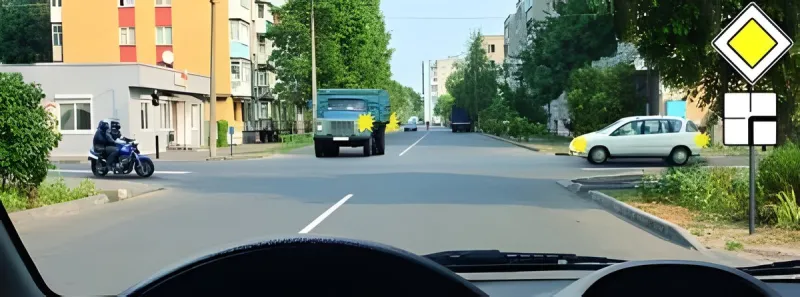
- The passenger-car driver.
- Everyone.
- No one.
Correct answer: The passenger-car driver. ABC · D/T
Why: Մեր դիմաց
2.1 «Գլխավոր ճանապարհ» նշանն է
8.13 «Գլխավոր ճանապարհի ուղղությունը» ցուցանակով. գլխավոր ճանապարհն անցնում է մեր թևով և թեքվում աջ՝ թեթև մարդատարի թևը։ Ուղիղ երթևեկելիս զիջում ենք աջից մոտեցող թեթև մարդատարին (կետ 97, 98), իսկ դիմացի բեռնատարն ու ձախի մոտոցիկլը երկրորդական ճանապարհից են և կետ 96-ով զիջում են մեզ. միայն թեթև մարդատարի վարորդին։
Signs in this question: 2.1, 8.13
In tests: ABC 42
131. In this situation, you must yield to:
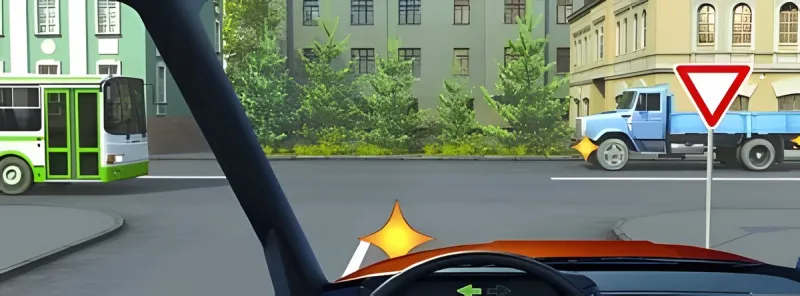
- The bus driver.
- The truck driver.
- Both drivers.
Correct answer: Both drivers. ABC · D/T
Why: Մեր դիմաց
2.4 «Զիջեք ճանապարհը» նշանն է առանց ցուցանակի. հատվող ճանապարհը գլխավորն է։ Ձախի ավտոբուսն ու աջի բեռնատարը երկուսն էլ դրանով են ընթանում, ուստի կետ 96-ով զիջում ենք երկուսին՝ անկախ նրանց ուղղությունից։
Signs in this question: 2.4
In tests: ABC 29, D/T 23
132. Under which sign must you give way at an intersection to drivers approaching from the left?
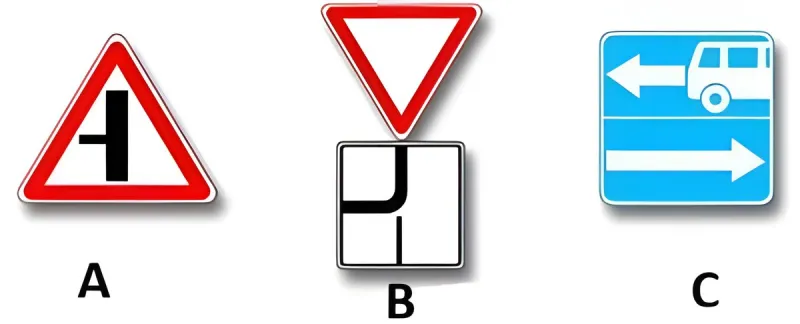
- Only A.
- Only B.
- A and B.
- All.
Correct answer: Only B. ABC · D/T
Why: A-ն
2.3.3 «Երկրորդական ճանապարհի հարում» նշանն է. մենք գլխավոր ճանապարհով ենք, ձախից մոտեցողը զիջում է մեզ։ B-ն
2.4 «Զիջեք ճանապարհը» նշանն է
8.13 ցուցանակով, որով գլխավոր ճանապարհը գալիս է ձախից. մենք երկրորդական ճանապարհով ենք և կետ 96-ով զիջում ենք ձախից մոտեցողներին։ C-ն
5.13.1 «Ելք դեպի ընդհանուր օգտագործման տրանսպորտային միջոցների համար գոտիով ճանապարհ» է, առավելություն չի սահմանում։ Միայն B։
Signs in this question: 2.3.3, 2.4, 8.13, 5.13.1
In tests: ABC 2, D/T 4
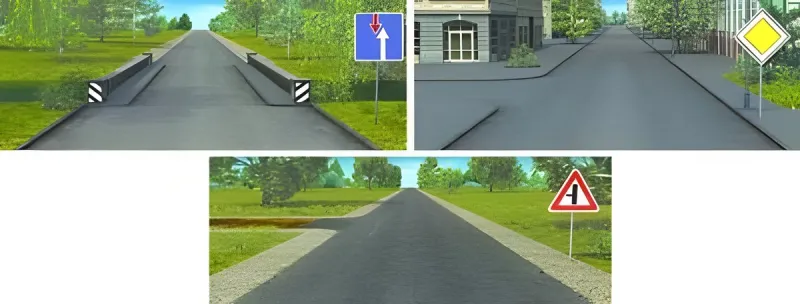
133. In which image is the priority road shown?
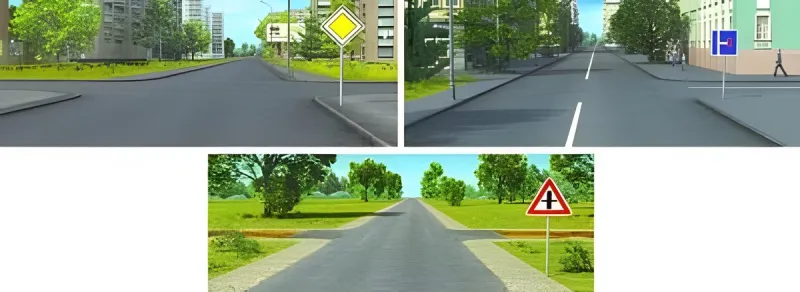
- Only in the left image.
- In the lower and left images.
- In all images.
Correct answer: In the lower and left images. ABC · D/T
Why: Կետ 3-ի 1-ին ենթակետով գլխավոր է
2.1 կամ
2.3.1-
2.3.7 նշաններով նշված ճանապարհը։ Ձախ նկարում
2.1 «Գլխավոր ճանապարհ» նշանն է, ներքևում՝
2.3.1 «Հատում երկրորդական ճանապարհի հետ», իսկ աջ նկարի կապույտ տեղեկատու նշանն առավելություն չի սահմանում. ներքևի և ձախ։
Signs in this question: 2.1, 2.3.1
In tests: ABC 36, D/T 18
134. In which image is the priority road shown?
- Only in the right image.
- In the right and lower images.
- In all images.
Correct answer: In the right and lower images. ABC · D/T
Why: Կետ 3-ի 1-ին ենթակետով գլխավոր է
2.1 կամ
2.3.1-
2.3.7 նշաններով նշված ճանապարհը։ Աջ նկարում
2.1 «Գլխավոր ճանապարհ» նշանն է, ներքևում՝
2.3.3 «Երկրորդական ճանապարհի հարում», իսկ ձախ նկարի
2.7 «Հանդիպակաց երթևեկության նկատմամբ առավելություն» նշանը գլխավոր ճանապարհ չի սահմանում. աջ և ներքևի։
Signs in this question: 2.7, 2.1, 2.3.3
In tests: ABC 14, ABC 48, D/T 52
135. In which image is the priority road shown?
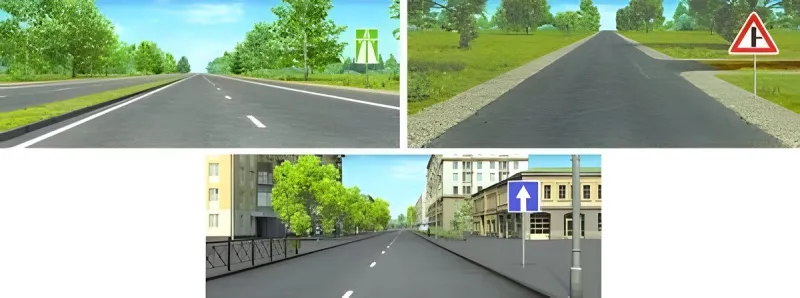
- Upper left.
- Upper right.
- In the upper images.
- In all images.
Correct answer: In the upper images. ABC · D/T
Why: Կետ 3-ի 1-ին ենթակետով գլխավոր է
5.1 «Ավտոմայրուղի» կամ
2.3.1-
2.3.7 նշաններով նշված ճանապարհը. վերին ձախ նկարում
5.1-ն է, վերին աջում՝
2.3.2 «Երկրորդական ճանապարհի հարում»։ Ներքևի նկարի
5.5 «Միակողմ երթևեկությամբ ճանապարհ» նշանն առավելություն չի սահմանում. վերևի նկարներում։
Signs in this question: 5.1, 2.3.2, 5.5
In tests: ABC 32, D/T 5
136. At an intersection, which road is considered the priority road?
- A paved road (asphalt concrete, cement concrete, stone materials, etc.) relative to an unpaved road.
- A three-lane road relative to a road having one lane in each direction.
- An asphalt-concrete road relative to a road paved with slabs.
Correct answer: A paved road (asphalt concrete, cement concrete, stone materials, etc.) relative to an unpaved road. ABC · D/T
Why: «Գլխավոր ճանապարհ» սահմանման (կետ
3.1) համաձայն՝ կոշտ ծածկույթով ճանապարհը գլխավոր է հողային ծածկույթ ունեցողի նկատմամբ։ Գոտիների թիվը կամ ասֆալտի ու սալիկի տարբերությունը գլխավորություն չեն տալիս։
In tests: ABC 38
137. The vehicles will proceed through the intersection in the following order:
- The red automobile, the green automobile, the blue automobile, the black automobile.
- The green automobile, the red automobile, the black automobile, the blue automobile.
- The green automobile, the red automobile, the blue automobile, the black automobile.
Correct answer: The red automobile, the green automobile, the blue automobile, the black automobile. D/T
Why: Կարմիրի դիմաց
2.1 «Գլխավոր ճանապարհ» նշանն է
8.13 «Գլխավոր ճանապարհի ուղղություն» ցուցանակով. գլխավոր ճանապարհն անցնում է կարմիրի և կանաչի թևերով, սևի դիմաց
2.5 «Երթևեկությունն առանց կանգառի արգելվում է» նշանն է։ Գլխավոր ճանապարհով ընթացողներն անցնում են առաջ (կետ 96), նրանց միջև՝ աջի խոչընդոտի կանոնով (կետ 97, 98), ապա երկրորդական ճանապարհի մեքենաները՝ նույն կանոնով. կարմիր, կանաչ, կապույտ, սև։
Signs in this question: 2.1, 8.13, 2.5
In tests: D/T 16
138. When continuing straight ahead, must we yield to the tram?
- Yes.
- No.
Correct answer: Yes. D/T
Why: Մենք
2.1 «Գլխավոր ճանապարհ» նշանով ճանապարհին ենք, իսկ հանդիպակաց տրամվայը նույն գլխավոր ճանապարհով է և ձախ է թեքվում։ Կետ 96-ով անհավասարազոր ճանապարհների խաչմերուկում տրամվայն առավելություն ունի նույն ճանապարհով համընթաց կամ հանդիպակաց ուղղությամբ երթևեկող ոչ ռելսագնաց տրանսպորտային միջոցների նկատմամբ, ուստի ուղիղ երթևեկելիս պարտավոր ենք զիջել նրան։
Signs in this question: 2.1
In tests: D/T 1
139. Who is permitted to move along a pedestrian path?
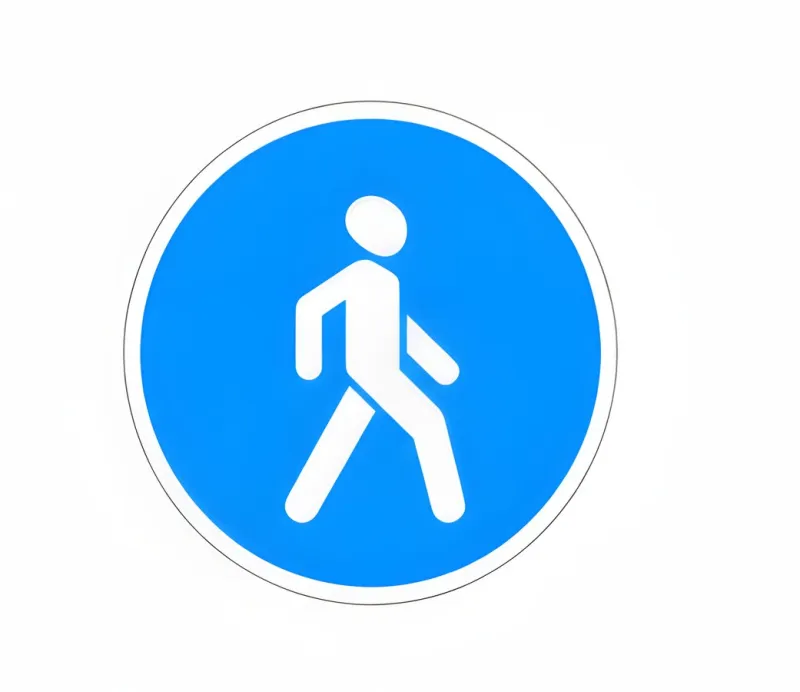
- Pedestrians only.
- Only persons pushing a bicycle or motorcycle.
- Persons riding a bicycle or motorcycle.
- Pedestrians and persons pushing a bicycle or motorcycle.
Correct answer: Pedestrians and persons pushing a bicycle or motorcycle. D/T
Why: 4.5 «Հետիոտնային արահետ» նշանի ազդման գոտում թույլատրվում է միայն հետիոտների տեղաշարժը։ Հեծանիվ կամ մոտոցիկլ ձեռքով տանող անձինք համարվում են հետիոտներ, ուստի նրանք նույնպես կարող են տեղաշարժվել արահետով, իսկ դրանք վարողները՝ ոչ։
Signs in this question: 4.5
140. Who is permitted to proceed within the area of effect of the “Bicycle Path” sign?
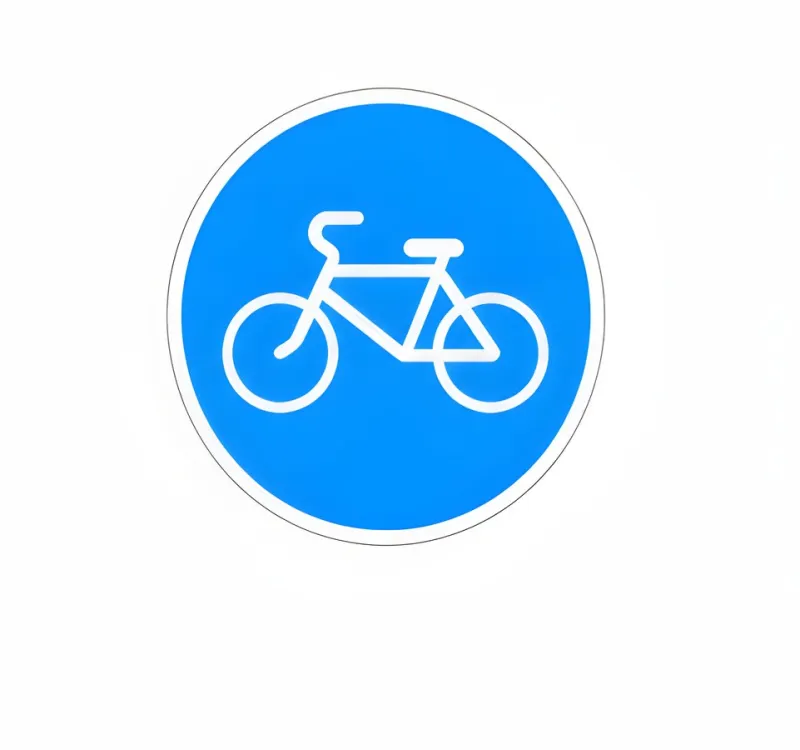
- Bicyclists, as well as pedestrians when sidewalks or pedestrian paths are absent.
- Moped drivers.
- Motorcycle operators.
- In cases 1 and 2.
Correct answer: In cases 1 and 2. D/T
Why: 4.4 «Հեծանվային արահետ» նշանի ազդման գոտում թույլատրվում է երթևեկել միայն մոպեդներով և հեծանիվներով, իսկ մայթի կամ հետիոտնային արահետի բացակայության դեպքում՝ նաև հետիոտներին։ Մոտոցիկլներին արգելվում է։
Signs in this question: 4.4
In tests: D/T 9
141. When making a right or left turn, must a bus driver yield to bicyclists proceeding on a bicycle path?
- Yes, in all cases.
- No, because a bus is a large vehicle and has the right-of-way.
- Only if the bicyclist is approaching from the right.
Correct answer: Yes, in all cases. D/T
Why: Կետ 87-ով աջ կամ ձախ շրջադարձ կատարելիս խաչմերուկից դուրս գալիս վարորդը պետք է զիջի հեծանվային արահետով երթևեկող հեծանվորդներին՝ բոլոր դեպքերում, անկախ տրանսպորտային միջոցի չափսերից։
142. Does a bus driver have the right-of-way over a bicyclist at an uncontrolled crossing of a bicycle path and a road outside an intersection?
- Yes.
- No.
Correct answer: Yes. D/T
Why: Պաշտոնական պատասխանով խաչմերուկներից դուրս հեծանվային արահետի և ճանապարհի չկարգավորվող հատման վրա առավելությունը ճանապարհով ընթացող ավտոբուսինն է, իսկ հեծանվորդը պետք է զիջի նրան։ Խաչմերուկում շրջադարձ կատարելիս, ընդհակառակը, վարորդն է զիջում հեծանվորդին (կետ 87)։
In tests: D/T 18
143. Before making a turn or U-turn, a bus driver must position the vehicle in advance:
- In any lane from which it is convenient to perform the maneuver.
- In the second lane and perform the maneuver from that lane to provide a wide turning radius.
- In the corresponding outermost lane of the roadway intended for that direction of travel.
Correct answer: In the corresponding outermost lane of the roadway intended for that direction of travel. D/T
Why: Կետ 40-ով շրջադարձից կամ հետադարձից առաջ վարորդը պետք է նախապես զբաղեցնի տվյալ ուղղության երթևեկելի մասի համապատասխան եզրային գոտին։
In tests: D/T 33
144. In which case may a bus driver refrain from taking the corresponding outermost lane in advance before making a turn?
- When the traffic lanes are separated by solid lines.
- When entering a roundabout.
- In both cases.
Correct answer: When entering a roundabout. D/T
Why: Կետ 40-ով շրջադարձից առաջ եզրային գոտին զբաղեցնելը պարտադիր չէ, երբ վարորդը մուտք է գործում շրջանաձև երթևեկությամբ խաչմերուկ (ենթակետ 1)։ Հոծ գծերը բացառություն չեն սահմանում։
In tests: D/T 13
145. When making a turn, is a bus driver permitted to cross a solid line separating lanes if the bus cannot make the turn from the outermost lane because of its large dimensions?
- Yes, if the driver has activated the turn signal and ensures safety.
- No. Crossing the solid line is prohibited; the driver must change lanes in advance at a section where the pavement marking permits it.
- Permitted if the bus is a public transit vehicle.
- In all of the listed cases.
Correct answer: No. Crossing the solid line is prohibited; the driver must change lanes in advance at a section where the pavement marking permits it. D/T
Why: Կետ 40.3-ով եզրաչափերի պատճառով կարելի է շրջադարձը կատարել ոչ եզրային գոտուց, բայց դա թույլ չի տալիս հատել գոտիները բաժանող հոծ գիծը։ Վարորդը պետք է նախապես վերադասավորվի այն հատվածում, որտեղ գծանշումը դա թույլատրում է։
In tests: D/T 36
146. In which case is a bus driver permitted not to occupy the corresponding outermost lane in advance before making a turn?
- If the bus cannot make the turn from the outermost lane because of its large dimensions.
- If there are no horizontal pavement markings on that section of road.
- In both cases.
Correct answer: If the bus cannot make the turn from the outermost lane because of its large dimensions. D/T
Why: Կետ 40.3-ով եզրային գոտին նախապես չզբաղեցնելը թույլատրվում է, երբ դա հնարավոր չէ տրանսպորտային միջոցի եզրաչափերի կամ այլ պատճառներով։ Գծանշման բացակայությունը նման բացառություն չէ։
In tests: D/T 7
147. From which lane must a bus driver make a turn if road signs or pavement markings permit the maneuver from lanes other than the outermost lane?
- Only from the outermost lane because a bus must always proceed as far to the right as possible.
- From any lane from which the maneuver is permitted by the applicable road signs or pavement markings.
- In both cases.
Correct answer: From any lane from which the maneuver is permitted by the applicable road signs or pavement markings. D/T
Why: Կետ 40.2-ով, եթե ճանապարհային նշանով կամ գծանշմամբ թույլատրվում է շրջադարձը կատարել նաև այլ գոտիներից, վարորդը կարող է այն կատարել ցանկացած այդպիսի գոտուց։
In tests: D/T 55
148. From where must a bus driver make a left turn or U-turn if tram tracks in the same direction are located on the left side of the roadway at the same level and no other arrangement is established by signs or pavement markings?
- From the leftmost lane of the roadway without entering the tram tracks.
- From the tram tracks in the same direction, provided this does not interfere with tram traffic.
- In both cases.
Correct answer: From the tram tracks in the same direction, provided this does not interfere with tram traffic. D/T
Why: Կետ 40-ով, եթե երթևեկելի մասի ձախ կողմում նույն մակարդակի վրա կան համընթաց ուղղության տրամվայի գծեր, և
5.15.1,
5.15.2 նշաններով կամ
1.18 գծանշմամբ այլ կարգ սահմանված չէ, ձախ շրջադարձը և հետադարձը կատարվում են այդ գծերի վրայից՝ խոչընդոտ չստեղծելով տրամվային։
In tests: D/T 49
149. How must a bus driver make a turn in order not to violate the traffic rules?
- When leaving the intersection of roadways, the vehicle must not enter the side intended for oncoming traffic.
- When leaving the intersection area, the vehicle must not enter the side intended for oncoming traffic.
- In both cases.
Correct answer: When leaving the intersection of roadways, the vehicle must not enter the side intended for oncoming traffic. D/T
Why: Կետ 41-ով շրջադարձը պետք է կատարել այնպես, որ երթևեկելի մասերի փոխհատումից դուրս գալիս տրանսպորտային միջոցը չհայտնվի հանդիպակաց երթևեկության կողմում։
In tests: D/T 47
150. A bus driver is making a left turn and entering a road with two lanes in the same direction. Which lane may the driver occupy after completing the turn?
- Any lane, except a lane intended for oncoming traffic.
- Only the leftmost lane, so as not to interfere with vehicles turning from the right.
- Only the rightmost lane because a bus must always proceed as far to the right as possible.
Correct answer: Any lane, except a lane intended for oncoming traffic. D/T
Why: Կետ 41-ը պահանջում է միայն, որ ձախ շրջադարձից հետո տրանսպորտային միջոցը չհայտնվի հանդիպակաց երթևեկության կողմում, ուստի նույն ուղղությամբ երկու գոտի ունեցող ճանապարհին կարելի է զբաղեցնել ցանկացած գոտի։
151. A bus driver is making a right turn and entering a road with three lanes in the same direction. Which lane must the driver occupy after completing the turn?
- Whenever possible, only the rightmost lane.
- Any lane, provided the vehicle does not enter the side intended for oncoming traffic.
- Only the second or third lane so that the right lane remains clear for other vehicles approaching a stop.
Correct answer: Whenever possible, only the rightmost lane. D/T
Why: Կետ 41-ով աջ շրջադարձի ժամանակ տրանսպորտային միջոցը պետք է երթևեկի երթևեկելի մասի աջ եզրին հնարավորինս մոտ, ուստի հնարավորության դեպքում զբաղեցնում է աջ եզրային գոտին։
In tests: D/T 9
152. A bus driver is proceeding through a three-lane roundabout. From which lane must the driver exit the intersection if no other arrangement is established by signs or pavement markings?
- Only from the rightmost lane.
- From any lane.
Correct answer: Only from the rightmost lane. D/T
Why: Շրջանաձև խաչմերուկից դուրս գալը աջ շրջադարձ է, իսկ կետ 40-ով շրջադարձից առաջ պետք է զբաղեցնել համապատասխան եզրային գոտին։ 40.1 ենթակետի բացառությունը վերաբերում է միայն շրջանաձև խաչմերուկ մուտք գործելուն, ուստի դուրս գալ կարելի է միայն աջ եզրային գոտուց։
In tests: D/T 17
153. Is a bus driver permitted to enter a reversible traffic lane immediately after making a turn if traffic in that lane is permitted by the traffic signal at that moment?
- Permitted, but only after making a left turn.
- Not permitted.
- Permitted only for public transit vehicles.
Correct answer: Not permitted. D/T
Why: Կետ 42-ով դարձափոխային երթևեկությամբ ճանապարհ շրջադարձ կատարելիս տրանսպորտային միջոցը պետք է հայտնվի աջ եզրային մասում, և միայն դրանից հետո, համոզվելով, որ տվյալ ուղղությամբ երթևեկությունը թույլատրվում է նաև այլ գոտով, կարելի է վերադասավորվել։ Անմիջապես դարձափոխային գոտի մուտք գործել չի թույլատրվում։
154. How must a bus driver act when making a turn or U-turn at or outside an intersection if the maneuver cannot be performed from the corresponding outermost lane because of the bus’s large dimensions?
- Activate the hazard warning lights and, taking advantage of the bus’s size, perform the maneuver first.
- Activate the hazard warning lights, yield to vehicles approaching from the opposite direction, and then perform the maneuver.
- Activate the hazard warning lights and yield to vehicles approaching from both the same and opposite directions.
Correct answer: Activate the hazard warning lights and yield to vehicles approaching from both the same and opposite directions. D/T
Why: Կետ 43-ով, եթե եզրաչափերի պատճառով հնարավոր չէ շրջադարձը կամ հետադարձը կատարել համապատասխան եզրային գոտուց, վարորդը պետք է միացնի վթարային լուսային ազդանշանը և զիջի ճանապարհը ինչպես համընթաց, այնպես էլ հանդիպակաց ուղղություններից մոտեցող տրանսպորտային միջոցներին։
In tests: D/T 6
155. How must a bus driver act if there is an acceleration lane?
- Stop at the beginning of the acceleration lane, wait until the road is clear, and enter the adjacent lane.
- Proceed along the acceleration lane and change into the adjacent lane, yielding to vehicles traveling on that road.
Correct answer: Proceed along the acceleration lane and change into the adjacent lane, yielding to vehicles traveling on that road. D/T
Why: Կետ 47-ով ճանապարհ մուտք գործելու վայրում թափառքի գոտու առկայության դեպքում վարորդը պետք է շարունակի երթևեկել դրանով և վերադասավորվի հարևան գոտի՝ զիջելով ճանապարհով ընթացող տրանսպորտային միջոցներին։
In tests: D/T 6
156. Is a bus permitted to reverse on a one-way road?
- Permitted if it is safe and does not interfere with other road users.
- Prohibited.
- Permitted for fixed-route buses.
Correct answer: Prohibited. D/T
Why: Կետ 49-ով հետընթացն արգելվում է կետ 50-ում թվարկված տեղերում, որոնց թվում են միակողմ երթևեկությամբ ճանապարհները (50.7)։
In tests: D/T 35
157. What is a deceleration lane intended for?
- To allow a driver intending to turn to change into that lane in time and reduce speed only within it.
- For slow-moving vehicles that impede the main traffic flow.
- To connect a motorway with an ordinary road.
- For bus parking.
Correct answer: To allow a driver intending to turn to change into that lane in time and reduce speed only within it. D/T
Why: Կետ 47-ով արգելակման գոտու առկայության դեպքում շրջադարձ կատարելու մտադրություն ունեցող վարորդը պետք է նախապես վերադասավորվի այդ գոտի և արագությունն իջեցնի միայն դրանում։
In tests: D/T 12
158. Where is making a U-turn prohibited for vehicles, including buses?
- At any uncontrolled intersection.
- On one-way roads.
- At any intersection.
Correct answer: On one-way roads. D/T
Why: Կետ 50.7-ով հետադարձն արգելվում է միակողմ երթևեկությամբ ճանապարհներին։ Խաչմերուկներում հետադարձի ընդհանուր արգելք չկա։
In tests: D/T 20
159. A bus is prohibited from making a U-turn:
- At locations where visibility in at least one direction is less than 100 meters.
- At intersections.
- In both cases.
Correct answer: At locations where visibility in at least one direction is less than 100 meters. D/T
Why: Կետ 50.5-ով հետադարձն արգելվում է ճանապարհի թեկուզ և մեկ ուղղությամբ 100 մ-ից պակաս տեսանելիության տեղերում։ Խաչմերուկներում այն ընդհանուր առմամբ չի արգելվում։
In tests: D/T 17
160. A bus is prohibited from making a U-turn:
- At railroad crossings.
- Within populated areas if visibility is 150 meters.
- In both cases.
Correct answer: At railroad crossings. D/T
Why: Կետ 50.4-ով հետադարձն արգելվում է երկաթուղային գծանցներում։ 150 մ տեսանելիությունը 100 մ-ից ավելի է, ուստի արգելք չի առաջացնում (կետ 50.5)։
In tests: D/T 46
161. A bus is prohibited from reversing:
- When exiting an adjacent area onto a road.
- At intersections.
- At pedestrian crossings.
- In all of the listed cases.
Correct answer: In all of the listed cases. D/T
Why: Կետ 49-ով հետընթացն արգելվում է խաչմերուկներում, մերձակա տարածքից ճանապարհ դուրս գալիս, ինչպես նաև կետ 50-ում թվարկված տեղերում, որոնց թվում են հետիոտնային անցումները (50.1)։
In tests: D/T 11
162. A bus is prohibited from reversing:
- On a steep uphill section of road.
- In tunnels.
- In both cases.
Correct answer: In tunnels. D/T
Why: Կետ 49-ով հետընթացն արգելվում է կետ 50-ում թվարկված տեղերում, այդ թվում՝ թունելներում (50.2)։ Կտրուկ վերելքի վրա ընդհանուր արգելք չկա։
In tests: D/T 40
163. A bus is prohibited from making a U-turn:
- On and under bridges, overpasses, and viaducts.
- On steep downhill sections of road.
- In both cases.
Correct answer: On and under bridges, overpasses, and viaducts. D/T
Why: Կետ 50.3-ով հետադարձն արգելվում է կամուրջների, ուղեկամուրջների, էստակադների վրա և դրանց տակ։
In tests: D/T 48
164. Which driver has violated the traffic rules?
- The driver who proceeded at 50 km/h in a residential zone.
- The driver who yielded to a bicyclist when entering an adjacent area from the road.
- Neither driver has violated the rules.
Correct answer: The driver who proceeded at 50 km/h in a residential zone. D/T
Why: Կետ 68-ով բնակավայրերում թույլատրվում է 60 կմ/ժ, իսկ
5.21 «Բնակելի գոտի» և
5.22 «Բնակելի գոտու վերջ» նշաններով սահմանված տարածքներում և բակային տարածքներում՝ ոչ ավելի, քան 20 կմ/ժ։ Ուստի բնակելի գոտում 50 կմ/ժ արագությամբ երթևեկած վարորդը խախտել է կանոնները։ Երկրորդ վարորդը չի խախտել. կետ 38-ով ճանապարհից մերձակա տարածք մուտք գործելիս վարորդը պետք է զիջի հեծանվորդներին։
Signs in this question: 5.21, 5.22
165. What must a bus driver do when an obstruction or danger to traffic arises that the driver is able to detect?
- Take measures to reduce speed, up to and including stopping the vehicle.
- Immediately change lanes without reducing speed so as not to disrupt the route schedule.
Correct answer: Take measures to reduce speed, up to and including stopping the vehicle. D/T
Why: Կետ 67-ով երթևեկության համար խոչընդոտ կամ վտանգ առաջանալու դեպքում, որը վարորդն ի վիճակի էր հայտնաբերել, նա պետք է միջոցներ ձեռնարկի արագությունն իջեցնելու՝ ընդհուպ մինչև տրանսպորտային միջոցը կանգնեցնելը։
In tests: D/T 12
166. Is a bus driver permitted to brake suddenly?
- Permitted if the bus is equipped with modern anti-lock braking (ABS) and other braking-assistance systems.
- Permitted in any situation if the driver has activated the hazard warning lights in advance.
- Permitted only when necessary to prevent a road traffic crash.
- Not permitted.
Correct answer: Permitted only when necessary to prevent a road traffic crash. D/T
Why: Կետ 72.5-ով վարորդին արգելվում է կտրուկ արգելակել, եթե դա անհրաժեշտ չէ ճանապարհատրանսպորտային պատահարը կանխելու համար։
167. What must a bus driver do if congestion has formed beyond a pedestrian crossing and would force the bus to stop on the crossing?
- The driver is prohibited from entering the pedestrian crossing and must stop before it.
- The driver may stop on the crossing if the traffic signal is still permissive, while yielding to all pedestrians crossing it.
- In both cases.
Correct answer: The driver is prohibited from entering the pedestrian crossing and must stop before it. D/T
Why: Կետ 106-ով հետիոտնային անցումից հետո խցանում առաջանալու դեպքում արգելվում է մուտք գործել անցում, եթե դա կհարկադրի վարորդին կանգնել անցման վրա, ուստի նա պետք է կանգ առնի անցումից առաջ։
In tests: D/T 25
168. Is a bus driver permitted to enter a pedestrian crossing if congestion beyond it would force the bus to stop on the crossing?
- Permitted if the bus is a fixed-route bus approaching a stop.
- Prohibited; the driver must stop before the pedestrian crossing.
- Permitted if there are no pedestrians.
Correct answer: Prohibited; the driver must stop before the pedestrian crossing. D/T
Why: Կետ 106-ով հետիոտնային անցումից հետո խցանման դեպքում արգելվում է մուտք գործել անցում, եթե դա կհարկադրի կանգնել անցման վրա՝ անկախ ավտոբուսի տեսակից և հետիոտների առկայությունից։
In tests: D/T 41
169. How must a bus driver act at a signal-controlled pedestrian crossing after the traffic signal changes to a permissive signal?
- Begin moving immediately because pedestrians are prohibited from entering the crossing when the signal is permissive for vehicles.
- Allow pedestrians to finish crossing the roadway in their chosen direction and only then continue driving.
Correct answer: Allow pedestrians to finish crossing the roadway in their chosen direction and only then continue driving. D/T
Why: Կետ 105-ով կարգավորվող հետիոտնային անցումներում լուսացույցի թույլատրող ազդանշանը միանալուց հետո վարորդը պետք է հնարավորություն տա հետիոտներին ավարտելու ընտրված ուղղությամբ երթևեկելի մասի հատումը։
In tests: D/T 21
170. How must a bus driver act at a signal-controlled pedestrian crossing after the traffic signal changes to a permissive signal?
- Begin moving while sounding the horn so that pedestrians speed up or turn back.
- Allow pedestrians to finish crossing the roadway in their chosen direction and only then continue driving.
Correct answer: Allow pedestrians to finish crossing the roadway in their chosen direction and only then continue driving. D/T
Why: Կետ 105-ով թույլատրող ազդանշանը միանալուց հետո վարորդը պետք է հնարավորություն տա հետիոտներին ավարտելու երթևեկելի մասի հատումը. ձայնային ազդանշանով նրանց շտապեցնելը կանոններին չի համապատասխանում։
In tests: D/T 6
171. How must a bus driver act when approaching an uncontrolled pedestrian crossing?
- Yield to pedestrians who are in the bus’s traffic lane.
- Must not interfere with pedestrians crossing the roadway.
Correct answer: Must not interfere with pedestrians crossing the roadway. D/T
Why: Կետ 103-ով վարորդը չպետք է խոչընդոտ ստեղծի չկարգավորվող հետիոտնային անցումներով երթևեկելի մասը հատող հետիոտներին՝ ոչ միայն իր գոտում գտնվողներին։
In tests: D/T 39
172. If a vehicle has slowed down or stopped before an uncontrolled pedestrian crossing, the driver of a bus proceeding in the adjacent lane may continue:
- If there are no pedestrians in the bus’s lane.
- Only after sounding the horn.
- Only after making sure that there are no pedestrians in front of that vehicle.
- In all of the listed cases.
Correct answer: Only after making sure that there are no pedestrians in front of that vehicle. D/T
Why: Կետ 104-ով, եթե որևէ տրանսպորտային միջոց չկարգավորվող հետիոտնային անցումից առաջ դանդաղեցրել է ընթացքը կամ կանգնել, հարևան շարքերով ընթացողները կարող են շարունակել երթևեկությունը միայն համոզվելով, որ դրա առջևում հետիոտներ չկան։
In tests: D/T 10
173. Where is a bus permitted to cross railroad tracks?
- At any location where the rails do not interfere with the bus’s movement and no train is visible.
- Only at railroad crossings, yielding to the train.
Correct answer: Only at railroad crossings, yielding to the train. D/T
Why: Կետ 109-ով վարորդները երկաթուղային գծերը կարող են հատել միայն երկաթուղային գծանցներով՝ ճանապարհը զիջելով գնացքին։
In tests: D/T 30
174. Is a bus driver permitted to enter a railroad crossing if the red traffic signal is flashing but the barrier is still open?
- Permitted if no approaching train is visible.
- Permitted until the barrier begins to lower.
- Prohibited.
Correct answer: Prohibited. D/T
Why: Կետ 15-ով գծանցի կարմիր թարթող ազդանշանն արգելում է երթևեկությունը, իսկ կետ 113.2-ով լուսացույցի արգելող ազդանշանի դեպքում գծանց մուտք գործելն արգելվում է՝ անկախ ուղեփակոցի առկայությունից և դիրքից։
In tests: D/T 22
175. Is a bus driver permitted to enter a railroad crossing if congestion has formed beyond it?
- Permitted only for fixed-route buses.
- Prohibited if this would force the driver to stop on the crossing.
- Permitted if the driver is sure the crossing can be cleared before a train approaches.
Correct answer: Prohibited if this would force the driver to stop on the crossing. D/T
Why: Կետ 113.3-ով վարորդին արգելվում է մուտք գործել գծանց, եթե գծանցից հետո առաջացել է խցանում, որը նրան կհարկադրի կանգնել գծանցի վրա։
In tests: D/T 17
176. Is a bus driver permitted to go around vehicles stopped before a railroad crossing if the driver does not enter the oncoming traffic lane?
- Permitted.
- Prohibited.
Correct answer: Permitted. D/T
Why: Կետ 114.1-ով արգելվում է գծանցից առաջ կանգնած տրանսպորտային միջոցները շրջանցել հանդիպակաց երթևեկության գոտի դուրս գալով։ Առանց դրա շրջանցելը արգելված չէ։
In tests: D/T 5
177. According to the traffic rules, what is prohibited for a bus driver when traveling on a motorway?
- Reversing.
- Driving instruction.
- Both are prohibited.
Correct answer: Both are prohibited. D/T
Why: Կետ 116-ով ավտոմայրուղիներում արգելվում են, ի թիվս այլնի, հետընթացը (116.6) և ուսումնական վարումը (116.7)։
178. In which direction may a tram proceed if the traffic controller’s arms are extended to the sides or lowered and the tram approaches from the controller’s right or left side?
- Straight ahead and to the right.
- Straight ahead only.
- In all directions.
Correct answer: Straight ahead only. D/T
Why: Կետ 16.2-ով, երբ կարգավորողի ձեռքերը պարզված են կողմ կամ իջեցված են, ձախ և աջ կողմերից ոչ ռելսագնաց տրանսպորտային միջոցներին թույլատրվում է ուղիղ և դեպի աջ, իսկ տրամվային՝ միայն ուղիղ։
In tests: D/T 2
179. In which direction may a tram proceed if the traffic controller’s right arm is extended forward and the tram approaches from the controller’s left side?
- To the left only.
- In all directions.
- Straight ahead and to the left.
Correct answer: To the left only. D/T
Why: Կետ 16.3-ով, երբ կարգավորողի աջ ձեռքը պարզված է առաջ, ձախ կողմից ոչ ռելսագնաց տրանսպորտային միջոցներին թույլատրվում է բոլոր ուղղություններով, իսկ տրամվային՝ միայն դեպի ձախ։
In tests: D/T 51
180. In which directions may a bus with a maximum authorized mass of 12 metric tons proceed?
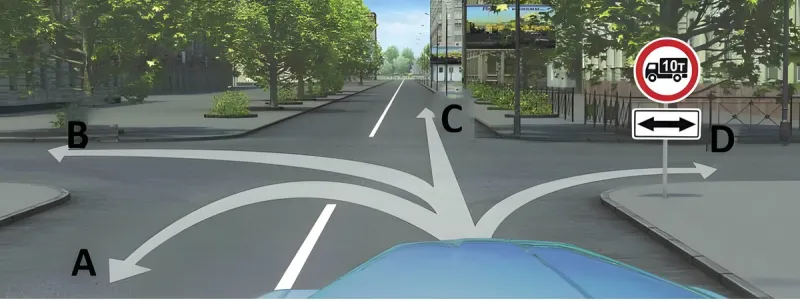
- Only C.
- A and C.
- All directions.
Correct answer: All directions. D/T
Why: 3.4 «Բեռնատար ավտոմոբիլների երթևեկությունն արգելվում է» նշանը 10 տ զանգվածով և
8.3.3 «Ազդման ուղղություններ» ցուցանակով արգելում է 10 տ-ից ծանր բեռնատարների շրջադարձը աջ և ձախ։ Նշանը չի տարածվում ավտոբուսների վրա, ուստի 12 տ ավտոբուսը կարող է երթևեկել բոլոր ուղղություններով։
Signs in this question: 3.4, 8.3.3
181. Considering the vehicle’s large dimensions, the driver is permitted to proceed:
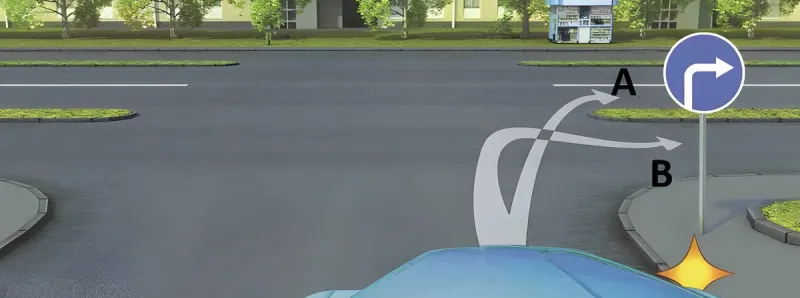
- Along both paths.
- Only along path A.
- Only along path B.
Correct answer: Only along path B. D/T
Why: 4.1.2 «Երթևեկությունը դեպի աջ» նշանով թույլատրվում է աջ շրջադարձ։ A հետագծով ավտոբուսը կհայտնվեր բաժանված ճանապարհի հանդիպակաց երթևեկության երթևեկելի մասում, ինչը կետ 41-ով արգելվում է։ Մեծ եզրաչափերը (կետ 40.3) ազատում են միայն եզրային գոտին զբաղեցնելու պահանջից, ոչ թե այդ արգելքից, ուստի թույլատրվում է միայն B հետագիծը։
Signs in this question: 4.1.2
In tests: D/T 26
182. In which direction may the driver of a fixed-route bus proceeding in a designated lane travel in this situation?
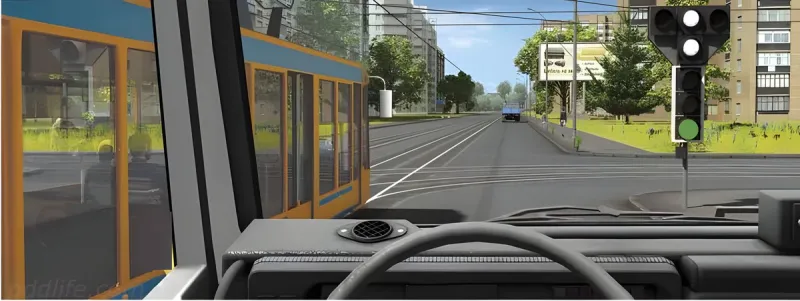
- Straight ahead only.
- In all directions.
Correct answer: Straight ahead only. D/T
Why: Առանձնացված գոտիով երթևեկող ընդհանուր օգտագործման տրանսպորտային միջոցները ղեկավարվում են «T»-աձև լուսնասպիտակ լուսացույցով։ Կետ 14-ով միացված են ներքևի և վերևի միջին ազդանշանները, ինչը թույլատրում է երթևեկել միայն ուղիղ։
In tests: D/T 54
183. A bus driver must not interfere with:
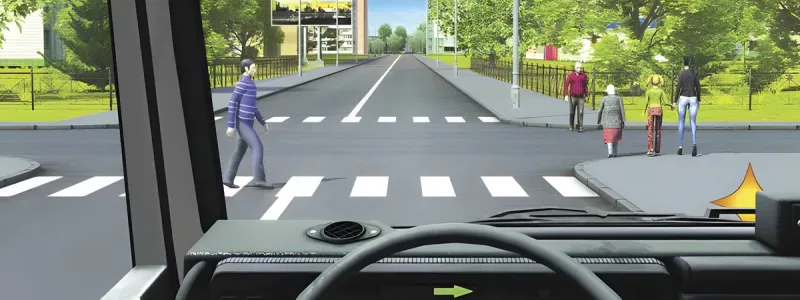
- Only pedestrians crossing at a pedestrian crossing.
- Only pedestrians encountered while making a turn.
- All pedestrians.
Correct answer: All pedestrians. D/T
Why: Ավտոբուսի վարորդը չպետք է խոչընդոտ ստեղծի բոլոր հետիոտներին՝ թե՛ հետիոտնային անցումով անցնողներին (կետ 103), թե՛ շրջադարձի ժամանակ երթևեկելի մասը հատողներին (կետ 87)։
In tests: D/T 16
184. When making a right or left turn and leaving the intersection, a bus driver must:
- Not interfere with pedestrians crossing the roadway.
- Yield to bicyclists proceeding on a bicycle path.
- Comply with both requirements.
Correct answer: Comply with both requirements. D/T
Why: Կետ 87-ով աջ կամ ձախ շրջադարձ կատարելիս խաչմերուկից դուրս գալիս վարորդը պետք է խոչընդոտ չստեղծի երթևեկելի մասը հատող հետիոտների համար և պետք է զիջի հեծանվային արահետով երթևեկող հեծանվորդներին։ Երկու պահանջն էլ պարտադիր են։
In tests: D/T 38
185. Is a bus driver permitted to drive around the truck by entering the oncoming traffic lane?
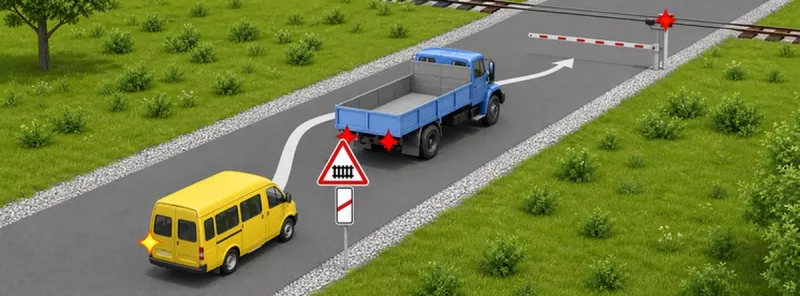
- Yes.
- No.
Correct answer: No. D/T
Why: 1.1 «Երկաթուղային գծանց՝ ուղեփակոցով» և
1.4.3 «Մոտեցում երկաթուղային գծանցին» նշանները ցույց են տալիս գծանցին մոտենալը։ Կետ 114.1-ով արգելվում է հանդիպակաց երթևեկության գոտի դուրս գալով շրջանցել գծանցից առաջ կանգնած տրանսպորտային միջոցները։
Signs in this question: 1.1, 1.4.3
In tests: D/T 20
186. In this situation, must the driver of an intercity bus yield to the driver of a fixed-route bus starting to move?
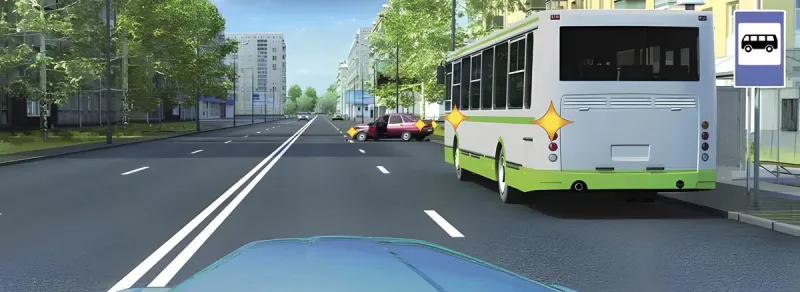
- Yes.
- No.
Correct answer: Yes. D/T
Why: 5.16 «Ավտոբուսի և (կամ) տրոլեյբուսի կանգառի տեղ» նշանով կահավորված կանգառի կետից բնակավայրում երթևեկությունն սկսող երթուղային ավտոբուսը կետ 125-ով առավելություն ունի, ուստի միջքաղաքային ավտոբուսի վարորդը պարտավոր է զիջել նրան։
Signs in this question: 5.16
In tests: D/T 34
187. Reversing in this situation is:
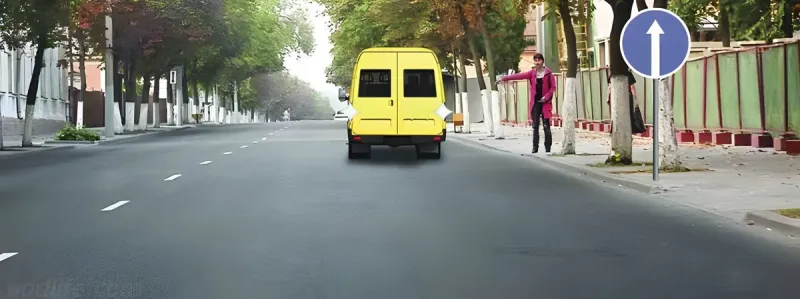
- Prohibited.
- Permitted.
- Permitted only for bus drivers.
Correct answer: Permitted. D/T
Why: 4.1.1 «Երթևեկությունն ուղիղ» նշանը հետընթացը չի արգելում։ Կետ 48-ով հետընթացը թույլատրվում է, եթե այն անվտանգ է և խոչընդոտ չի ստեղծում, իսկ կետ 49-ի արգելված տեղերից (խաչմերուկ, մերձակա տարածքից ելք, կետ 50-ի տեղեր) ոչ մեկն այստեղ չկա։
Signs in this question: 4.1.1
In tests: D/T 1
188. In this situation, the driver of a public transit vehicle:
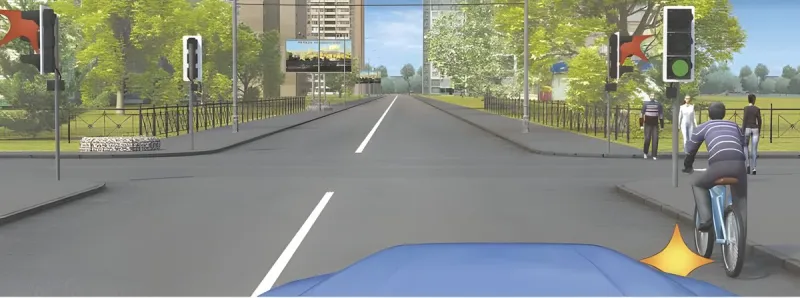
- Has the right-of-way only over the bicyclist.
- Has the right-of-way over the bicyclist and pedestrians.
- Must yield to the bicyclist and must not interfere with pedestrians.
Correct answer: Must yield to the bicyclist and must not interfere with pedestrians. D/T
Why: Կետ 87-ով աջ շրջադարձ կատարելիս խաչմերուկից դուրս գալիս վարորդը պետք է խոչընդոտ չստեղծի երթևեկելի մասը հատող հետիոտների համար և պետք է զիջի հեծանվորդին։ Ընդհանուր օգտագործման տրանսպորտային միջոցը նման առավելություն չունի։
In tests: D/T 50
189. Outside populated areas, must drivers yield to public transit vehicles starting to move from designated and marked stopping places?
- Yes.
- No.
Correct answer: No. D/T
Why: Կետ 125-ով կանգառի կետից երթևեկությունն սկսող ընդհանուր օգտագործման տրանսպորտային միջոցներն առավելություն ունեն միայն բնակավայրերում, ուստի բնակավայրից դուրս զիջելու պարտավորություն չկա։
In tests: D/T 39
190. At an intersection of equivalent roads, a tram operator must yield to:
- Drivers of all vehicles approaching from the right.
- Only tram operators approaching from the right.
Correct answer: Only tram operators approaching from the right. D/T
Why: Կետ 98-ով հավասարազոր ճանապարհների խաչմերուկում տրամվայն առավելություն ունի ոչ ռելսագնաց տրանսպորտային միջոցների նկատմամբ, իսկ տրամվայների վարորդները միմյանց նկատմամբ զիջում են աջից մոտեցողին. ուստի տրամվայը զիջում է միայն աջից մոտեցող տրամվայներին։
In tests: D/T 3
191. A bus driver proceeding along the indicated path is:
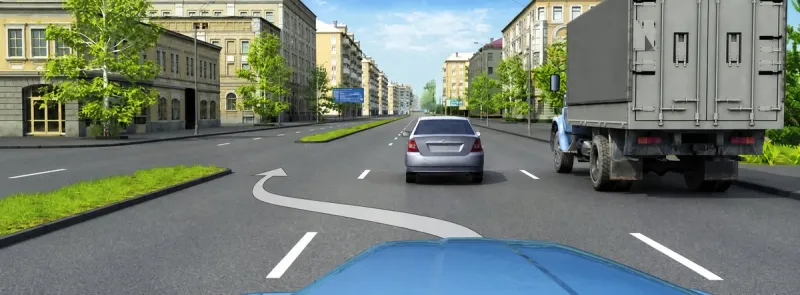
- Prohibited.
- Permitted only when passing.
- Permitted only when making a U-turn or left turn.
Correct answer: Permitted only when making a U-turn or left turn. D/T
Why: Միևնույն ուղղությամբ երեք գոտի ունեցող ճանապարհին նշված հետագիծը տանում է ձախ եզրային գոտի։ Կետ 57-ով ուղևորների կանոնավոր փոխադրումներ իրականացնող տրանսպորտային միջոցներին այդ գոտին թույլատրվում է զբաղեցնել միայն ձախ շրջադարձ կամ հետադարձ կատարելու համար։
In tests: D/T 28
192. Must a tram yield to a bus proceeding along a fixed route?
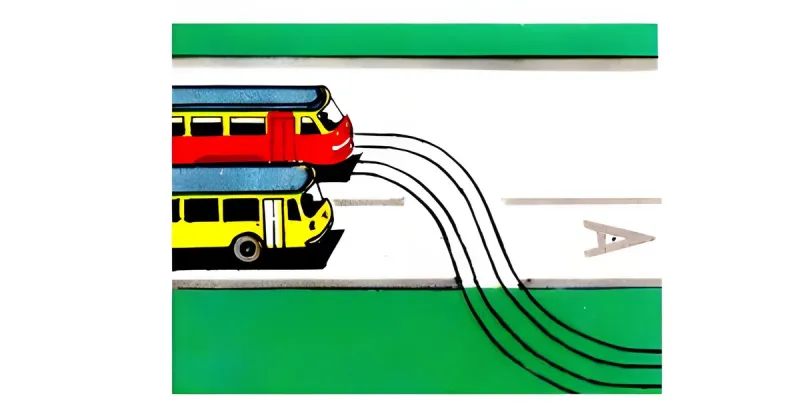
- Must yield.
- Not required.
Correct answer: Not required. D/T
Why: Տրամվայի գծերը հատում են երթևեկելի մասը խաչմերուկից դուրս։ Կետ 123-ով այդպիսի տեղերում տրամվայն առավելություն ունի ոչ ռելսագնաց տրանսպորտային միջոցների նկատմամբ (բացի դեպոյից դուրս գալուց), ուստի երթուղային ավտոբուսին զիջելու պարտավորություն չունի։
In tests: D/T 38
193. On all roads with four lanes in the same direction, are public transit vehicles permitted to occupy the leftmost lane?
- Permitted when passing.
- Permitted when making a left turn or U-turn.
- Permitted in all cases.
Correct answer: Permitted when making a left turn or U-turn. D/T
Why: Կետ 57-ով միևնույն ուղղությամբ երեք և ավելի գոտիների առկայության դեպքում ուղևորների կանոնավոր փոխադրումներ իրականացնող տրանսպորտային միջոցներին ձախ եզրային գոտին թույլատրվում է զբաղեցնել միայն ձախ շրջադարձ կամ հետադարձ կատարելու համար։
In tests: D/T 10
194. In this situation, must the driver of the fixed-route bus yield to the passenger car before starting to move?
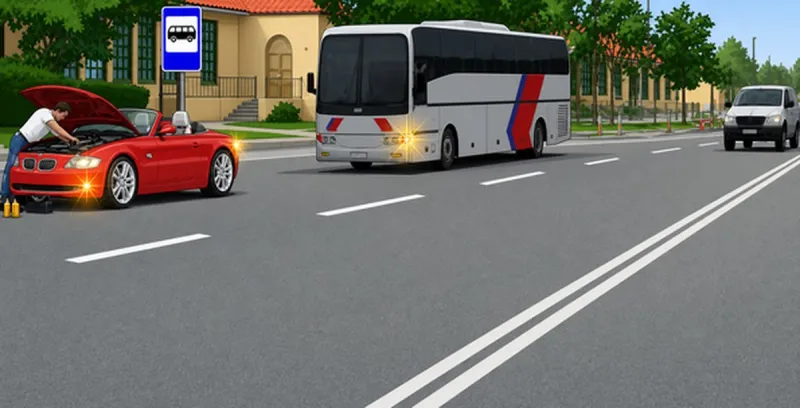
- Not required.
- Must yield.
Correct answer: Not required. D/T
Why: Երթուղային ավտոբուսը երթևեկությունն սկսում է
5.16 նշանով կահավորված կանգառի կետից բնակավայրում, ուստի կետ 125-ով առավելություն ունի և թեթև մարդատարին զիջելու պարտավորություն չունի. նա միայն պետք է համոզվի, որ հարևան գոտիով մոտեցողները խոչընդոտ չեն ստեղծում։
Signs in this question: 5.16
In tests: D/T 14
195. What is the maximum permitted speed for tourist buses on motorways?
- 70 km/h.
- 90 km/h.
- 100 km/h.
- 110 km/h.
Correct answer: 90 km/h. D/T
Why: Կետ 69.3-ով ավտոմայրուղիներով ավտոբուսներին թույլատրվում է երթևեկել ոչ ավելի, քան 90 կմ/ժ արագությամբ։
196. If the traffic controller’s arms are extended to the sides, which public transit vehicle is permitted to proceed straight ahead only?
- Buses only.
- Buses and trolleybuses.
- Trams only.
- All of the listed vehicles.
Correct answer: Trams only. D/T
Why: Կետ 16.2-ով, երբ կարգավորողի ձեռքերը պարզված են կողմ, ձախ և աջ կողմերից ոչ ռելսագնաց տրանսպորտային միջոցներին թույլատրվում է ուղիղ և դեպի աջ, իսկ միայն ուղիղ՝ տրամվայներին։
In tests: D/T 28
197. Must a bus driver yield to the bicyclist?
- Must yield.
- Not required if the bus is a fixed-route bus.
- Not required if the bus is large and is proceeding straight ahead.
Correct answer: Must yield. D/T
Why: Նշաններ չկան՝ հավասարազոր ճանապարհների խաչմերուկ։ Հեծանվորդը մոտենում է ավտոբուսի աջ կողմից, ուստի կետ 98-ով ավտոբուսի վարորդը պարտավոր է զիջել նրան՝ անկախ երթուղային լինելուց կամ եզրաչափերից։
In tests: D/T 37
198. Must a bus driver yield to the bicyclist?
- Not required if the bus is large.
- Not required if the bus is a fixed-route bus.
- Must yield.
Correct answer: Must yield. D/T
Why: Հեծանվորդի դիմաց
2.1 «Գլխավոր ճանապարհ» նշանն է, թեթև մարդատարի դիմաց՝
2.4 «Զիջեք ճանապարհը», ավտոբուսի մոտ նշանի թիկունքն է երևում։ Ավտոբուսն ու հեծանվորդը նույն գլխավոր ճանապարհով են, և ավտոբուսի ձախ շրջադարձը հատում է հանդիպակաց ուղիղ ընթացող հեծանվորդի ուղին, ուստի կետ 97, 99-ով ավտոբուսը պարտավոր է զիջել նրան։
Signs in this question: 2.1, 2.4
In tests: D/T 51
199. Must a bus driver yield to the tram?
- Not required because the bus is approaching the tram from the right.
- Must yield.
Correct answer: Must yield. D/T
Why: Նշաններ և լուսացույց չկան՝ հավասարազոր ճանապարհների չկարգավորվող խաչմերուկ։ Կետ 100-ով տրամվայն առավելություն ունի ոչ ռելսագնաց տրանսպորտային միջոցների նկատմամբ՝ անկախ ուղղությունից, ուստի ավտոբուսը պարտավոր է զիջել, թեև մոտենում է տրամվայի աջից։
In tests: D/T 19
200. If a bus driver has entered an intersection on a permissive traffic signal, then:
- Regardless of the traffic signals, the driver must stop.
- If a stop line pavement marking is present, the driver must comply with every traffic-signal indication.
Correct answer: If a stop line pavement marking is present, the driver must comply with every traffic-signal indication. D/T
Why: Կետ 93-ով թույլատրող ազդանշանով խաչմերուկ մուտք գործած վարորդը կարող է այն ազատել նախընտրած ուղղությամբ, սակայն եթե ընթացքի ուղղությամբ լուսացույցներից առաջ կա
1.12 «Կանգ-գիծ» գծանշումը, նա պետք է կատարի յուրաքանչյուր լուսացույցի ազդանշանի պահանջը։
201. Before making a turn or U-turn, a bus driver must occupy the corresponding outermost lane in advance, except:
- When making a U-turn at an intersection.
- When making a right turn if this does not interfere with other vehicles.
- When the driver is unable to do so because of the vehicle’s dimensions or for other reasons.
Correct answer: When the driver is unable to do so because of the vehicle’s dimensions or for other reasons. D/T
Why: Կետ 40-ով շրջադարձից կամ հետադարձից առաջ պետք է զբաղեցնել համապատասխան եզրային գոտին, բացառությամբ, ի թիվս այլնի, այն դեպքի, երբ դա հնարավոր չէ տրանսպորտային միջոցի եզրաչափերի կամ այլ պատճառներով (40.3)։
In tests: D/T 31
202. At intersections of equivalent roads, which public transit vehicle has the right-of-way?
- Public transit buses only.
- Trams and trolleybuses.
- Trams only.
Correct answer: Trams only. D/T
Why: Հավասարազոր ճանապարհների խաչմերուկում ընդհանուր օգտագործման տրանսպորտային միջոցներից առավելություն ունեն միայն տրամվայները (կետ 98, 100). ավտոբուսներն ու տրոլեյբուսները ենթարկվում են ընդհանուր կանոններին։
In tests: D/T 44
203. With this traffic-signal indication, tram traffic:
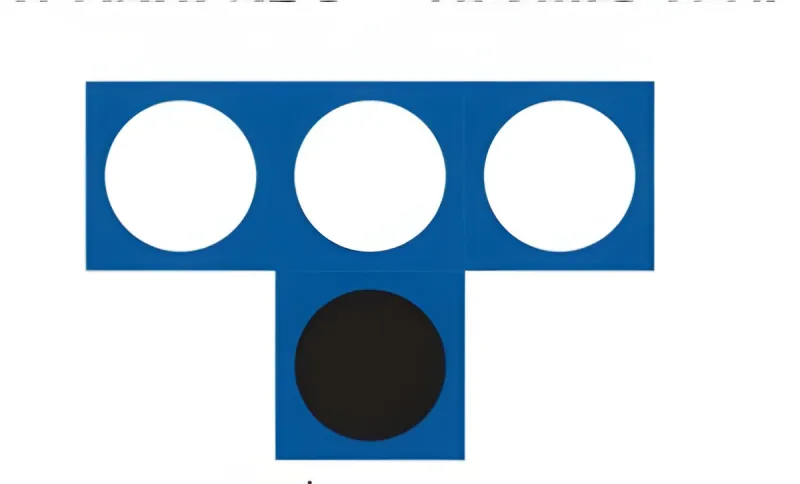
- Is permitted to the right or left.
- Is permitted in all directions.
- Is prohibited.
Correct answer: Is prohibited. D/T
Why: Կետ 14-ով «T»-աձև լուսնասպիտակ լուսացույցի վերևի ազդանշանները միացված են առանց ներքևի ազդանշանի, ուստի տրամվայի երթևեկությունն արգելված է։
In tests: D/T 36
204. For a public transit bus proceeding in a designated lane, traffic is prohibited:
- For making a U-turn.
- For turning right, turning left, and making a U-turn.
- In all directions.
Correct answer: In all directions. D/T
Why: Կետ 14-ով «T»-աձև լուսնասպիտակ լուսացույցի վերևի բոլոր ազդանշանները միացված են առանց ներքևի ազդանշանի, ուստի առանձնացված գոտիով երթևեկող ավտոբուսի երթևեկությունն արգելված է բոլոր ուղղություններով։
205. In which direction is a public transit bus proceeding in a designated lane permitted to travel?
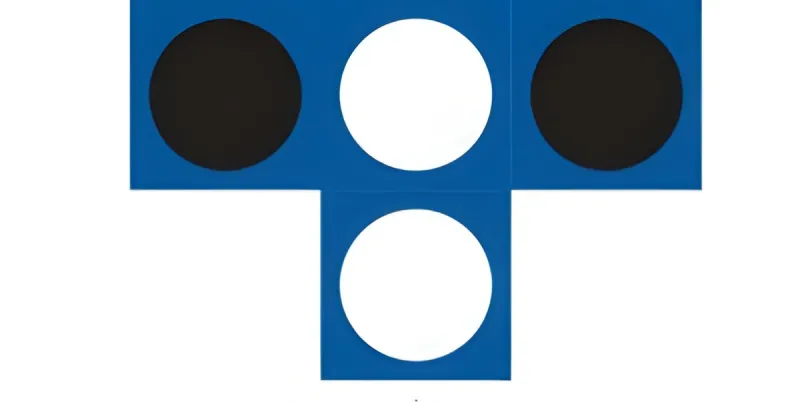
- To the right and left only.
- Straight ahead only.
- In all directions.
Correct answer: Straight ahead only. D/T
Why: Կետ 14-ով «T»-աձև լուսնասպիտակ լուսացույցի ներքևի ազդանշանը միացված է վերևի միջին ազդանշանի հետ, ինչը թույլատրում է երթևեկել միայն ուղիղ։
In tests: D/T 53
206. You intend to make a left turn. To whom must you yield?
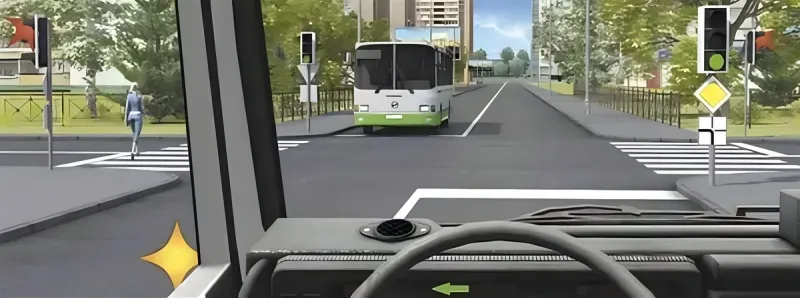
- Pedestrians only.
- The bus only.
- The bus and pedestrians.
Correct answer: The bus and pedestrians. D/T
Why: Լուսացույցը կանաչ է, ուստի
2.1 նշանն
8.13 ցուցանակով հերթականությունը չի որոշում (կետ 173)։ Կանաչով ձախ թեքվելիս կետ 90-ով զիջում ենք հանդիպակաց ուղիղ ընթացող ավտոբուսին, իսկ կետ 87-ով խոչընդոտ չենք ստեղծում մուտք գործվող ճանապարհը հատող հետիոտներին։
Signs in this question: 2.1, 8.13
In tests: D/T 1
207. In this situation, who must yield?
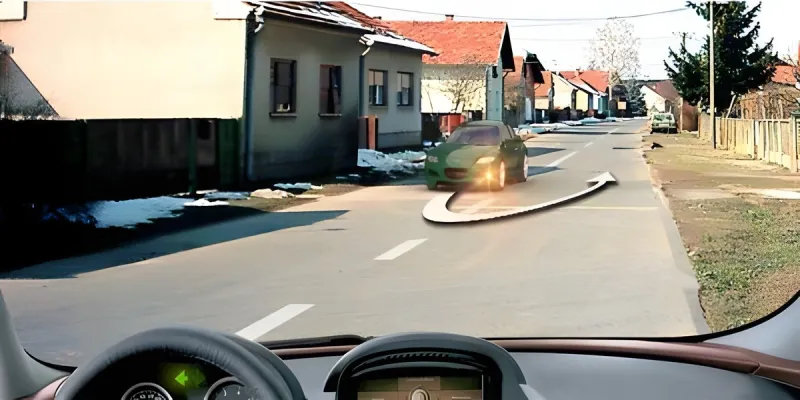
- The bus driver starting to move.
- The passenger-car driver.
Correct answer: The bus driver starting to move. D/T
Why: Ավտոբուսը երթևեկությունն սկսում է ոչ բնակավայրում կահավորված և նշված կանգառի կետից, ուստի կետ 125-ի առավելությունը չի գործում։ Կետ 36-ով ազդանշան տալն առավելություն չի տալիս, և երթևեկությունն սկսելիս մանևրը չպետք է խոչընդոտ ստեղծի, ուստի զիջում է ավտոբուսի վարորդը։
In tests: D/T 45
208. You are driving a fixed-route bus and intend to make a left turn in this situation. You will pass through the intersection:
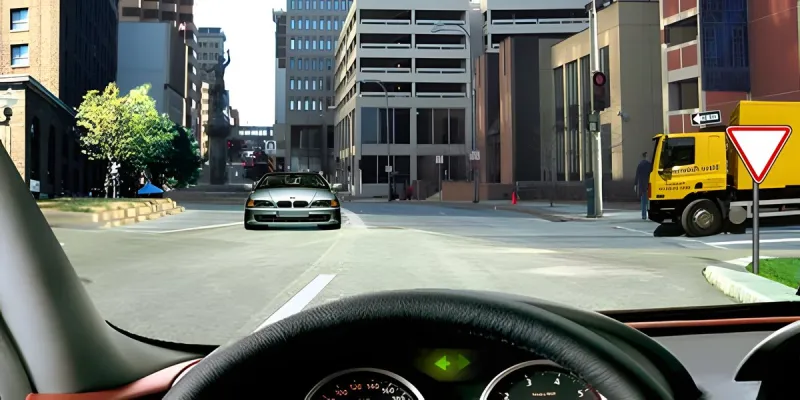
- First.
- Second.
- Third.
Correct answer: Third. D/T
Why: Մեր առջև
2.4 «Զիջեք ճանապարհը» նշանն է, ուստի հատվող ճանապարհով աջից մոտեցող բեռնատարն առավելություն ունի և անցնում է առաջինը (կետ 96)։ Հանդիպակաց թեթև մարդատարը նույնպես երկրորդական ճանապարհից է. նրա նկատմամբ գործում են հավասարազոր խաչմերուկի կանոնները (կետ 97), և ձախ շրջադարձի ժամանակ կետ 99-ով զիջում ենք նրան։ Երթուղային լինելը խաչմերուկում առավելություն չի տալիս. անցնում ենք երրորդը։
Signs in this question: 2.4
In tests: D/T 40
209. You are driving a fixed-route bus and intend to make a left turn while the tram is proceeding straight ahead. Who has the right-of-way?
- The bus driver, because fixed-route vehicles always have the right-of-way over trams when maneuvering at intersections.
- The tram operator.
Correct answer: The tram operator. D/T
Why: Նշաններ չկան՝ հավասարազոր ճանապարհների խաչմերուկ, և
5.15.1 «Երթևեկության ուղղությունները գոտիներով» նշանն առավելություն չի սահմանում։ Կետ 100-ով տրամվայն առավելություն ունի ոչ ռելսագնաց տրանսպորտային միջոցների նկատմամբ՝ անկախ ուղղությունից, իսկ երթուղային ավտոբուսներն այդպիսի առավելություն չունեն։
Signs in this question: 5.15.1
210. You are driving a fixed-route bus. Indicate the correct order of proceeding through the intersection in this situation.
- The truck, then the tram and bus simultaneously.
- The truck, the tram, the bus.
- The tram, the truck, the bus.
Correct answer: The tram, the truck, the bus. D/T
Why: Առավելության նշաններ չկան՝ հավասարազոր ճանապարհների խաչմերուկ։ Տրամվայն առավելություն ունի ոչ ռելսագնաց տրանսպորտային միջոցների նկատմամբ (կետ 100) և անցնում է առաջինը, ապա բեռնատարը, որը մոտենում է մեր աջից (կետ 98), իսկ վերջում՝ մեր ավտոբուսը. տրամվայ, բեռնատար, ավտոբուս։
211. You are driving a bus. Indicate the correct order of proceeding through the intersection in this situation.
- The passenger car, the tram, the motorcycle, the bus.
- The tram, the passenger car, the bus, the motorcycle.
Correct answer: The tram, the passenger car, the bus, the motorcycle. D/T
Why: Մեր առջև
2.1 «Գլխավոր ճանապարհ» նշանն է
8.13 ցուցանակով. գլխավոր ճանապարհն անցնում է մեր թևով և թեքվում աջ՝ թեթև մարդատարի թևը, իսկ դիմացի թևը մոտոցիկլով երկրորդական է։ Ձախի տրամվայը մեր գլխավոր ճանապարհով է և առավելություն ունի ոչ ռելսագնացների նկատմամբ (կետ 96, 100), թեթև մարդատարը մոտենում է աջից (կետ 97, 98), իսկ մոտոցիկլը զիջում է բոլորին (կետ 96). տրամվայ, թեթև մարդատար, ավտոբուս, մոտոցիկլ։
Signs in this question: 2.1, 8.13
212. The bus will pass through the intersection:
- First, together with the trolleybus.
- Second.
- Last.
Correct answer: Last. D/T
Why: Դեղին թեթև մարդատարի առջև
2.1 «Գլխավոր ճանապարհ» նշանն է
8.13 ցուցանակով. գլխավոր ճանապարհն անցնում է նրա թևով և թեքվում աջ՝ տրոլեյբուսի թևը, իսկ ավտոբուսը երկրորդական ճանապարհից է։ Տրոլեյբուսն ու թեթև մարդատարը անցնում են առաջ (կետ 97, 98), իսկ ավտոբուսը կետ 96-ով զիջում է երկուսին և անցնում վերջինը։
Signs in this question: 2.1, 8.13
In tests: D/T 55
213. The tram will pass through the intersection:
- First, simultaneously with the blue automobile.
- Second.
- Third.
Correct answer: Second. D/T
Why: Կապույտի դիմաց
2.1 «Գլխավոր ճանապարհ» նշանն է
8.13 ցուցանակով. գլխավոր ճանապարհն անցնում է նրա և ձախ թևերով, և կապույտն անցնում է առաջինը։ Տրամվայն ու կարմիրը երկրորդական ճանապարհի վրա են, իսկ կետ 96-ով տրամվայն առավելություն ունի նույն ճանապարհով ընթացող ոչ ռելսագնացների նկատմամբ, ուստի անցնում է երկրորդը։
Signs in this question: 2.1, 8.13
In tests: D/T 45
214. The tram will pass through the intersection:
- First.
- Second, together with the blue automobile.
- Third.
Correct answer: Third. D/T
Why: Կապույտի և մոտոցիկլի դիմաց
2.1 «Գլխավոր ճանապարհ» նշաններն են
8.13 ցուցանակով. գլխավոր ճանապարհը թեքվում է նրանց թևերի միջև, իսկ տրամվայը երկրորդական ճանապարհի վրա է։ Գլխավոր ճանապարհով ընթացողները միմյանց նկատմամբ գործում են աջի խոչընդոտի կանոնով (կետ 97, 98)՝ մոտոցիկլ, ապա կապույտ, իսկ տրամվայը կետ 96-ով զիջում է նրանց և անցնում երրորդը։
Signs in this question: 2.1, 8.13
In tests: D/T 50
Take this test in the app
In Varordakan Tester the same tests are taken without hints, wrong answers are collected automatically, and there is an exam simulation (20 questions, 30 minutes, pass at 18), a 3D intersection simulator, video lessons and an AI assistant that cites the Traffic Rules point. Free.
Sources: questions from the official bank of the Road Police of Armenia (roadpolice.am, edition of 2 October 2026); rule points from the Traffic Rules of the Republic of Armenia (arlis.am). Varordakan Tester is an independent educational app, not affiliated with the Police of Armenia.
Explanations © 2026 Suren Galoyan, all rights reserved; reproduction without permission is prohibited. Questions and pictures are from the official bank of the Road Police of Armenia.
