Tests › Topics
Topic 9. Warning signals, special signals, overtaking
Updated 2026-10-13 · official question bank of 2 October 2026
Topic 9: "Warning signals, special signals, overtaking". 192 questions from the official bank of 2 October 2026 (categories ABC and D/T), each with the correct answer and an explanation.
1. When approaching a stopped vehicle with a flashing red beacon switched on, drivers of vehicles proceeding in that direction must:
- Stop and continue only after receiving permission.
- Reduce speed so that they can stop immediately if necessary.
- Continue driving.
Correct answer: Stop and continue only after receiving permission. ABC
Why: Կետ 31-ով կարմիր առկայծող փարոսիկ միացրած, կանգնած տրանսպորտային միջոցին մոտենալիս տվյալ ուղղությամբ երթևեկող վարորդները պետք է կանգ առնեն և շարունակեն միայն թույլտվություն ստանալուց հետո։
In tests: ABC 3
2. When a vehicle with a flashing blue beacon and a special audible signal activated is approaching, drivers of vehicles must:
- Continue driving.
- Yield to ensure the unobstructed passage of that vehicle.
- Reduce speed and yield to ensure the unobstructed passage of that vehicle.
Correct answer: Yield to ensure the unobstructed passage of that vehicle. ABC
Why: Կետ 28-ով կապույտ փարոսիկ և հատուկ ձայնային ազդանշան միացրած մեքենա մոտենալիս վարորդները պետք է զիջեն ճանապարհը։ Արագությունն իջեցնելու լրացուցիչ պահանջը վերաբերում է կապույտ և կարմիր փարոսիկների դեպքին (կետ 29)։
3. Is it mandatory to have the low-beam headlights switched on during daylight hours on mopeds?
- Mandatory
- Not mandatory
Correct answer: Mandatory ABC
Why: Կետ 133.1-ով օրվա լուսավոր ժամերին մոտոցիկլների և մոպեդների վրա լապտերների մոտակա լույսը պետք է միացված լինի։
In tests: ABC 13
4. In which case do the rules not require a warning signal to be given?
- Before stopping at the edge of the roadway.
- Before a curve in the road within the area of effect of a “Dangerous Turn” sign.
- Before changing to an adjacent traffic lane.
Correct answer: Before a curve in the road within the area of effect of a “Dangerous Turn” sign. ABC · D/T
Why: Կետ 36-ով ազդանշան տալը պարտադիր չէ, եթե տրանսպորտային միջոցն առանց վերադասավորման երթևեկում է ճանապարհի կորագծային հատվածով («Վտանգավոր շրջադարձ» նշանի գոտում)։ Եզրին կանգառը և վերադասավորումը մանևրներ են, որոնց համար ազդանշան պարտադիր է։
Signs in this question: 1.11.1, 1.11.2
In tests: ABC 19
5. Before changing lanes, a warning signal must be given:
- Immediately before beginning the maneuver.
- Immediately after beginning the maneuver.
- In advance, before beginning the maneuver.
Correct answer: In advance, before beginning the maneuver. ABC · D/T
Why: Կետ 36-ով ազդանշանը պետք է տրվի նախօրոք՝ մինչև երթևեկությունը կամ մանևրն սկսելը։
In tests: ABC 19, D/T 29
6. When performing a maneuver, a warning signal must be given:
- Before changing the direction of traffic.
- While changing the direction of traffic.
- In advance, before changing the direction of traffic.
Correct answer: In advance, before changing the direction of traffic. ABC · D/T
Why: Կետ 36-ով ազդանշանը տրվում է նախօրոք՝ մինչև մանևրն սկսելը, ոչ թե ուղղությունը փոխելու պահին կամ ընթացքում։
7. A warning signal given by hand must be discontinued:
- Immediately before beginning the maneuver.
- Immediately after completing the maneuver.
- While performing the maneuver.
Correct answer: Immediately before beginning the maneuver. ABC
Why: Կետ 36-ով ձեռքով տրվող ազդանշանը դադարեցվում է մանևրն սկսելուց անմիջապես առաջ (ի տարբերություն լուսային ցուցիչի, որն անջատվում է մանևրն ավարտելուց հետո)։
In tests: ABC 24
8. In which case must the driver give a warning signal before stopping?
- If another vehicle is proceeding behind the driver.
- Only in populated areas.
- In all cases.
Correct answer: In all cases. ABC · D/T
Why: Կետ 36-ով ազդանշան տրվում է ցանկացած մանևրից, այդ թվում՝ կանգառից առաջ, առանց տեղի կամ հետևից երթևեկողի առկայության պայմանի. այսինքն՝ բոլոր դեպքերում։
In tests: ABC 55, D/T 22
9. If forced to stop on a railroad crossing, what general alarm signal must the driver give by repeated horn signals?
- Three long and one short.
- One long and three short.
- One long and two short.
Correct answer: One long and three short. ABC · D/T
Why: Կետ 112.4-ով գծանցում հարկադրված կանգառի դեպքում ընդհանուր տագնապի ազդանշանն է իրար հետևից տրվող մեկ երկար և երեք կարճ ձայնային ազդանշանների համակցությունը։
In tests: ABC 20, D/T 6
10. If a turn signal is absent or malfunctioning, a warning signal given by hand must be discontinued:
- Immediately before beginning the maneuver.
- Immediately after completing the maneuver.
- While performing the maneuver.
Correct answer: Immediately before beginning the maneuver. ABC · D/T
Why: Կետ 36-ով ցուցիչի բացակայության կամ անսարքության դեպքում ձեռքով տրվող ազդանշանը դադարեցվում է մանևրն սկսելուց անմիջապես առաջ։
In tests: ABC 43, D/T 18
11. The following combination of horn signals constitutes the general alarm signal given at a railroad crossing:
- Two long and two short.
- One long and three short.
- Three long and three short.
- Three long and one short.
Correct answer: One long and three short. ABC · D/T
Why: Կետ 112.4-ով երկաթուղային գծանցի վրա ընդհանուր տագնապի ազդանշանն է մեկ երկար և երեք կարճ ձայնային ազդանշանների համակցությունը։
In tests: ABC 25, D/T 32
12. In which image is the driver giving a left-turn signal?
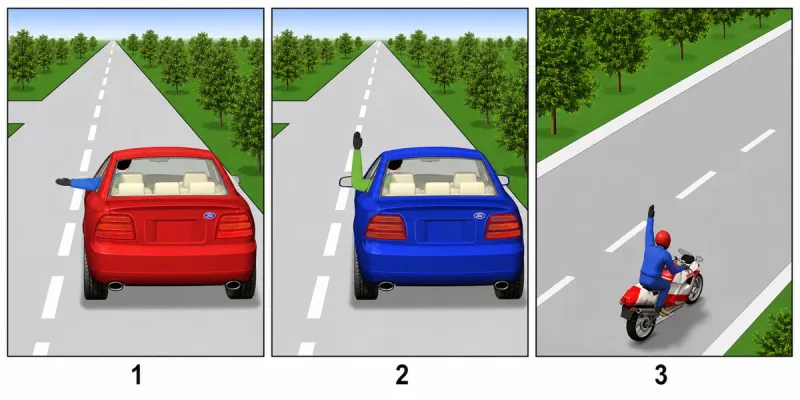
- 1
- 2
- 3
Correct answer: Option 1 ABC · D/T
Why: Կետ 37-ի համաձայն՝ ձախ շրջադարձի ազդանշանին համապատասխանում է դեպի կողմ պարզված ձախ ձեռքը (1-ին նկար)։ 2-րդ նկարում արմունկում վեր ծալված ձախ ձեռքն աջ շրջադարձի ազդանշանն է, իսկ 3-րդում վեր պարզված ձեռքը՝ արգելակման։
In tests: ABC 41
13. When approaching a stationary vehicle with a red flashing beacon activated, drivers proceeding in the same direction must:
- Stop and continue only after receiving permission.
- Reduce speed so that they can stop immediately if necessary.
Correct answer: Stop and continue only after receiving permission. ABC · D/T
Why: Կետ 31-ով կարմիր առկայծող փարոսիկ միացրած կանգնած մեքենային մոտենալիս տվյալ ուղղությամբ երթևեկող վարորդները կանգ են առնում և շարունակում միայն թույլտվություն ստանալուց հետո։
In tests: ABC 4, D/T 3
14. For what purpose are orange or yellow flashing beacons installed on vehicles?
- To obtain right-of-way over other road users.
- To warn other road users of danger.
Correct answer: To warn other road users of danger. ABC · D/T
Why: Կետ 32-ով դեղին կամ նարնջագույն առկայծող փարոսիկները երթևեկության առավելություն չեն տալիս և ծառայում են միայն մյուս մասնակիցներին վտանգի մասին նախազգուշացնելու համար։
In tests: ABC 3, D/T 1
15. When a vehicle with a blue flashing beacon and a special audible signal activated is approaching, drivers must:
- Yield to ensure the unobstructed passage of that vehicle.
- Reduce speed and yield to ensure the unobstructed passage of that vehicle.
Correct answer: Yield to ensure the unobstructed passage of that vehicle. ABC · D/T
Why: Կետ 28-ով կապույտ փարոսիկ և հատուկ ձայնային ազդանշան միացրած մեքենային վարորդները զիջում են ճանապարհը։ Արագությունն իջեցնելը պահանջվում է միայն կապույտ և կարմիր փարոսիկների դեպքում (կետ 29)։
In tests: ABC 16, D/T 24
16. The blue automobile will proceed through the intersection:
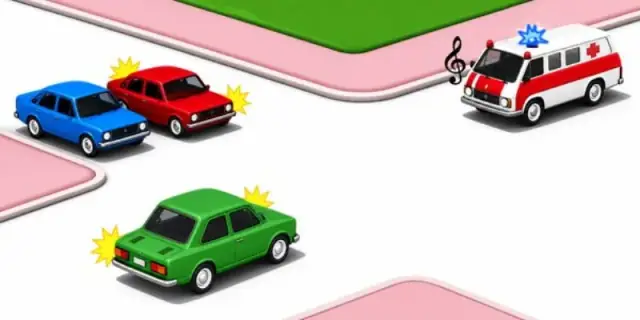
- First, simultaneously with the red automobile.
- Second, simultaneously with the red automobile.
- Third, simultaneously with the red automobile.
Correct answer: Third, simultaneously with the red automobile. ABC · D/T
Why: Կապույտ փարոսիկով և հատուկ ձայնային ազդանշանով շտապ օգնության ավտոմոբիլն անցնում է առաջինը (կետ 28)։ Այնուհետև գործում է հավասարազոր ճանապարհների կանոնը (կետ 98)՝ կանաչ ավտոմոբիլը երկրորդն է, իսկ կապույտն ու կարմիրը, որոնց ուղիները չեն հատվում, անցնում են երրորդը՝ միաժամանակ։
In tests: ABC 14, D/T 41
17. When a vehicle with blue and red flashing beacons and a special audible signal activated is approaching, drivers must:
- Yield to ensure the unobstructed passage of that vehicle.
- Reduce speed and yield to ensure the unobstructed passage of that vehicle and the vehicles it is escorting.
Correct answer: Reduce speed and yield to ensure the unobstructed passage of that vehicle and the vehicles it is escorting. ABC · D/T
Why: Կետ 29-ով կապույտ և կարմիր փարոսիկներ ու հատուկ ձայնային ազդանշան միացրած մեքենա մոտենալիս վարորդները պետք է իջեցնեն արագությունը և զիջեն ճանապարհը նրան և նրանով ուղեկցվող տրանսպորտային միջոցներին։
In tests: ABC 15, D/T 31
18. Which vehicle driver has the right-of-way?
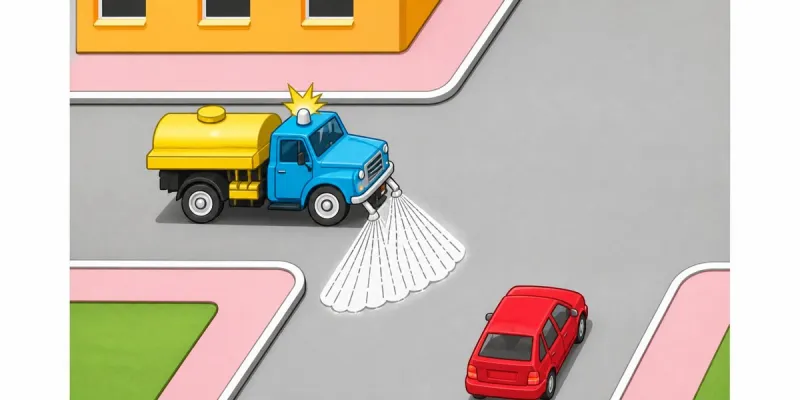
- The driver of the road-cleaning vehicle.
- The passenger-car driver.
Correct answer: The passenger-car driver. ABC
Why: Ճանապարհային մեքենայի դեղին առկայծող փարոսիկը երթևեկության առավելություն չի տալիս (կետ 32)։ Հավասարազոր ճանապարհների խաչմերուկում առավելությունն աջից մոտեցող թեթև մարդատարի վարորդինն է (կետ 98)։
In tests: ABC 32
19. The black automobile will proceed through the intersection:
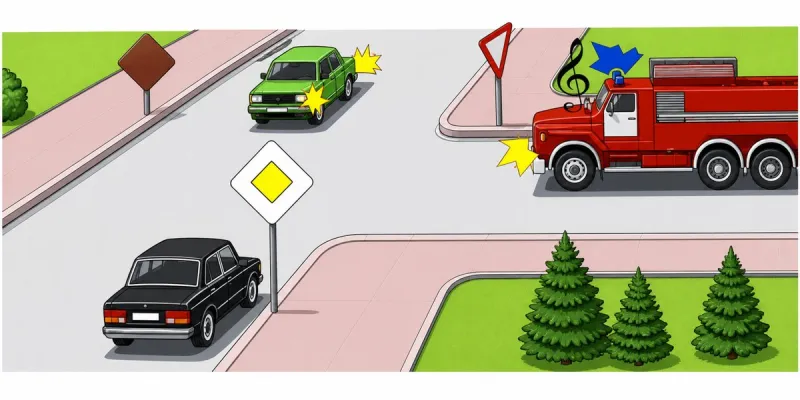
- First.
- Second.
- Last.
Correct answer: Second. ABC
Why: Կապույտ փարոսիկով և ձայնային ազդանշանով հրշեջ ավտոմոբիլն անցնում է առաջինը (կետ 28)։ Երկրորդական ճանապարհից (նշան
2.4) այն առավելություն չէր ունենա, բայց հատուկ ազդանշաններն այն տալիս են։ Սև և կանաչ ավտոմոբիլները գլխավոր ճանապարհով են (նշան
2.1) և միմյանց նկատմամբ ղեկավարվում են հավասարազոր խաչմերուկի կանոններով (կետ 97). ձախ շրջվող կանաչը զիջում է հանդիպակացից ուղիղ ընթացող սևին (կետ 99), ուստի սևն անցնում է երկրորդը։
Signs in this question: 2.1, 2.4
In tests: ABC 40
20. Which vehicle driver must yield?
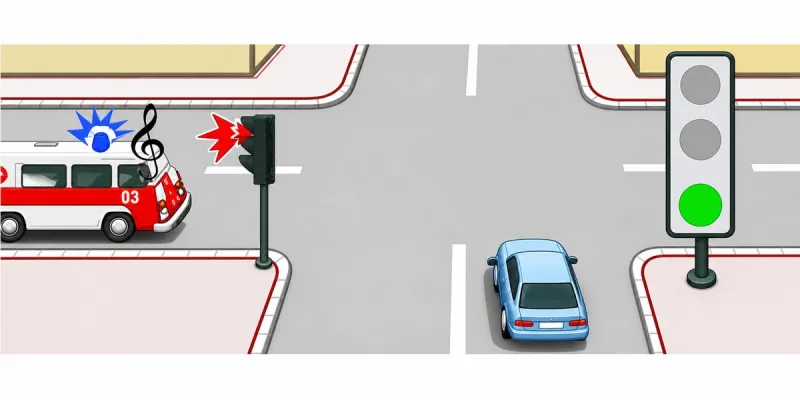
- The ambulance driver.
- The passenger-car driver.
Correct answer: The passenger-car driver. ABC
Why: Շտապ օգնության ավտոմոբիլի կապույտ փարոսիկն ու հատուկ ձայնային ազդանշանը միացված են։ Կետ 28-ի համաձայն՝ վարորդները պետք է զիջեն ճանապարհը նման տրանսպորտային միջոցին, ուստի, թեև թեթև մարդատարի համար կանաչ է վառվում, զիջում է նրա վարորդը։
In tests: ABC 48
21. The blue automobile will proceed through the intersection:
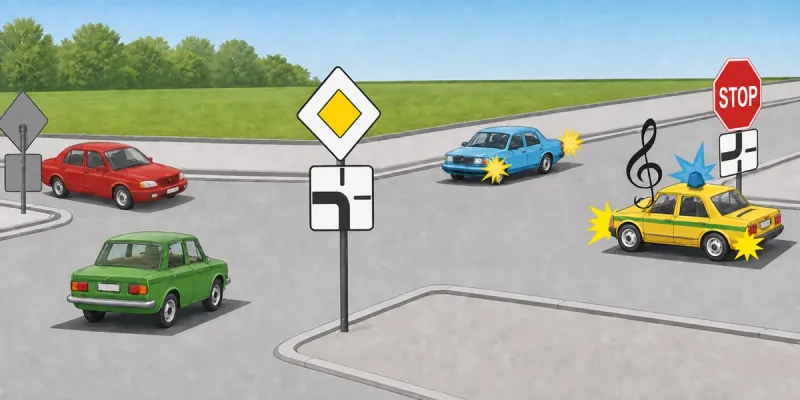
- First.
- Second.
- Third.
- Last.
Correct answer: Last. ABC
Why: Կապույտ փարոսիկով և ձայնային ազդանշանով դեղին ավտոմոբիլն անցնում է առաջինը (կետ 28), թեև նրա ճանապարհին
2.5 «STOP» նշանն է։
2.1 նշանը
8.13 ցուցանակով ցույց է տալիս, որ գլխավոր ճանապարհը թեքվում է ձախ. կարմիր և կանաչ ավտոմոբիլները գլխավոր ճանապարհին են և միմյանց նկատմամբ գործում են աջի կանոնով (կետ 97, 98)։ Կապույտ ավտոմոբիլը երկրորդական ճանապարհով է, ուստի կետ 96-ով անցնում է վերջինը։
Signs in this question: 2.1, 8.13, 2.5
In tests: ABC 18
22. Does an activated yellow (orange) flashing beacon give a vehicle the right-of-way?
- Yes.
- No.
Correct answer: No. ABC · D/T
Why: Կետ 32-ով դեղին (նարնջագույն) առկայծող փարոսիկը երթևեկության առավելություն չի տալիս, միայն նախազգուշացնում է վտանգի մասին։
In tests: ABC 22
23. The driver of a vehicle with white flashing beacons activated gives a special audible signal in order to:
- Obtain right-of-way over other road users.
- Attract the attention of police officers and other persons.
Correct answer: Attract the attention of police officers and other persons. ABC · D/T
Why: Կետ 35-ով լուսնասպիտակ փարոսիկներն ու հատուկ ձայնային ազդանշանը միացվում են միայն մեքենայի վրա հարձակման դեպքում. դրանք առավելություն չեն տալիս և ծառայում են միայն ոստիկանության և այլ անձանց ուշադրությունը գրավելու համար։
In tests: ABC 46, D/T 21
24. The driver of a vehicle equipped with a blue flashing beacon has the right-of-way over other road users if the driver:
- Has activated the flashing beacon.
- Is giving a special audible signal.
- Has activated the blue flashing beacon and the special audible signal.
Correct answer: Has activated the blue flashing beacon and the special audible signal. ABC · D/T
Why: Կետ 26-ով երթևեկության մյուս մասնակիցների նկատմամբ առավելություն ստանալու համար պետք է միացված լինեն և՛ կապույտ առկայծող փարոսիկը, և՛ հատուկ ձայնային ազդանշանը միասին։
In tests: ABC 12, D/T 27
25. Within what distance before a railroad crossing is passing prohibited?
- Within 50 m before the crossing.
- Within 100 m before the crossing.
- Within 150 m before the crossing.
Correct answer: Within 100 m before the crossing. ABC · D/T
Why: Կետ 77.3-ով վազանցն արգելվում է երկաթուղային գծանցների վրա և մինչև 100 մ դրանցից առաջ։
In tests: ABC 1, D/T 19
26. Is passing vehicles at an intersection permitted when proceeding on a road that is the priority road relative to the intersecting road?
- Permitted.
- Prohibited.
Correct answer: Prohibited. ABC · D/T
Why: Կետ 77.1-ով վազանցն արգելվում է խաչմերուկներում՝ առանց բացառության։ Գլխավոր ճանապարհի վրա գտնվելը վազանց չի թույլատրում։
In tests: ABC 53, D/T 52
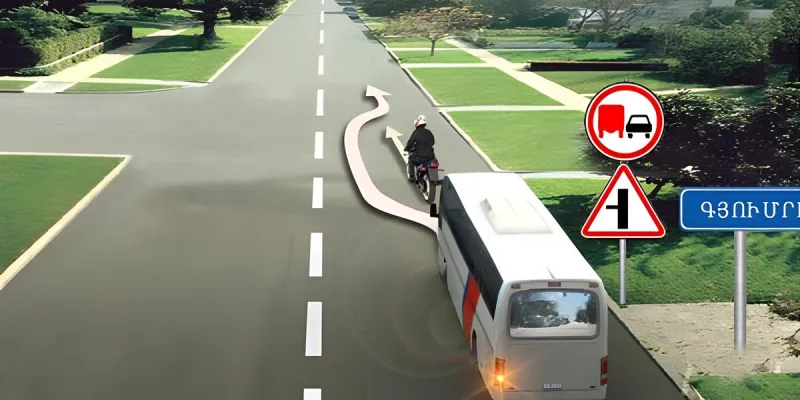
27. Is the passenger-car driver permitted to pass in the indicated situation?
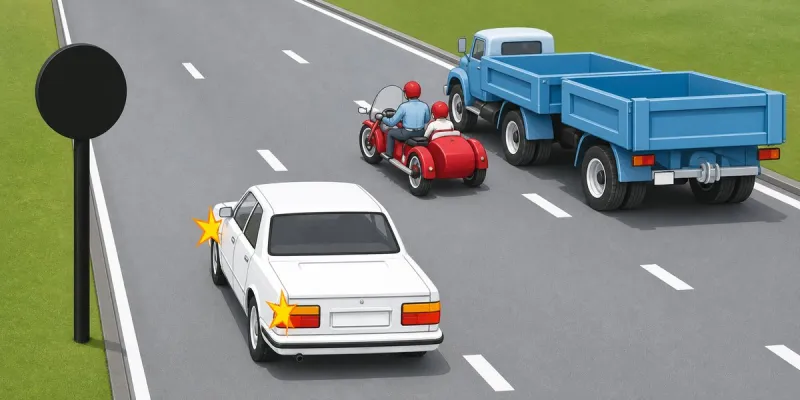
- Permitted.
- Permitted if the motorcycle’s speed does not exceed 30 km/h.
- Prohibited.
Correct answer: Prohibited. ABC
Why: Առջևում կողային կցորդով մոտոցիկլն ինքն է վազանցում բեռնատարին։ Կետ 77-ի համաձայն՝ վազանցն արգելվում է, եթե վազանցվող տրանսպորտային միջոցի վարորդը կատարում է վազանց, ուստի թեթև մարդատարի վարորդին վազանցն արգելվում է։
In tests: ABC 54
28. Passing is prohibited:
- At intersections.
- Within 150 m before railroad crossings.
- In both cases.
Correct answer: At intersections. ABC · D/T
Why: Վազանցն արգելվում է խաչմերուկներում (կետ 77.1)։ Երկաթուղային գծանցից առաջ արգելքը 100 մ է (կետ 77.3), ոչ 150 մ, ուստի ճիշտ է միայն առաջին տարբերակը։
In tests: ABC 39, D/T 16
29. Passing is prohibited:
- At controlled intersections.
- At uncontrolled intersections.
- In both cases.
Correct answer: In both cases. ABC · D/T
Why: Կետ 77.1-ը արգելում է վազանցը խաչմերուկներում՝ առանց տեսակի տարբերության։ Կետ 89-ը սահմանում է կարգավորվող, կետ 95-ը՝ չկարգավորվող խաչմերուկը, և արգելքը գործում է երկուսում էլ։
In tests: ABC 10, D/T 39
30. Is it permitted to pass the road train in this situation if its speed does not exceed 30 km/h?
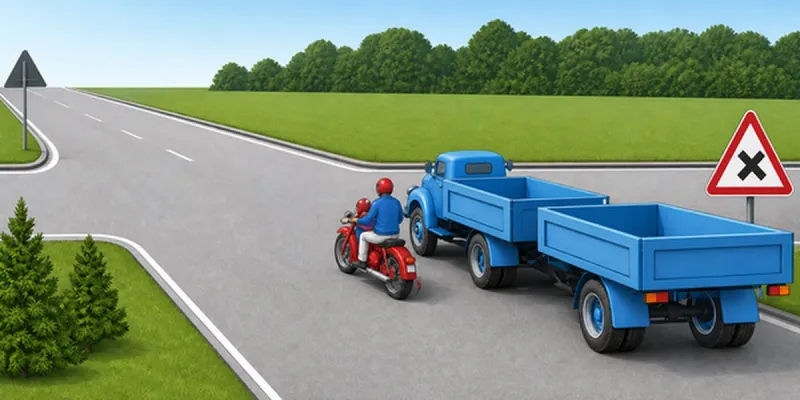
- Prohibited.
- Permitted.
Correct answer: Prohibited. ABC
Why: Նշան
1.6 «Հավասարազոր ճանապարհների հատում»-ը նախազգուշացնում է խաչմերուկի մասին, և ավտոգնացքը մոտենում է դրան։ Կետ 77.1-ով խաչմերուկներում վազանցն արգելվում է՝ անկախ վազանցվողի արագությունից։
Signs in this question: 1.6
In tests: ABC 28
31. Is the driver of the green automobile permitted to pass?
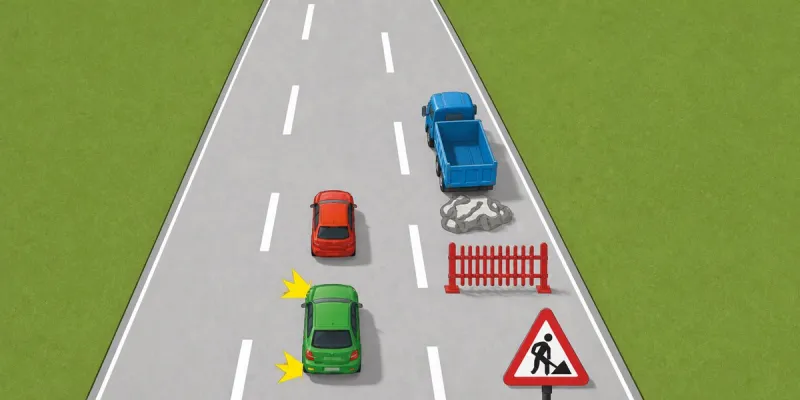
- Permitted.
- Prohibited.
- Permitted if the red automobile is proceeding at a speed below 30 km/h.
Correct answer: Prohibited. ABC
Why: Ճանապարհային աշխատանքների (նշան
1.25) պատճառով ճանապարհը նեղացել է, և առջևի կարմիր ավտոմոբիլը շրջանցում է արգելքը։ Կետ 77-ի համաձայն՝ վազանցն արգելվում է, եթե վազանցվողը շրջանցում է արգելքը, ինչպես նաև ճանապարհների նեղացումներում։
Signs in this question: 1.25
In tests: ABC 5
32. Is the driver of the red automobile permitted to pass in this situation?
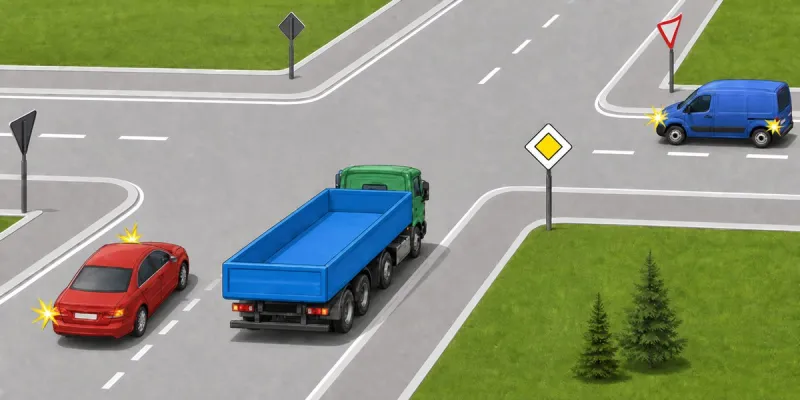
- Permitted.
- Prohibited.
- Permitted if the speed of the automobile being passed does not exceed 30 km/h.
Correct answer: Prohibited. ABC
Why: Կարմիր ավտոմոբիլը բեռնատարին կվազանցի խաչմերուկում։ Կետ 77-ի համաձայն՝ վազանցն արգելվում է խաչմերուկներում, այդ թվում՝ գլխավոր ճանապարհով (նշան
2.1) ընթանալիս։
Signs in this question: 2.1, 2.4
In tests: ABC 6
33. Is it permitted to pass the bus at the indicated location?
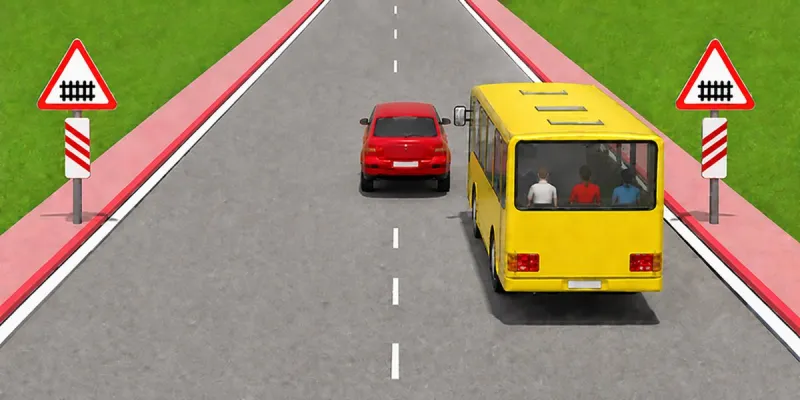
- Permitted.
- Prohibited.
Correct answer: Permitted. ABC · D/T
Why: Ճանապարհի երկու կողմում
1.1 «Երկաթուղային գծանց ուղեփակոցով» նշաններն են
1.4.1 և
1.4.4 երեք շերտով ցուցանակներով, որոնք տեղադրվում են գծանցից 150–300 մ առաջ։ Կետ 77.3-ով վազանցն արգելվում է միայն գծանցի վրա և դրանից 100 մ առաջ, ուստի այստեղ ավտոբուսին վազանցելը թույլատրվում է։
Signs in this question: 1.1, 1.4.1, 1.4.4
In tests: ABC 38, D/T 2
34. Passing vehicles means:
- Proceeding ahead of one or more moving vehicles by leaving the occupied lane and entering the oncoming traffic lane.
- Proceeding ahead of one or more moving vehicles by leaving the occupied lane.
Correct answer: Proceeding ahead of one or more moving vehicles by leaving the occupied lane. ABC · D/T
Why: Կետ
3.11-ի սահմանմամբ վազանցը շարժման մեջ գտնվող մեկ կամ մի քանի տրանսպորտային միջոցից առաջ անցնելն է՝ կապված զբաղեցրած գոտուց դուրս գալու հետ։ Հանդիպակաց գոտի դուրս գալը սահմանման մաս չէ։
In tests: ABC 25, D/T 35
35. At night and under conditions of insufficient visibility, regardless of road lighting, moving motor vehicles must have the following activated:
- High-beam headlights.
- Low-beam headlights.
- High-beam or low-beam headlights.
Correct answer: High-beam or low-beam headlights. ABC · D/T
Why: Կետ 127.1-ով օրվա մութ ժամանակ և անբավարար տեսանելիության պայմաններում, անկախ ճանապարհի լուսավորվածությունից, մեխանիկական տրանսպորտային միջոցների վրա միացված է լինում լապտերների հեռահար կամ մոտակա լույսը։
In tests: ABC 5, D/T 34
36. In which case must a motorcycle have its low-beam headlights activated during daylight?
- When proceeding under conditions of insufficient visibility.
- When proceeding to a parking location on a motorcycle with a malfunction.
- In all cases while participating in traffic.
- When carrying an ill passenger.
Correct answer: In all cases while participating in traffic. ABC
Why: Կետ 133.1-ով օրվա լուսավոր ժամերին մոտոցիկլների և մոպեդների վրա լապտերների մոտակա լույսը պետք է միացված լինի միշտ՝ երթևեկության մեջ գտնվելիս։
In tests: ABC 27
37. What must the driver do first if dazzled by the headlights of an oncoming vehicle?
- Switch the high-beam headlights (if activated) to low beam.
- Activate the hazard warning lights.
- Give a horn signal consisting of one long and three short signals.
- Give a horn signal consisting of one short and three long signals.
Correct answer: Activate the hazard warning lights. ABC
Why: Կետ 129-ով շլանալու դեպքում վարորդն առաջին հերթին պետք է միացնի վթարային լուսային ազդանշանը և, առանց գոտին փոխելու, իջեցնի արագությունը, անհրաժեշտության դեպքում՝ կանգնի։
In tests: ABC 36
38. Horn signals may be used only:
- In populated areas, to warn other drivers of the intention to pass.
- When necessary to prevent a traffic accident.
- In both cases.
Correct answer: When necessary to prevent a traffic accident. ABC · D/T
Why: Կետ 136-ով ձայնային ազդանշանը թույլատրվում է վազանցի մասին նախազգուշացնելու համար միայն բնակավայրերից դուրս (136.1) և պատահարը կանխելու համար (136.2)։ Բնակավայրում նախազգուշացնելը թույլատրված չէ, ուստի միայն երկրորդ տարբերակը։
In tests: ABC 50
39. At night, on unlit sections of road, a moving motor vehicle must have the following activated:
- High-beam or low-beam headlights.
- Low-beam headlights only.
- High-beam headlights only.
Correct answer: High-beam or low-beam headlights. ABC · D/T
Why: Կետ 127.1-ով օրվա մութ ժամանակ չլուսավորված հատվածներում մեխանիկական տրանսպորտային միջոցի վրա պետք է միացված լինի լապտերների հեռահար կամ մոտակա լույսը. երկուսն էլ թույլատրելի են։
In tests: ABC 44, D/T 34
40. Rear fog lights may be used:
- At night when proceeding as part of a convoy.
- When proceeding through tunnels.
- Only under conditions of insufficient visibility.
- At night when unloading a vehicle.
- In all of the listed cases.
Correct answer: Only under conditions of insufficient visibility. ABC · D/T
Why: Կետ 131-ով հետին հակամառախուղային լապտերիկները կարող են օգտագործվել միայն անբավարար տեսանելիության պայմաններում. շարասյուն, թունել կամ բեռնաթափում հիմք չեն։
In tests: ABC 32, D/T 42
41. At what distance from an oncoming vehicle must high-beam headlights be switched to low beam?
- At least 100 m.
- At least 150 m.
- At least 300 m.
Correct answer: At least 150 m. ABC · D/T
Why: Կետ 128.2-ով հեռահար լույսը փոխարկվում է մոտակայի հանդիպակաց տրանսպորտային միջոցից ոչ պակաս, քան 150 մ հեռավորության վրա, իսկ լույսերը փոխարկելով ազդանշան տալու դեպքում՝ ավելի վաղ։
In tests: ABC 31, D/T 17
42. A searchlight may be used:
- Only outside populated areas when there are no oncoming or preceding vehicles.
- Only under conditions of insufficient visibility.
- Anywhere, when necessary.
- At night on all sections of road.
Correct answer: Only outside populated areas when there are no oncoming or preceding vehicles. ABC
Why: Կետ 134-ով լապտեր-լուսարձակ և փնտրող լապտեր թույլատրվում է օգտագործել միայն բնակավայրերից դուրս՝ հանդիպակաց և համընթաց տրանսպորտային միջոցների բացակայության դեպքում։
In tests: ABC 42
43. In populated areas, at what distance before the beginning of a hazardous section is this warning sign installed?
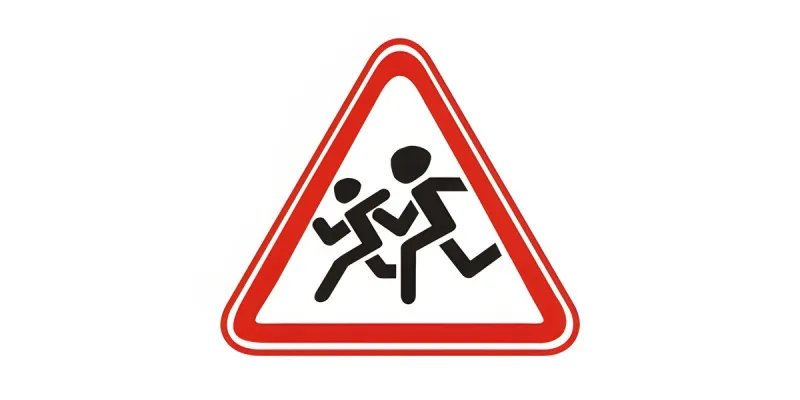
- 25–50 m.
- 50–100 m.
- 100–150 m.
Correct answer: 50–100 m. ABC · D/T
Why: Նախազգուշացնող նշանները, այդ թվում՝
1.23 «Երեխաներ»-ը, բնակավայրերում տեղադրվում են վտանգավոր հատվածի սկզբից 50–100 մ առաջ։
Signs in this question: 1.23
In tests: ABC 31, D/T 3
44. Is it permitted to transport agricultural, road-construction, construction, and other machines and mechanisms across a railroad crossing?
- Permitted if the crossing is not equipped with a barrier gate.
- Permitted if they are in a non-transport position.
- Permitted if they are in a transport position.
Correct answer: Permitted if they are in a transport position. ABC
Why: Կետ 114.3-ով արգելվում է գծանցով փոխադրել ոչ տրանսպորտային վիճակում գտնվող գյուղատնտեսական, ճանապարհային, շինարարական մեքենաներ. ուստի թույլատրվում է միայն տրանսպորտային վիճակում։
In tests: ABC 51
45. Where is it permitted to cross railroad tracks?
- At locations where visibility in both directions is at least 1,000 m.
- At locations most convenient at the driver’s discretion.
- At locations designated for crossing.
- At least 1,000 m from railroad stations.
Correct answer: At locations designated for crossing. ABC
Why: Կետ 109-ով վարորդները երկաթուղային գծերը կարող են հատել միայն երկաթուղային գծանցներով, այսինքն՝ դրա համար նախատեսված տեղերում՝ զիջելով գնացքին։
In tests: ABC 20
46. While performing an official assignment, is it permitted to open or bypass a barrier gate without authorization?
- Prohibited.
- Permitted.
- Permitted at the driver’s discretion if no train is approaching nearby.
- Permitted if the railroad crossing attendant is absent.
Correct answer: Prohibited. ABC
Why: Կետ 114.2-ով արգելվում է ինքնակամ բացել ուղեփակոցը. ծառայողական առաջադրանքի կամ հերթապահի բացակայության համար բացառություն չկա։
47. Is it permitted to transport agricultural, road-construction, construction, and other machines and mechanisms across a railroad crossing?
- Permitted.
- Permitted if they are in a transport position.
- Prohibited.
Correct answer: Permitted if they are in a transport position. ABC
Why: Կետ 114.3-ով գծանցով արգելվում է փոխադրել ոչ տրանսպորտային վիճակում գտնվող մեքենաներ ու մեխանիզմներ, ուստի տրանսպորտային վիճակում դա թույլատրվում է։
In tests: ABC 17
48. What must the driver follow when approaching a railroad crossing?
- The position of the barrier gate and the traffic signals.
- The requirements of traffic signs and pavement markings.
- The instructions of the railroad crossing attendant.
- All of the listed requirements.
Correct answer: All of the listed requirements. ABC · D/T
Why: Կետ 110-ը թվարկում է բոլորը. գծանցին մոտենալիս վարորդը ղեկավարվում է հերթապահի ցուցումներով, լուսացույցի, նշանների և գծանշման պահանջներով ու ուղեփակոցի դիրքով։
In tests: ABC 8, D/T 32
49. Are pedestrians permitted to proceed on a road marked with the “Freeway” sign?
- Prohibited.
- Permitted outside populated areas, against the direction of vehicle traffic.
- Permitted outside populated areas, in the same direction as vehicle traffic.
Correct answer: Prohibited. ABC · D/T
Why: Կետ 116.1-ով ավտոմայրուղիներում (
5.1 նշանով ճանապարհ) արգելվում է հետիոտների տեղաշարժը. բնակավայրերից դուրս բացառություն չկա։
Signs in this question: 5.1
In tests: ABC 52
50. Vehicles whose speed, because of their technical characteristics or condition, does not exceed 40 km/h are:
- Permitted on freeways only in the rightmost lane.
- Prohibited from proceeding on freeways.
- Permitted on freeways if there is no “Minimum Speed Limit” sign.
Correct answer: Prohibited from proceeding on freeways. ABC · D/T
Why: Կետ 116.2-ով ավտոմայրուղիներում արգելվում է այն տրանսպորտային միջոցների երթևեկությունը, որոնց արագությունը տեխնիկական բնութագրից կամ վիճակից ելնելով չի գերազանցում 40 կմ/ժ։
In tests: ABC 38, D/T 18
51. The hazard warning lights on a vehicle must be activated:
- In the event of a traffic accident.
- In the event of a forced stop where stopping is prohibited.
- In both cases.
Correct answer: In both cases. ABC · D/T
Why: Կետ 22-ով վթարային լուսային ազդանշանը միացվում է ճանապարհատրանսպորտային պատահարի դեպքում (22.1) և կանգառն արգելված տեղերում հարկադրված կանգառի դեպքում (22.2)։ Երկու դեպքն էլ ցանկում են։
In tests: ABC 42
52. The hazard warning lights on a vehicle must be activated:
- In the event of a traffic accident.
- During towing, on the towed motor vehicle.
- In the event of a forced stop where stopping is prohibited.
- In all of the listed cases.
Correct answer: In all of the listed cases. ABC · D/T
Why: Կետ 22-ով վթարային լուսային ազդանշանը միացվում է պատահարի դեպքում (22.1), քարշակվող մեքենայի վրա (22.4) և կանգառն արգելված տեղերում հարկադրված կանգառի դեպքում (22.2)։ Բոլոր երեքը ցանկում են։
In tests: ABC 9, D/T 23
53. At what distance from the vehicle must the emergency warning triangle be placed?
- At least 15 m in populated areas and at least 30 m outside populated areas.
- At least 10 m in populated areas and at least 20 m outside populated areas.
- At least 5 m in populated areas and at least 10 m outside populated areas.
Correct answer: At least 15 m in populated areas and at least 30 m outside populated areas. ABC · D/T
Why: Կետ 23.2-ով «Վթարային կանգառ» նշանը տեղադրվում է բնակավայրերում տրանսպորտային միջոցից ոչ պակաս 15 մ, իսկ բնակավայրերից դուրս՝ 30 մ հեռավորության վրա։
In tests: ABC 29, D/T 11
54. The hazard warning lights on a vehicle must be activated:
- If the driver is dazzled by headlights.
- During towing, on the towed motor vehicle.
- In both cases.
Correct answer: In both cases. ABC · D/T
Why: Կետ 22-ով վթարային լուսային ազդանշանը միացվում է լապտերների լույսից շլանալու դեպքում (22.3) և քարշակման ժամանակ քարշակվող մեքենայի վրա (22.4)։ Երկու դեպքն էլ ցանկում են։
In tests: ABC 52, D/T 1
55. The hazard warning lights on a vehicle must be activated:
- In the event of a traffic accident.
- During towing, on the towed motor vehicle.
- In both cases.
Correct answer: In both cases. ABC · D/T
Why: Կետ 22-ով վթարային լուսային ազդանշանը միացվում է ճանապարհատրանսպորտային պատահարի դեպքում (22.1) և քարշակման ժամանակ քարշակվող մեքենայի վրա (22.4)։ Երկու դեպքն էլ ցանկում են։
In tests: ABC 48, D/T 39
56. In developed areas where the entrance and exit are marked by the “Residential Zone” and “End of Residential Zone” traffic signs, the following is not prohibited:
- Pedestrians proceeding on the roadway.
- Through traffic of vehicles.
- Driving instruction.
Correct answer: Pedestrians proceeding on the roadway. ABC · D/T
Why: Կետ 119-ով բնակելի գոտում հետիոտների տեղաշարժը թույլատրվում է նաև երթևեկելի մասով։ Միջանցիկ երթևեկությունը և ուսումնական վարումը կետ 121-ի արգելքների ցանկում են։
Signs in this question: 5.21, 5.22
In tests: ABC 7
57. An intersection is considered controlled if the order of traffic is determined by:
- Traffic signals only.
- Traffic controller signals only.
- Either of the above.
Correct answer: Either of the above. ABC · D/T
Why: Կետ 89-ով խաչմերուկը կարգավորվող է, երբ երթևեկության հերթականությունը որոշվում է կարգավորողի կամ լուսացույցի ազդանշաններով. այսինքն՝ երկու դեպքում էլ։
58. On an unpaved dirt road, does the presence of a paved section immediately before an intersection make that road equal in priority to the intersecting road?
- No.
- Yes.
Correct answer: No. ABC · D/T
Why: «Գլխավոր ճանապարհ» սահմանման (կետ
3.1) վերջին նախադասությամբ հողային ճանապարհի վրա անմիջապես խաչմերուկից առաջ ծածկույթով հատվածի առկայությունն այն հատվող ծածկույթով ճանապարհին հավասարազոր չի դարձնում։
In tests: ABC 26, D/T 26
59. Which image shows the permitted directions of traffic?
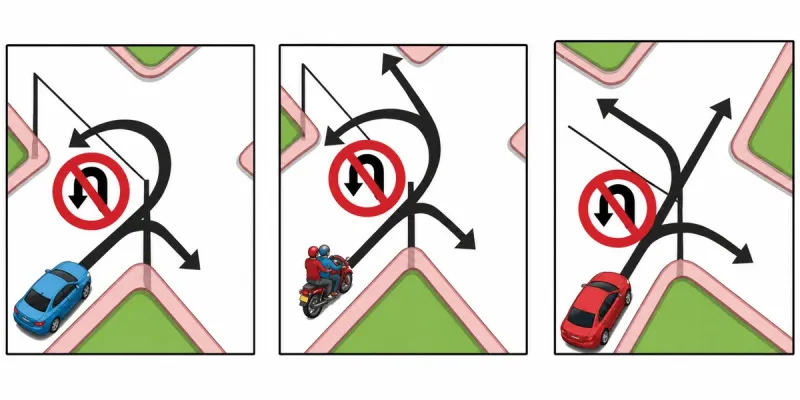
- The left image.
- The center image.
- The right image.
- The center and right images.
Correct answer: The right image. ABC · D/T
Why: Նշան
3.19 «Հետադարձն արգելվում է»-ն արգելում է միայն հետադարձը, իսկ ձախ շրջադարձը թույլատրվում է։ Երթևեկության թույլատրելի ուղղությունները ճիշտ են պատկերված աջ նկարում։
Signs in this question: 3.19
In tests: ABC 6
60. If the meanings of the traffic signals conflict with the requirements of the priority signs, drivers must follow:
- The requirements of the signs.
- The traffic signals.
Correct answer: The traffic signals. ABC · D/T
Why: Կետ 173-ով, եթե լուսացույցի ազդանշանների նշանակությունը հակասում է առավելության նշանների պահանջներին, վարորդները ղեկավարվում են լուսացույցի ազդանշաններով։
In tests: ABC 8, D/T 22
61. Is the driver permitted to continue when the yellow traffic signal turns on or the traffic controller raises an arm?
- Prohibited.
- Permitted if the driver cannot stop without sudden braking.
Correct answer: Permitted if the driver cannot stop without sudden braking. ABC · D/T
Why: Կետ 19-ով դեղին ազդանշանը միանալու կամ կարգավորողի ձեռքը բարձրացնելու դեպքում այն վարորդները, որոնք չեն կարող կանգնել առանց կտրուկ արգելակելու, կարող են շարունակել երթևեկությունը։
In tests: ABC 34, D/T 48
62. A traffic controller gives a whistle signal:
- Only when requiring a vehicle to stop.
- To attract the attention of road users.
Correct answer: To attract the attention of road users. ABC · D/T
Why: Կետ 17-ով կարգավորողը սուլիչով ազդանշան է տալիս երթևեկության մասնակիցների ուշադրությունն իր վրա հրավիրելու համար, ոչ միայն կանգնեցնելու պահանջի դեպքում։
In tests: ABC 30, D/T 53
63. In this situation, is the road train permitted to proceed across the bridge?
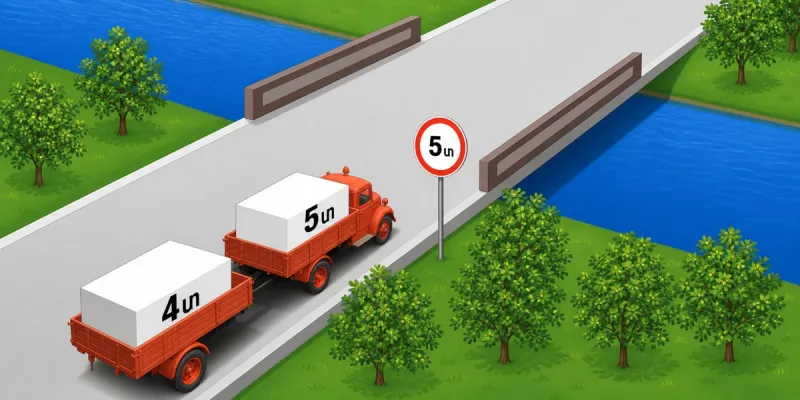
- Permitted.
- Prohibited.
Correct answer: Prohibited. ABC
Why: Նշան
3.11 «Զանգվածի սահմանափակում»-ն արգելում է 5 տ-ից ավելի փաստացի զանգված ունեցող տրանսպորտային միջոցների երթևեկությունը։ Ավտոգնացքի զանգվածը (4 տ և 5 տ) գերազանցում է այն, ուստի կամրջով անցնելն արգելվում է։
Signs in this question: 3.11
In tests: ABC 7
64. May a warning signal be given by hand in order to proceed along the indicated path?
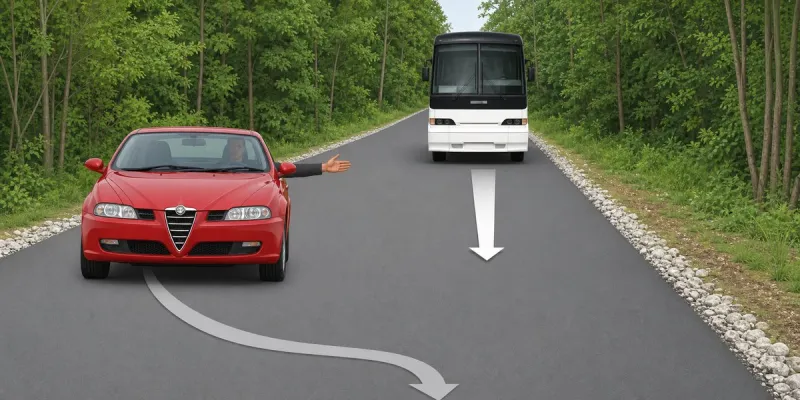
- Yes, if the turn signal is malfunctioning.
- Yes, if the turn signal is malfunctioning during daylight hours.
- Yes, in all cases.
Correct answer: Yes, if the turn signal is malfunctioning. ABC · D/T
Why: Կետ 36-ի համաձայն՝ մանևրի ազդանշանը տրվում է շրջադարձի լուսային ցուցիչով, իսկ ձեռքով՝ միայն այն դեպքում, երբ ցուցիչը բացակայում է կամ անսարք է։
In tests: ABC 10
65. Must the driver activate the turn signal before starting to move in a residential zone?
- No.
- Yes.
- Yes, if other vehicles are present.
Correct answer: Yes. ABC · D/T
Why: Կետ 36-ով երթևեկությունն սկսելուց առաջ վարորդը պարտավոր է ազդանշան տալ՝ ամենուր և անկախ այլ մեքենաների առկայությունից, այդ թվում՝ բնակելի գոտում։
In tests: D/T 15
66. To obtain right-of-way over other road users, the driver of a patrol vehicle must activate:
- The blue flashing beacon.
- The blue and red flashing beacons.
- The blue flashing beacon and the special audible signal.
Correct answer: The blue flashing beacon and the special audible signal. ABC · D/T
Why: Կետ 26-ով երթևեկության մյուս մասնակիցների նկատմամբ առավելություն ստանալու համար պետք է միացնել կապույտ առկայծող փարոսիկը և հատուկ ձայնային ազդանշանը միասին. միայն փարոսիկը բավարար չէ։
In tests: ABC 33, D/T 47
67. Passing is prohibited:
- At railroad crossings and within 100 m before them.
- At railroad crossings and within 150 m before them.
- At railroad crossings and within 250 m before them.
Correct answer: At railroad crossings and within 100 m before them. ABC
Why: Կետ 77.3-ով վազանցն արգելվում է երկաթուղային գծանցների վրա և դրանցից 100 մ առաջ։
In tests: ABC 40
68. What does the hand signal given by the passenger-car driver indicate?
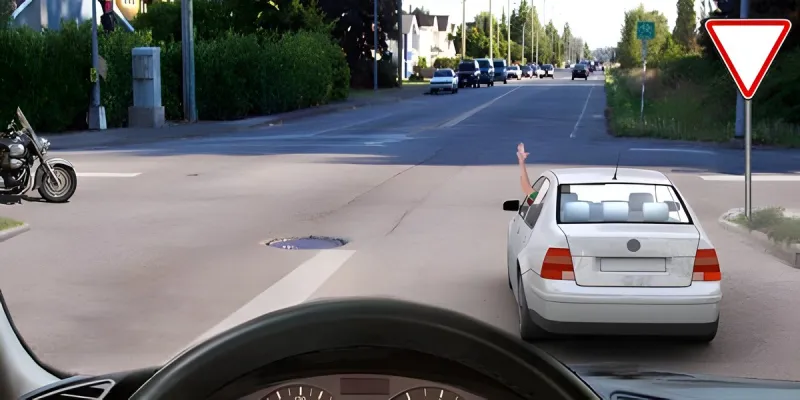
- The driver is making a right turn.
- The driver is continuing straight ahead.
- The driver is braking.
Correct answer: The driver is braking. ABC · D/T
Why: Կետ 37-ի համաձայն՝ արգելակման ազդանշանին համապատասխանում է դեպի վեր պարզված ձեռքը, ուստի թեթև մարդատարի վարորդը տեղեկացնում է, որ արգելակում է։
Signs in this question: 2.4
In tests: ABC 18, D/T 44
69. The hazard warning lights must be activated:
- Before entering a tunnel.
- In the event of a traffic accident.
- When proceeding as part of an organized convoy.
Correct answer: In the event of a traffic accident. ABC · D/T
Why: Կետ 22-ը թվարկում է, թե երբ է միացվում վթարային լուսային ազդանշանը. ճանապարհատրանսպորտային պատահարի դեպքը (22.1) այդ ցանկում է։ Թունելը և ավտոշարասյունը ցանկում չկան։
In tests: ABC 46, D/T 49
70. What does the hand signal given by the motorcycle operator indicate?
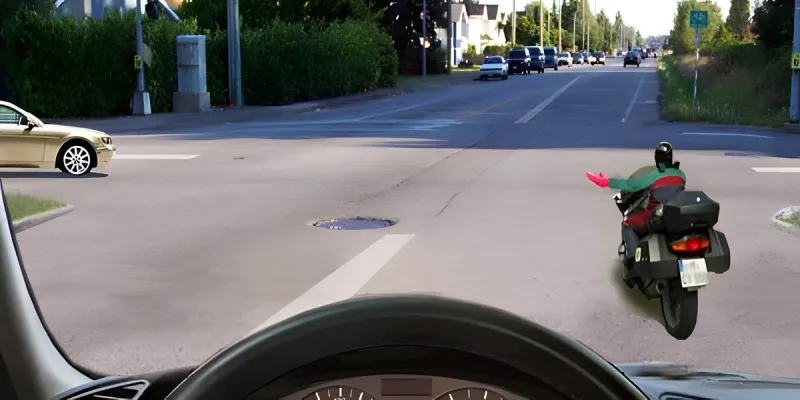
- The motorcycle will proceed to the left or make a U-turn.
- The motorcycle will proceed straight ahead or to the right.
Correct answer: The motorcycle will proceed to the left or make a U-turn. ABC · D/T
Why: Կետ 37-ի համաձայն՝ դեպի կողմ պարզված ձախ ձեռքը ձախ շրջադարձի (հետադարձի) ազդանշանն է, ուստի մոտոցիկլի վարորդը շարունակելու է երթևեկությունը դեպի ձախ կամ հակառակ ուղղությամբ։
In tests: ABC 47
71. What does the hand signal given by the passenger-car driver indicate?
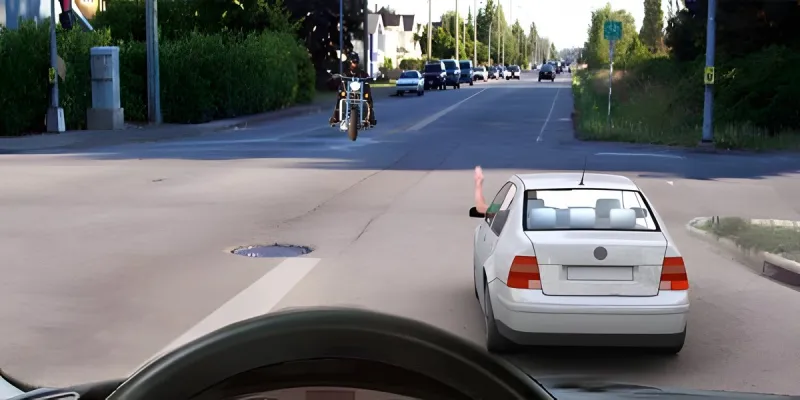
- The driver is making a right turn.
- The driver is continuing straight ahead.
- The driver is braking in order to yield to the motorcycle.
Correct answer: The driver is making a right turn. ABC · D/T
Why: Կետ 37-ի համաձայն՝ արմունկում ուղիղ անկյան տակ դեպի վեր ծալված ձախ ձեռքն աջ շրջադարձի ազդանշանն է, ուստի թեթև մարդատարի վարորդն աջ շրջադարձ է կատարում։
In tests: ABC 9
72. What does the hand signal given by the passenger-car driver indicate?
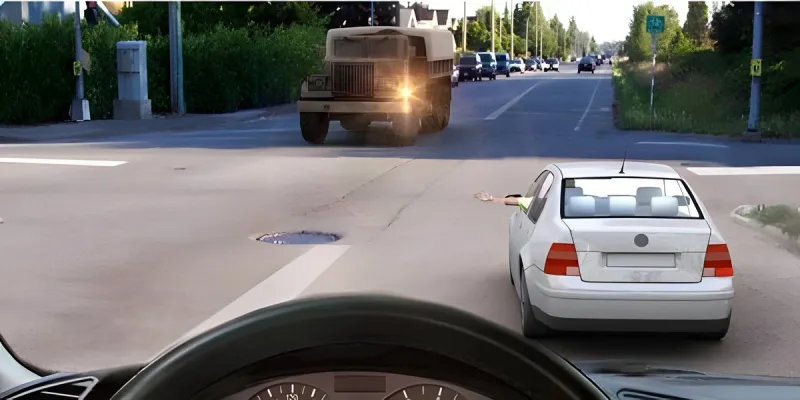
- The driver intends to make a left turn or a U-turn.
- The driver is braking in order to yield to the truck.
Correct answer: The driver intends to make a left turn or a U-turn. ABC · D/T
Why: Կետ 37-ի համաձայն՝ դեպի կողմ պարզված ձախ ձեռքը ձախ շրջադարձի կամ հետադարձի ազդանշանն է, ուստի վարորդը մտադիր է կատարել ձախ շրջադարձ կամ հետադարձ։
In tests: ABC 24, D/T 30
73. In this case, must the driver activate the turn signal?
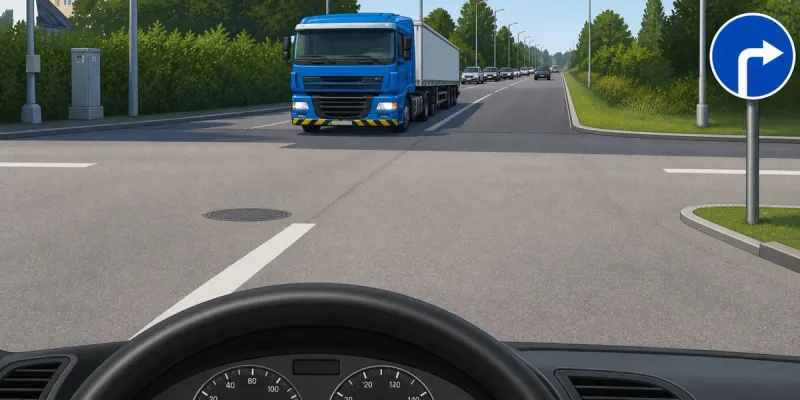
- Yes.
- No.
Correct answer: Yes. ABC · D/T
Why: Թեև
4.1.2 «Երթևեկությունը դեպի աջ» նշանը թույլատրում է միայն աջ շրջադարձը, կետ 36-ի համաձայն՝ ուղղությունը փոխելուց առաջ վարորդը պարտավոր է ազդանշան տալ շրջադարձի ցուցիչով։
Signs in this question: 4.1.2
In tests: ABC 44, D/T 38
74. Is the truck driver permitted to pass the bus that is proceeding at a speed of 60 km/h?
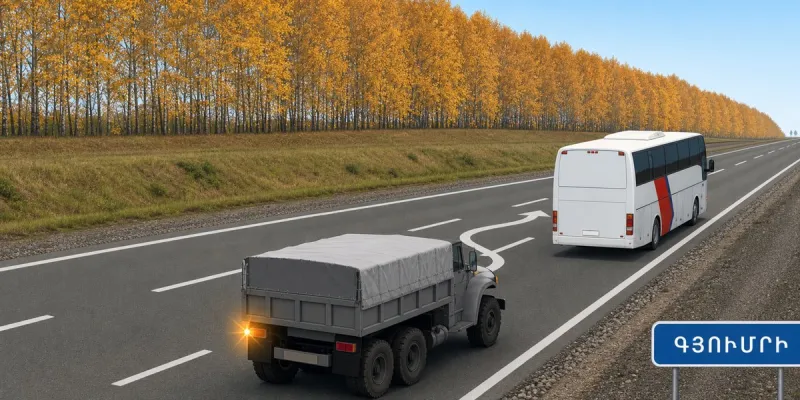
- Prohibited.
- Permitted.
Correct answer: Permitted. ABC
Why: Բնակավայրից դուրս (
5.25 նշանը դեռ առջևում է) բեռնատարին թույլատրվում է մինչև 70–90 կմ/ժ արագություն (կետ 69), ուստի 60 կմ/ժ արագությամբ ընթացող ավտոբուսին ձախից վազանցելը, հանդիպակաց գոտին ազատ լինելու դեպքում, թույլատրվում է (կետ 74)։
Signs in this question: 5.25
In tests: ABC 49
75. Is passing permitted in this situation?
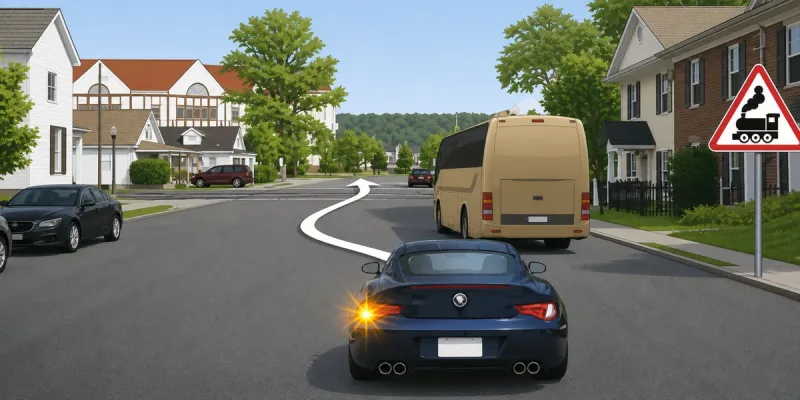
- Prohibited.
- Permitted.
- Permitted if the bus is proceeding at a speed below 30 km/h.
Correct answer: Prohibited. ABC
Why: Նշան
1.2 «Երկաթուղային գծանց առանց ուղեփակոցի»-ն նախազգուշացնում է գծանցի մասին։ Կետ 77.3-ով վազանցն արգելվում է գծանցի վրա և դրանից 100 մ առաջ՝ անկախ ավտոբուսի արագությունից։
Signs in this question: 1.2
In tests: ABC 26
76. Is it permitted to enter the railroad crossing in this situation?
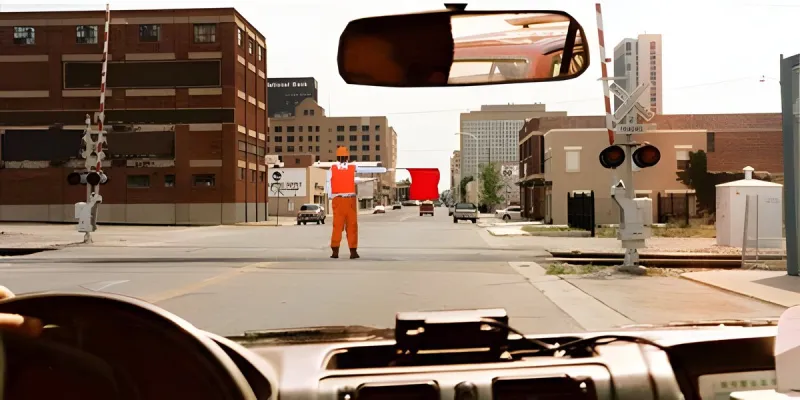
- Permitted.
- Prohibited.
Correct answer: Prohibited. ABC · D/T
Why: Գծանցի հերթապահը կրծքով դեպի վարորդն է կանգնած և ձեռքը կողմ է պարզել կարմիր դրոշակով։ Կետ 113.5-ով դա արգելող ազդանշան է, ուստի գծանց մուտք գործելն արգելվում է։
In tests: ABC 34, D/T 5
77. Is it permitted to enter the railroad crossing in this situation?
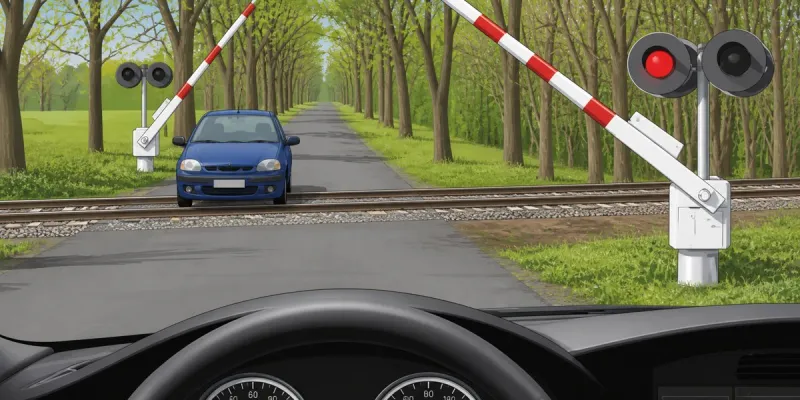
- Permitted if no train is approaching.
- Permitted if the barrier gate is open.
- Prohibited.
Correct answer: Prohibited. ABC · D/T
Why: Գծանցի լուսացույցի կարմիր ազդանշանն է վառվում։ Կետ 113-ի համաձայն՝ լուսացույցի արգելող ազդանշանի դեպքում գծանց մուտք գործելն արգելվում է՝ անկախ ուղեփակոցի դիրքից և գնացքի բացակայությունից։
In tests: ABC 28
78. What should the driver do in this situation?
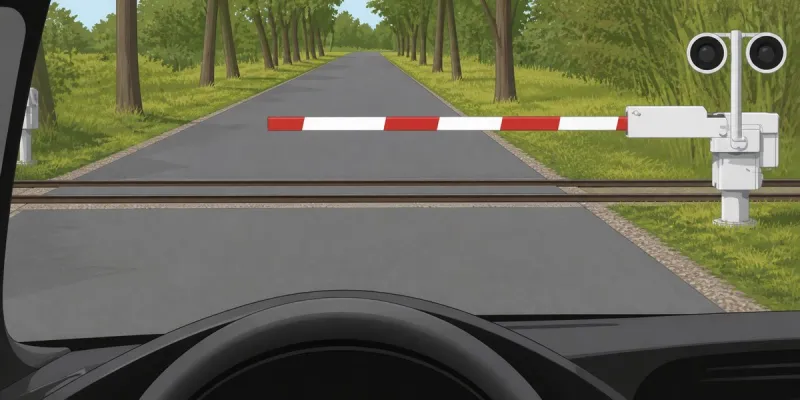
- If no train is approaching, go around the barrier gate and continue.
- Stop and wait for the barrier gate to open.
Correct answer: Stop and wait for the barrier gate to open. ABC · D/T
Why: Ուղեփակոցը փակ է։ Կետ 113-ի համաձայն՝ փակ ուղեփակոցի դեպքում գծանց մուտք գործելն արգելվում է, իսկ կետ 114-ն արգելում է ինքնակամ բացել ուղեփակոցը, ուստի պետք է կանգ առնել և սպասել դրա բացմանը։
In tests: ABC 2, D/T 29
79. In this situation, is it permitted to cross the railroad crossing?
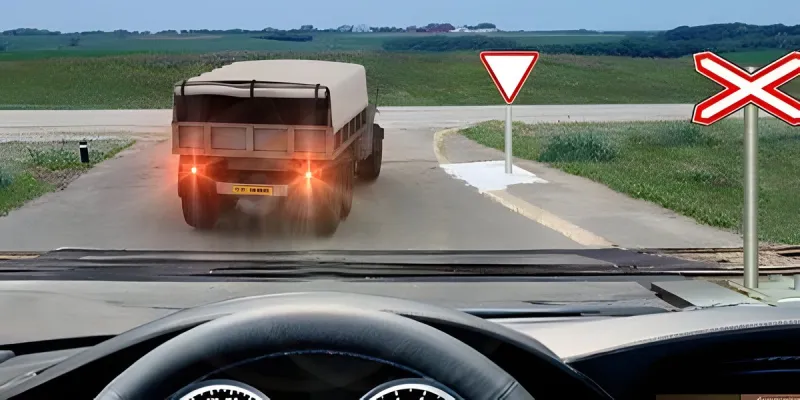
- Permitted if no train is approaching.
- Permitted.
- Prohibited.
Correct answer: Prohibited. ABC · D/T
Why: Առջևի բեռնատարը կանգնել է անմիջապես գծանցից (նշաններ
1.3.1,
2.4) հետո։ Կետ 113-ի համաձայն՝ արգելվում է մուտք գործել գծանց, եթե դրանից հետո առաջացել է խցանում, որը կհարկադրի կանգնել գծանցի վրա։
Signs in this question: 2.4, 1.3.1
In tests: D/T 43
80. In this situation, is it permitted to cross the railroad crossing?
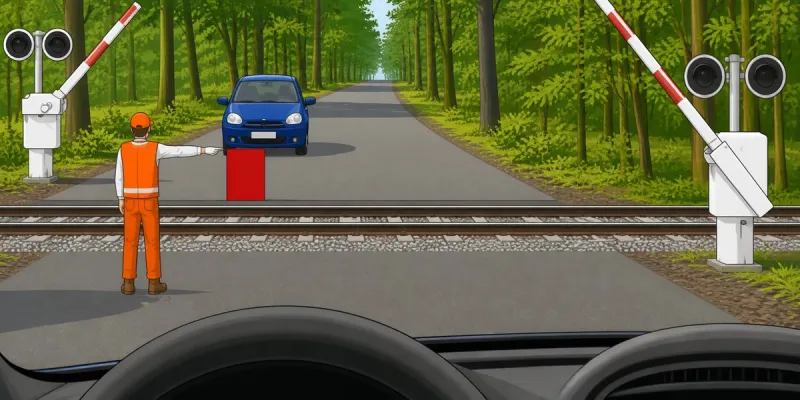
- Prohibited.
- Permitted if no train is approaching.
- Permitted because the railroad crossing attendant is prohibiting the oncoming vehicle from crossing.
Correct answer: Prohibited. ABC · D/T
Why: Գծանցի հերթապահը ձեռքը կողմ է պարզել կարմիր դրոշակով։ Կետ 113.5-ով կողմ պարզած ձեռքերը և կարմիր դրոշակը արգելող ազդանշան են բոլոր վարորդների համար, ոչ միայն հանդիպակացի, ուստի գծանցն անցնելն արգելվում է։
In tests: ABC 37, D/T 42
81. In this situation, where may passing be started?
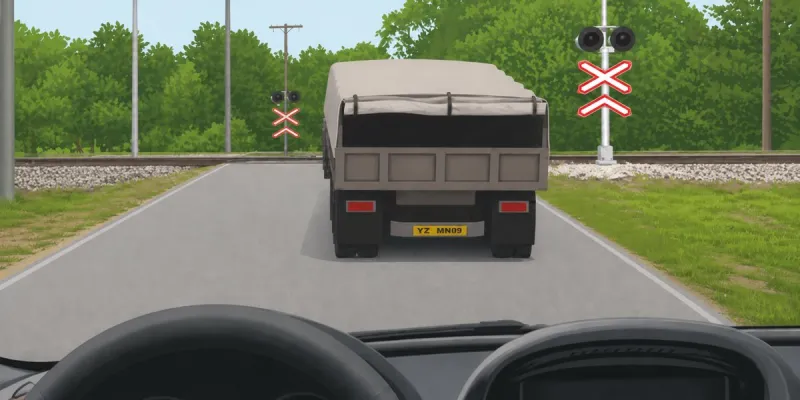
- At the railroad crossing.
- After crossing the railroad crossing.
- After proceeding 100 m beyond the railroad crossing.
Correct answer: After crossing the railroad crossing. ABC · D/T
Why: Կետ 77-ի համաձայն՝ վազանցն արգելվում է երկաթուղային գծանցի վրա և մինչև 100 մ դրանից առաջ, իսկ գծանցից հետո սահմանափակում չկա, ուստի վազանցը կարելի է սկսել գծանցն անցնելուց անմիջապես հետո։
Signs in this question: 1.3.1
In tests: ABC 17
82. In this situation, is passing permitted?
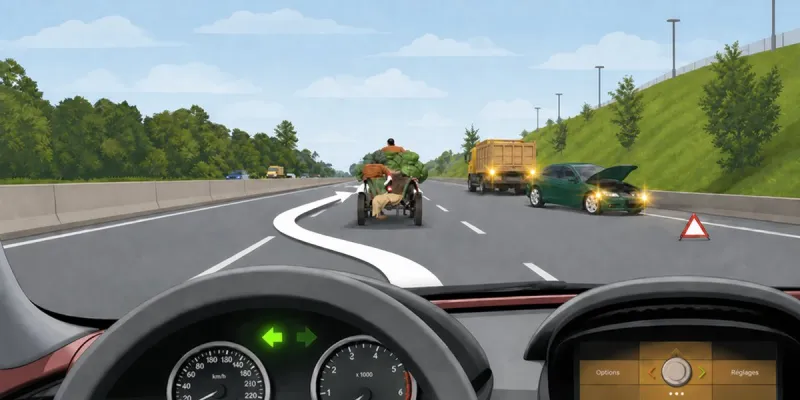
- Permitted because there is no oncoming vehicle.
- Prohibited.
- Permitted if the animal-drawn cart is moving at a speed below 30 km/h.
Correct answer: Prohibited. ABC · D/T
Why: Հանդիպակաց գոտին ազատ չէ. այնտեղ ավտոմոբիլը շրջանցում է խափանված տրանսպորտային միջոցը։ Կետ 73-ի համաձայն՝ վազանց սկսելուց առաջ վարորդը պետք է համոզվի, որ հանդիպակաց գոտին բավարար տարածությամբ ազատ է, ուստի լծասայլին վազանցելն արգելվում է։
In tests: ABC 30, D/T 41
83. What maneuver is the passenger-car driver performing?
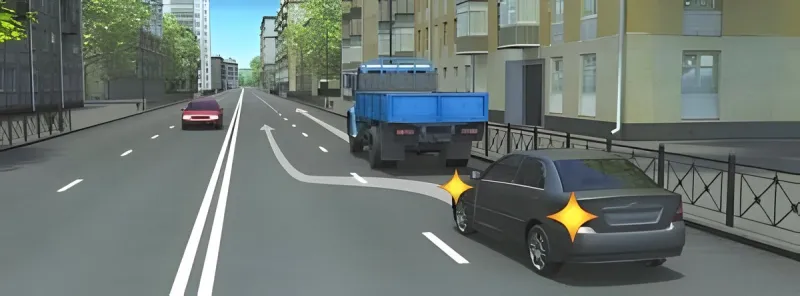
- Passing without leaving the lane.
- Passing.
- Driving around an obstruction.
Correct answer: Passing. ABC
Why: Թեթև մարդատարը բեռնատարից առաջ է անցնում՝ դուրս գալով զբաղեցրած գոտուց։ Կետ 3-ի սահմանման համաձայն՝ դա վազանց է, իսկ առանց գոտուց դուրս գալու առաջ անցնելը կլիներ կողանցում։
In tests: ABC 14
84. Is passing the motorcycle permitted?
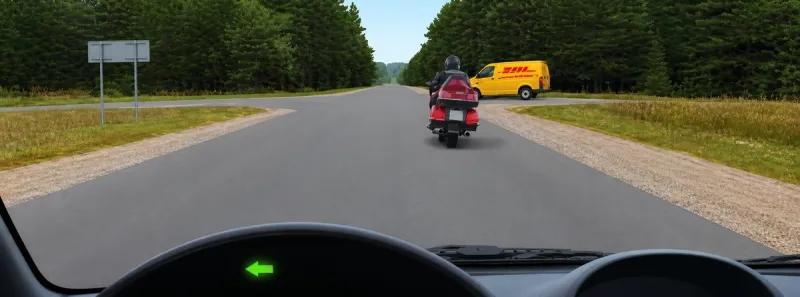
- Permitted.
- Prohibited.
Correct answer: Prohibited. ABC · D/T
Why: Աջից ճանապարհ է հարում, ուստի մոտոցիկլին վազանցելը կկատարվի խաչմերուկում։ Կետ 77-ի համաձայն՝ խաչմերուկներում վազանցն արգելվում է։
In tests: D/T 43
85. On a road with one lane in each direction, when is passing in the oncoming traffic lane permitted?
- Only when the oncoming traffic lane is clear for a sufficient distance.
- Only when no vehicle is passing us.
- Both conditions must be met.
Correct answer: Both conditions must be met. ABC · D/T
Why: Կետ 73-ով վազանցից առաջ վարորդը պետք է համոզվի, որ հանդիպակաց գոտին բավարար տարածությամբ ազատ է (73.1) և որ հետևից ընթացողն իրեն վազանց չի սկսել (73.2)։ Երկու պայմանն էլ պարտադիր են։
In tests: ABC 45, D/T 6
86. Is passing permitted in the indicated situation?
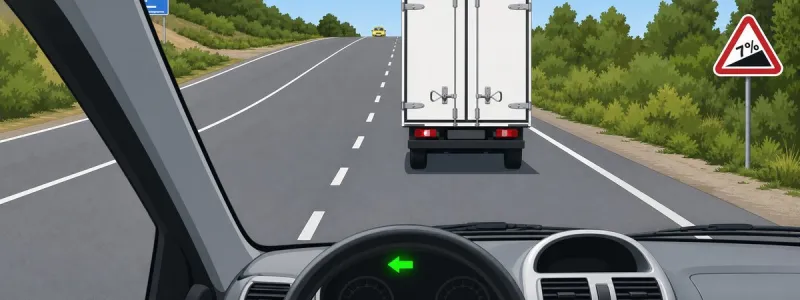
- Prohibited.
- Permitted if the maneuver can be completed within the visible section of the road.
- Permitted.
Correct answer: Permitted. ABC · D/T
Why: Նշան
1.13 «Կտրուկ վայրէջք»-ը վայրէջք է նշում, ոչ թե վերելքի վերջ. գծանշումն ընդհատվող է, տեսանելիությունը՝ բավարար։ Կետ 77-ի արգելքներից և ոչ մեկը չի գործում, ուստի վազանցը թույլատրվում է։
Signs in this question: 1.13
In tests: ABC 33, D/T 15
87. Is passing the truck permitted?
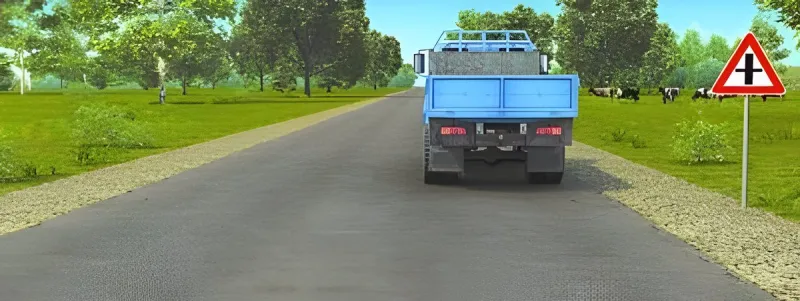
- Yes.
- Yes, if the passing maneuver is completed before the intersection.
- No.
Correct answer: Yes, if the passing maneuver is completed before the intersection. ABC · D/T
Why: Նշան
2.3.1 «Հատում երկրորդական ճանապարհի հետ»-ը նախազգուշացնում է խաչմերուկի մասին։ Կետ 77.1-ով խաչմերուկներում վազանցն արգելվում է նաև գլխավոր ճանապարհով ընթանալիս, ուստի բեռնատարին կարելի է վազանցել միայն այն դեպքում, եթե վազանցը կավարտվի մինչև խաչմերուկը։
Signs in this question: 2.3.1
In tests: ABC 45, D/T 33
88. What is required of the driver of the vehicle being passed?
- The driver must yield to the passing vehicle.
- The driver must not interfere with the passing vehicle by increasing speed or by taking any other action.
Correct answer: The driver must not interfere with the passing vehicle by increasing speed or by taking any other action. ABC · D/T
Why: Կետ 75-ով վազանցվող տրանսպորտային միջոցի վարորդին արգելվում է արագությունը բարձրացնելով կամ այլ գործողությամբ խոչընդոտել վազանցին. ճանապարհ զիջելու պարտավորություն նա չունի։
In tests: ABC 21, D/T 28
89. Is passing permitted in this situation?
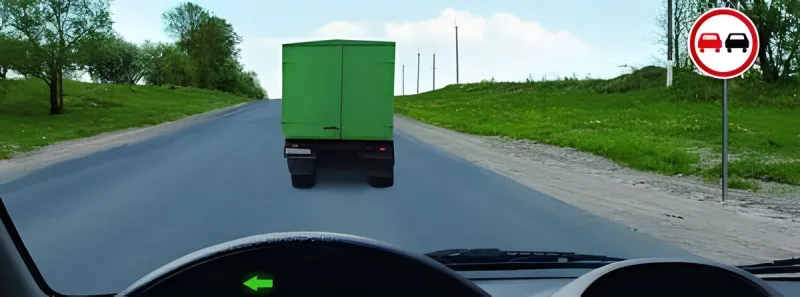
- Prohibited.
- Permitted if the truck is moving at less than 30 km/h.
- Permitted.
Correct answer: Prohibited. ABC · D/T
Why: Նշան
3.20 «Վազանցն արգելվում է»-ն արգելում է բոլոր տրանսպորտային միջոցների վազանցը, բացի դանդաղընթացներից, ուստի բեռնատարին վազանցելն այս իրավիճակում արգելվում է։
Signs in this question: 3.20
In tests: ABC 49, D/T 53
90. Is the driver of a truck with a maximum authorized mass of 3 metric tons permitted to pass the tractor?
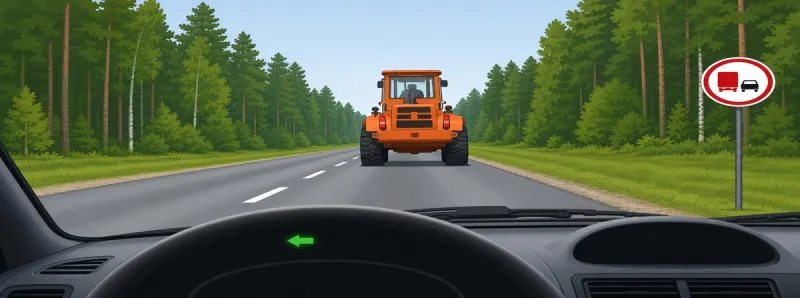
- Yes.
- Yes, if the tractor is moving at less than 30 km/h.
- No.
Correct answer: Yes. ABC
Why: Նշան
3.22 «Բեռնատար ավտոմոբիլներով վազանցն արգելվում է»-ն վերաբերում է միայն 3,5 տ-ից ավելի թույլատրելի առավելագույն զանգված ունեցող բեռնատարներին, ուստի 3 տ զանգվածով բեռնատարին տրակտորին վազանցելը թույլատրվում է։
Signs in this question: 3.22
In tests: ABC 41
91. If oncoming traffic is difficult in this situation, who must yield?
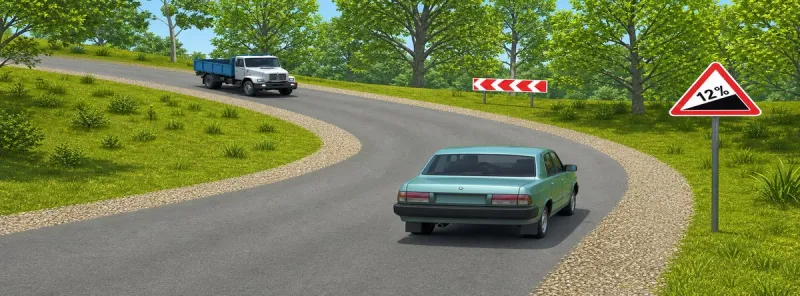
- The truck driver.
- The passenger-car driver.
Correct answer: The truck driver. ABC
Why: Թեթև մարդատարի ուղղությամբ տեղադրված է
1.14 «Կտրուկ վերելք» նշանը. թեթև մարդատարը բարձրանում է, բեռնատարն իջնում է։ Կետ 46-ի համաձայն՝ նման հատվածներում ճանապարհը զիջում է վայրէջքի ուղղությամբ ընթացողը՝ բեռնատարի վարորդը։
Signs in this question: 1.14, 1.34.2
In tests: ABC 4
92. Passing at a pedestrian crossing is:
- Prohibited only when pedestrians are present.
- Prohibited.
- Permitted.
Correct answer: Prohibited. ABC · D/T
Why: Կետ 77.2-ով վազանցն արգելվում է հետիոտնային անցումների վրա՝ անվերապահ, անկախ հետիոտնի առկայությունից։
In tests: ABC 36, D/T 10
93. Along which path is passing permitted?
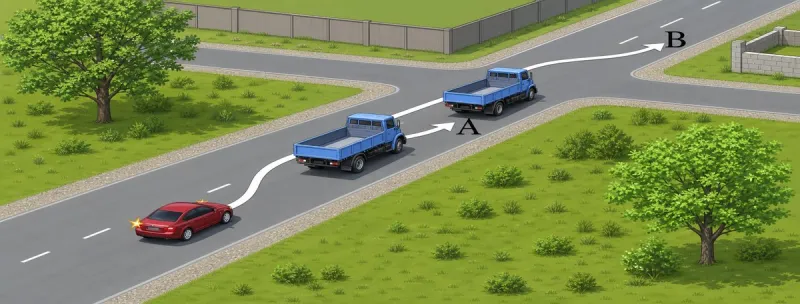
- Either path.
- Only A.
- Only B.
Correct answer: Only A. ABC
Why: Կետ 74-ով ոչ ռելսագնաց տրանսպորտային միջոցին վազանցել թույլատրվում է միայն ձախ կողմից։ «Ա» հետագիծը բեռնատարներին անցնում է ձախից, «Բ»-ն՝ աջից, ինչը թույլատրված չէ։
In tests: ABC 13
94. What does the traffic sign indicate?
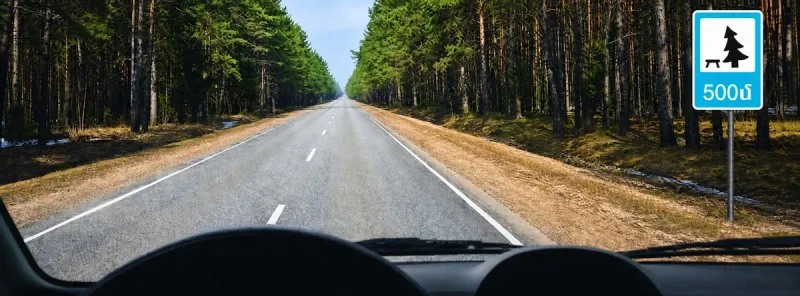
- There is a fallen tree 500 meters ahead.
- There is a rest area 500 meters ahead.
- There is a rest area along the next 500 meters.
Correct answer: There is a rest area 500 meters ahead. ABC · D/T
Why: Նշան
7.11 «Հանգստի վայր»-ը
8.1.1 «Հեռավորություն մինչև օբյեկտ» ցուցանակով տեղեկացնում է, որ հանգստի վայրը 500 մետր հետո է։
Signs in this question: 7.11, 8.1.1
In tests: ABC 47, D/T 37
95. In this situation, is the driver required to activate the turn signal?
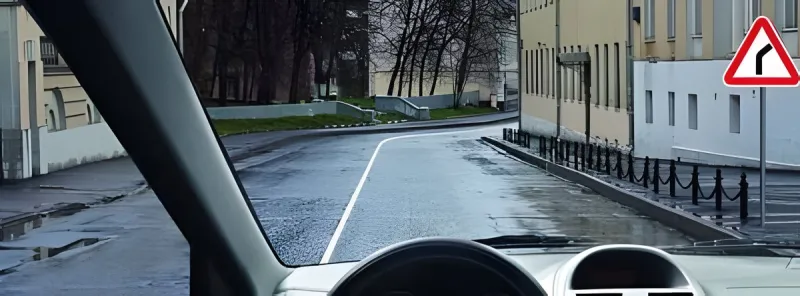
- Yes.
- Yes, if a vehicle is approaching from behind.
- No.
Correct answer: No. ABC · D/T
Why: Նշան
1.11.1 «Վտանգավոր շրջադարձ»-ը ցույց է տալիս ճանապարհի կորացում։ Կետ 36-ով ազդանշան տալը պարտադիր չէ, եթե տրանսպորտային միջոցն առանց վերադասավորման երթևեկում է ճանապարհի կորագծային հատվածով, ուստի վարորդը պարտավոր չէ։
Signs in this question: 1.11.1
In tests: ABC 15
96. By raising an arm, the driver indicates:
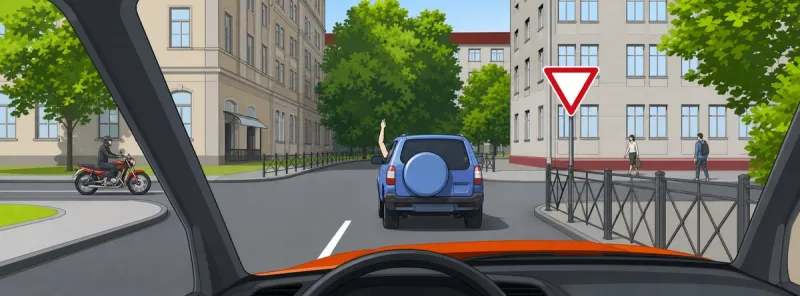
- An intention to make a left turn.
- An intention to proceed straight ahead.
- An intention to slow down.
Correct answer: An intention to slow down. ABC · D/T
Why: Կետ 37-ի համաձայն՝ դեպի վեր պարզված ձեռքն արգելակման ազդանշանն է, ուստի վարորդը տեղեկացնում է ընթացքը դանդաղեցնելու մասին։
Signs in this question: 2.4
In tests: D/T 19
97. Giving a signal:
- Gives the driver the right-of-way over other road users.
- Does not give the driver the right-of-way over other road users.
- Gives the driver the right-of-way only when starting to move.
Correct answer: Does not give the driver the right-of-way over other road users. ABC · D/T
Why: Կետ 36-ի վերջին նախադասությամբ ազդանշան տալը երթևեկության մյուս մասնակիցների նկատմամբ առավելություն չի տալիս, այդ թվում՝ շարժում սկսելիս։
In tests: ABC 35, D/T 4
98. When making a right turn while following the priority road, giving a turn signal is:
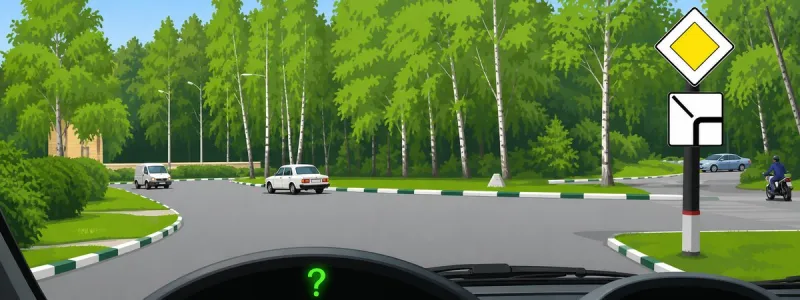
- Required.
- Required only at night.
- Not required.
Correct answer: Required. ABC · D/T
Why: 2.1 նշանը
8.13 ցուցանակով ցույց է տալիս, որ գլխավոր ճանապարհը խաչմերուկում թեքվում է։ Գլխավոր ճանապարհով շրջադարձ կատարելիս ուղղությունը փոխվում է, ուստի կետ 36-ով ազդանշան տալը պարտադիր է՝ օրվա ցանկացած ժամի։
Signs in this question: 2.1, 8.13
In tests: ABC 23, D/T 47
99. What is the driver of the motorcycle indicating?
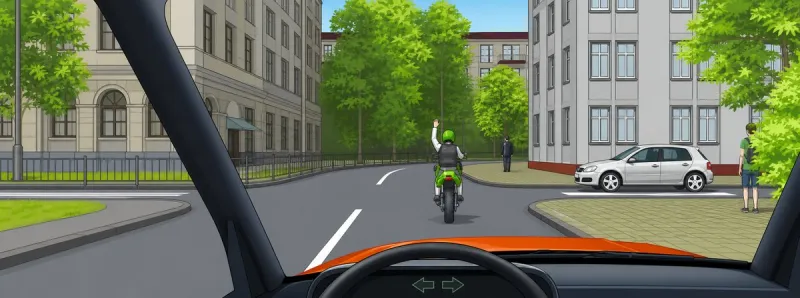
- An intention to continue straight ahead.
- An intention to make a left turn.
- An intention to slow down in order to yield to the passenger car.
Correct answer: An intention to slow down in order to yield to the passenger car. ABC · D/T
Why: Մոտոցիկլի վարորդի դեպի վեր պարզված ձեռքը կետ 37-ի համաձայն արգելակման ազդանշանն է. նա իջեցնում է արագությունը՝ թեթև մարդատարին զիջելու համար։
In tests: ABC 29, D/T 2
100. In this situation, when making a left turn, giving a turn signal is:
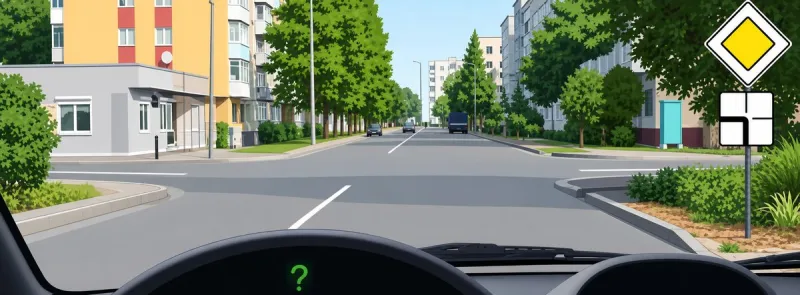
- Required.
- Not required.
Correct answer: Required. ABC · D/T
Why: Թեև գլխավոր ճանապարհն ինքը (նշան
2.1՝
8.13 ցուցանակով) թեքվում է դեպի ձախ, ձախ շրջադարձը երթևեկության ուղղության փոփոխություն է, և կետ 36-ի համաձայն ազդանշան տալը պարտադիր է։
Signs in this question: 2.1, 8.13
In tests: ABC 2, D/T 9
101. When passing, the left turn signal must be turned off:
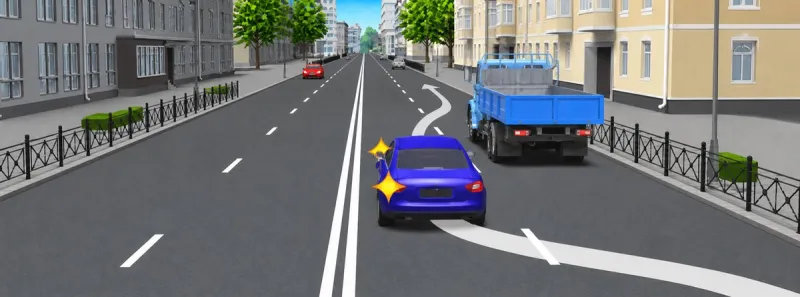
- Immediately after changing to the left lane.
- Only after proceeding ahead of the vehicle in front.
- At the driver’s discretion.
Correct answer: Immediately after changing to the left lane. ABC
Why: Կետ 36-ի համաձայն՝ ազդանշանը դադարեցվում է մանևրն ավարտելուց անմիջապես հետո, ուստի ձախ շրջադարձի ցուցիչն անջատում ենք ձախ գոտի վերադասավորվելուց անմիջապես հետո։
In tests: ABC 51
102. When making a U-turn at this intersection, which turn signal must be activated?
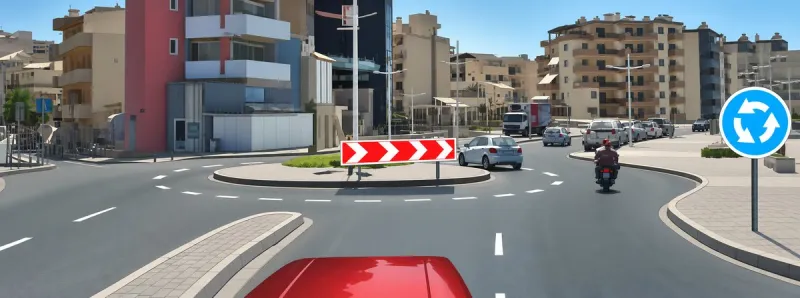
- Right.
- Left.
- Neither.
Correct answer: Right. ABC · D/T
Why: Շրջանաձև երթևեկությամբ խաչմերուկում (նշան
4.3, ուղղությունը ցույց են տալիս
1.34.1 նշանի սլաքները) հետադարձը սկսվում է դեպի աջ մուտք գործելով, ուստի կետ 36-ի համաձայն միացնում ենք աջ շրջադարձի ցուցիչը։
Signs in this question: 4.3, 1.34.1
In tests: ABC 50, D/T 26
103. In the indicated situation, must you give a turn signal?
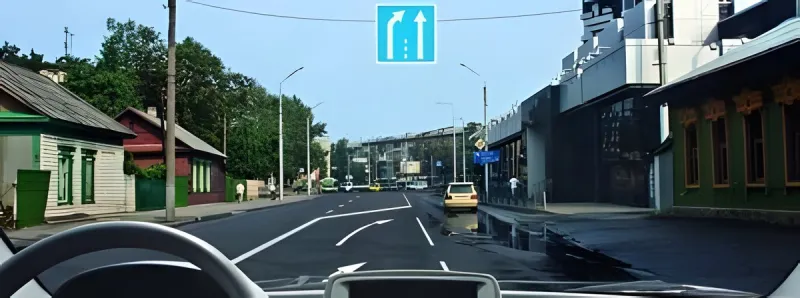
- Yes.
- No.
- Yes, if there is a driver proceeding in the right lane.
Correct answer: Yes. ABC · D/T
Why: Գոտին (նշան
5.15.1,
1.18 գծանշում) թեքվում է դեպի աջ՝ նոր ուղղությամբ, ինչը մանևր է։ Կետ 36-ի համաձայն՝ ազդանշան տալը պարտադիր է՝ անկախ այլ վարորդների առկայությունից։
Signs in this question: 5.15.1
In tests: ABC 23, D/T 24
104. What is the driver of the motorcycle indicating?
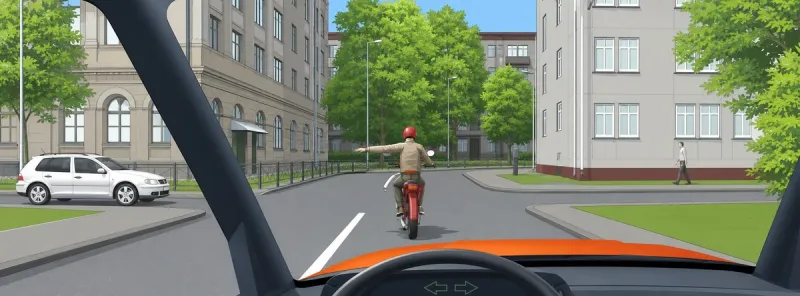
- An intention to continue straight ahead.
- An intention to make a right turn.
- An intention to make a left turn or U-turn.
Correct answer: An intention to make a left turn or U-turn. ABC · D/T
Why: Կետ 37-ի համաձայն՝ դեպի կողմ պարզված ձախ ձեռքը ձախ շրջադարձի կամ հետադարձի ազդանշանն է, ուստի մոտոցիկլի վարորդը տեղեկացնում է ձախ շրջադարձ կամ հետադարձ կատարելու մասին։
In tests: ABC 54
105. The turn signal must be canceled
- Immediately before the maneuver.
- Immediately after the maneuver.
- During the maneuver.
Correct answer: Immediately after the maneuver. ABC · D/T
Why: Կետ 36-ով լուսային ցուցիչով տրված ազդանշանը դադարեցվում է մանևրն ավարտելուց անմիջապես հետո (ձեռքով տրվողը՝ սկսելուց առաջ)։
In tests: ABC 53, D/T 23
106. In the indicated situation, giving a turn signal is:
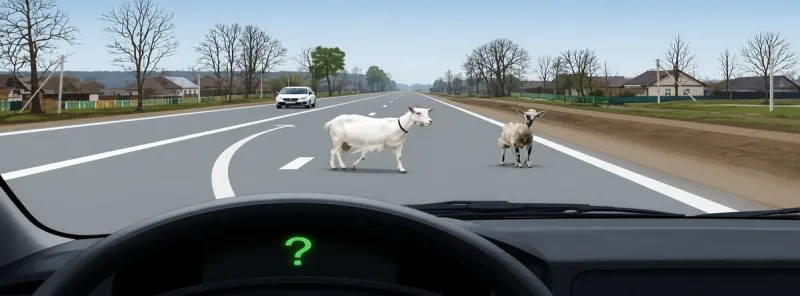
- Required.
- At the driver’s discretion.
Correct answer: Required. ABC · D/T
Why: Կենդանիներին շրջանցելու համար պետք է դուրս գալ գոտուց, ինչը մանևր է։ Կետ 36-ի համաձայն՝ մանևրից առաջ լուսային ցուցիչով ազդանշան տալը պարտադիր է։
In tests: ABC 11, D/T 27
107. Which driver is giving a right-turn signal?
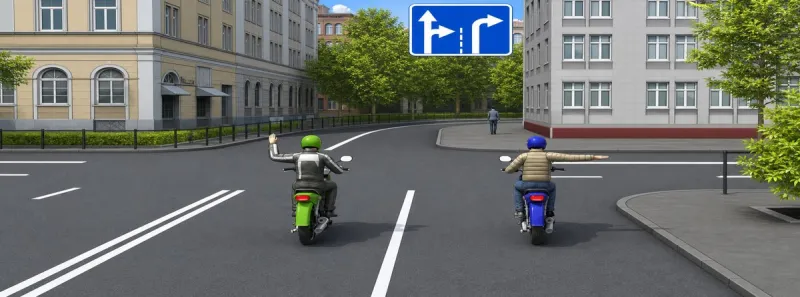
- Only the driver on the right.
- Both drivers.
- Only the driver on the left.
Correct answer: Both drivers. ABC · D/T
Why: Կետ 37-ի համաձայն՝ աջ շրջադարձի ազդանշանն է դեպի կողմ պարզված աջ ձեռքը կամ արմունկում վեր ծալված ձախ ձեռքը։ Ձախ մոտոցիկլավարը ձախ ձեռքը վեր է ծալել, աջը՝ աջ ձեռքն է պարզել, ուստի երկուսն էլ աջ շրջադարձի ազդանշան են տալիս։
Signs in this question: 5.15.1
In tests: ABC 11
108. When maneuvering in parking areas or at gas stations, you:
- Must use the turn signal.
- Are not required to use the turn signal.
Correct answer: Must use the turn signal. ABC · D/T
Why: Կետ 36-ով ցանկացած մանևրից առաջ ազդանշան տալը պարտադիր է, և կայանատեղիների կամ ավտոլցակայանների համար բացառություն չկա։
109. In this situation, what can the driver’s outstretched arm indicate?
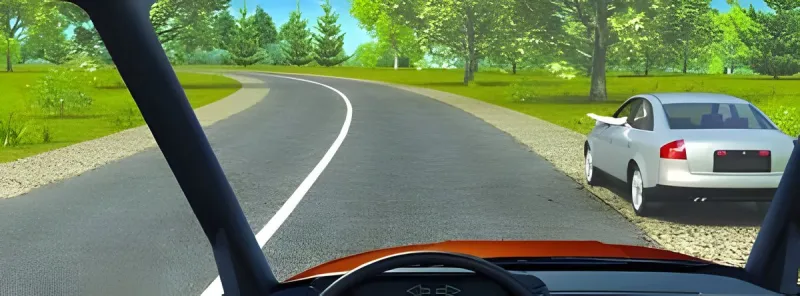
- An intention to start moving.
- An intention to stop.
- A general emergency signal.
Correct answer: An intention to start moving. ABC · D/T
Why: Կանգնած ավտոմոբիլի վարորդի դեպի կողմ պարզված ձեռքը ձախ շրջադարձի ձեռքի ազդանշանն է (կետ 37), որով նա նախազգուշացնում է երթևեկությունն սկսելու մասին (կետ 36)։
In tests: ABC 39, D/T 21
110. Which turn signals must you use when making a U-turn along the indicated path?
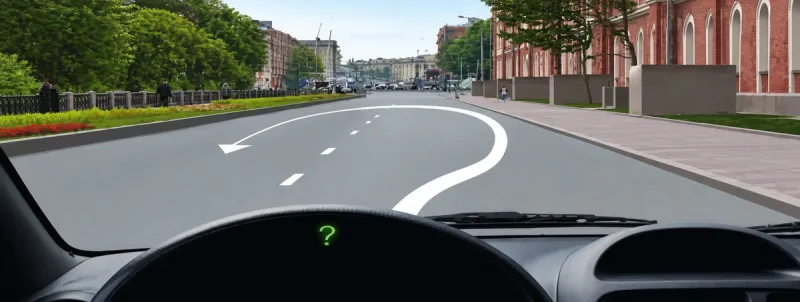
- Right.
- Left.
- First right, then left.
Correct answer: First right, then left. ABC · D/T
Why: Նշված հետագծով հետադարձը սկսվում է դեպի աջ եզր շեղվելով, ապա ձախ շրջվելով, ուստի կետ 36-ի համաձայն նախ տրվում է աջ, ապա ձախ շրջադարձի ազդանշանը։
In tests: ABC 55, D/T 46
111. If you intend to stop immediately after the intersection, when should you activate the right turn signal so as not to mislead other road users?
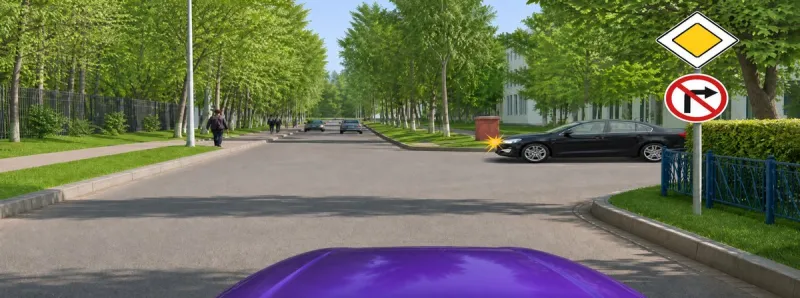
- In advance, before the intersection.
- After entering the intersection.
Correct answer: After entering the intersection. ABC · D/T
Why: Կետ 36-ի համաձայն՝ ազդանշանը չպետք է շփոթության մեջ գցի երթևեկության մասնակիցներին։ Մինչև խաչմերուկը միացրած աջ ցուցիչը կընկալվեր որպես աջ շրջադարձ, ուստի այն միացնում ենք խաչմերուկ մուտք գործելուց հետո։
In tests: ABC 22, D/T 13
112. When changing back into the lane proceeding in the same direction after completing a passing maneuver, does the driver have the right-of-way over a driver already proceeding in that lane?
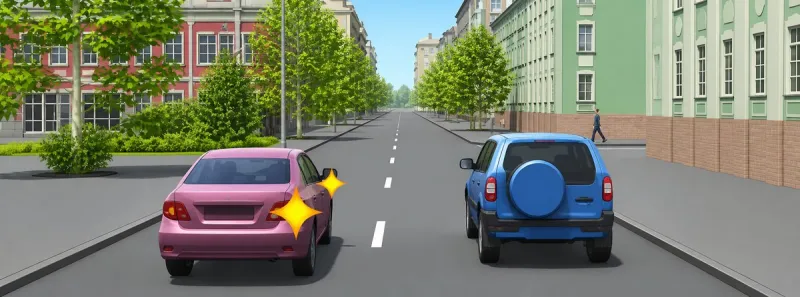
- No.
- Yes.
Correct answer: No. ABC
Why: Վազանցն ավարտելիս գոտի վերադառնալը վերադասավորում է։ Կետ 39-ի համաձայն՝ վերադասավորվող վարորդը զիջում է այդ գոտիով երթևեկողին, ուստի առավելություն չունի։
In tests: ABC 43
113. Must we yield to a driver exiting an adjacent area with flashing beacons and a special audible signal activated?
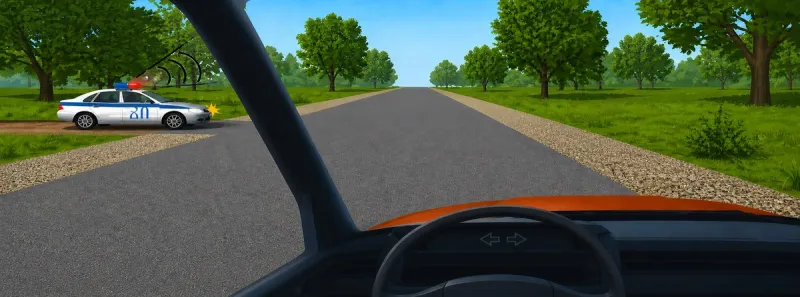
- No.
- Yes.
Correct answer: Yes. ABC · D/T
Why: Կապույտ և կարմիր փարոսիկներով ու հատուկ ձայնային ազդանշանով ոստիկանության ավտոմոբիլին կետ 29-ով պետք է զիջել ճանապարհը, նույնիսկ եթե այն դուրս է գալիս մերձակա տարածքից։
In tests: ABC 12, D/T 55
114. When proceeding straight through the intersection, must we yield to the driver of the truck with flashing yellow beacons activated?
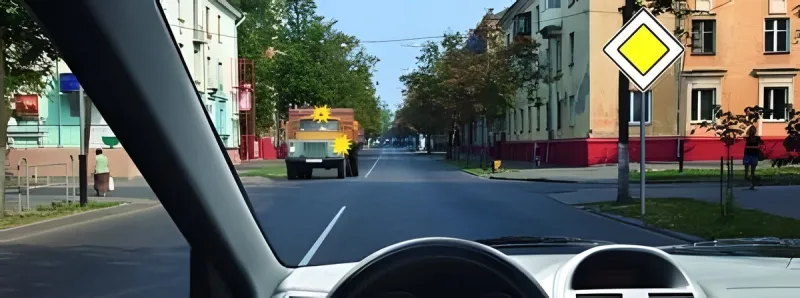
- Yes.
- No.
Correct answer: No. ABC · D/T
Why: Դեղին առկայծող փարոսիկները երթևեկության առավելություն չեն տալիս (կետ 32)։ Մենք գլխավոր ճանապարհով ենք (նշան
2.1), ուստի երկրորդական ճանապարհի բեռնատարը կետ 96-ի համաձայն զիջում է մեզ։
Signs in this question: 2.1
In tests: ABC 27, D/T 11
115. In this situation, to whom must you yield?
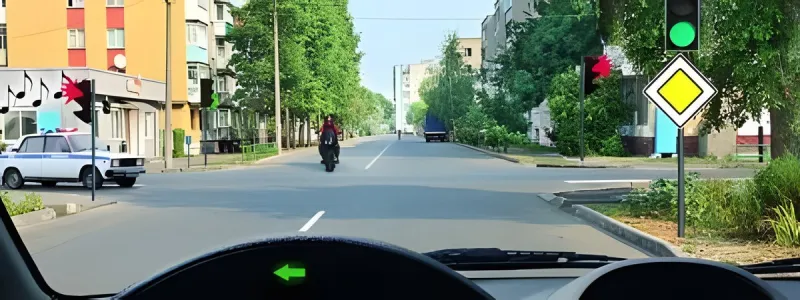
- The driver of the motorcycle.
- The driver of the automobile with special light and audible signals activated.
- Both drivers.
Correct answer: Both drivers. ABC
Why: Կանաչ ազդանշան է վառվում, ուստի խաչմերուկը կարգավորվող է, և
2.1 նշանը չի գործում (կետ 173)։ Ձախ շրջադարձ կատարելիս զիջում ենք հանդիպակացից ուղիղ ընթացող մոտոցիկլին (կետ 90) և կապույտ փարոսիկով ու ձայնային ազդանշանով ոստիկանության ավտոմոբիլին (կետ 28)։
Signs in this question: 2.1
In tests: ABC 37
116. We must yield to:
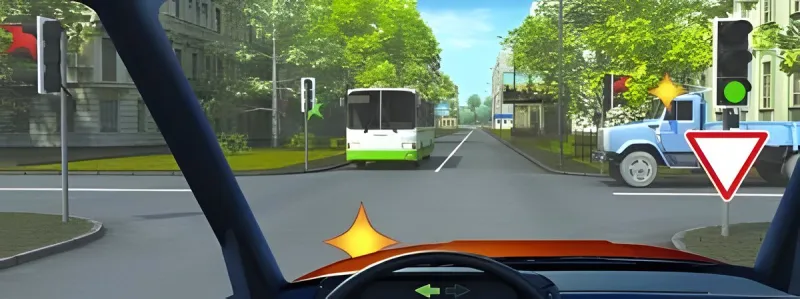
- Both drivers.
- The driver of the truck with a flashing yellow beacon.
- Only the bus driver.
Correct answer: Only the bus driver. ABC
Why: Կանաչ ազդանշան է վառվում, ուստի
2.4 «Զիջեք ճանապարհը» նշանը չի գործում (կետ 173)։ Ձախ շրջադարձ կատարելիս զիջում ենք միայն հանդիպակացից ուղիղ ընթացող ավտոբուսին (կետ 90). բեռնատարի դեղին փարոսիկն առավելություն չի տալիս (կետ 32)։
Signs in this question: 2.4
In tests: ABC 21
117. In this situation:
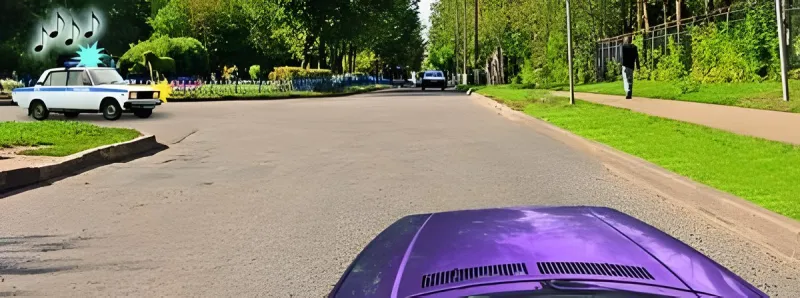
- You will proceed through the intersection first.
- You must yield to the driver approaching from the left.
Correct answer: You must yield to the driver approaching from the left. ABC · D/T
Why: Ձախից մոտեցող ոստիկանության ավտոմոբիլի կապույտ փարոսիկն ու հատուկ ձայնային ազդանշանը միացված են։ Կետ 28-ի համաձայն՝ պետք է զիջենք ճանապարհը։
In tests: ABC 16, D/T 46
118. We must yield to:
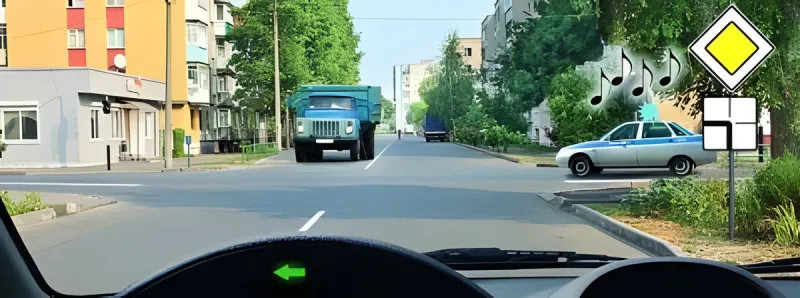
- Everyone.
- The driver of the police automobile.
- No one.
Correct answer: The driver of the police automobile. ABC · D/T
Why: Մենք գլխավոր ճանապարհով ենք (նշան
2.1՝
8.13 ցուցանակով), ուստի երկրորդական ճանապարհի բեռնատարը զիջում է մեզ (կետ 96)։ Կապույտ փարոսիկով և ձայնային ազդանշանով ոստիկանության ավտոմոբիլին կետ 28-ի համաձայն զիջում ենք։
Signs in this question: 2.1, 8.13
In tests: ABC 35, D/T 48
119. When making a left turn:
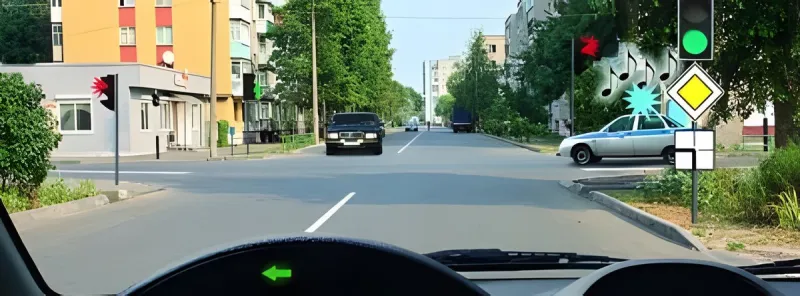
- You will proceed through the intersection first.
- You will yield only to the driver of the police automobile.
- You will yield to all drivers.
Correct answer: You will yield to all drivers. ABC · D/T
Why: Կանաչ ազդանշան է վառվում, ուստի
2.1 նշանը
8.13 ցուցանակով չի գործում (կետ 173)։ Ձախ շրջադարձ կատարելիս զիջում ենք հանդիպակացից ուղիղ ընթացող ավտոմոբիլին (կետ 90) և կապույտ փարոսիկով ու ձայնային ազդանշանով ոստիկանության ավտոմոբիլին (կետ 28)՝ բոլորին։
Signs in this question: 2.1, 8.13
In tests: ABC 1
120. When approaching a stopped vehicle with a flashing red beacon activated, drivers of public transit vehicles proceeding in that direction must:
- Stop and continue only after receiving permission.
- Reduce speed so that they can stop immediately if necessary.
- Continue because they are operating on an established route.
Correct answer: Stop and continue only after receiving permission. D/T
Why: Կետ 31-ով կարմիր առկայծող փարոսիկ միացրած կանգնած մեքենային մոտենալիս տվյալ ուղղությամբ երթևեկող վարորդները պետք է կանգ առնեն և շարունակեն միայն թույլտվություն ստանալուց հետո։ Ընդհանուր օգտագործման տրանսպորտի համար բացառություն չկա։
In tests: D/T 49
121. When a vehicle with a flashing blue beacon and a special audible signal activated is approaching, drivers of public transit vehicles must:
- Continue because they are operating on an established route.
- Yield to ensure the unobstructed passage of that vehicle.
- Reduce speed and yield to ensure the unobstructed passage of that vehicle.
Correct answer: Yield to ensure the unobstructed passage of that vehicle. D/T
Why: Կետ 28-ով կապույտ փարոսիկ և հատուկ ձայնային ազդանշան միացրած մեքենա մոտենալիս վարորդները պետք է զիջեն ճանապարհը՝ անխոչընդոտ անցումն ապահովելու համար։ Արագությունն իջեցնելը պահանջվում է միայն կապույտ և կարմիր փարոսիկների դեպքում (կետ 29)։
In tests: D/T 4
122. Horn signals may be used by drivers of public transit vehicles:
- To gain an advantage over other road users.
- In populated areas, to warn other drivers of the intention to pass.
- When necessary to prevent a traffic accident.
- In all cases.
Correct answer: When necessary to prevent a traffic accident. D/T
Why: Կետ 136-ով ձայնային ազդանշանը կարելի է կիրառել միայն բնակավայրերից դուրս վազանցի մասին նախազգուշացնելու (136.1) և պատահարը կանխելու համար (136.2)։ Առավելություն ստանալը և բնակավայրում նախազգուշացնելը թույլատրված չեն։
123. At night, on unlit sections of road, a bus operating on an established route must have the following activated:
- Low-beam headlights only.
- High-beam headlights only.
- High-beam or low-beam headlights.
Correct answer: High-beam or low-beam headlights. D/T
Why: Կետ 127.1-ով օրվա մութ ժամանակ, անկախ ճանապարհի լուսավորվածությունից, մեխանիկական տրանսպորտային միջոցների վրա պետք է միացված լինի լապտերների հեռահար կամ մոտակա լույսը։ Երթուղային ավտոբուսը բացառություն չէ։
In tests: D/T 14
124. During daylight hours, must public transit vehicles proceeding in a specially designated lane opposite the main traffic flow have their low-beam headlights on?
- Yes.
- No.
Correct answer: Yes. D/T
Why: Կետ 133.3-ով օրվա լուսավոր ժամերին լապտերների մոտակա լույսը պարտադիր միացված է հատուկ առանձնացված գոտիով, հիմնական հոսքին հանդիպակաց երթևեկող ընդհանուր օգտագործման տրանսպորտային միջոցների վրա։
125. What should the driver do if dazzled by the headlights of an oncoming vehicle?
- Switch from high-beam headlights (if switched on) to low beam.
- Switch on the hazard warning lights and, without changing the traffic lane, reduce speed and, if necessary, stop.
- Sound the horn with one long and three short signals.
- Sound the horn with one short and three long signals.
Correct answer: Switch on the hazard warning lights and, without changing the traffic lane, reduce speed and, if necessary, stop. D/T
Why: Կետ 129-ով շլանալու դեպքում վարորդը պետք է միացնի վթարային լուսային ազդանշանը և, չփոխելով երթևեկության գոտին, իջեցնի արագությունը, իսկ անհրաժեշտության դեպքում՝ կանգ առնի։
In tests: D/T 30
126. Where is it permitted to cross railway tracks?
- At locations where visibility in both directions is at least 1,000 m.
- At locations most convenient at the driver’s discretion.
- At designated places only — at railway crossings.
- At a distance of at least 1000 m from railway stations.
Correct answer: At designated places only — at railway crossings. D/T
Why: Կետ 109-ով երկաթուղային գծերը կարելի է հատել միայն երկաթուղային գծանցներով՝ զիջելով գնացքին։
127. In which case do the rules not require the bus driver to give a warning signal?
- Before stopping at the edge of the roadway.
- Before a curve in the road within the area of effect of a “Dangerous Turn” sign.
- Before changing to an adjacent traffic lane.
Correct answer: Before a curve in the road within the area of effect of a “Dangerous Turn” sign. D/T
Why: Կետ 36-ով ազդանշան պարտադիր չէ միայն, երբ ավտոբուսն առանց վերադասավորման անցնում է ճանապարհի կորագծային հատվածով («Վտանգավոր շրջադարձ» նշանի գոտում)։ Եզրին կանգառը և հարևան գոտի վերադասավորվելը մանևրներ են, որոնցից առաջ ազդանշան տալը պարտադիր է։
Signs in this question: 1.11.1, 1.11.2
In tests: D/T 45
128. Before changing lanes, the bus driver must give a warning signal:
- Immediately before beginning the maneuver.
- Immediately after beginning the maneuver.
- In advance, before beginning the maneuver.
- Not required if the bus is operating on an established route.
Correct answer: In advance, before beginning the maneuver. D/T
Why: Կետ 36-ով ազդանշանը տրվում է նախօրոք՝ մինչև մանևրն սկսելը։ Սահմանված երթուղով երթևեկող ավտոբուսի համար բացառություն չկա։
In tests: D/T 8
129. If forced to stop on a railroad crossing, what general alarm signal must the bus driver give by repeated horn signals?
- Three long and one short.
- One long and three short.
- One long and two short.
- Two long and two short.
Correct answer: One long and three short. D/T
Why: Կետ 112.4-ով գծանցում հարկադրված կանգառի դեպքում ընդհանուր տագնապի ազդանշանն է մեկ երկար և երեք կարճ ձայնային ազդանշանների համակցությունը։
130. Is the driver of an intercity bus permitted to pass a motorcycle proceeding at a speed of 70 km/h?
- No.
- Yes.
Correct answer: No. D/T
Why: 3.22 «Բեռնատար ավտոմոբիլներով վազանցն արգելվում է» նշանը ավտոբուսների վրա չի տարածվում։ Սակայն
2.3.3 նշանը ցույց է տալիս ձախից հարող երկրորդական ճանապարհ, և վազանցը կկատարվի այդ խաչմերուկում, իսկ կետ 77.1-ով խաչմերուկներում վազանցն արգելվում է։ Բնակավայրի
5.25 նշանը դա չի փոխում։
Signs in this question: 3.22, 2.3.3, 5.25
131. Must the bus driver yield to the ambulance if the blue flashing beacon and special audible signal are not activated?
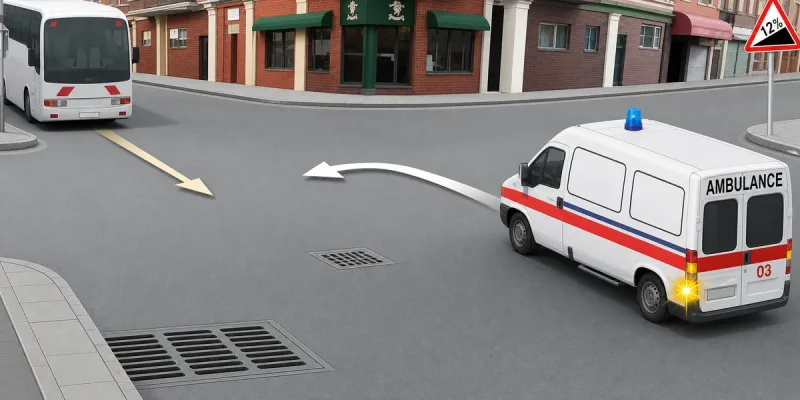
- Yes.
- No.
Correct answer: No. D/T
Why: Կապույտ փարոսիկն ու հատուկ ձայնային ազդանշանը միացրած չլինելու դեպքում շտապ օգնության ավտոմոբիլն առավելություն չունի (կետեր 26, 28), ուստի ավտոբուսի վարորդը զիջելու պարտավոր չէ։
In tests: D/T 20
132. Passing is prohibited:
- At railroad crossings and within 100 m before them.
- At railroad crossings and within 150 m before them.
- At railroad crossings and within 250 m before them.
Correct answer: At railroad crossings and within 100 m before them. D/T
Why: Կետ 77.3-ով վազանցն արգելվում է երկաթուղային գծանցների վրա և մինչև 100 մ դրանցից առաջ, ոչ 150 կամ 250 մ։
In tests: D/T 12
133. During daylight, when transporting organized groups of children, a bus must have the following activated:
- High-beam headlights.
- Low-beam headlights.
- Hazard warning lights.
- Interior passenger-compartment lighting.
Correct answer: Low-beam headlights. D/T
Why: Կետ 133.4-ով օրվա լուսավոր ժամերին երեխաների խմբերի կազմակերպված փոխադրումներ կատարելիս ավտոբուսի վրա միացված պետք է լինի լապտերների մոտակա լույսը։
134. In which cases must a bus driver activate the hazard warning lights?
- When picking up or dropping off children during the organized transportation of groups of children.
- In the event of a road traffic crash.
- When transporting groups of children outside a populated area.
- In cases 1 and 2.
- In cases 2 and 3.
Correct answer: In cases 1 and 2. D/T
Why: Կետ 156-ով «Երեխաների փոխադրում» նշանով ավտոբուսի վրա երեխաների նստեցման և իջեցման ժամանակ պետք է միացված լինի վթարային լուսային ազդանշանը, իսկ կետ 22.1-ով՝ ճանապարհատրանսպորտային պատահարի դեպքում։ Բնակավայրից դուրս երեխաներ փոխադրելը ինքնին այդ պահանջը չի առաջացնում։
In tests: D/T 50
135. In which case must a bus driver activate the hazard warning lights?
- When proceeding in the oncoming direction to the general flow of traffic in a specially designated lane for fixed-route vehicles.
- When making a forced stop at a location where stopping is prohibited.
- In both cases.
Correct answer: When making a forced stop at a location where stopping is prohibited. D/T
Why: Կետ 22.2-ով վթարային լուսային ազդանշանը միացվում է կանգառն արգելված տեղերում հարկադրված կանգառի դեպքում։ Հանդիպակաց առանձնացված գոտով երթևեկելիս պահանջվում է մոտակա լույսը (կետ 133.3), ոչ թե վթարային ազդանշանը։
136. A bus driver activates the hazard warning lights when:
- It is necessary to warn other road users of danger.
- Reversing.
- In both cases.
Correct answer: It is necessary to warn other road users of danger. D/T
Why: Կետ 22-ի վերջին նախադասությամբ վարորդը վթարային լուսային ազդանշանը պետք է միացնի նաև, երբ անհրաժեշտ է վտանգի մասին նախազգուշացնել երթևեկության մասնակիցներին։ Հետընթացն այդ ցանկում չկա։
In tests: D/T 37
137. Is a bus driver permitted to stop within the area of effect of a “No Stopping” sign by activating the hazard warning lights?
- Permitted only for fixed-route buses for the purpose of picking up or dropping off passengers.
- Permitted only in the case of a forced stop.
- Not permitted.
Correct answer: Permitted only in the case of a forced stop. D/T
Why: Կետ 25-ով արգելվում է վթարային ազդանշանն օգտագործել կանգառն արգելված վայրերում կանգառ կատարելու համար, բացառությամբ հարկադրված կանգառի։ Ուստի
3.27 նշանի գոտում կանգառը թույլատրվում է միայն հարկադրված կանգառի դեպքում։
Signs in this question: 3.27
138. When performing an urgent official task, may drivers of vehicles with flashing blue beacons and a special audible signal activated disregard the requirements of a traffic controller’s signals?
- Yes, they may.
- No, they may not.
Correct answer: No, they may not. D/T
Why: Կետ 26-ով կապույտ փարոսիկով և հատուկ ձայնային ազդանշանով վարորդները կարող են չպահպանել կանոնների մի շարք բաժիններ, սակայն կարգավորողի ազդանշանները պետք է կատարեն։
In tests: D/T 10
139. When may drivers of vehicles with flashing blue beacons and a special audible signal activated use their right-of-way?
- Immediately after activating the special audible signal, regardless of the actions of other drivers.
- Only after making sure that other drivers are yielding to them.
- Only when there are no public transit vehicles.
Correct answer: Only after making sure that other drivers are yielding to them. D/T
Why: Կետ 26-ով կապույտ փարոսիկով և հատուկ ձայնային ազդանշանով վարորդներն առավելությունից կարող են օգտվել միայն՝ համոզվելով, որ ճանապարհն իրենց զիջում են։
140. Do vehicles that simply travel behind a vehicle with flashing blue and red beacons and a special audible signal switched on, without being escorted, have priority?
- No, priority is granted only to drivers of vehicles with the special signals switched on and to the vehicles escorted by them.
- Yes, but only if the vehicle travelling behind has switched on the hazard warning lights.
- In both cases.
Correct answer: No, priority is granted only to drivers of vehicles with the special signals switched on and to the vehicles escorted by them. D/T
Why: Կետ 26-ով առավելությունից օգտվում են հատուկ ազդանշանները միացրած վարորդները և նրանք, որոնց ուղեկցում են կապույտ և կարմիր փարոսիկներով ու ձայնային ազդանշանով միջոցները։ Պարզապես հետևից ընթացողը առավելություն չունի։
In tests: D/T 36
141. May drivers of vehicles with flashing yellow or orange beacons, while ensuring traffic safety, disregard the requirement of this sign?
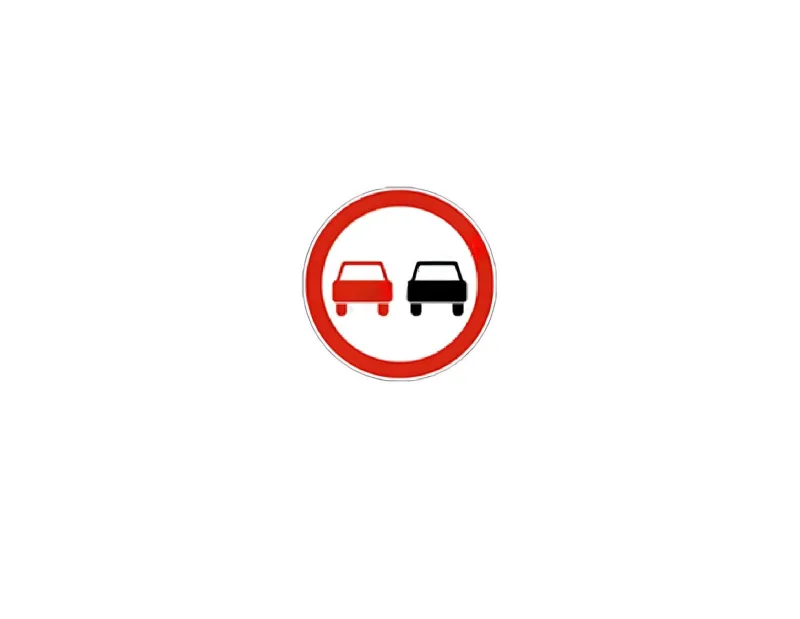
- Yes, they may.
- No, they may not.
Correct answer: No, they may not. D/T
Why: Նշանը
3.20 «Վազանցն արգելվում է»-ն է։ Կետ 34-ով դեղին կամ նարնջագույն փարոսիկներով աշխատանքային մեքենաները կարող են չպահպանել որոշ նշաններ, բայց
3.20-ը բացառությունների ցանկում է, ուստի դրա պահանջը պետք է կատարեն։
Signs in this question: 3.20
In tests: D/T 7
142. Flashing yellow or orange beacons must be activated on vehicles performing:
- Road construction, repair, maintenance, or cleaning work.
- Agricultural work within a populated area.
- Loading and transporting disabled, crashed, or other vehicles.
- In cases 1 and 3.
- In cases 2 and 3.
Correct answer: In cases 1 and 3. D/T
Why: Կետ 33.1-ով դեղին կամ նարնջագույն փարոսիկները պետք է միացված լինեն ճանապարհների շինարարության, վերանորոգման, պահպանման կամ մաքրման, ինչպես նաև անսարք, վթարված միջոցների բարձման ու փոխադրման աշխատանքներ կատարողների վրա, այսինքն՝ 1 և 3 դեպքերում։
In tests: D/T 12
143. Drivers of vehicles equipped with flashing white beacons may activate them:
- To obtain right-of-way at intersections.
- Together with a special audible signal, only in the event of an attack on those vehicles.
- At their discretion, whenever they consider it appropriate.
Correct answer: Together with a special audible signal, only in the event of an attack on those vehicles. D/T
Why: Կետ 35-ով լուսնասպիտակ փարոսիկները կարելի է միացնել, հատուկ ձայնային ազդանշանի հետ միասին, միայն տրանսպորտային միջոցի վրա հարձակման դեպքում։ Դրանք առավելություն չեն տալիս։
144. What is prohibited for the driver of a vehicle performing an urgent official task with flashing blue beacons and a special audible signal activated?
- Making a turn when the traffic signal is prohibitive.
- Failing to give the appropriate turn signal before performing a maneuver.
- Exceeding the established maximum permitted speed.
Correct answer: Failing to give the appropriate turn signal before performing a maneuver. D/T
Why: Կետ 26-ով կապույտ փարոսիկով և հատուկ ձայնային ազդանշանով վարորդը կարող է չպահպանել լուսացույցի ազդանշանները (բացի կարգավորողից) և արագության սահմանափակումները, բայց միայն ապահովելով երթևեկության անվտանգությունը։ Մանևրից առաջ շրջադարձի լուսային ցուցիչով ազդանշան տալը (կետ 36) հենց այն նախազգուշացումն է, որն ապահովում է մյուս մասնակիցների անվտանգությունը, ուստի այդ վարորդին արգելվում է մանևրից առաջ ազդանշան չտալ։
145. What is prohibited for the driver of a vehicle performing an urgent official task with flashing blue beacons and a special audible signal activated?
- Crossing a solid horizontal pavement marking.
- Proceeding in the opposite direction on a one-way road.
- Failing to give the appropriate turn signal before performing a maneuver.
Correct answer: Failing to give the appropriate turn signal before performing a maneuver. D/T
Why: Կետ 26-ով կապույտ փարոսիկով և հատուկ ձայնային ազդանշանով վարորդը կարող է չպահպանել գծանշումները և միակողմ երթևեկության կարգը, բայց միայն ապահովելով երթևեկության անվտանգությունը։ Մանևրից առաջ շրջադարձի լուսային ցուցիչով ազդանշան տալը (կետ 36) հենց այն նախազգուշացումն է, որն ապահովում է մյուս մասնակիցների անվտանգությունը, ուստի այդ վարորդին արգելվում է մանևրից առաջ ազդանշան չտալ։
146. Must a bus driver give the appropriate turn signal before starting to move if there are no other vehicles on the road at that moment?
- Must.
- Not required.
- Not required if it is a public transit vehicle.
Correct answer: Must. D/T
Why: Կետ 36-ով երթևեկությունն սկսելուց առաջ ազդանշան տալը պարտադիր է՝ անկախ այլ տրանսպորտային միջոցների առկայությունից, այդ թվում ընդհանուր օգտագործման ավտոբուսի համար։
147. When must a bus driver activate the turn signal before performing a maneuver?
- Immediately before starting the maneuver.
- In advance, before starting the maneuver.
- 1–2 seconds after starting the maneuver.
Correct answer: In advance, before starting the maneuver. D/T
Why: Կետ 36-ով շրջադարձի ցուցիչը միացվում է նախօրոք՝ մինչև մանևրն սկսելը։
148. Must a bus driver activate the turn signal if the vehicle does not change lanes but the road changes direction at that section?
- Yes, because the bus changes its direction of travel.
- No.
- Yes, but only if the road turns more than 90 degrees.
Correct answer: No. D/T
Why: Կետ 36-ով ազդանշան տալը պարտադիր չէ, եթե տրանսպորտային միջոցն առանց վերադասավորման երթևեկում է ճանապարհի կորագծային հատվածով, ուստի ավտոբուսի վարորդը պարտավոր չէ։
In tests: D/T 50
149. Must a bus driver activate a turn signal when reversing?
- No, because the hazard warning lights must be activated when reversing.
- No, because the white light of the reversing lamps is sufficient to warn other drivers.
- Yes.
Correct answer: Yes. D/T
Why: Կետ 3-ով հետընթացը մանևր է, իսկ կետ 36-ով մանևրից առաջ պետք է ազդանշան տալ շրջադարձի լուսային ցուցիչով, ուստի հետընթացի ժամանակ նույնպես միացնում են համապատասխան ցուցիչը։
In tests: D/T 14
150. When changing direction in yards or other adjacent areas, must a bus driver activate the turn signal?
- No, because yard areas are not considered public roads.
- No, if there are no other vehicles in the yard at that moment.
- Yes, because maneuvering rules apply on all types of roads and areas.
Correct answer: Yes, because maneuvering rules apply on all types of roads and areas. D/T
Why: Կետ 36-ով երթևեկությունն սկսելուց կամ մանևր կատարելուց առաջ ազդանշան տալը պարտադիր է առանց տեղի բացառության, այդ թվում՝ բակերում և այլ մերձակա տարածքներում։
In tests: D/T 45
151. A bus driver is prohibited from passing:
- A vehicle with a flashing blue beacon and a special audible signal activated.
- A vehicle with a flashing blue beacon activated even if the special audible signal is not activated.
- In both cases.
Correct answer: A vehicle with a flashing blue beacon and a special audible signal activated. D/T
Why: Կետ 77.6-ով վազանցն արգելվում է կապույտ փարոսիկ և հատուկ ձայնային ազդանշան միացրած տրանսպորտային միջոցին։ Միայն կապույտ փարոսիկի դեպքում այդ արգելքը չի գործում։
In tests: D/T 51
152. A bus driver is prohibited from passing if the vehicles being passed are:
- Vehicles with flashing orange or yellow beacons activated.
- Vehicles with flashing blue and red beacons and a special audible signal activated, or vehicles escorted by such vehicles.
- In both cases.
Correct answer: Vehicles with flashing blue and red beacons and a special audible signal activated, or vehicles escorted by such vehicles. D/T
Why: Կետ 77.7-ով վազանցն արգելվում է, եթե վազանցվողը կապույտ և կարմիր փարոսիկներով ու ձայնային ազդանշանով է կամ ուղեկցվում է այդպիսիներով։ Դեղին կամ նարնջագույն փարոսիկներն առավելություն չեն տալիս (կետ 32) և վազանցն չեն արգելում։
In tests: D/T 9
153. In which case is a bus driver prohibited from passing?
- If the vehicle being passed has special color-and-graphic markings.
- If the passing maneuver is performed at a railroad crossing or within 100 m before it.
- In both cases.
Correct answer: If the passing maneuver is performed at a railroad crossing or within 100 m before it. D/T
Why: Կետ 77.3-ով վազանցն արգելվում է երկաթուղային գծանցների վրա և դրանցից 100 մ առաջ։ Հատուկ գունագրաֆիկ երանգավորումը ինքնին վազանցն չի արգելում։
154. What must a bus driver do in the event of a forced stop at a location where stopping is prohibited?
- Activate the hazard warning lights and wait for assistance without moving the vehicle.
- Activate the hazard warning lights, place an emergency stop sign, and take all possible measures to remove the vehicle from that location.
- Notify the police and follow their instructions.
Correct answer: Activate the hazard warning lights, place an emergency stop sign, and take all possible measures to remove the vehicle from that location. D/T
Why: Կանգառն արգելված վայրում հարկադրված կանգառի դեպքում վարորդը միացնում է վթարային լուսային ազդանշանը (կետ 22), տեղադրում «Վթարային կանգառ» նշանը (կետ 23) և ձեռնարկում բոլոր միջոցները տրանսպորտային միջոցն այդ վայրից դուրս բերելու համար (կետ 83)։
In tests: D/T 13
155. In which case must a bus driver not interfere with blind pedestrians signaling their actions with a white cane?
- Only at pedestrian crossings.
- In all cases.
Correct answer: In all cases. D/T
Why: Կետ 107-ով բոլոր դեպքերում, այդ թվում՝ հետիոտնային անցումներից դուրս, վարորդը չպետք է խոչընդոտ ստեղծի երթևեկելի մասը հատող կույր հետիոտներին, որոնք կետ 108-ով ազդանշան են տալիս սպիտակ ձեռնափայտով։
In tests: D/T 55
156. In which cases must a bus driver not interfere with blind pedestrians signaling their actions with a white cane?
- In all cases.
- Only at locations where the “Blind Pedestrians” supplemental information sign is installed.
Correct answer: In all cases. D/T
Why: Կետ 107-ով վարորդը բոլոր դեպքերում պետք է խոչընդոտ չստեղծի սպիտակ ձեռնափայտով (կետ 108) ազդանշան տվող կույր հետիոտներին՝ անկախ «Կույր հետիոտներ» ցուցանակի առկայությունից։
In tests: D/T 38
157. In which case is a railroad-crossing attendant’s signal considered prohibitive?
- When the attendant faces the driver and gives a stop signal by hand.
- When the attendant is facing or has their back to the driver, with arms extended to the sides or raised, holding a baton, red lantern, or flag.
Correct answer: When the attendant is facing or has their back to the driver, with arms extended to the sides or raised, holding a baton, red lantern, or flag. D/T
Why: Կետ 113.5-ով գծանցի հերթապահի արգելող ազդանշան է նրա կրծքով կամ մեջքով դեպի վարորդն ուղղված դիրքը, կողմ պարզած ձեռքերը կամ գլխից վեր բարձրացրած ցուցաձողը, կարմիր լապտերը կամ դրոշակը։
In tests: D/T 51
158. Is a bus driver permitted to enter a railroad crossing if the barrier has started to close but the prohibitive traffic signal has not yet come on?
- Permitted if no approaching train is visible.
- Prohibited.
- Permitted only for fixed-route buses.
Correct answer: Prohibited. D/T
Why: Կետ 113.1-ով գծանց մուտք գործելն արգելվում է փակ կամ փակվող ուղեփակոցի դեպքում՝ լուսացույցի ազդանշանից անկախ։
159. In residential zones, a bus driver is prohibited from:
- Through traffic.
- Stopping with the engine running.
- Both.
Correct answer: Through traffic. D/T
Why: Կետ 121.2-ով բնակելի գոտիներում արգելվում է միջանցիկ երթևեկությունը։ Կետ 121.3-ն արգելում է աշխատող շարժիչով կայանելը, ոչ թե կանգառը, ուստի երկրորդ տարբերակը սխալ է։
In tests: D/T 44
160. When traveling through tunnels, which lighting devices must a bus driver activate?
- Marker lights, if the tunnel has sufficient artificial lighting.
- Low-beam or high-beam headlights.
- Fog lights only.
Correct answer: Low-beam or high-beam headlights. D/T
Why: Կետ 127.1-ով թունելներում երթևեկող մեխանիկական տրանսպորտային միջոցների վրա պետք է միացված լինի լապտերների հեռահար կամ մոտակա լույսը։
161. When traveling through a tunnel with sufficient artificial lighting, must a bus driver activate the low-beam or high-beam headlights?
- Must.
- Not required.
- Required only at night.
Correct answer: Must. D/T
Why: Կետ 127-ով թունելներում, անկախ ճանապարհի լուսավորվածությունից, մեխանիկական տրանսպորտային միջոցների վրա պետք է միացված լինի լապտերների հեռահար կամ մոտակա լույսը, ուստի վարորդը պարտավոր է։
In tests: D/T 36
162. Within populated areas, when traveling at night on roads with sufficient artificial lighting, which lighting devices must be activated on a bus?
- High-beam or low-beam headlights, at the driver’s choice.
- Marker lights only.
- Low-beam headlights only.
Correct answer: Low-beam headlights only. D/T
Why: Օրվա մութ ժամանակ միացված է լինում հեռահար կամ մոտակա լույսը (կետ 127.1), բայց կետ 128.1-ով բնակավայրում լուսավորված ճանապարհին հեռահարը պետք է փոխարկվի մոտակայի, ուստի միացված է լինում միայն մոտակա լույսը։
163. High-beam headlights must be switched to low beam:
- Within a populated area if the road is illuminated.
- Outside populated areas at a distance of not less than 100 meters from an oncoming vehicle.
Correct answer: Within a populated area if the road is illuminated. D/T
Why: Կետ 128.1-ով հեռահար լույսը փոխարկվում է մոտակայի բնակավայրերում, եթե ճանապարհը լուսավորված է։ Հանդիպակացից հեռավորությունը 128.2-ով 150 մ է, ոչ 100 մ։
164. When stopping or parking on an unlit section of road at night, which lighting devices must be activated on a bus?
- Low-beam headlights.
- Marker lights.
- Only the interior compartment lighting.
Correct answer: Marker lights. D/T
Why: Կետ 130-ով օրվա մութ ժամանակ ճանապարհի չլուսավորված հատվածներում կանգառի և կայանման դեպքում պետք է միացված լինեն եզրաչափային լույսերը։
In tests: D/T 40
165. When stopping or parking on a road under conditions of insufficient visibility, which lighting devices must be activated on a bus?
- Marker lights; in addition, low-beam headlights and fog lights may also be activated.
- Only high-beam headlights so that the bus is visible from a long distance.
Correct answer: Marker lights; in addition, low-beam headlights and fog lights may also be activated. D/T
Why: Կետ 130-ով անբավարար տեսանելիության պայմաններում կանգառի և կայանման դեպքում պետք է միացված լինեն եզրաչափային լույսերը, իսկ դրանց հետ կարելի է միացնել նաև մոտակա լույսերը և հակամառախուղային լապտերները։
In tests: D/T 35
166. During daylight hours, to identify a bus, the low-beam headlights must be activated:
- Only when the bus is being towed by another vehicle because of a technical malfunction.
- When transporting organized groups of children.
- In both cases.
Correct answer: When transporting organized groups of children. D/T
Why: Կետ 133.4-ով օրվա լուսավոր ժամերին երեխաների խմբերի կազմակերպված փոխադրումներ կատարելիս պետք է միացված լինի մոտակա լույսը։ Քարշակման դեպքում մոտակա լույսը միացվում է քարշակողի վրա (133.6), ոչ քարշակվող ավտոբուսի։
In tests: D/T 33
167. During daylight hours, to identify a bus, the low-beam headlights must be activated:
- When proceeding in an organized convoy.
- Only when proceeding on international routes.
- In both cases.
Correct answer: When proceeding in an organized convoy. D/T
Why: Կետ 133.2-ով օրվա լուսավոր ժամերին կազմակերպված տրանսպորտային շարասյունում երթևեկելիս պետք է միացված լինի մոտակա լույսը։ Միջպետական երթուղիների համար նման պահանջ չկա։
In tests: D/T 5
168. In which case is a bus driver permitted to use the audible warning signal within a populated area?
- To warn other drivers of the intention to pass.
- When necessary to prevent a road traffic crash.
- In both cases.
Correct answer: When necessary to prevent a road traffic crash. D/T
Why: Կետ 136-ով ձայնային ազդանշանը թույլատրվում է միայն բնակավայրերից դուրս վազանցի մասին նախազգուշացնելու (136.1) կամ պատահարը կանխելու համար (136.2)։ Բնակավայրում մնում է միայն պատահարը կանխելու դեպքը։
In tests: D/T 40
169. At night, to warn of passing, instead of or together with an audible signal, a light signal may be given by:
- Repeatedly switching the headlights from low beam to high beam.
- Repeatedly switching the headlights on and off.
- In both cases.
Correct answer: Repeatedly switching the headlights from low beam to high beam. D/T
Why: Կետ 137-ով վազանցի մասին լուսային ազդանշանը օրվա մութ ժամանակ լապտերների լույսի բազմակի փոխարկումներն է մոտակայից հեռահարի, իսկ օրվա լուսավոր ժամանակ՝ լույսի պարբերաբար միացումն ու անջատումը։
170. Which light signal must be activated on a bus displaying the “Transportation of Children” identification sign while children are boarding or exiting?
- No light signal is required.
- The right turn signal.
- The hazard warning lights.
Correct answer: The hazard warning lights. D/T
Why: Կետ 156-ով «Երեխաների փոխադրում» նշանով տրանսպորտային միջոցի վրա երեխաների նստեցման և իջեցման ժամանակ պետք է միացված լինի վթարային լուսային ազդանշանը։
171. What must a driver do when approaching a stopped bus displaying the “Transportation of Children” identification sign with the hazard warning lights activated while children are boarding or exiting?
- The driver must stop immediately and wait until the bus turns off the hazard warning lights and begins moving.
- The driver must reduce speed and, if necessary, stop to allow the children to cross the roadway without obstruction.
- Both of the above actions.
Correct answer: The driver must reduce speed and, if necessary, stop to allow the children to cross the roadway without obstruction. D/T
Why: Կետ 156-ով «Երեխաների փոխադրում» նշանով կանգնած ավտոբուսին մոտենալիս վարորդը պետք է նվազեցնի արագությունը, իսկ անհրաժեշտության դեպքում՝ կանգ առնի՝ երեխաներին երթևեկելի մասն անարգել անցնել թույլ տալու համար։
In tests: D/T 20
172. For what purpose does a traffic controller use a baton, including one with a red signal or a retroreflective disk?
- To make the signals more visible.
- To indicate the exact stopping location for vehicles.
Correct answer: To make the signals more visible. D/T
Why: Կետ 17-ով կարգավորողը ցուցաձողը, այդ թվում կարմիր ազդանշանով կամ լուսանդրադարձիչ սկավառակով, օգտագործում է ազդանշանների լավ տեսանելիության համար։
173. Under conditions of insufficient visibility, is it permitted to proceed with only the fog lights activated?
- Yes, if they are factory-installed.
- Yes.
- No, the low-beam or high-beam headlights must also be activated.
Correct answer: No, the low-beam or high-beam headlights must also be activated. D/T
Why: Կետ 127.1-ով անբավարար տեսանելիության պայմաններում մեխանիկական տրանսպորտային միջոցների վրա պետք է միացված լինի հեռահար կամ մոտակա լույսը, իսկ հակամառախուղային լապտերները (կետ 132) դրանց լրացում են։ Պաշտոնական պատասխանով միայն հակամառախուղային լապտերներով երթևեկելը չի թույլատրվում։
174. At the scene of a road traffic crash, the driver of a fixed-route bus must:
- Only activate the hazard warning lights.
- Only place the “Emergency Stop” sign.
- Perform both of the above actions.
Correct answer: Perform both of the above actions. D/T
Why: Պատահարի դեպքում վարորդը պետք է միացնի վթարային լուսային ազդանշանը (կետ 22.1) և անհապաղ տեղադրի «Վթարային կանգառ» նշանը (կետ 23.1)՝ երկու գործողություններն էլ։
175. Which sign does not apply to public transit vehicles?
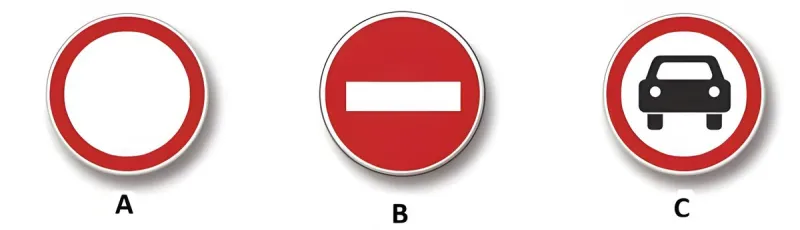
- Only A.
- Only B.
- Only C.
- All of them.
Correct answer: All of them. D/T
Why: A-ն
3.2 «Երթևեկությունն արգելվում է», B-ն
3.1 «Մուտքն արգելվում է», C-ն
3.3 «Մեխանիկական տրանսպորտային միջոցների երթևեկությունն արգելվում է» նշանն է։ Նշանների հավելվածի համաձայն՝ այս երեք նշանների ազդեցությունը չի տարածվում ընդհանուր օգտագործման տրանսպորտային միջոցների վրա։
Signs in this question: 3.2, 3.1, 3.3
In tests: D/T 28
176. When a vehicle with a flashing blue beacon and a special audible signal activated approaches, drivers of public transit vehicles must:
- Continue proceeding because they are operating on a fixed route.
- Stop and continue only after receiving permission.
- Yield to ensure the unobstructed passage of that vehicle.
Correct answer: Yield to ensure the unobstructed passage of that vehicle. D/T
Why: Կետ 28-ով կապույտ փարոսիկ և հատուկ ձայնային ազդանշան միացրած տրանսպորտային միջոց մոտենալիս բոլոր վարորդները, այդ թվում՝ երթուղայինները, պետք է զիջեն ճանապարհը։
177. When approaching a stationary vehicle with a flashing red beacon activated, drivers of public transit vehicles proceeding in that direction must:
- Yield to ensure the unobstructed passage of that vehicle.
- Stop and continue only after receiving permission.
- Continue proceeding because they are operating on a fixed route.
Correct answer: Stop and continue only after receiving permission. D/T
Why: Կետ 31-ով կարմիր առկայծող փարոսիկ միացրած կանգնած մեքենային մոտենալիս տվյալ ուղղությամբ երթևեկող բոլոր վարորդները, այդ թվում՝ երթուղայինները, կանգ են առնում և շարունակում միայն թույլտվություն ստանալուց հետո։
In tests: D/T 16
178. At night, on illuminated road sections, a bus proceeding along a fixed route must have activated:
- Low-beam headlights only.
- High-beam headlights only.
- High-beam or low-beam headlights.
Correct answer: Low-beam headlights only. D/T
Why: Օրվա մութ ժամանակ միացված է լինում հեռահար կամ մոտակա լույսը (կետ 127.1), բայց լուսավորված ճանապարհին հեռահարը պետք է փոխարկվի մոտակայի (կետ 128.1), ուստի միացված է լինում միայն մոտակա լույսը։
In tests: D/T 25
179. Within populated areas, drivers of public transit vehicles may use the audible warning signal:
- To obtain right-of-way over other road users.
- When necessary to prevent a road traffic crash.
- To warn other drivers of the intention to pass.
- In all cases.
Correct answer: When necessary to prevent a road traffic crash. D/T
Why: Կետ 136-ով բնակավայրերում ձայնային ազդանշանը թույլատրվում է միայն պատահարը կանխելու համար. վազանցի մասին նախազգուշացումը թույլատրվում է միայն բնակավայրերից դուրս, իսկ առավելություն ստանալու համար այն չի կիրառվում։
In tests: D/T 54
180. During daylight hours, when proceeding in an organized convoy, which lights must be activated to identify the bus?
- High-beam headlights only.
- Low-beam headlights only.
- Marker lights.
Correct answer: Low-beam headlights only. D/T
Why: Կետ 133.2-ով օրվա լուսավոր ժամերին կազմակերպված տրանսպորտային շարասյունում երթևեկելիս պետք է միացված լինի լապտերների մոտակա լույսը։
In tests: D/T 7
181. To warn of passing, may a bus driver use a light signal instead of, or together with, an audible signal?
- May not.
- May.
Correct answer: May. D/T
Why: Կետ 137-ով վազանցի մասին նախազգուշացնելու համար ձայնային ազդանշանի փոխարեն կամ նրա հետ միաժամանակ կարելի է տալ լուսային ազդանշան։
182. A bus’s hazard warning lights must be activated:
- To obtain right-of-way over other vehicles.
- On the towing bus during towing.
- When it is necessary to warn other road users of danger.
- In all of the above cases.
Correct answer: When it is necessary to warn other road users of danger. D/T
Why: Կետ 22-ով վթարային ազդանշանը միացվում է, երբ անհրաժեշտ է վտանգի մասին նախազգուշացնել մյուս մասնակիցներին։ Քարշակման դեպքում այն միացվում է քարշակվողի, ոչ քարշակող ավտոբուսի վրա (22.4), իսկ առավելություն ստանալու համար դրա օգտագործումն արգելված է (կետ 25)։
In tests: D/T 17
183. When approaching a stationary vehicle with flashing blue or flashing blue and red beacons activated, a bus driver must:
- Stop and continue only after receiving permission.
- Reduce speed so as to be able to stop if necessary.
Correct answer: Reduce speed so as to be able to stop if necessary. D/T
Why: Կետ 30-ով կապույտ կամ կապույտ և կարմիր փարոսիկներ միացրած կանգնած տրանսպորտային միջոցին մոտենալիս վարորդը պետք է իջեցնի արագությունը, որպեսզի անհրաժեշտության դեպքում կանգ առնի։ Կանգ առնել և թույլտվության սպասել պետք է կարմիր փարոսիկի դեպքում (կետ 31)։
184. When approaching a stationary vehicle with a flashing red beacon activated, a bus driver proceeding in that direction must:
- Stop and continue only after receiving permission.
- Continue without stopping.
Correct answer: Stop and continue only after receiving permission. D/T
Why: Կետ 31-ով կարմիր առկայծող փարոսիկ միացրած կանգնած տրանսպորտային միջոցին մոտենալիս ավտոբուսի վարորդը պետք է կանգ առնի և շարունակի միայն թույլտվություն ստանալուց հետո։
185. A bus driver must not interfere with blind pedestrians crossing the roadway:
- Outside pedestrian crossings.
- At pedestrian crossings.
- In all of the listed cases.
Correct answer: In all of the listed cases. D/T
Why: Կետ 107-ով բոլոր դեպքերում, այդ թվում՝ հետիոտնային անցումներից դուրս, վարորդը չպետք է խոչընդոտ ստեղծի երթևեկելի մասը հատող կույր հետիոտներին, ուստի ճիշտ են թվարկած բոլոր դեպքերը։
186. What does this pavement marking indicate?
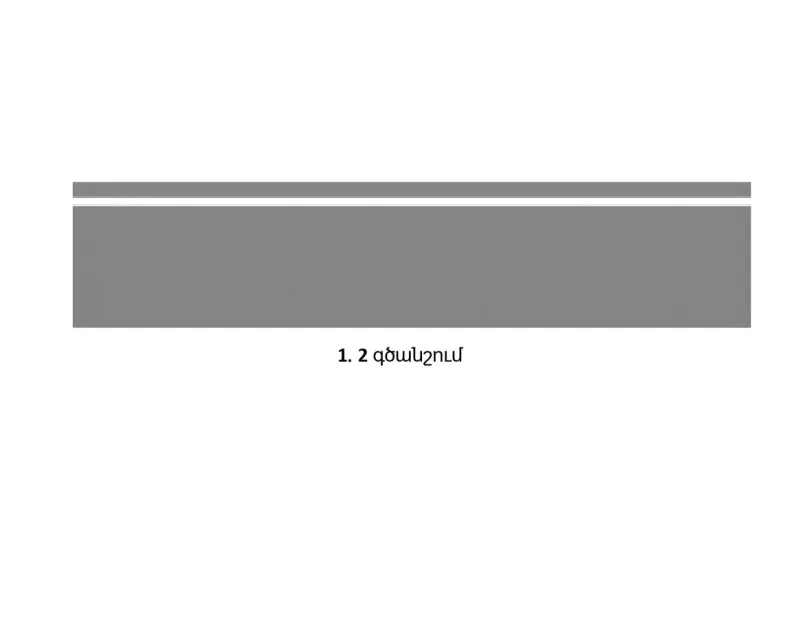
- The boundary between lanes of traffic moving in opposite directions.
- The edge between the roadway and the median.
Correct answer: The edge between the roadway and the median. D/T
Why: Պատկերված
1.2 հոծ եզրային գիծը ցույց է տալիս երթևեկելի մասի և բաժանարար գոտու եզրը։ Հանդիպակաց հոսքերը բաժանում են
1.1 և
1.3 գծանշումները։
In tests: D/T 52
187. During daylight hours, public transit vehicles proceeding against the main traffic flow in a specially designated lane must have activated:
- High-beam headlights.
- Low-beam headlights.
- Marker lights.
Correct answer: Low-beam headlights. D/T
Why: Կետ 133.3-ով օրվա լուսավոր ժամերին հատուկ առանձնացված գոտով, հիմնական հոսքին հանդիպակաց երթևեկող ընդհանուր օգտագործման տրանսպորտային միջոցների վրա պետք է միացված լինի մոտակա լույսը։
In tests: D/T 8
188. When this sign is present, public transit vehicles must have the following activated during daylight hours:
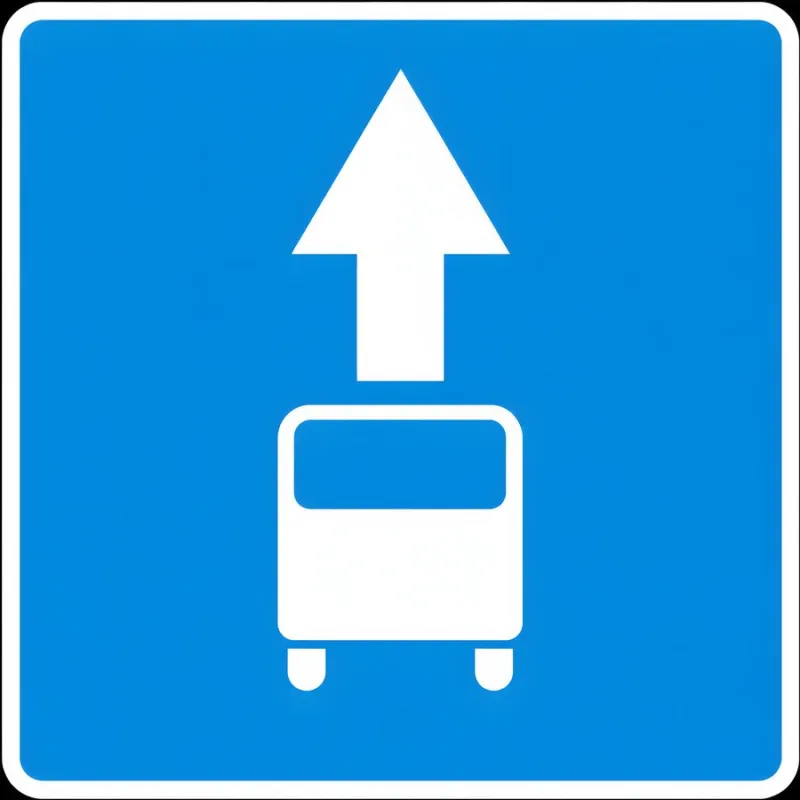
- High-beam or low-beam headlights.
- Low-beam headlights.
- Marker lights and fog lights.
- Hazard warning lights.
- None of the above.
Correct answer: None of the above. D/T
Why: Նշանը
5.14 «Ընդհանուր օգտագործման տրանսպորտային միջոցների համար գոտի»-ն է, որը նշում է հոսքին համընթաց գոտի։ Կետ 133.3-ով մոտակա լույսը պարտադիր է միայն հանդիպակաց առանձնացված գոտով երթևեկելիս, ուստի այստեղ նշվածներից ոչ մեկը պարտադիր չէ։
Signs in this question: 5.14
In tests: D/T 31
189. When this sign is present, drivers of public transit vehicles must activate the following during daylight hours:
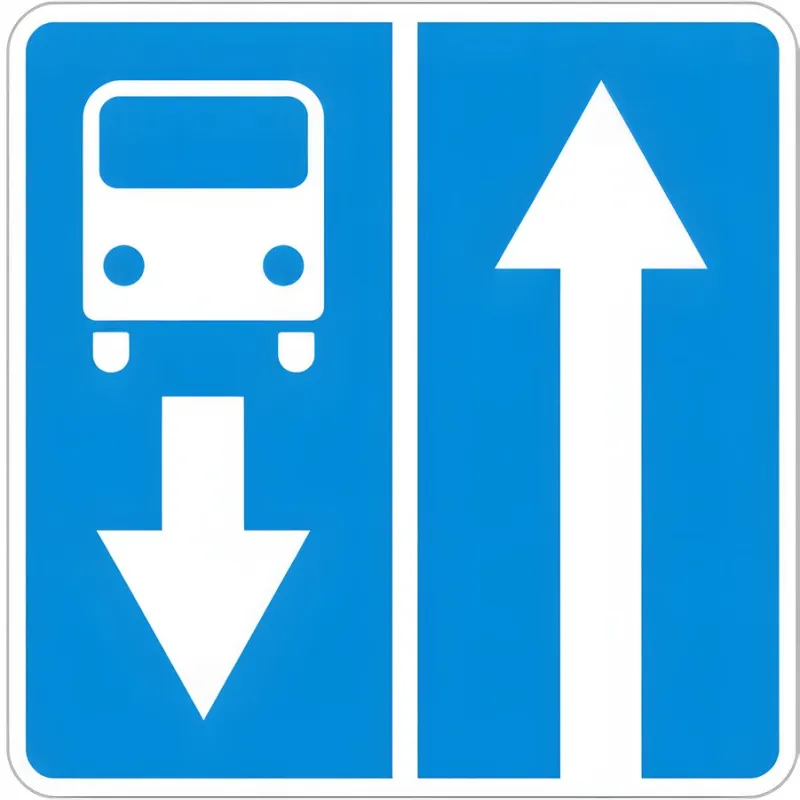
- High-beam or low-beam headlights.
- Low-beam headlights.
- Marker lights.
- Hazard warning lights.
- All of the listed lighting devices.
Correct answer: Low-beam headlights. D/T
Why: Նշանը
5.11 «Ընդհանուր օգտագործման տրանսպորտային միջոցների համար գոտիով ճանապարհ»-ն է, որտեղ առանձնացված գոտին հոսքին հանդիպակաց է։ Կետ 133.3-ով այդ գոտով երթևեկող ընդհանուր օգտագործման տրանսպորտային միջոցների վրա օրվա լուսավոր ժամերին պետք է միացված լինի մոտակա լույսը։
Signs in this question: 5.11
In tests: D/T 25
190. A bus’s high-beam headlights must be switched to low beam:
- Whenever necessary to avoid dazzling drivers of oncoming vehicles.
- Whenever necessary to avoid dazzling drivers of vehicles proceeding in the same direction.
- At a distance of not less than 150 meters from oncoming vehicles.
- In all of the listed cases.
Correct answer: In all of the listed cases. D/T
Why: Կետ 128-ով հեռահար լույսը փոխարկվում է մոտակայի հանդիպակացից ոչ պակաս, քան 150 մ հեռավորության վրա (128.2) և ցանկացած այլ դեպքում՝ հանդիպակաց և համընթաց վարորդներին շլացնելու հնարավորությունը բացառելու համար (128.3)՝ բոլոր թվարկված դեպքերում։
In tests: D/T 54
191. The signals of this traffic signal apply to:
- Trams only.
- Trams, as well as other public transit vehicles proceeding in a designated lane.
- All fixed-route vehicles.
Correct answer: Trams, as well as other public transit vehicles proceeding in a designated lane. D/T
Why: «T»-աձև դասավորված չորս լուսնասպիտակ ազդանշաններով լուսացույցը կետ 14-ով կարգավորում է տրամվայների, ինչպես նաև առանձնացված գոտով երթևեկող ընդհանուր օգտագործման այլ տրանսպորտային միջոցների երթևեկությունը։
192. Which exterior lighting devices must be activated on a vehicle displaying the “Transportation of Children” identification sign while children are boarding or exiting?
- Marker lights.
- Low-beam headlights or fog lights.
- Hazard warning lights.
Correct answer: Hazard warning lights. D/T
Why: Կետ 156-ով «Երեխաների փոխադրում» նշանով տրանսպորտային միջոցի վրա երեխաների նստեցման և իջեցման ժամանակ պետք է միացված լինի վթարային լուսային ազդանշանը։
Take this test in the app
In Varordakan Tester the same tests are taken without hints, wrong answers are collected automatically, and there is an exam simulation (20 questions, 30 minutes, pass at 18), a 3D intersection simulator, video lessons and an AI assistant that cites the Traffic Rules point. Free.
Sources: questions from the official bank of the Road Police of Armenia (roadpolice.am, edition of 2 October 2026); rule points from the Traffic Rules of the Republic of Armenia (arlis.am). Varordakan Tester is an independent educational app, not affiliated with the Police of Armenia.
Explanations © 2026 Suren Galoyan, all rights reserved; reproduction without permission is prohibited. Questions and pictures are from the official bank of the Road Police of Armenia.
