Tests › Topics
Topic 6. Passing intersections (traffic controller, traffic lights)
Updated 2026-10-13 · official question bank of 2 October 2026
Topic 6: "Passing intersections (traffic controller, traffic lights)". 165 questions from the official bank of 2 October 2026 (categories ABC and D/T), each with the correct answer and an explanation.
1. Traffic is prohibited for:
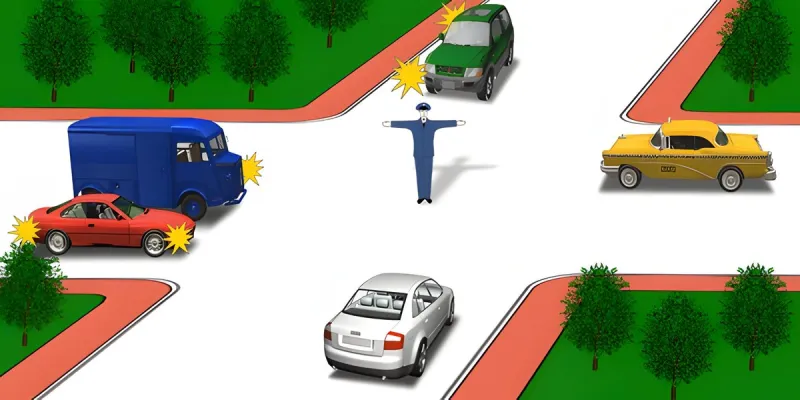
- The red and white automobiles.
- The blue, green, and white automobiles.
- The white, blue, and yellow automobiles.
Correct answer: The blue, green, and white automobiles. ABC · D/T
Why: Լուսացույց և նշաններ չկան, կարգավորողի ձեռքերը պարզված են կողմ։ Կետ 16-ի 2-րդ ենթակետի «ա»-ով ձախ և աջ կողմերից ոչ ռելսագնաց միջոցներին թույլատրվում է միայն ուղիղ և աջ. կարմիրը (աջ) և դեղինը (ուղիղ) կարող են անցնել, ձախ թեքվող կապույտ բեռնատարը՝ ոչ։ Կրծքի և թիկունքի կողմից երթևեկությունն արգելված է («բ»)՝ սպիտակ և կանաչ։ Արգելվում է կապույտին, կանաչին և սպիտակին։
In tests: ABC 1, D/T 43
2. Which drivers are permitted to proceed straight ahead?
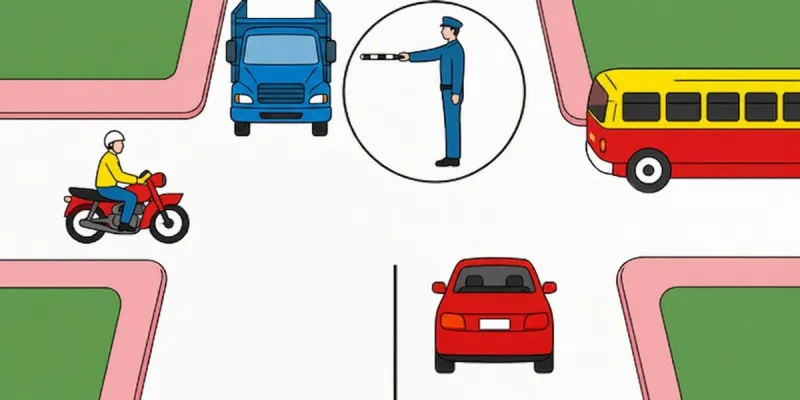
- The bus driver and the motorcycle operator.
- The passenger-car driver and the truck driver.
- The passenger-car driver.
Correct answer: The passenger-car driver. ABC · D/T
Why: Կարգավորողի աջ ձեռքը պարզված է առաջ, լուսացույց և նշաններ չկան։ Կետ 16-ի 3-րդ ենթակետի «ա»-ով միայն նրա ձախ կողմից եկողին է թույլատրվում երթևեկել բոլոր ուղղություններով, այդ թվում՝ ուղիղ. դա կարմիր թեթև մարդատարն է։ Կրծքի կողմից մոտոցիկլին թույլատրվում է միայն աջ («բ»), թիկունքի ավտոբուսին և աջ կողմի բեռնատարին երթևեկությունն արգելված է («գ»)։
In tests: ABC 11, D/T 5
3. Which vehicle driver must yield?
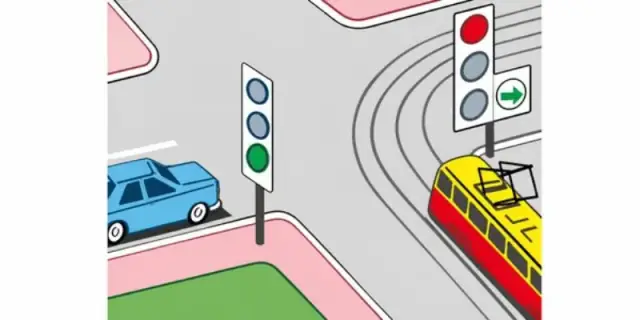
- The automobile driver.
- The tram operator.
Correct answer: The tram operator. ABC · D/T
Why: Երկու լուսացույց, նշաններ չկան։ Տրամվայի լուսացույցը կարմիր է՝ աջ ուղղված կանաչ լրացուցիչ սեկցիայով, թեթև մարդատարինը՝ կանաչ։ Կետ 91-ով կարմիրի հետ միացված լրացուցիչ սեկցիայի սլաքի ուղղությամբ երթևեկողը զիջում է այլ ուղղություններից ընթացողներին, և կետ 92-ով դա վերաբերում է նաև տրամվային. զիջում է տրամվայի վարորդը։
In tests: ABC 25, D/T 40
4. If the traffic controller’s right arm is extended forward, traffic of non-rail vehicles is permitted:
- From the left side, to the left and by making a U-turn.
- From the right side, to the right only.
- From the left side, in all directions.
- From the rear, to the right only.
Correct answer: From the left side, in all directions. ABC · D/T
Why: Կարգավորողի աջ ձեռքն առաջ պարզված է. կետ 16.3-ով նրա ձախ կողմից ոչ ռելսագնաց տրանսպորտային միջոցների երթևեկությունը թույլատրվում է բոլոր ուղղություններով (տրամվայինը՝ դեպի ձախ)։
In tests: ABC 16
5. The vehicles will proceed through the intersection in the following order:
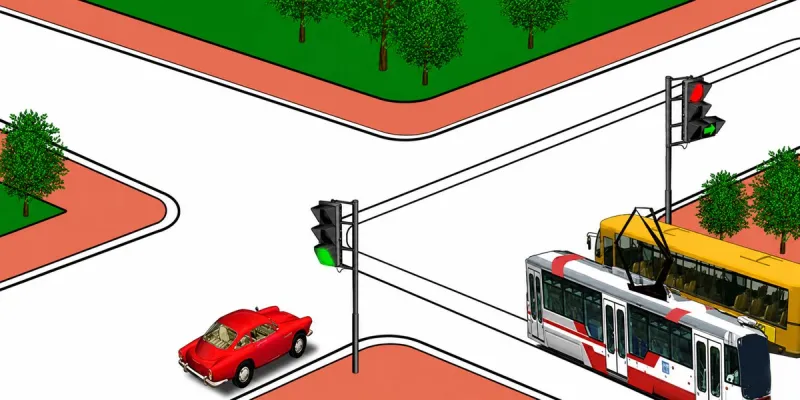
- The tram and the bus, then the passenger car.
- The tram, the passenger car, the bus.
- The passenger car, then the tram and the bus.
Correct answer: The passenger car, then the tram and the bus. ABC · D/T
Why: Թեթև մարդատարն ընթանում է հիմնական կանաչով։ Տրամվայի և ավտոբուսի լուսացույցը կարմիր է՝ միացված կանաչ լրացուցիչ սեկցիայով, ուստի երկուսն էլ զիջում են այլ ուղղությունից ընթացողին (կետ 91, տրամվայի համար՝ կետ 92) և անցնում են դրանից հետո։ Առաջինն անցնում է թեթև մարդատարը, ապա՝ տրամվայն ու ավտոբուսը։
In tests: ABC 21, D/T 15
6. Which answer correctly identifies the vehicle or vehicles permitted to proceed?
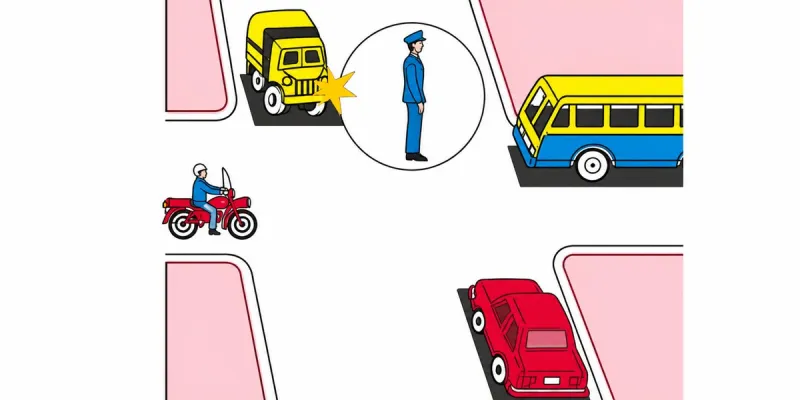
- The motorcycle.
- The truck.
- The bus.
- The passenger car.
- The passenger car and the truck.
Correct answer: The passenger car. ABC · D/T
Why: Կարգավորողի ձեռքերն իջեցված են, լուսացույց և նշաններ չկան։ Կետ 16-ի 2-րդ ենթակետի «ա»-ով կողմերից եկողներին թույլատրվում է ուղիղ և աջ. կարմիր թեթև մարդատարն ուղիղ է անցնում, իսկ մյուս կողմի դեղին բեռնատարը ձախ է թեքվում, ինչը չի թույլատրվում։ Թիկունքի ավտոբուսին և կրծքի կողմի մոտոցիկլին երթևեկությունն արգելված է («բ»)։ Միայն թեթև մարդատարը։
In tests: ABC 30
7. Which vehicle driver must yield?
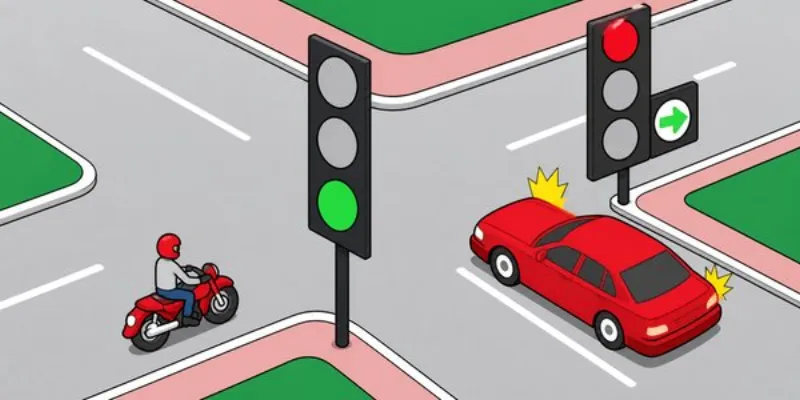
- The motorcycle operator.
- The automobile driver.
Correct answer: The automobile driver. ABC
Why: Երկու լուսացույց, նշաններ չկան։ Կարմիր ավտոմոբիլն աջ է թեքվում կարմիր հիմնական ազդանշանի հետ միացված կանաչ լրացուցիչ սեկցիայի սլաքով, մոտոցիկլն ընթանում է կանաչով։ Կետ 91-ով սլաքի ուղղությամբ երթևեկողը զիջում է այլ ուղղություններից ընթացողներին. զիջում է ավտոմոբիլի վարորդը։
In tests: ABC 40
8. This signal given by the traffic controller means that traffic is permitted for:
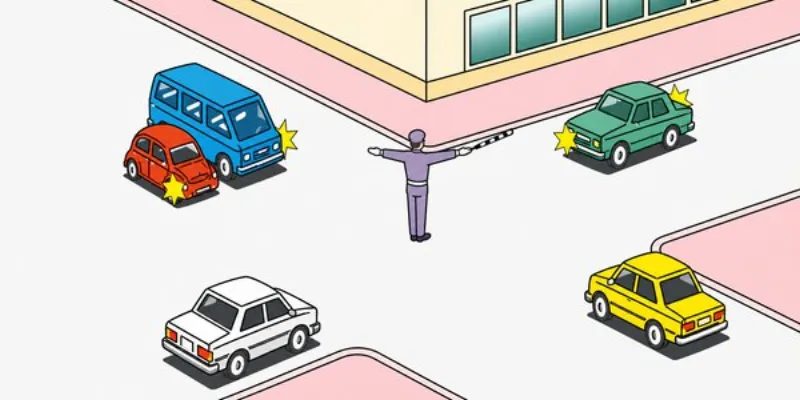
- The blue and green automobiles; traffic is prohibited for the red, yellow, and white automobiles.
- The blue, red, and green automobiles; traffic is prohibited for the yellow and white automobiles.
Correct answer: The blue, red, and green automobiles; traffic is prohibited for the yellow and white automobiles. ABC · D/T
Why: Կարգավորողի ձեռքերը պարզված են կողմ, լուսացույց և նշաններ չկան։ Կետ 16-ի 2-րդ ենթակետի «ա»-ով ձախ և աջ կողմերից եկող կապույտին, կարմիրին և կանաչին թույլատրվում է ուղիղ և աջ, իսկ կրծքի և թիկունքի կողմի սպիտակին ու դեղինին երթևեկությունն արգելված է («բ»)։
In tests: ABC 2, D/T 41
9. Which vehicles may make a right turn?
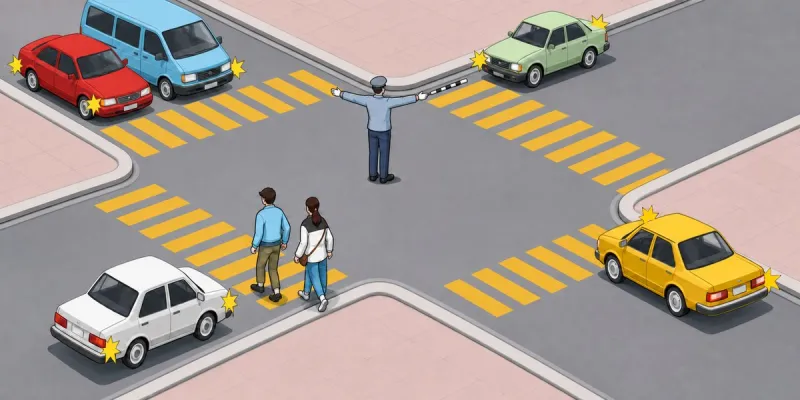
- Only the red automobile.
- All vehicles.
- The red and green automobiles.
Correct answer: The red and green automobiles. ABC · D/T
Why: Կարգավորողի ձեռքերը պարզված են կողմ, լուսացույց և նշաններ չկան։ Կետ 16.2 «ա»-ով նրա ձախ և աջ կողմերից եկողներին թույլատրվում է ուղիղ և աջ՝ դա կարմիր և կանաչ ավտոմոբիլներն են, իսկ կրծքի և թիկունքի կողմի սպիտակին ու դեղինին երթևեկությունն արգելված է («բ»)։ Կարմիրի կողքի կապույտ միկրոավտոբուսը ձախ գոտում է, իսկ կետ 40-ով աջ շրջադարձ կատարվում է աջ եզրային գոտուց, ուստի աջ կարող են թեքվել կարմիրն ու կանաչը։
In tests: ABC 5, D/T 31
10. Traffic is permitted:
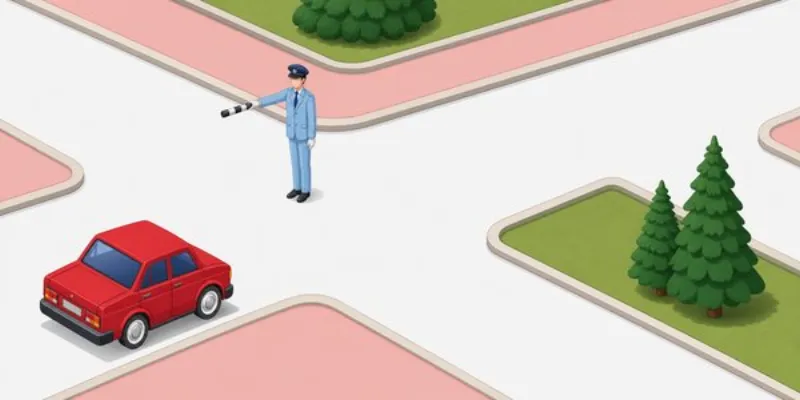
- Straight ahead.
- To the right through the first passage.
- To the right through the second passage.
- To the right through the first and second passages.
Correct answer: To the right through the first passage. ABC · D/T
Why: Կարգավորողը կրծքով դեպի կարմիր ավտոմոբիլն է, աջ ձեռքը պարզված է առաջ, լուսացույց և նշաններ չկան։ Կետ 16-ի 3-րդ ենթակետի «բ»-ով կրծքի կողմից թույլատրվում է միայն աջ շրջադարձ, այսինքն՝ դեպի աջ առաջին (մոտակա) անցումով. ուղիղ գնալը կամ երկրորդ անցումով թեքվելն արգելված է։
In tests: ABC 19, D/T 31
11. Traffic is permitted:
- To the right through the first passage.
- Straight ahead and to the right through the first passage.
Correct answer: To the right through the first passage. ABC · D/T
Why: Կարգավորողը կրծքով դեպի կարմիր ավտոմոբիլն է, աջ ձեռքը պարզված է առաջ, լուսացույց և նշաններ չկան։ Կետ 16-ի 3-րդ ենթակետի «բ»-ով կրծքի կողմից թույլատրվում է միայն աջ շրջադարձ՝ առաջին (մոտակա) անցումով. ուղիղ գնալն արգելված է։
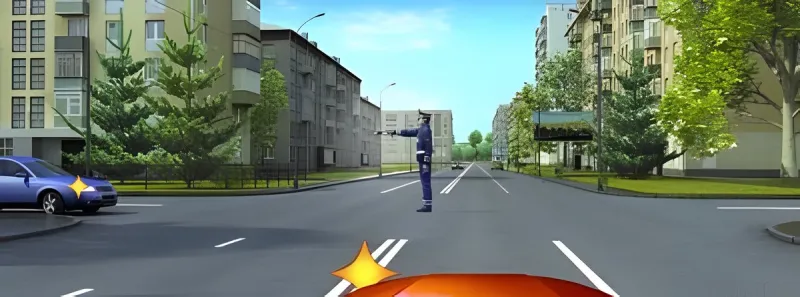
In tests: ABC 5, D/T 21
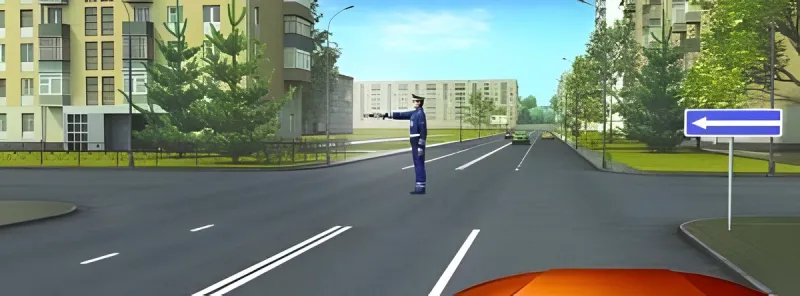
12. If the traffic controller’s arms are extended to the sides or lowered, traffic of non-rail vehicles is permitted:
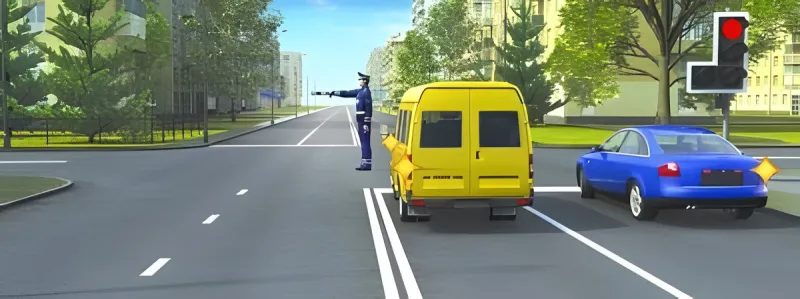
- From the front and rear, to the right only.
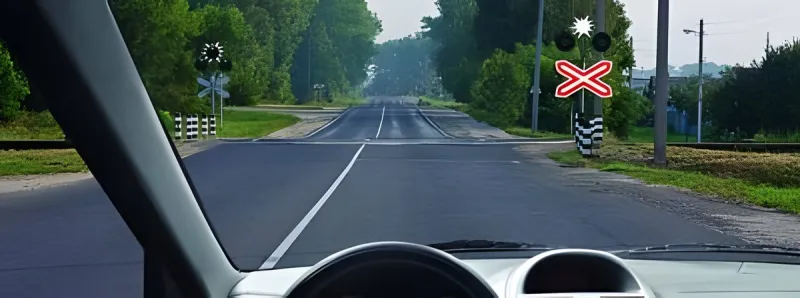
- From the left and right sides, straight ahead and to the right.
- From the left and right sides, straight ahead only.
Correct answer: From the left and right sides, straight ahead and to the right. ABC · D/T
Why: Կարգավորողի ձեռքերը կողմ են պարզված կամ իջեցված. կետ 16.2-ով ձախ և աջ կողմերից ոչ ռելսագնաց տրանսպորտային միջոցներին թույլատրվում է ուղիղ և դեպի աջ, տրամվային՝ միայն ուղիղ։
In tests: ABC 36
13. The driver of the red automobile:
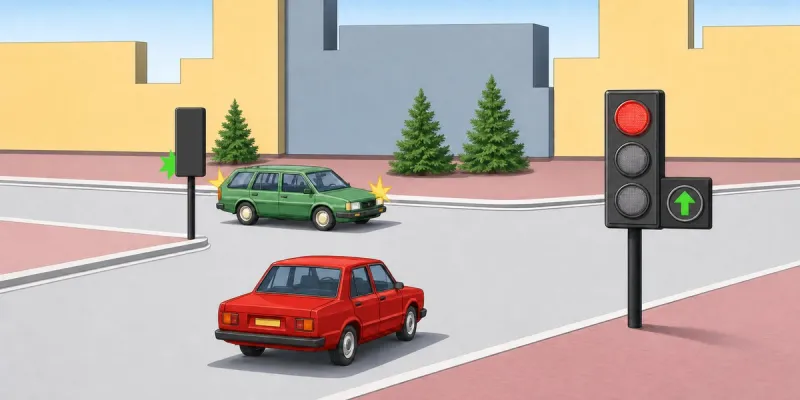
- Must yield.
- Has the right-of-way.
Correct answer: Must yield. ABC
Why: Լուսացույցի հիմնական ազդանշանը կարմիր է, միացված է կանաչ լրացուցիչ սեկցիայի սլաքը, նշաններ չկան։ Կարմիր ավտոմոբիլն ընթանում է կարմիրի հետ միացված սլաքով, ուստի կետ 91-ով պետք է զիջի այլ ուղղությունից ընթացող կանաչ ավտոմոբիլին։
In tests: ABC 9
14. Which vehicles are permitted to proceed?
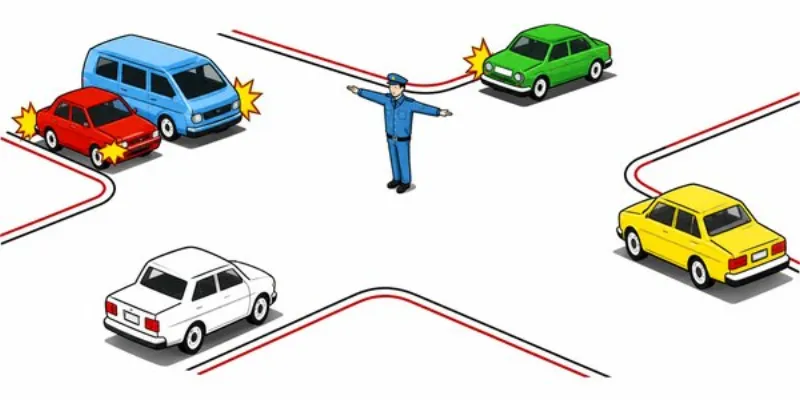
- The yellow and red automobiles.
- The green, red, and white automobiles.
- The white and green automobiles.
Correct answer: The yellow and red automobiles. ABC · D/T
Why: Կարգավորողի ձեռքերը պարզված են կողմ, լուսացույց և նշաններ չկան։ Կետ 16-ի 2-րդ ենթակետի «ա»-ով կողմերից եկողներին թույլատրվում է ուղիղ և աջ. դեղինն ու կարմիրը, իսկ կողքից ձախ թեքվող կապույտին՝ ոչ։ Թիկունքի կանաչին և կրծքի կողմի սպիտակին երթևեկությունն արգելված է («բ»)։ Դեղին և կարմիր ավտոմոբիլներին։
In tests: ABC 10
15. Under which traffic signal may the automobile driver complete the U-turn?
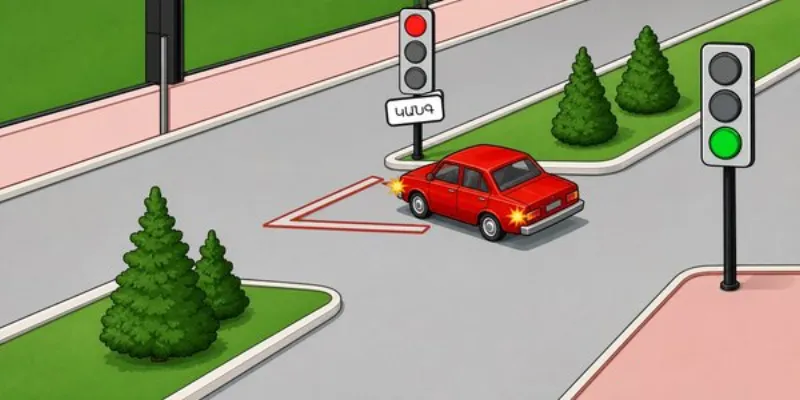
- Red.
- Green.
- Any signal.
Correct answer: Green. ABC · D/T
Why: Խաչմերուկում ավտոմոբիլի ընթացքի ուղղությամբ երկու լուսացույց է, երկրորդից առաջ՝
6.16 «Կանգ-գիծ» նշան։ Կետ 93-ով, երբ խաչմերուկի լուսացույցից առաջ կանգ-գիծ կամ
6.16 նշան կա, վարորդը ղեկավարվում է յուրաքանչյուր լուսացույցի ազդանշաններով, ուստի հետադարձը կարող է ավարտել միայն կանաչի դեպքում (կետ 7, 1-ին ենթակետ)։
Signs in this question: 6.16
In tests: ABC 45, D/T 9
16. What does the combination of yellow and red traffic signals mean?
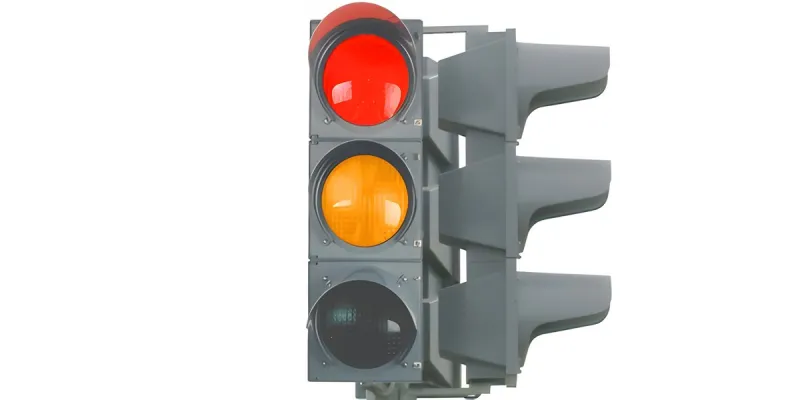
- Traffic may begin.
- Traffic is prohibited, and the signals indicate that the green signal will turn on shortly.
- A vehicle with a special audible signal and flashing beacons activated is approaching the intersection.
Correct answer: Traffic is prohibited, and the signals indicate that the green signal will turn on shortly. ABC · D/T
Why: Կարմիր և դեղին ազդանշանների զուգակցումն արգելում է երթևեկությունը և տեղեկացնում կանաչի առաջիկա միանալու մասին (կետ 7, 6-րդ ենթակետ)։
In tests: ABC 17, D/T 51
17. In which image is the driver making the turn correctly?
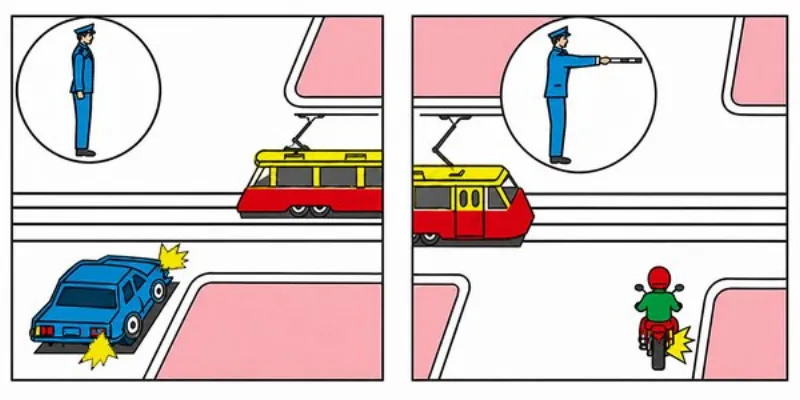
- In the left image.
- In the right image.
Correct answer: In the left image. ABC · D/T
Why: Ձախ նկարում կարգավորողի ձեռքերն իջեցված են, կողքի կապույտ ավտոմոբիլն աջ է թեքվում, ինչը թույլատրված է (կետ 16, 2-րդ ենթակետ «ա»)։ Աջ նկարում աջ ձեռքը պարզված է առաջ, կրծքի կողմի մոտոցիկլավարը ձախ է թեքվում, մինչդեռ կրծքի կողմից թույլատրվում է միայն աջ (կետ 16, 3-րդ ենթակետ «բ»)։ Ճիշտ է ձախ նկարը։
In tests: ABC 46, D/T 34
18. When the traffic signal is green, must the tram operator yield to vehicles approaching from other directions?
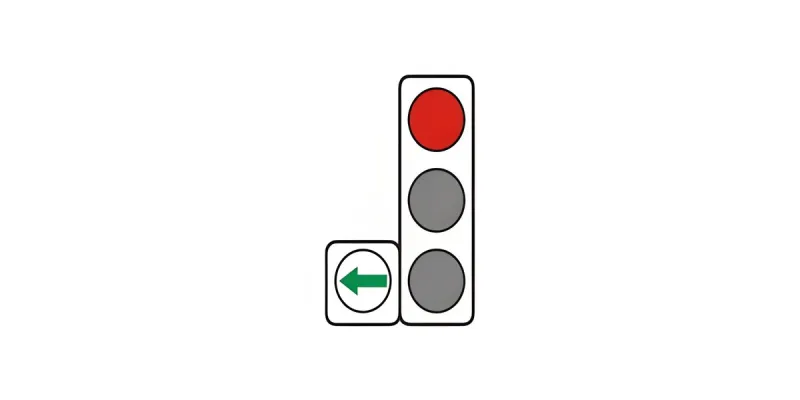
- Yes.
- No.
Correct answer: Yes. ABC · D/T
Why: Լուսացույցը կարմիր է՝ ձախ ուղղված կանաչ լրացուցիչ սեկցիայով։ Կետ 92-ով կարմիրի հետ միացված լրացուցիչ սեկցիայի սլաքի ուղղությամբ երթևեկող տրամվայի վարորդը զիջում է այլ ուղղություններից մոտեցողներին (այլ վարորդների համար՝ կետ 91)։ Պարտավոր է։
In tests: ABC 32
19. This traffic signal is used to regulate traffic:

- Across the entire width of the roadway.
- In roadway lanes where the direction of traffic may change to the opposite direction.
- Only in lanes designated for public transit vehicles.
Correct answer: In roadway lanes where the direction of traffic may change to the opposite direction. ABC · D/T
Why: Դարձափոխային լուսացույցը («X»-աձև կարմիր և դեպի ներքև սլաքով կանաչ ազդանշաններ) կարգավորում է երթևեկությունն այն գոտիներով, որոնց ուղղությունը կարող է փոխվել հանդիպակացի (կետ 13)։
In tests: ABC 33, ABC 53
20. If the traffic controller’s right arm is extended forward, traffic of non-rail vehicles from the controller’s left side is permitted:
- In all directions.
- To the left only.
Correct answer: In all directions. ABC · D/T
Why: Կարգավորողի աջ ձեռքն առաջ պարզված է. կետ 16.3-ով նրա ձախ կողմից ոչ ռելսագնաց տրանսպորտային միջոցների երթևեկությունը թույլատրվում է բոլոր ուղղություններով, ոչ միայն դեպի ձախ։
In tests: ABC 8
21. Which vehicles are permitted to proceed under this traffic signal?
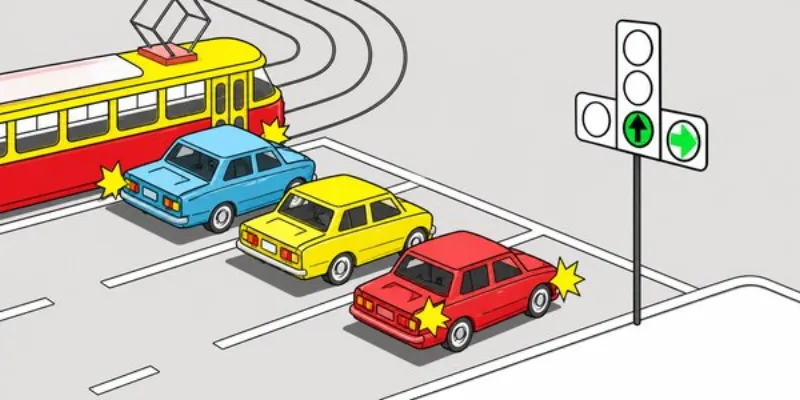
- The tram, the yellow automobile, and the red automobile.
- The yellow and red automobiles.
- All vehicles.
Correct answer: The yellow and red automobiles. ABC · D/T
Why: Հիմնական կանաչ ազդանշանի վրա ուղիղ ուղղված սև ուրվագծային սլաք է, միացված է աջ սլաքով լրացուցիչ սեկցիան. թույլատրվում է ուղիղ (դեղին) և աջ (կարմիր) (կետ 10, 8)։ Ձախ սեկցիան անջատված է, ուստի ձախ թեքվող կապույտին և տրամվային երթևեկությունն արգելված է (կետ 8)։
In tests: ABC 10, D/T 41
22. Traffic is permitted for:
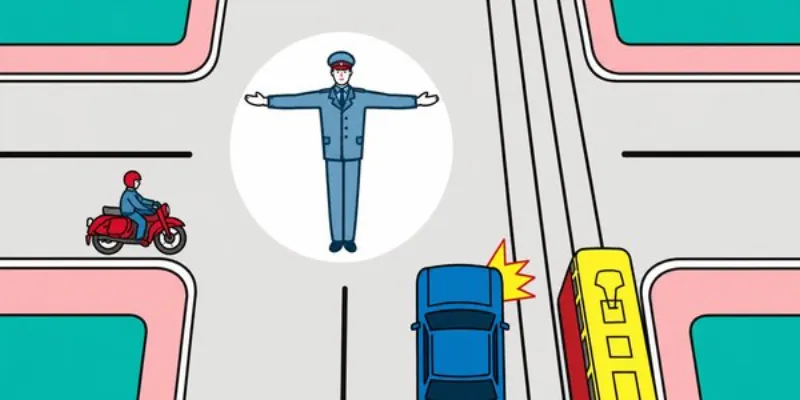
- All vehicles.
- The motorcycle.
- The automobile and the motorcycle.
Correct answer: The motorcycle. ABC · D/T
Why: Կարգավորողի ձեռքերը պարզված են կողմ, լուսացույց և նշաններ չկան։ Նրա կողքից մոտեցող մոտոցիկլին թույլատրվում է ուղիղ և աջ (կետ 16.2 «ա»), իսկ կրծքի կամ թիկունքի կողմից մոտեցող կապույտ ավտոմոբիլին և տրամվային երթևեկությունն արգելված է («բ»)։ Թույլատրվում է միայն մոտոցիկլին։
In tests: ABC 23
23. If the traffic controller’s arms are extended to the sides or lowered, traffic of non-rail vehicles from the controller’s left and right sides is permitted:
- Straight ahead and to the right.
- Straight ahead only.
Correct answer: Straight ahead and to the right. ABC · D/T
Why: Կետ 16.2-ով, երբ կարգավորողի ձեռքերը կողմ են պարզված կամ իջեցված, նրա ձախ և աջ կողմերից ոչ ռելսագնաց տրանսպորտային միջոցների երթևեկությունը թույլատրվում է ուղիղ և դեպի աջ։
In tests: ABC 42, ABC 51, D/T 7
24. Which vehicle driver has the right-of-way?
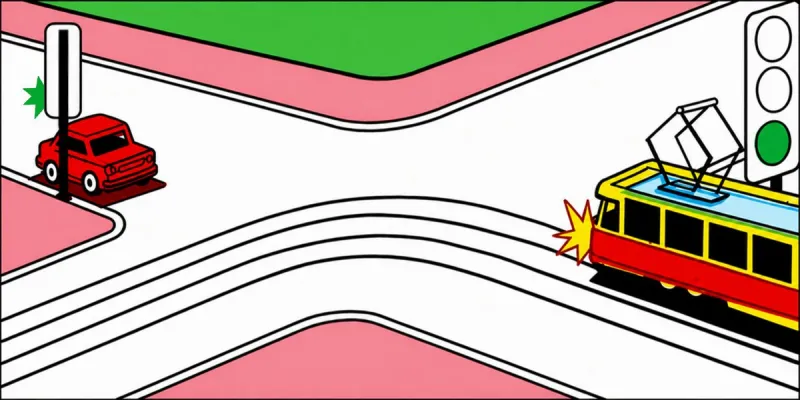
- The automobile driver.
- The tram operator.
Correct answer: The tram operator. ABC · D/T
Why: Երկու լուսացույցներն էլ կանաչ են, նշաններ չկան։ Կետ 92-ով, երբ ազդանշանները թույլատրում են տրամվայի և ոչ ռելսագնաց միջոցի միաժամանակյա երթևեկություն, առավելությունը տրամվայինն է՝ անկախ ուղղությունից։
In tests: ABC 41, ABC 54
25. Traffic is prohibited for:
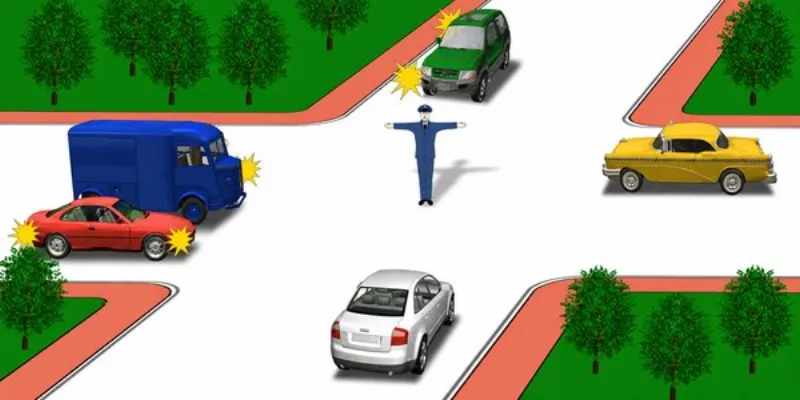
- The green and white automobiles.
- The white, blue, and green automobiles.
- The white and yellow automobiles.
- The green and yellow automobiles.
Correct answer: The white, blue, and green automobiles. ABC · D/T
Why: Կարգավորողի ձեռքերը պարզված են կողմ, լուսացույց և նշաններ չկան։ Կրծքի կողմի սպիտակին և թիկունքի կանաչին երթևեկությունն արգելված է (կետ 16, 2-րդ ենթակետ «բ»), կողքի կապույտ բեռնատարը ձախ է թեքվում, ինչը կողքից չի թույլատրվում («ա»)։ Աջ թեքվող կարմիրն ու ուղիղ գնացող դեղինը կարող են անցնել։ Սպիտակին, կապույտին և կանաչին։
In tests: ABC 16
26. When this traffic signal is red, traffic is prohibited:
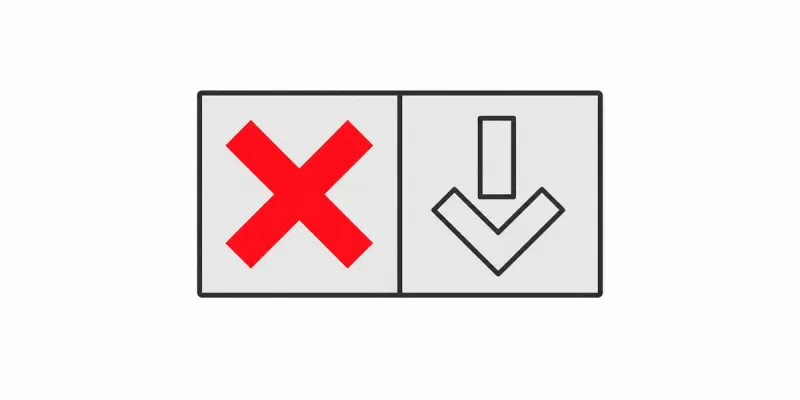
- Across the entire width of the roadway.
- At a speed not exceeding 50 km/h.
- In the lane over which the signal is located.
Correct answer: In the lane over which the signal is located. ABC · D/T
Why: Դարձափոխային լուսացույցի «X»-աձև կարմիր ազդանշանն արգելում է երթևեկությունն այն գոտիով, որի վերևում այն տեղակայված է (կետ 13)։
In tests: ABC 6, ABC 55
27. What is the meaning of the circular flashing green traffic signal?
- It indicates that entering the intersection is prohibited.
- It permits traffic and indicates that its display period is ending and a prohibitory signal will be activated shortly.
Correct answer: It permits traffic and indicates that its display period is ending and a prohibitory signal will be activated shortly. ABC · D/T
Why: Կետ
7.2-ով կանաչ թարթող ազդանշանը թույլատրում է երթևեկությունը և տեղեկացնում, որ դրա ժամկետը լրանում է, և շուտով կմիանա արգելող ազդանշանը։
In tests: ABC 18, ABC 49, D/T 2
28. The vehicles will proceed through the intersection in the following order:
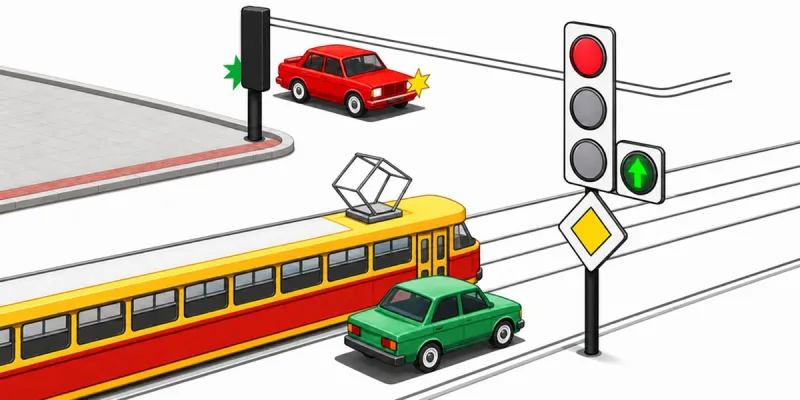
- The tram, the red automobile, the green automobile.
- The red automobile, then the tram simultaneously with the green automobile.
- The tram simultaneously with the green automobile, then the red automobile.
Correct answer: The red automobile, then the tram simultaneously with the green automobile. ABC · D/T
Why: Նկարում և՛ աշխատող լուսացույցներ են, և՛
2.1 «Գլխավոր ճանապարհ» նշան. լուսացույցները գերակայում են առավելության նշանին (կետ 173)։ Կարմիր ավտոմոբիլն ընթանում է իր լուսացույցի հիմնական կանաչով։ Տրամվայի և կանաչ ավտոմոբիլի լուսացույցը կարմիր է՝ միացված կանաչ լրացուցիչ սեկցիայով, ուստի երկուսն էլ զիջում են այլ ուղղությունից ընթացողին (կետ 91, տրամվայի համար՝ կետ 92) և անցնում միաժամանակ. նախ կարմիրը, ապա տրամվայը կանաչի հետ։
Signs in this question: 2.1
In tests: ABC 45
29. Which answer correctly identifies the vehicles that are permitted to proceed?
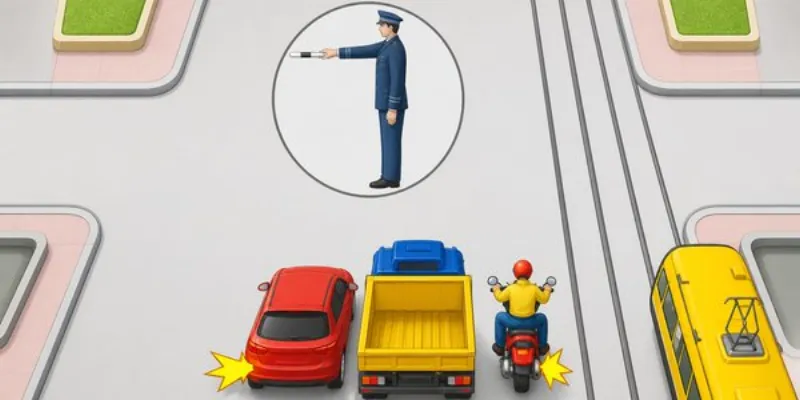
- The automobiles and the motorcycle.
- All vehicles.
- The automobiles and the tram.
Correct answer: The automobiles and the motorcycle. ABC · D/T
Why: Կարգավորողի աջ ձեռքը պարզված է առաջ, բոլոր տրանսպորտային միջոցները մոտենում են նրա ձախ կողմից, լուսացույց և նշաններ չկան։ Կետ 16-ի 3-րդ ենթակետի «ա»-ով ձախ կողմից ոչ ռելսագնաց միջոցներին (ավտոմոբիլներ, մոտոցիկլ) թույլատրվում է բոլոր ուղղություններով, տրամվային՝ միայն ձախ։ Ավտոմոբիլները և մոտոցիկլը։
In tests: ABC 8
30. If the traffic controller’s right arm is extended forward, traffic of non-rail vehicles from the controller’s left side is permitted:
- Straight ahead and to the left.
- In all directions.
Correct answer: In all directions. ABC · D/T
Why: Կետ 16.3-ով, երբ կարգավորողի աջ ձեռքն առաջ է պարզված, նրա ձախ կողմից ոչ ռելսագնաց տրանսպորտային միջոցների երթևեկությունը թույլատրվում է բոլոր ուղղություններով։
In tests: ABC 43, ABC 55, D/T 32
31. Traffic is prohibited for:
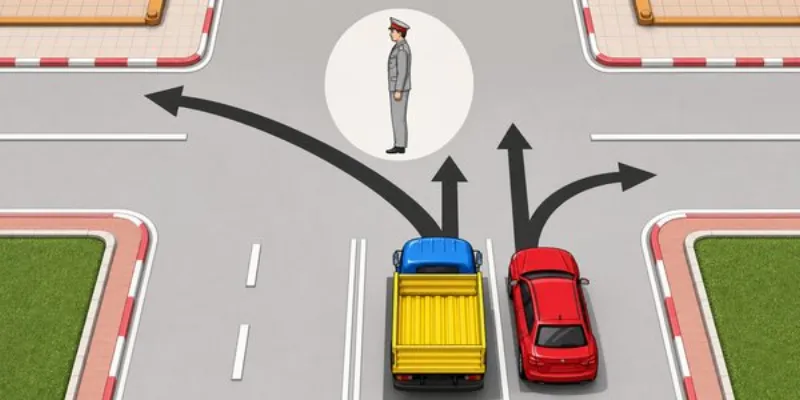
- The blue-and-yellow automobile when proceeding to the left.
- The blue-and-yellow automobile when proceeding straight ahead, and the red automobile when proceeding straight ahead and to the right.
- The red automobile.
Correct answer: The blue-and-yellow automobile when proceeding to the left. ABC · D/T
Why: Կարգավորողի ձեռքերն իջեցված են, երկու ավտոմոբիլները մոտենում են նրա կողքից, լուսացույց և նշաններ չկան։ Կետ 16-ի 2-րդ ենթակետի «ա»-ով կողքից ոչ ռելսագնաց միջոցներին թույլատրվում է միայն ուղիղ և աջ, ուստի կապտադեղինին ձախ շրջադարձն արգելված է, իսկ կարմիրի ուղիղ և աջ երթևեկությունը թույլատրված է։
In tests: ABC 34, ABC 50
32. In which direction is traffic permitted?
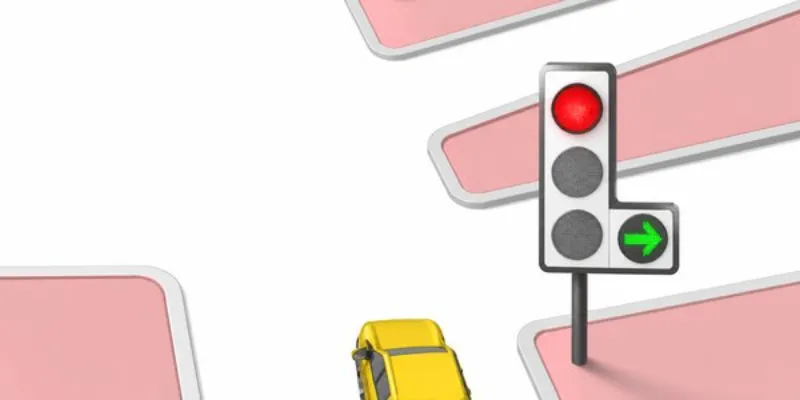
- Straight ahead and to the right through the first passage.
- To the right through the first passage.
- To the right through the second passage.
- To the right through the first and second passages.
Correct answer: To the right through the first passage. ABC · D/T
Why: Հիմնական ազդանշանը կարմիր է, միացված է աջ սլաքով կանաչ լրացուցիչ սեկցիան, նշաններ չկան։ Կարմիրն արգելում է ուղիղ երթևեկությունը (կետ 7, 5-րդ ենթակետ), սլաքը թույլատրում է միայն իր ցույց տված ուղղությունը՝ աջ (կետ 8), որը բաժանարար գոտով ճանապարհին կատարվում է առաջին (մոտակա) անցումով։
In tests: ABC 28, D/T 24
33. Which vehicle will proceed through the intersection first?
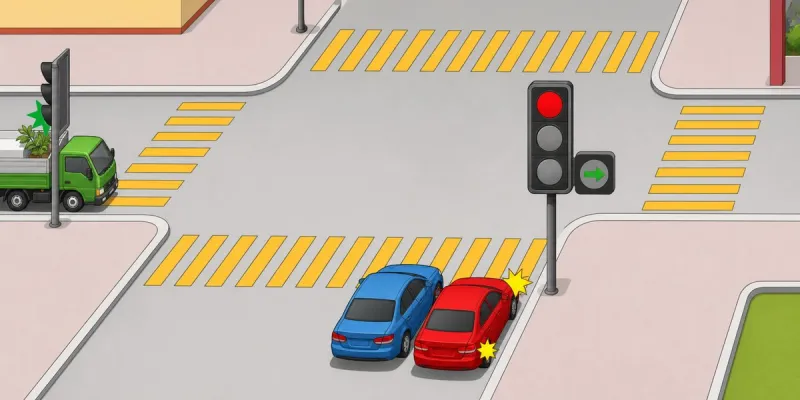
- The red automobile.
- The blue automobile.
- The green automobile.
Correct answer: The green automobile. ABC · D/T
Why: Երկու լուսացույց, նշաններ չկան, անցումները նշված են
1.14.1 «Զեբր» գծանշմամբ։ Կանաչ ավտոմոբիլն ընթանում է հիմնական կանաչով (կետ 7, 1-ին ենթակետ)։ Կարմիրն աջ է թեքվում կարմիրի հետ միացված լրացուցիչ սեկցիայի սլաքով և կետ 91-ով զիջում է այլ ուղղություններից ընթացողներին, կապույտի ազդանշանը կարմիր է (կետ 7, 5-րդ ենթակետ)։ Առաջինն անցնում է կանաչը։
In tests: ABC 17, D/T 32
34. In which image is the driver making the turn correctly?
- In the left image.
- In the right image.
- In both images.
Correct answer: In the left image. ABC · D/T
Why: Ձախ նկարում կարգավորողի ձեռքերն իջեցված են, կողքի կապույտ ավտոմոբիլն աջ է թեքվում, ինչը թույլատրված է (կետ 16, 2-րդ ենթակետ «ա»)։ Աջ նկարում աջ ձեռքը պարզված է առաջ, կրծքի կողմի մոտոցիկլավարը ձախ է թեքվում, մինչդեռ կրծքի կողմից թույլատրվում է միայն աջ (կետ 16, 3-րդ ենթակետ «բ»)։ Միայն ձախ նկարում։
In tests: ABC 48
35. The red automobile will proceed through the intersection:
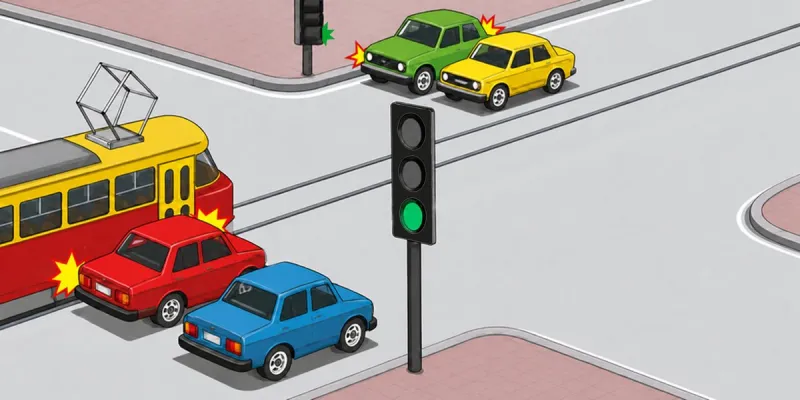
- First.
- Second.
- Third.
- Last.
Correct answer: Last. ABC · D/T
Why: Երկու լուսացույցներն էլ կանաչ են, նշաններ չկան։ Կարմիր ավտոմոբիլը ձախ է թեքվում կանաչով և կետ 90-ով զիջում է հանդիպակաց ուղիղ գնացող կանաչին ու դեղինին, իսկ կետ 92-ով՝ նաև տրամվային, որը միաժամանակյա երթևեկության դեպքում առավելություն ունի։ Կապույտն ուղիղ է անցնում։ Կարմիրն անցնում է վերջինը։
In tests: ABC 22, D/T 6
36. The automobile will proceed through the intersection:
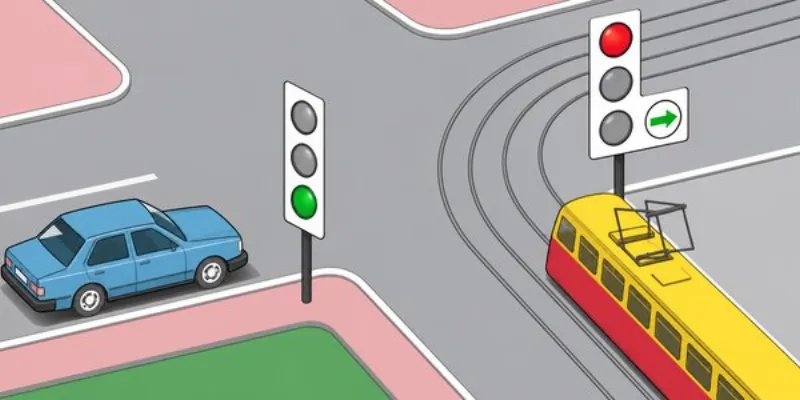
- First.
- Second.
Correct answer: First. ABC · D/T
Why: Երկու լուսացույց, նշաններ չկան։ Տրամվայն աջ է թեքվում կարմիրի հետ միացված լրացուցիչ սեկցիայի սլաքով, ուստի կետ 92-ով զիջում է հիմնական կանաչով ընթացող ավտոմոբիլին. ավտոմոբիլն անցնում է առաջինը։
In tests: ABC 39, D/T 38
37. Traffic is permitted for:
- The blue-and-yellow automobile straight ahead, and the red automobile to the right.
- The red automobile straight ahead and to the right, and the blue-and-yellow automobile straight ahead.
- Both automobiles straight ahead only.
Correct answer: The red automobile straight ahead and to the right, and the blue-and-yellow automobile straight ahead. ABC · D/T
Why: Կարգավորողի ձեռքերն իջեցված են, երկու ավտոմոբիլները մոտենում են նրա կողքից, լուսացույց և նշաններ չկան։ Կետ 16-ի 2-րդ ենթակետի «ա»-ով կողքից թույլատրվում է միայն ուղիղ և աջ. աջ գոտու կարմիրին՝ ուղիղ և աջ, ձախ գոտու կապտադեղինին՝ միայն ուղիղ (ձախ շրջադարձն արգելված է)։
In tests: ABC 42, D/T 36
38. Traffic is permitted for:
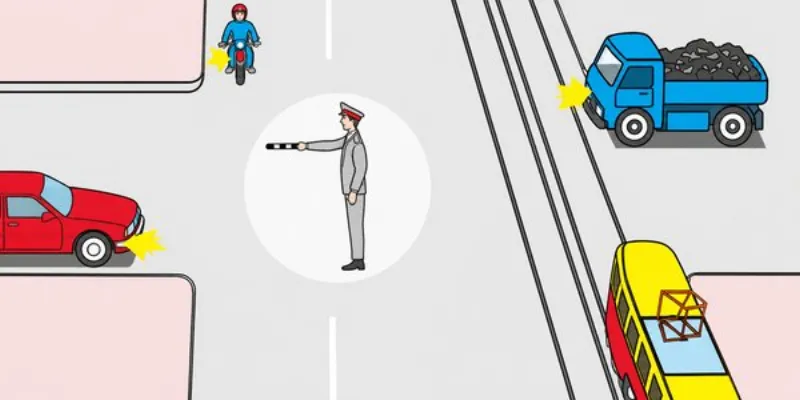
- The red automobile.
- The motorcycle.
- The tram and the red automobile.
- The tram.
- The blue automobile.
Correct answer: The red automobile. ABC · D/T
Why: Կարգավորողի աջ ձեռքն առաջ է պարզված, նա կանգնած է կրծքով դեպի կարմիր մեքենան։ Կրծքի կողմից թույլատրվում է միայն աջ շրջադարձ (կետ 16.3), և կարմիրը հենց աջ է թեքվում։ Մոտոցիկլը նրա աջ կողմից է, բեռնատարն ու տրամվայը՝ թիկունքից, որտեղից երթևեկությունն արգելված է (կետ 16.3)։
In tests: ABC 37, D/T 17
39. Is it permitted to proceed along the indicated path when the reversible traffic signals are off?
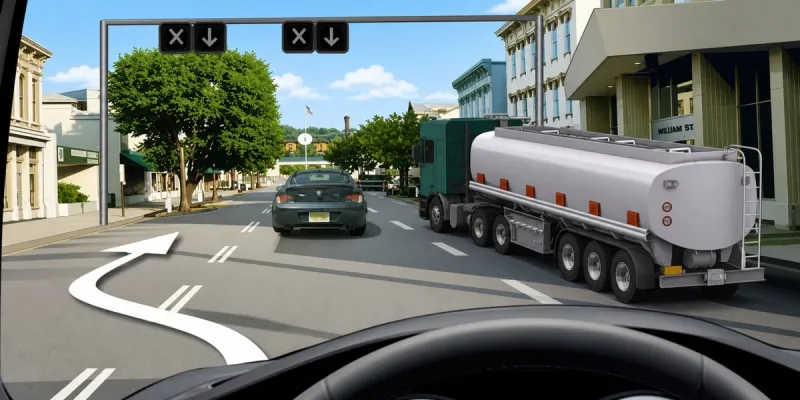
- Permitted.
- Permitted for the purpose of passing.
- Prohibited.
- Permitted if there are no oncoming vehicles.
Correct answer: Prohibited. ABC · D/T
Why: 1.9 գծանշմամբ սահմանված գոտու վերևի դարձափոխային լուսացույցներն անջատված են. կետ 13-ով այդ դեպքում մուտքն այդ գոտի արգելված է, ուստի նշված հետագծով երթևեկելն արգելվում է։
In tests: ABC 21, D/T 13
40. In this situation, which vehicles are permitted to continue?
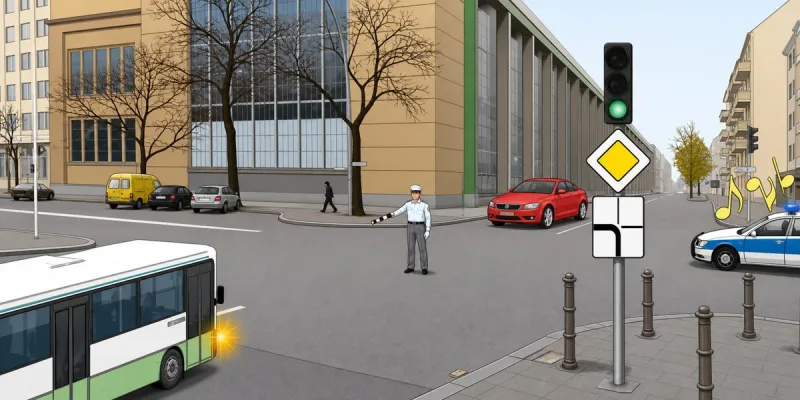
- The passenger car straight ahead, the patrol vehicle in all directions, and the bus to the right only.
- Only the patrol vehicle, in all directions.
- The patrol vehicle in all directions and the bus to the right only.
Correct answer: The patrol vehicle in all directions and the bus to the right only. ABC · D/T
Why: Նկարում և՛ կարգավորող է, և՛ կանաչ լուսացույց, և՛
2.1 նշան
8.13 ցուցանակով։ Կետ 20-ով կարգավորողի ազդանշանները գերակայում են թե՛ լուսացույցին, թե՛ նշանին։ Կարգավորողի աջ ձեռքը պարզված է առաջ. նրա կրծքի կողմից մոտեցող ավտոբուսին թույլատրվում է միայն աջ (կետ 16.3 «բ»), ձախ կողմից մոտեցող պարեկային ավտոմոբիլին՝ բոլոր ուղղություններով («ա»), իսկ թիկունքի կողմի կարմիր ավտոմոբիլին երթևեկությունն արգելված է («գ»)։ Հատուկ ազդանշանները կարգավորողի ազդանշաններից ազատում չեն տալիս (կետ 26)։
Signs in this question: 2.1, 8.13
In tests: ABC 43
41. What does the traffic signal indicate?
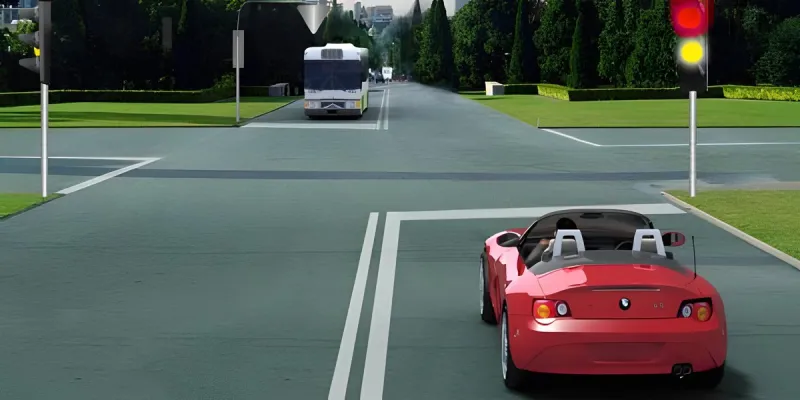
- The traffic signal is malfunctioning.
- When proceeding through the intersection, drivers must follow the requirements of the traffic sign.
- Drivers must wait for a permissive traffic signal.
Correct answer: Drivers must wait for a permissive traffic signal. ABC · D/T
Why: Կարմիր և դեղին ազդանշանների զուգակցումն արգելում է երթևեկությունը և տեղեկացնում կանաչի առաջիկա միանալու մասին (կետ 7, 6-րդ ենթակետ). լուսացույցն անսարք չէ, վարորդները պետք է սպասեն թույլատրող ազդանշանին։
In tests: ABC 27, D/T 48
42. Is the passenger-car driver permitted to pass the bus when the reversible traffic signal is off?
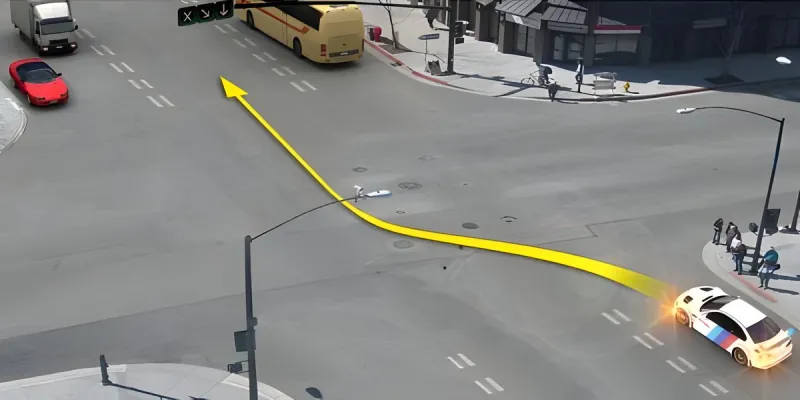
- Permitted.
- Permitted if the bus is moving at 30 km/h.
- Permitted if there are no oncoming vehicles.
- Prohibited.
Correct answer: Prohibited. ABC
Why: 1.9 գծանշմամբ սահմանված գոտու վերևի դարձափոխային լուսացույցն անջատված է, ուստի կետ 13-ով այդ գոտի մուտք գործելն ավտոբուսից առաջ անցնելու համար արգելվում է։
In tests: ABC 24
43. Which vehicle must yield?
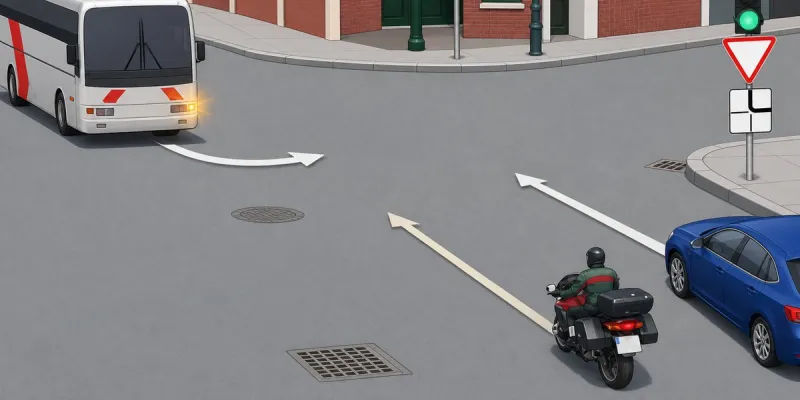
- The bus.
- The motorcycle and the passenger car.
Correct answer: The bus. ABC · D/T
Why: Նկարում և՛ աշխատող կանաչ լուսացույց է, և՛
2.4 «Զիջեք ճանապարհը» նշան
8.13 ցուցանակով։ Աշխատող լուսացույցի դեպքում խաչմերուկը կարգավորվող է (կետ 89), և լուսացույցը գերակայում է առավելության նշանին (կետ 173)։ Կանաչով ձախ թեքվող ավտոբուսը կետ 90-ով զիջում է հանդիպակաց ուղիղ գնացող մոտոցիկլին և թեթև մարդատարին. զիջում է ավտոբուսը։
Signs in this question: 2.4, 8.13
In tests: ABC 31, D/T 29
44. The following drivers are permitted to continue along the indicated paths:
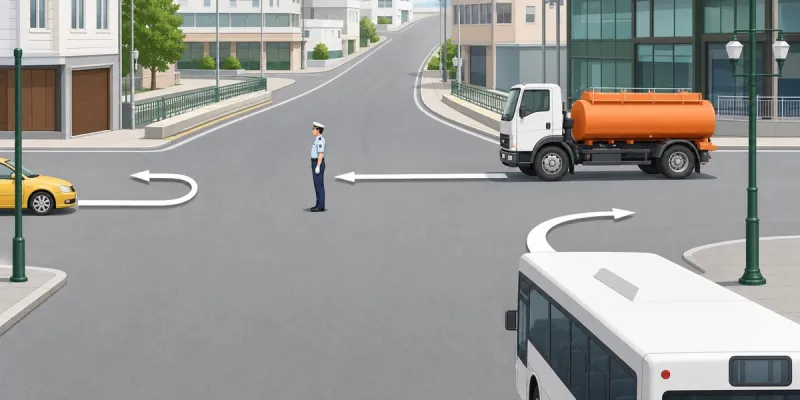
- The truck driver.
- The bus driver and the truck driver.
- The passenger-car driver and the bus driver.
- The bus driver.
Correct answer: The bus driver. ABC · D/T
Why: Կարգավորողի ձեռքերն իջեցված են, կրծքով դեպի ավտոցիստեռնն է, լուսացույց և նշաններ չկան։ Կրծքի կողմի բեռնատարին և թիկունքի դեղին մեքենային երթևեկությունն արգելված է (կետ 16, 2-րդ ենթակետ «բ»), կողքի ավտոբուսին թույլատրվում է նշված աջ շրջադարձը («ա»)։ Միայն ավտոբուսի վարորդը։
In tests: ABC 12, D/T 23
45. The vehicles will proceed through the intersection in the following order:
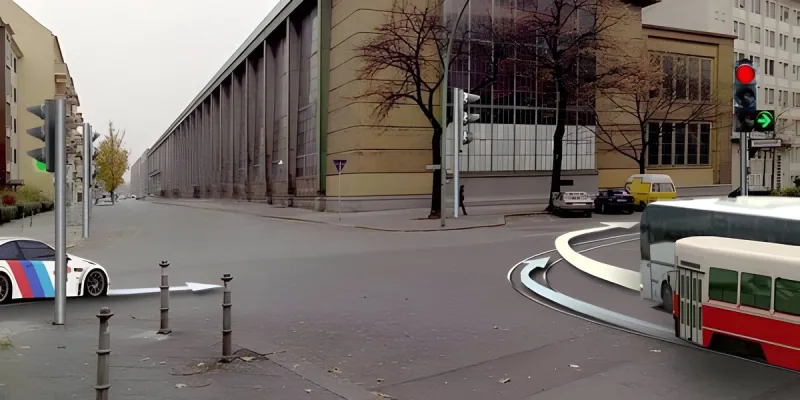
- The tram, the passenger car, the bus.
- The passenger car, the tram, the bus.
- The passenger car, the bus, the tram.
Correct answer: The passenger car, the tram, the bus. ABC · D/T
Why: Միայն լուսացույցներ են, նշաններ չկան։ Թեթև մարդատարն ուղիղ է անցնում կանաչով, տրամվայն ու ավտոբուսն աջ են թեքվում կարմիրի հետ միացված լրացուցիչ սեկցիայի սլաքով, ուստի երկուսն էլ զիջում են նրան (կետ 91, 92), իսկ նույն ազդանշանով ընթացող տրամվայն առավելություն ունի ավտոբուսի նկատմամբ (կետ 92). թեթև մարդատար, տրամվայ, ավտոբուս։
In tests: ABC 28
46. In which direction may the driver continue?
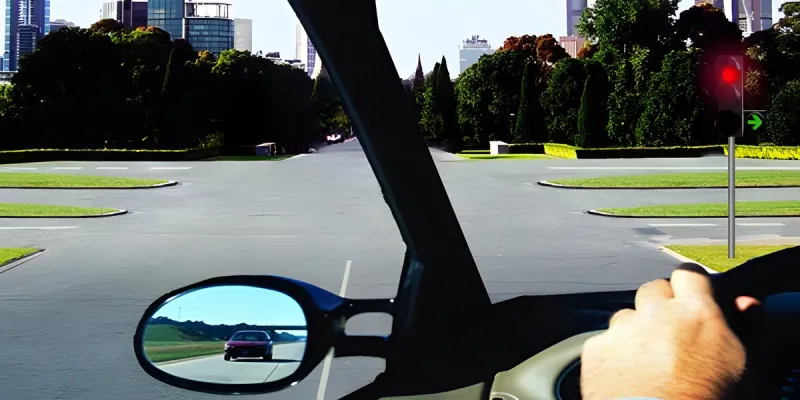
- To the right through the first passage.
- To the right through the first and second passages.
- To the left through the first passage.
Correct answer: To the right through the first passage. ABC · D/T
Why: Հիմնական ազդանշանը կարմիր է, միացված է աջ սլաքով կանաչ լրացուցիչ սեկցիան, նշաններ չկան։ Կարմիրն արգելում է ուղիղ և ձախ երթևեկությունը (կետ 7, 5-րդ ենթակետ), սլաքը թույլատրում է միայն աջ շրջադարձ (կետ 8)՝ բաժանարար գոտով ճանապարհի առաջին (մոտակա) անցումով։
In tests: ABC 31
47. When making a right turn, the driver must yield to:
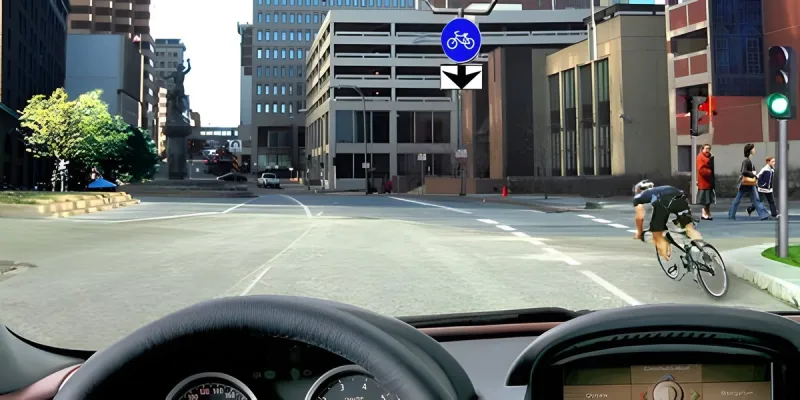
- Only the bicyclist.
- Only the pedestrians.
- The pedestrians and the bicyclist.
- The driver may continue without stopping.
Correct answer: The pedestrians and the bicyclist. ABC · D/T
Why: Կանաչ լուսացույց, աջում
4.4 «Հեծանվային արահետ» նշանը
8.2.3 «Ազդման գոտի» ցուցանակով, կողմնային փողոցն անցնում են հետիոտներ և հեծանվորդ։ Աջ շրջադարձի ժամանակ խաչմերուկից դուրս գալիս վարորդը կետ 87-ով խոչընդոտ չպետք է ստեղծի հետիոտներին և պետք է զիջի հեծանվային արահետով ընթացող հեծանվորդին։ Հետիոտներին և հեծանվորդին։
Signs in this question: 4.4, 8.2.3
In tests: ABC 7
48. The vehicles will proceed through the intersection in the following order:
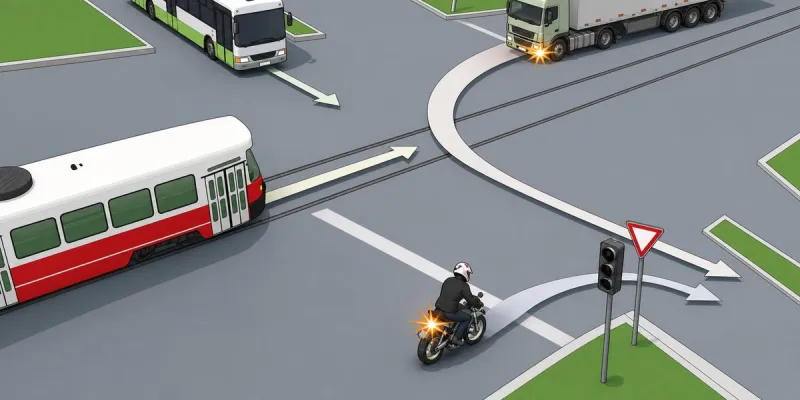
- The tram, the bus, the truck, the motorcycle.
- The bus, the truck, the tram, the motorcycle.
- The bus, then the tram and the motorcycle, then the truck.
Correct answer: The bus, then the tram and the motorcycle, then the truck. ABC · D/T
Why: Լուսացույցն անջատված է, ուստի խաչմերուկը չկարգավորվող է (կետ 95) և գործում է մոտոցիկլի թևի
2.4 «Զիջեք ճանապարհը» նշանը։ Հատվող գլխավոր ճանապարհի ավտոբուսն անցնում է առաջինը (կետ 96), ապա տրամվայն ու մոտոցիկլը միաժամանակ, քանի որ նրանց ուղիները չեն հատվում, իսկ ձախ թեքվող բեռնատարը զիջում է (կետ 99) և անցնում վերջինը։
Signs in this question: 2.4
In tests: ABC 32, ABC 52, D/T 14
49. In this situation, to which tram operator must you yield?
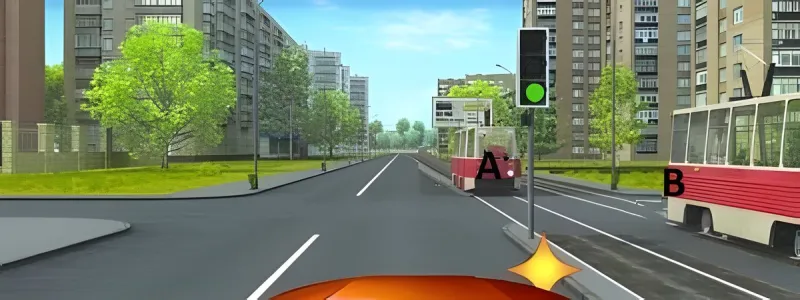
- Neither of them.
- Both tram operators.
- Only A.
Correct answer: Both tram operators. ABC · D/T
Why: Բոլորի համար կանաչ է, նշաններ չկան։ Կետ 92-ով, երբ ազդանշանները թույլատրում են տրամվայի և ոչ ռելսագնաց միջոցի միաժամանակյա երթևեկություն, առավելությունը տրամվայինն է՝ անկախ ուղղությունից, ուստի զիջում ենք և՛ A, և՛ B տրամվայներին։
In tests: ABC 25
50. Which driver has the right-of-way?
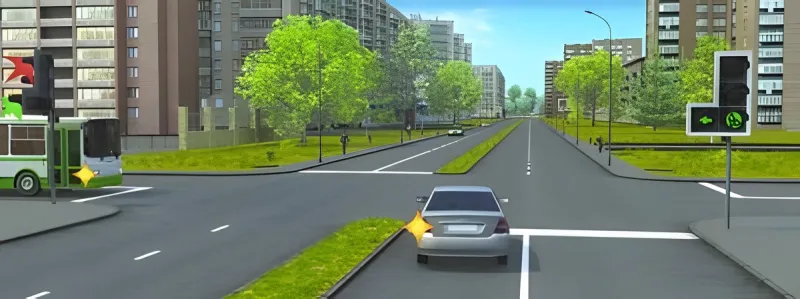
- The bus driver.
- The passenger-car driver.
Correct answer: The passenger-car driver. ABC · D/T
Why: Միայն լուսացույցներ են, նշաններ չկան։ Թեթև մարդատարը ձախ է թեքվում հիմնական կանաչով և միացված ձախ սեկցիայով (կետ 8), ավտոբուսն ընթանում է կարմիրի հետ միացված լրացուցիչ սեկցիայի սլաքով և կետ 91-ով զիջում է այլ ուղղություններից ընթացողներին։ Առաջնահերթությունը թեթև մարդատարի վարորդինն է։
In tests: ABC 29, D/T 13
51. In this situation, when making a left turn:
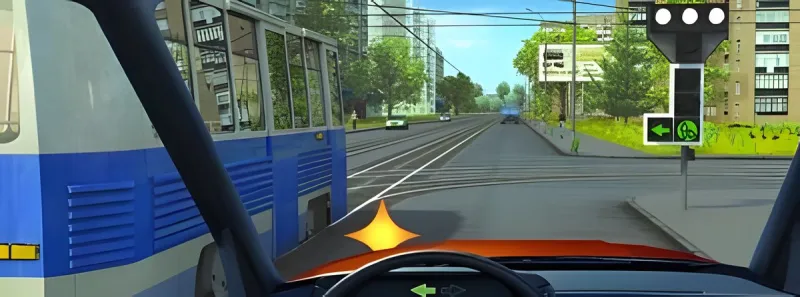
- I will yield to the tram.
- I will proceed through the intersection first.
Correct answer: I will proceed through the intersection first. ABC · D/T
Why: Տրամվայի «T»-աձև լուսացույցի միայն վերևի ազդանշաններն են միացված՝ առանց ներքևի, ուստի կետ 14-ով տրամվայի երթևեկությունն արգելված է. մեր լուսացույցը կանաչ է՝ միացված ձախ սեկցիայով (կետ 8)։ Խաչմերուկն անցնում ենք առաջինը։
In tests: ABC 3, D/T 2
52. What should you do in this situation?
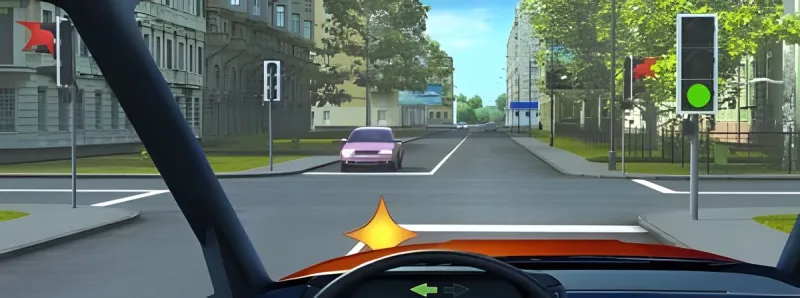
- Enter the intersection and, after yielding to the passenger-car driver, proceed through the intersection.
- Wait before the “Stop Line” until the passenger-car driver has proceeded through the intersection.
- Proceed first.
Correct answer: Enter the intersection and, after yielding to the passenger-car driver, proceed through the intersection. ABC · D/T
Why: Կանաչ լուսացույց, խաչմերուկից առաջ՝
1.12 «Կանգ-գիծ» գծանշում, նշաններ չկան։ Կանաչով ձախ թեքվող վարորդը կարող է մուտք գործել խաչմերուկ, բայց կետ 90-ով պետք է զիջի հանդիպակաց ուղիղ գնացող թեթև մարդատարին. կանգ-գծի առջև սպասել պարտադիր չէ։
In tests: ABC 46, ABC 49, D/T 35
53. Which driver violates the traffic rules when making the turn?
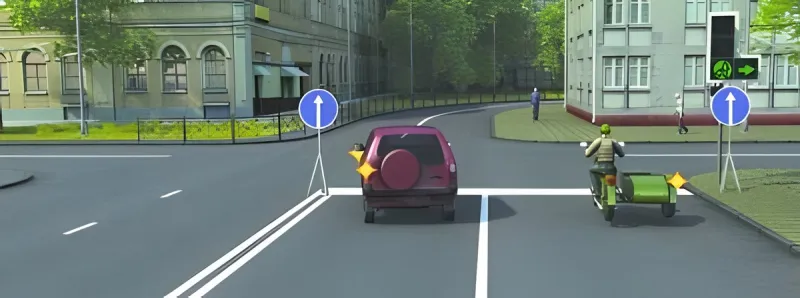
- The passenger-car driver.
- The driver of the motorcycle.
- Both drivers.
- No one.
Correct answer: Both drivers. ABC
Why: Երկու թևերում էլ կանաչ լուսացույցի տակ
4.1.1 «Երթևեկությունն ուղիղ» նշանն է. լուսացույցը թույլատրում է երթևեկությունը, բայց նշանը թույլատրում է միայն ուղիղ, ուստի շրջադարձ կատարող թե՛ թեթև մարդատարի, թե՛ մոտոցիկլի վարորդը խախտում է կանոնները։
Signs in this question: 4.1.1
In tests: ABC 22
54. In this situation, when making a right turn, must you yield?
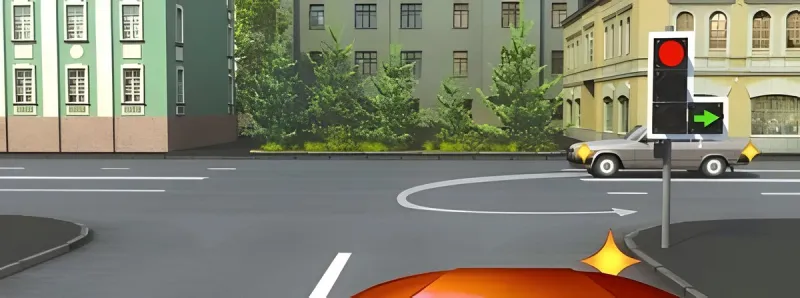
- Yes.
- No.
Correct answer: Yes. ABC · D/T
Why: Մեր լուսացույցը կարմիր է՝ միացված աջ սլաքով կանաչ սեկցիայով, նշաններ չկան։ Կարմիրի հետ միացված լրացուցիչ սեկցիայի սլաքով աջ թեքվելիս կետ 91-ով զիջում ենք կանաչով հետադարձ կատարող հանդիպակաց թեթև մարդատարին։ Պարտավոր ենք։
In tests: ABC 38, D/T 28
55. Is a right turn permitted in this situation?
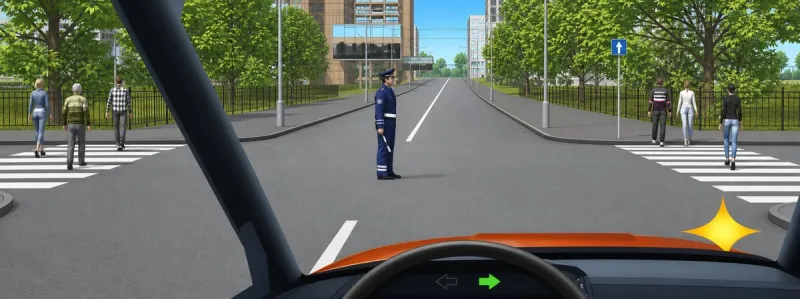
- Yes, provided you do not interfere with pedestrians.
- No.
Correct answer: Yes, provided you do not interfere with pedestrians. ABC · D/T
Why: Կարգավորողը մեզ կողքով է կանգնած, ձեռքերն իջեցված, լուսացույց և նշաններ չկան, կողմնային փողոցում
1.14.1 «Զեբր» անցումներ են։ Նրա կողքից թույլատրվում է ուղիղ և աջ (կետ 16, 2-րդ ենթակետ «ա»), հետիոտներին թույլատրվում է անցնել կարգավորողի կողքերից, ուստի աջ շրջադարձը թույլատրելի է՝ չխոչընդոտելով հետիոտներին (կետ 87)։
In tests: ABC 13, D/T 36
56. In this situation, must you yield to the tram operator?
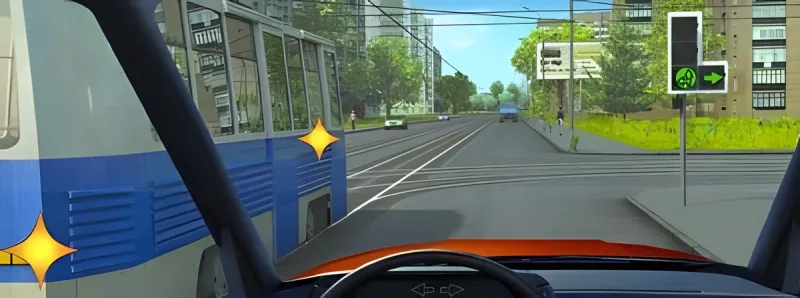
- No.
- Yes.
Correct answer: Yes. ABC · D/T
Why: Լուսացույցի կանաչը թույլատրում է և՛ մեր, և՛ կողքի տրամվայի երթևեկությունը։ Կետ 92-ով, երբ ազդանշանները թույլատրում են տրամվայի և ոչ ռելսագնացների միաժամանակյա երթևեկություն, առավելությունը տրամվայինն է՝ անկախ ուղղությունից. պարտավոր ենք զիջել։
In tests: ABC 34
57. When the green traffic signal turns on, the driver:
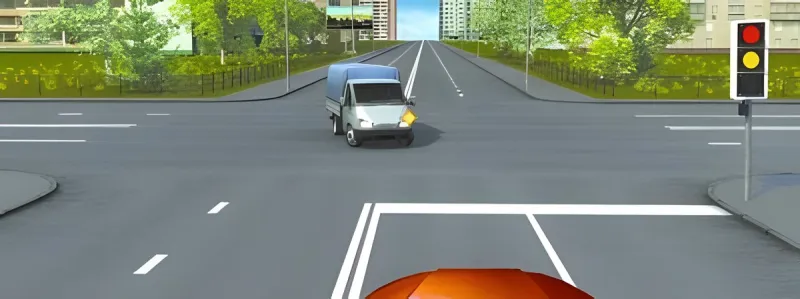
- Must yield to the truck driver.
- Has the right-of-way.
Correct answer: Must yield to the truck driver. ABC · D/T
Why: Մեր լուսացույցը կարմիր և դեղին է (կանաչը շուտով կմիանա, կետ 7, 6-րդ ենթակետ), առջևում
1.12 «Կանգ-գիծ» գծանշումն է, բեռնատարը դեռ անցնում է խաչմերուկը։ Կանաչի միանալու դեպքում կետ 94-ով զիջում ենք երթևեկելի մասի հատումը դեռ չավարտած բեռնատարին։
In tests: ABC 4, ABC 52, D/T 12
58. At this intersection, the driver:
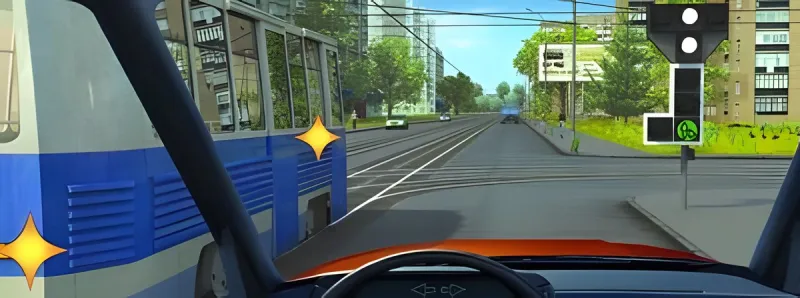
- Will proceed first.
- Must yield to the tram.
Correct answer: Will proceed first. ABC · D/T
Why: Տրամվայի «T»-աձև լուսացույցի միայն վերևի ազդանշաններն են միացված՝ առանց ներքևի, ուստի կետ 14-ով տրամվայի երթևեկությունն արգելված է. մեր լուսացույցը կանաչ է՝ միացված ձախ սեկցիայով (կետ 8)։ Անցնում ենք առաջինը։
In tests: ABC 19, D/T 14
59. When proceeding straight through the intersection, the driver:
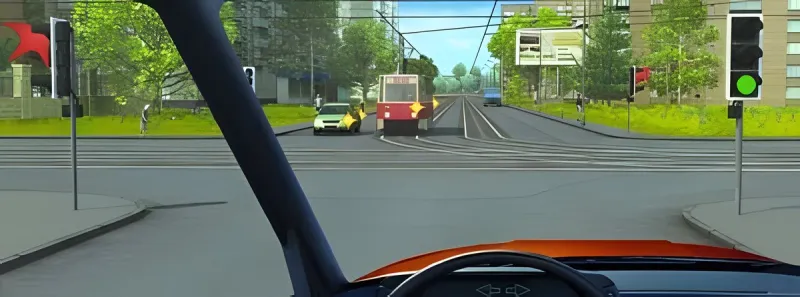
- May proceed first.
- Must yield to the tram.
- Must yield to both drivers.
Correct answer: Must yield to the tram. ABC · D/T
Why: Բոլորի համար կանաչ է, նշաններ չկան։ Ուղիղ անցնելիս զիջում ենք ձախ թեքվող հանդիպակաց տրամվային, քանի որ միաժամանակյա թույլատրող ազդանշանով ընթացող տրամվայն առավելություն ունի անկախ ուղղությունից (կետ 92), իսկ ձախ թեքվող հանդիպակաց թեթև մարդատարը կետ 90-ով զիջում է մեզ։ Միայն տրամվային։
In tests: ABC 12, ABC 54, D/T 15
60. When making the turn, the driver must yield to:
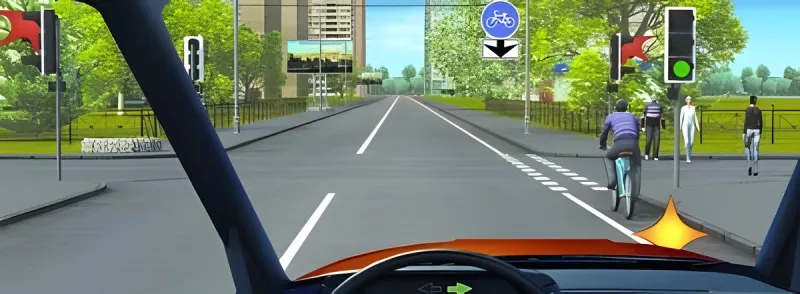
- Pedestrians only.
- The bicyclist.
- The bicyclist and the pedestrians.
Correct answer: The bicyclist and the pedestrians. ABC · D/T
Why: Կանաչ լուսացույց, աջում
4.4 «Հեծանվային արահետ» նշանը
8.2.3 «Ազդման գոտի» ցուցանակով, կողմնային փողոցն անցնում են հեծանվորդ և հետիոտներ։ Աջ շրջադարձի ժամանակ խաչմերուկից դուրս գալիս վարորդը կետ 87-ով զիջում է հեծանվային արահետով ընթացող հեծանվորդին և խոչընդոտ չի ստեղծում հետիոտներին։ Հեծանվորդին և հետիոտներին։
Signs in this question: 4.4, 8.2.3
In tests: ABC 15, D/T 45
61. When making a right turn, must you yield to the driver approaching in the oncoming lane?
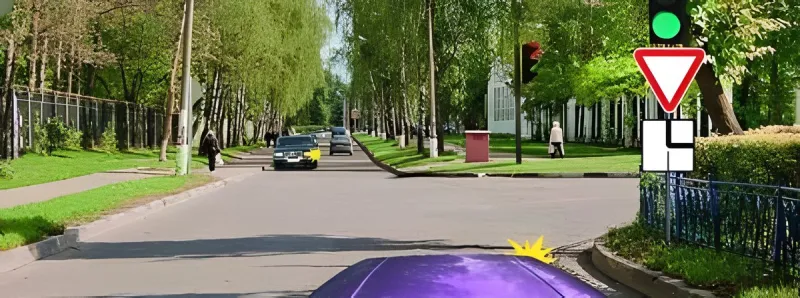
- Yes.
- No.
Correct answer: No. ABC · D/T
Why: Նկարում և՛ կանաչ լուսացույց է, և՛
2.4 «Զիջեք ճանապարհը» նշան
8.13 ցուցանակով։ Աշխատող լուսացույցի դեպքում խաչմերուկը կարգավորվող է (կետ 89), և լուսացույցը գերակայում է առավելության նշանին (կետ 173)։ Կանաչով հանդիպակացին զիջում են միայն ձախ շրջադարձի կամ հետադարձի ժամանակ (կետ 90). աջ շրջադարձի ժամանակ՝ ոչ։
Signs in this question: 2.4, 8.13
In tests: ABC 20, ABC 50
62. When proceeding straight through the intersection:
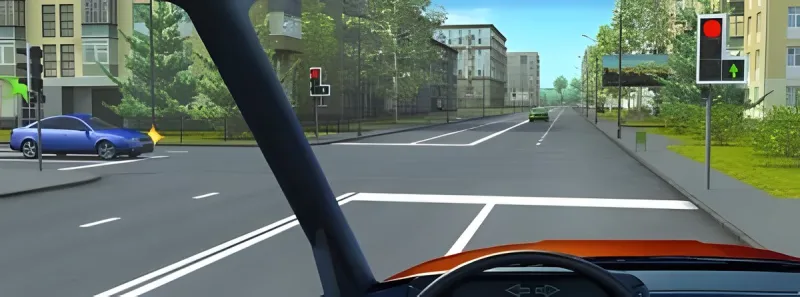
- We may proceed first.
- We must yield to the passenger-car driver.
Correct answer: We must yield to the passenger-car driver. ABC · D/T
Why: Մեր լուսացույցը կարմիր է՝ միացված ուղիղ սլաքով կանաչ սեկցիայով, առջևում
1.12 «Կանգ-գիծ» գծանշումն է, նշաններ չկան։ Կարմիրի հետ միացված լրացուցիչ սեկցիայի սլաքով ուղիղ անցնելիս կետ 91-ով զիջում ենք ձախից կանաչով մոտեցող թեթև մարդատարին։
In tests: ABC 37
63. When making a left turn, you must yield to:
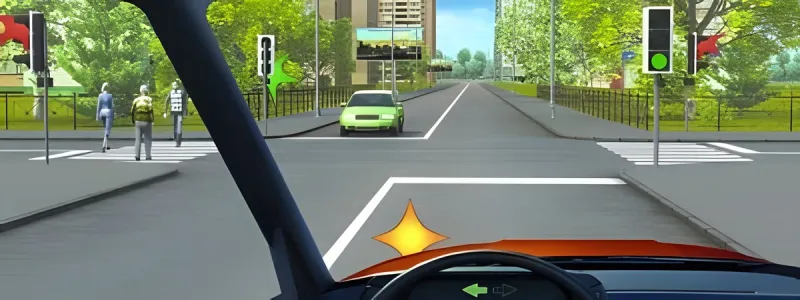
- Only the passenger-car driver.
- Pedestrians only.
- The passenger-car driver and the pedestrians.
Correct answer: The passenger-car driver and the pedestrians. ABC · D/T
Why: Կանաչ լուսացույց,
1.12 «Կանգ-գիծ» և
1.14.1 «Զեբր» գծանշումներ, նշաններ չկան։ Կանաչով ձախ թեքվելիս վարորդը կետ 90-ով զիջում է հանդիպակաց ուղիղ գնացող թեթև մարդատարին և կետ 87-ով խոչընդոտ չի ստեղծում մուտք գործվող ճանապարհը հատող հետիոտներին։ Թեթև մարդատարի վարորդին և հետիոտներին։
In tests: ABC 39, D/T 22
64. In this situation, is a right turn permitted?
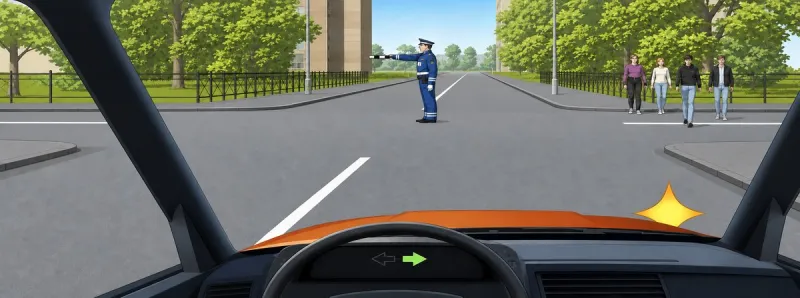
- No.
- Yes, provided you do not interfere with the pedestrian.
Correct answer: Yes, provided you do not interfere with the pedestrian. ABC · D/T
Why: Կարգավորողը կրծքով դեպի մեզ է, աջ ձեռքը պարզված է առաջ, լուսացույց և նշաններ չկան, առջևում
1.12 «Կանգ-գիծ»։ Կրծքի կողմից աջ շրջադարձը թույլատրված է (կետ 16, 3-րդ ենթակետ «բ»), հետիոտներին թույլատրվում է անցնել կարգավորողի թիկունքի կողմով («դ»), ուստի շրջադարձը կատարում ենք՝ չխոչընդոտելով հետիոտներին (կետ 87)։ Այո։
In tests: ABC 26, D/T 38
65. When making a left turn:
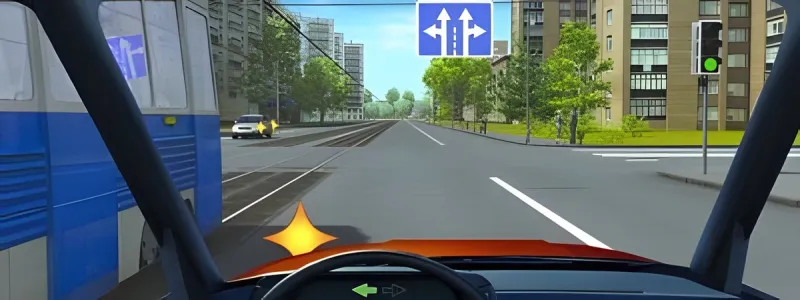
- You must yield to the tram operator.
- You will proceed through the intersection first.
Correct answer: You must yield to the tram operator. ABC · D/T
Why: Կանաչ է և՛ մեզ, և՛ ձախի տրամվայի համար.
5.15.1 «Երթևեկության ուղղությունները գոտիներով» նշանը միայն գոտիներն է բաշխում, առաջնահերթություն չի սահմանում։ Կետ 92-ով միաժամանակյա թույլատրող ազդանշանի դեպքում առավելությունը տրամվայինն է՝ անկախ ուղղությունից, ուստի ձախ շրջադարձի ժամանակ պարտավոր ենք զիջել տրամվայի վարորդին։
Signs in this question: 5.15.1
In tests: ABC 6, D/T 29
66. Which traffic signs do not apply when their requirements conflict with traffic signal indications?
- Priority signs.
- Prohibitory signs.
- Mandatory signs.
- All of the above.
Correct answer: Priority signs. ABC · D/T
Why: Կետ 173-ով, եթե լուսացույցի ազդանշանների նշանակությունը հակասում է առավելության նշանների պահանջներին, վարորդները ղեկավարվում են լուսացույցով. այդ դեպքում առավելության նշանները չեն գործում։
In tests: ABC 13, ABC 48, D/T 10
67. In this situation, who must yield?
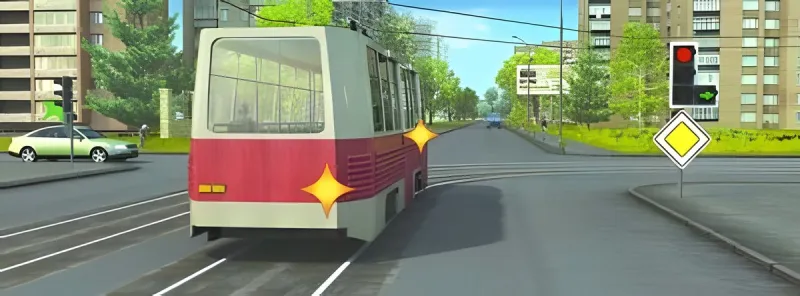
- The passenger-car driver.
- The tram operator.
Correct answer: The tram operator. ABC · D/T
Why: Նկարում և՛ աշխատող լուսացույցներ են, և՛
2.1 «Գլխավոր ճանապարհ» նշան. լուսացույցները գերակայում են առավելության նշանին (կետ 173)։ Դիմացի տրամվայն ընթանում է կարմիրի հետ միացված լրացուցիչ սեկցիայի սլաքով, ուստի կետ 92-ով զիջում է այլ ուղղությունից կանաչով մոտեցող թեթև մարդատարին։ Զիջում է տրամվայի վարորդը։
Signs in this question: 2.1
In tests: ABC 30, D/T 11
68. When making a right turn:
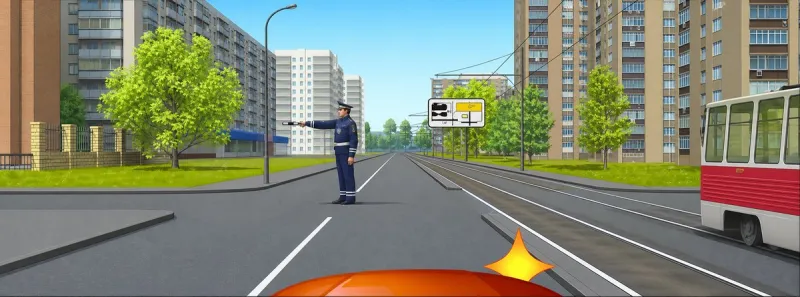
- We must yield to the tram operator.
- We will proceed through the intersection first.
Correct answer: We will proceed through the intersection first. ABC · D/T
Why: Կարգավորողը կրծքով դեպի մեզ է, աջ ձեռքը պարզված է առաջ, լուսացույց և նշաններ չկան։ Կրծքի կողմից մեզ թույլատրվում է աջ շրջադարձ (կետ 16, 3-րդ ենթակետ «բ»), իսկ նրա ձախ կողմի տրամվային՝ միայն ձախ («ա»), ուստի ուղիները չեն հատվում, անցնում ենք առաջինը։
In tests: ABC 35
69. You intend to make a left turn. To whom must you yield?
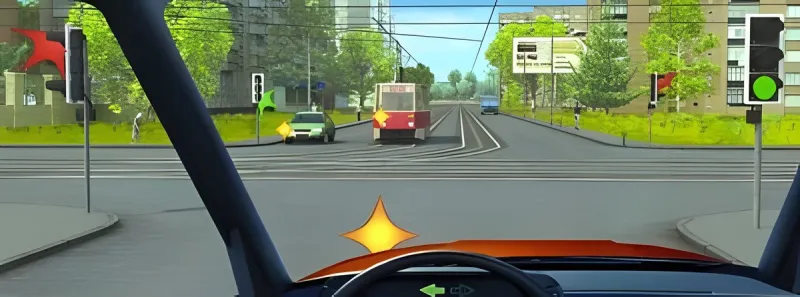
- Only the tram operator.
- No one.
- The automobile driver and the tram operator.
Correct answer: The automobile driver and the tram operator. ABC · D/T
Why: Բոլորի համար կանաչ է, նշաններ չկան։ Կանաչով ձախ թեքվելիս կետ 90-ով զիջում ենք հանդիպակաց ուղիղ գնացող թեթև մարդատարին և կետ 92-ով՝ տրամվային, որը միաժամանակյա երթևեկության դեպքում առավելություն ունի։ Ավտոմոբիլի և տրամվայի վարորդներին։
In tests: ABC 27, D/T 46
70. When making a left turn:
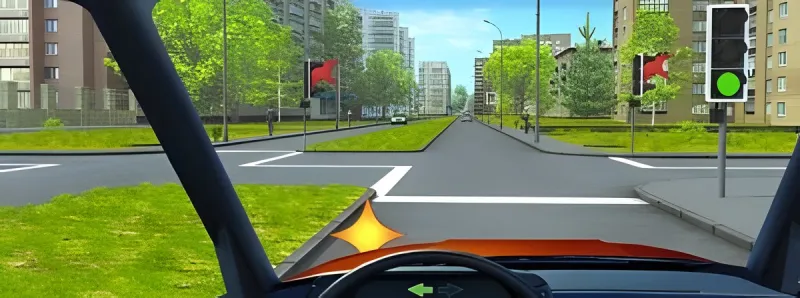
- I will complete the maneuver without stopping.
- After entering the intersection, I will stop before the second “Stop Line” and wait for the green signal.
Correct answer: After entering the intersection, I will stop before the second “Stop Line” and wait for the green signal. ABC · D/T
Why: Խաչմերուկում մեր ուղղությամբ երկու լուսացույց է, երկրորդից առաջ՝
1.12 «Կանգ-գիծ» գծանշում, նշաններ չկան։ Կետ 93-ով, երբ խաչմերուկի լուսացույցից առաջ կանգ-գիծ կա, վարորդը ղեկավարվում է յուրաքանչյուր լուսացույցով, ուստի կանաչով մուտք գործելուց հետո կանգնում ենք երկրորդ «Կանգ-գծի» առջև և սպասում կանաչին։
In tests: ABC 33, D/T 47
71. In this situation, must we yield to the truck driver?
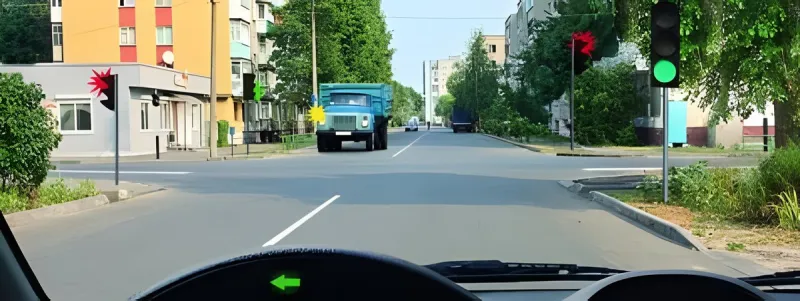
- Yes.
- No.
Correct answer: Yes. ABC · D/T
Why: Երկուսի համար էլ կանաչ է, նշաններ չկան։ Կանաչով ձախ թեքվելիս կետ 90-ով զիջում ենք հանդիպակաց աջ թեքվող բեռնատարին։ Այո։
In tests: ABC 36, D/T 25
72. In this situation, when making a left turn, you must:
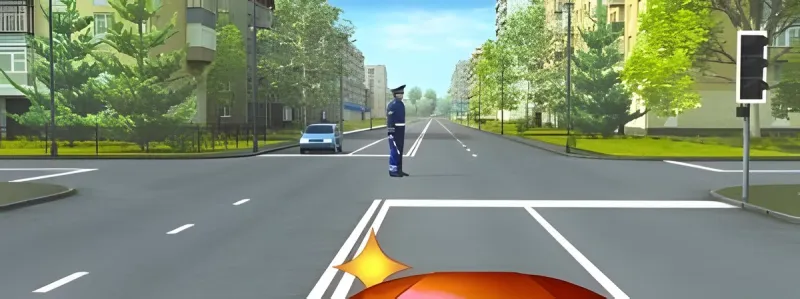
- Enter the intersection and wait for the traffic controller’s signal permitting a left turn.
- Stop before the “Stop Line” pavement marking and wait for the traffic controller’s signal permitting a left turn.
- Enter the intersection and, after yielding to the driver approaching in the oncoming lane, proceed through the intersection.
Correct answer: Stop before the “Stop Line” pavement marking and wait for the traffic controller’s signal permitting a left turn. ABC · D/T
Why: Կարգավորողը մեզ կողքով է, ձեռքերն իջեցված, լուսացույց և նշաններ չկան, առջևում
1.12 «Կանգ-գիծ»։ Կողքից թույլատրվում է միայն ուղիղ և աջ (կետ 16, 2-րդ ենթակետ «ա»), ուստի ձախ շրջադարձի համար կանգ ենք առնում «Կանգ-գծի» առջև (կետ 18) և սպասում ձախ շրջադարձ թույլատրող ազդանշանին։
In tests: ABC 1, D/T 16
73. In which case may you proceed through the intersection without yielding to another road user?
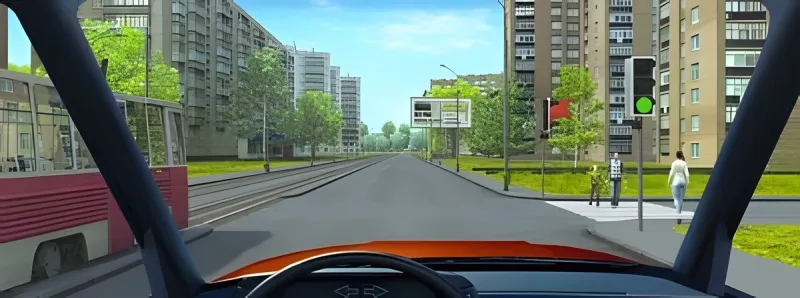
- When proceeding straight ahead.
- When making a right turn.
- When making a left turn.
Correct answer: When proceeding straight ahead. ABC · D/T
Why: Կանաչ լուսացույց, ձախում տրամվայ, աջի կողմնային փողոցի
1.14.1 «Զեբր» անցումին՝ հետիոտներ, նշաններ չկան։ Ուղիղ անցնելիս ոչ մեկի հետ չենք հատվում։ Ձախ շրջադարձի դեպքում պետք է զիջեինք տրամվային (կետ 92), աջ շրջադարձի դեպքում՝ անցնող հետիոտներին (կետ 87)։ Միայն ուղիղ անցնելու դեպքում։
In tests: ABC 20
74. When making a right turn, you must:
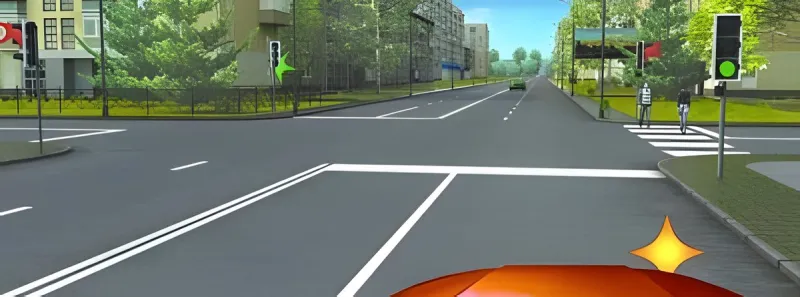
- Stop before the “Stop Line” so as not to interfere with pedestrians.
- Enter the intersection and stop so as not to interfere with pedestrians.
- Proceed through the intersection without stopping.
Correct answer: Enter the intersection and stop so as not to interfere with pedestrians. ABC · D/T
Why: Կանաչ լուսացույց,
1.12 «Կանգ-գիծ», աջի կողմնային փողոցի
1.14.1 «Զեբր» անցումին՝ հետիոտներ և հեծանվորդ, նշաններ չկան։ Կանաչով մուտք ենք գործում խաչմերուկ, աջ թեքվելիս անհրաժեշտության դեպքում կանգ ենք առնում, որպեսզի կետ 87-ով խոչընդոտ չստեղծենք անցնողներին. «Կանգ-գծի» առջև սպասել պարտադիր չէ։
In tests: ABC 47, D/T 20
75. When making a right turn:
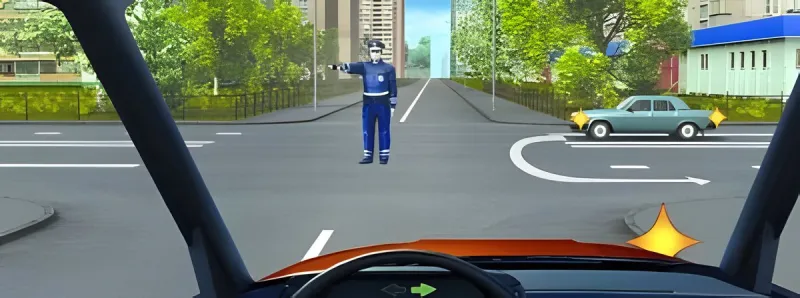
- You must yield to the passenger-car driver.
- You will proceed through the intersection first.
Correct answer: You will proceed through the intersection first. ABC · D/T
Why: Կարգավորողը կրծքով դեպի մեզ է, աջ ձեռքն առաջ. կրծքի կողմից թույլատրվում է միայն աջ շրջադարձ (կետ 16.3), որը և կատարում ենք։ Հատող ճանապարհի մեքենան կարգավորողի ձախ կողմից է և կարող է գնալ բոլոր ուղղություններով, սակայն մեր աջ շրջադարձը մոտակա գոտի նրա ուղին չի հատում. զիջելու պարտավորություն չկա, անցնում ենք առաջինը։
In tests: ABC 26, ABC 53, D/T 43
76. After the permissive traffic signal turns on, we may enter the intersection:
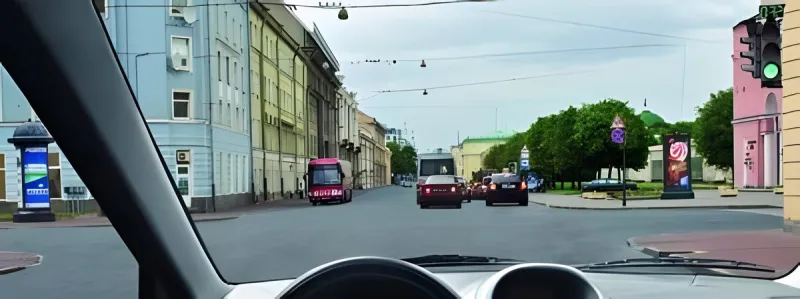
- Only when making a turn or a U-turn.
- In all cases.
Correct answer: Only when making a turn or a U-turn. ABC · D/T
Why: Խաչմերուկից անմիջապես հետո խցանում է։ Կետ 88-ով նույնիսկ թույլատրող ազդանշանից հետո արգելվում է մուտք գործել խաչմերուկ, եթե դրանում կանգնելով կխոչընդոտենք լայնական երթևեկությանը, բացառությամբ շրջադարձ կամ հետադարձ կատարելու դեպքերի։
In tests: ABC 40, D/T 47
77. When the green traffic signal turns on, we must:
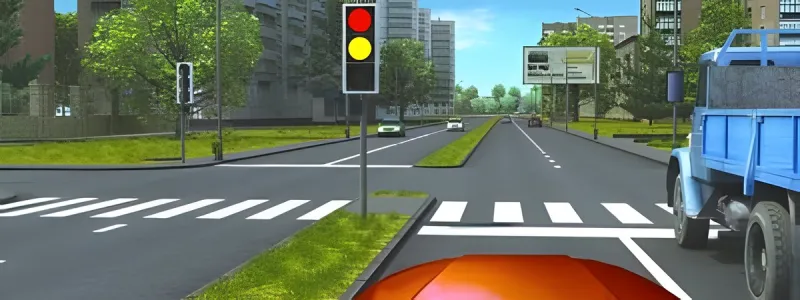
- Make sure that there are no pedestrians who have not finished crossing in the part of the pedestrian crossing that is not visible.
- Immediately start moving in accordance with the traffic signal.
Correct answer: Make sure that there are no pedestrians who have not finished crossing in the part of the pedestrian crossing that is not visible. ABC · D/T
Why: Մեր լուսացույցը կարմիր և դեղին է (կանաչը շուտով կմիանա, կետ 7, 6-րդ ենթակետ),
1.14.1 «Զեբր» անցման մի մասը ծածկված է աջի բեռնատարով։ Կանաչի միանալուց հետո կետ 94-ով չպետք է խոչընդոտենք անցումն ավարտող հետիոտներին, ուստի նախ համոզվում ենք, որ չերևացող մասում հետիոտներ չկան։
In tests: ABC 23
78. In this situation, when making a left turn, you must yield to:
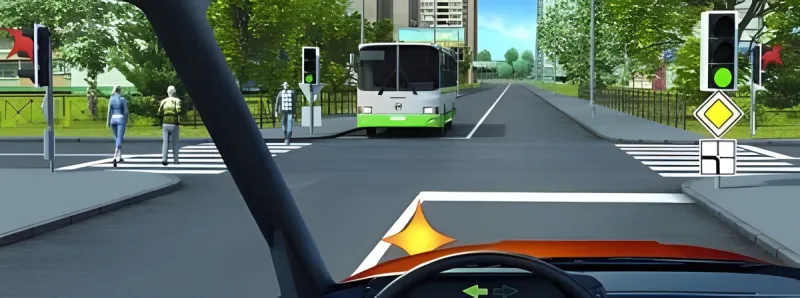
- Only the pedestrian.
- The bus driver.
- The bus driver and the pedestrian.
- No one.
Correct answer: The bus driver and the pedestrian. ABC
Why: Կանաչ լուսացույց է, ուստի
2.1 նշանը
8.13 ցուցանակով հերթականություն չի որոշում (կետ 173)։ Կանաչով ձախ թեքվելիս կետ 90-ով զիջում ենք հանդիպակաց ուղիղ ընթացող ավտոբուսին, իսկ կետ 87-ով խոչընդոտ չենք ստեղծում մուտք գործվող ճանապարհը հատող հետիոտնին։
Signs in this question: 2.1, 8.13
In tests: ABC 47
79. Must you yield to the bus?
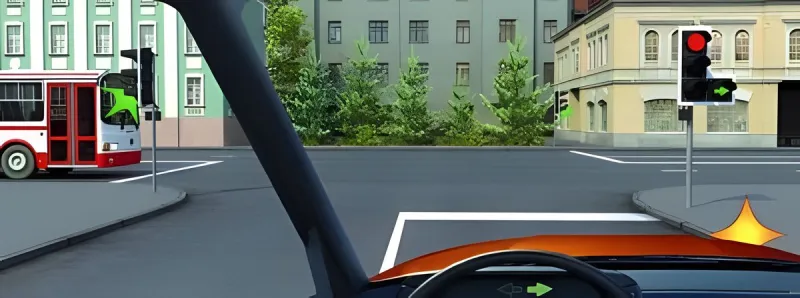
- Yes.
- No.
Correct answer: Yes. ABC
Why: Մեր լուսացույցը կարմիր է՝ միացված աջ սլաքով կանաչ սեկցիայով, ավտոբուսն ընթանում է կանաչով, նշաններ չկան։ Կարմիրի հետ միացված լրացուցիչ սեկցիայի սլաքով աջ թեքվելիս կետ 91-ով զիջում ենք այլ ուղղությունից ընթացող ավտոբուսին։ Այո։
In tests: ABC 3
80. In this situation, when making a U-turn, must you yield to the other driver?
- No.
- Yes.
Correct answer: Yes. ABC · D/T
Why: Կարգավորողի աջ ձեռքը պարզված է առաջ. մենք մոտենում ենք նրա ձախ կողմից, որտեղից թույլատրվում է բոլոր ուղղություններով, այդ թվում՝ հետադարձ (կետ 16.3 «ա»), իսկ կրծքի կողմից մոտեցող կապույտ ավտոմոբիլին թույլատրվում է աջ շրջադարձ («բ»)։ Հետադարձի ժամանակ մեր ուղին հատվում է նրա ուղու հետ, և նա մոտենում է աջից, ուստի կետ 45-ով մենք պետք է զիջենք։
In tests: ABC 15
81. In which direction or directions may the driver continue in this situation?
- Straight ahead only.
- Straight ahead and to the right.
- Straight ahead and to the left.
- In all directions.
Correct answer: Straight ahead only. ABC · D/T
Why: Կարգավորողի ձեռքը պարզված է կողմ, մենք մոտենում ենք նրա կողքից, ուստի թույլատրված է ուղիղ և աջ (կետ 16, 2-րդ ենթակետ «ա»)։ Սակայն աջի
5.7.2 «Ելք դեպի միակողմ երթևեկությամբ ճանապարհ» նշանը ցույց է տալիս, որ կողմնային ճանապարհը միակողմ է դեպի ձախ, ուստի աջ շրջադարձը կլիներ հոսքին հակառակ։ Մնում է միայն ուղիղ։
Signs in this question: 5.7.2
In tests: ABC 4, ABC 51
82. Which driver may continue?
- Neither driver.
- Only the bus driver.
- Both drivers.
Correct answer: Both drivers. ABC · D/T
Why: Նկարում և՛ կարգավորող է, և՛ կարմիր լուսացույց. կարգավորողի ազդանշանները գերակայում են լուսացույցին (կետ 20)։ Աջ ձեռքը պարզված է առաջ, ֆուրգոնն ու կապույտը մոտենում են նրա ձախ կողմից, որտեղից ոչ ռելսագնաց միջոցներին թույլատրվում է բոլոր ուղղություններով (կետ 16, 3-րդ ենթակետ «ա»)։ Երկու վարորդներն էլ կարող են շարունակել։
In tests: ABC 41, D/T 54
83. Proceeding across the railroad crossing is:
- Permitted.
- Prohibited.
Correct answer: Permitted. ABC · D/T
Why: Գծանցը նշված է
1.3.1 «Միագիծ երկաթուղի» նշանով, և գծանցի լուսացույցի լուսնասպիտակ թարթող ազդանշանն է միացված։ Կետ 15-ով լուսնասպիտակ թարթող ազդանշանը թույլատրում է գծանցով երթևեկությունը, ուստի գծանցն անցնելը թույլատրված է։
Signs in this question: 1.3.1
In tests: ABC 9, D/T 50
84. The driver is:
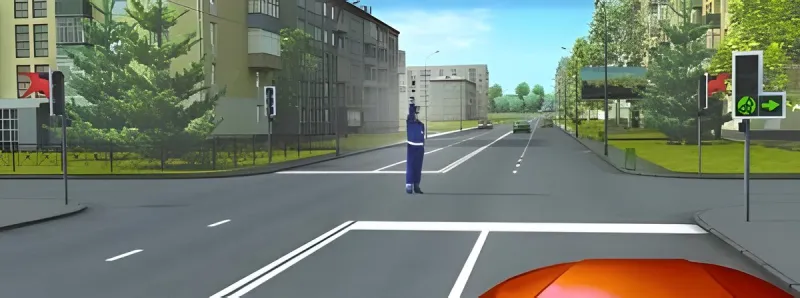
- Prohibited from proceeding through the intersection.
- Permitted to proceed through the intersection in all cases.
- Permitted to proceed through the intersection if the driver cannot stop before the “Stop Line” without sudden braking.
Correct answer: Prohibited from proceeding through the intersection. ABC · D/T
Why: Կարգավորողի ձեռքը բարձրացված է վեր, ինչը կետ 16.1-ով արգելում է բոլոր տրանսպորտային միջոցների երթևեկությունը։ Կետ 19-ի բացառությունը վերաբերում է միայն այն վարորդներին, որոնք ազդանշանը տրվելու պահին չեն կարող կանգնել առանց կտրուկ արգելակելու, իսկ մենք կանգ-գծի առջև կարող ենք կանգնել, ուստի խաչմերուկն անցնելն արգելվում է։
In tests: ABC 44, D/T 55
85. When complying with the traffic signal, where must the driver stop?
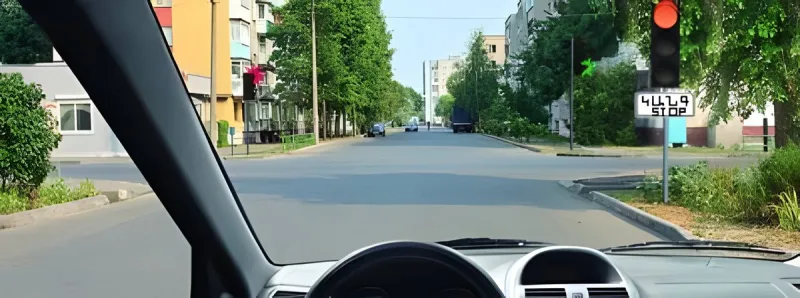
- Before the traffic signal.
- Before the intersecting roadway.
- At any location.
Correct answer: Before the traffic signal. ABC · D/T
Why: Կարմիր լուսացույց, նույն սյան վրա՝
6.16 «Կանգ-գիծ» նշան, ճանապարհին կանգ-գիծ գծանշված չէ։ Կետ 18-ով արգելող ազդանշանի դեպքում վարորդը կանգ է առնում
6.16 նշանի առջև, այսինքն՝ լուսացույցի առջև։
Signs in this question: 6.16
In tests: ABC 24, D/T 54
86. A left turn is permitted:
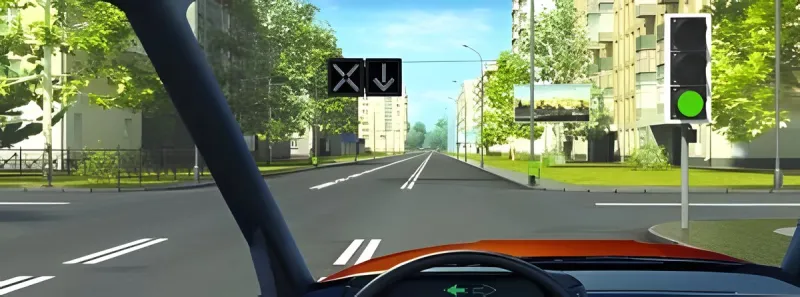
- From the reversible traffic lane.
- From the lane indicated in the image.
Correct answer: From the lane indicated in the image. ABC · D/T
Why: Կանաչ լուսացույց,
1.9 գծանշմամբ սահմանված գոտու վերևում դարձափոխային լուսացույց է։ Դարձափոխային գոտին կարգավորվում է իր լուսացույցով (կետ 13) և շրջադարձի համար չէ. ձախ շրջադարձը կատարվում է նկարում նշված սովորական գոտուց։
In tests: ABC 18, D/T 33
87. Traffic is permitted:
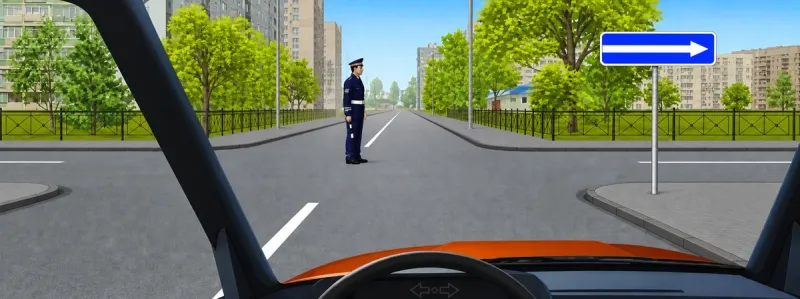
- Straight ahead only.
- To the right only.
- Straight ahead and to the right.
Correct answer: Straight ahead and to the right. ABC · D/T
Why: Կարգավորողը մեզ կողքով է, ձեռքերն իջեցված, ուստի կողքից թույլատրվում է ուղիղ և աջ (կետ 16, 2-րդ ենթակետ «ա»)։ Աջի
5.7.1 «Ելք դեպի միակողմ երթևեկությամբ ճանապարհ» նշանը ցույց է տալիս, որ կողմնային ճանապարհը միակողմ է դեպի աջ, ուստի աջ շրջադարձը հոսքի ուղղությամբ է։ Ուղիղ և աջ։
Signs in this question: 5.7.1
In tests: ABC 29, D/T 4
88. Traffic is permitted:
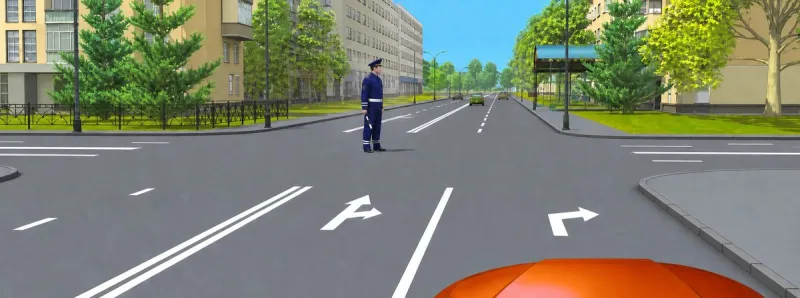
- Straight ahead and to the right.
- Straight ahead only.
- To the right only.
Correct answer: To the right only. ABC · D/T
Why: Կարգավորողը կրծքով դեպի մեզ է, աջ ձեռքը պարզված է առաջ.
1.18 գծանշման սլաքները թույլատրում են ուղիղ և աջ, բայց որոշիչը կարգավորողի ազդանշանն է (կետ 20). կրծքի կողմից թույլատրվում է միայն աջ (կետ 16, 3-րդ ենթակետ «բ»)։
In tests: ABC 35, D/T 39
89. The arrows shown in the green traffic signal indicate that:
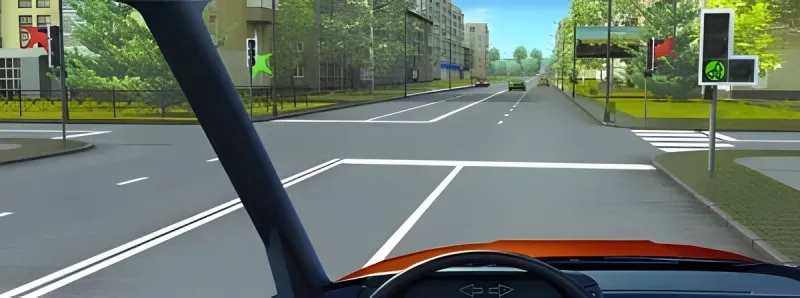
- A right turn is prohibited.
- Traffic to the right is controlled by an additional traffic-signal section.
Correct answer: Traffic to the right is controlled by an additional traffic-signal section. ABC · D/T
Why: Հիմնական կանաչ ազդանշան՝ սև ուրվագծային սլաքներով, աջ սեկցիան անջատված է։ Կետ 10-ով ուրվագծային սլաքները տեղեկացնում են լրացուցիչ սեկցիայի առկայության մասին և որ աջ ուղղությամբ երթևեկությունը կարգավորվում է այդ սեկցիայով. ինքնին աջ շրջադարձը չեն արգելում։
In tests: ABC 7
90. Is passing the truck permitted?
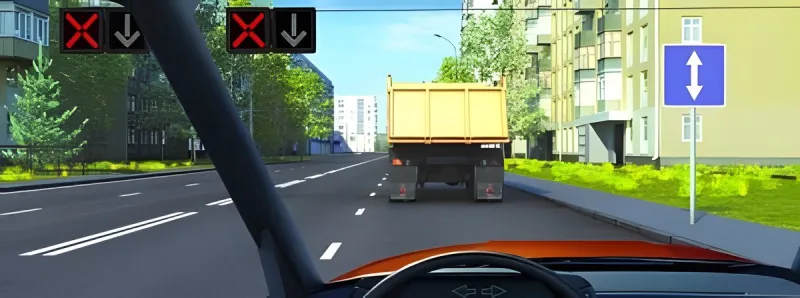
- Yes.
- No.
Correct answer: No. ABC · D/T
Why: 5.8 «Դարձափոխային երթևեկություն» նշան. բեռնատարից ձախ գոտիների վերևի դարձափոխային լուսացույցները «X»-աձև կարմիր են, որն արգելում է երթևեկությունն այդ գոտիներով (կետ 13)։ Վազանցը կպահանջեր այդ գոտիները, ուստի արգելված է։
Signs in this question: 5.8
In tests: ABC 14, D/T 19
91. In which direction or directions may the driver continue in this situation?
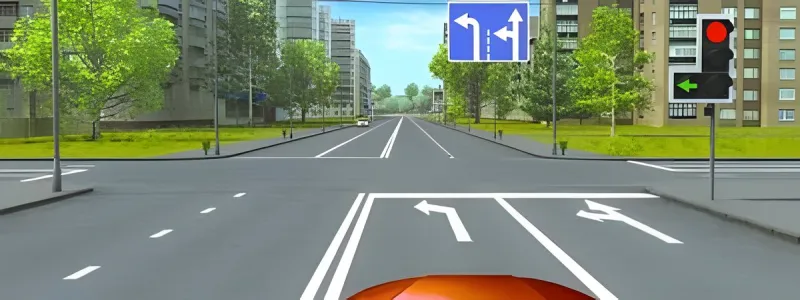
- To the left only.
- The driver must wait for a permissive signal.
- To the left and by making a U-turn.
Correct answer: To the left and by making a U-turn. ABC · D/T
Why: Հիմնական կարմիր՝ միացված ձախ սլաքով կանաչ սեկցիայով.
5.15.1 «Երթևեկության ուղղությունները գոտիներով» նշանը և
1.18 գծանշման սլաքները ձախ գոտին հատկացնում են ձախ շրջադարձին։ Կետ 8-ով ձախ շրջադարձ թույլատրող սլաքը թույլատրում է նաև հետադարձ, եթե նշանով արգելված չէ. ձախ և հակառակ։
Signs in this question: 5.15.1
In tests: ABC 44, D/T 52
92. In this situation, entering the reversible traffic lane is:
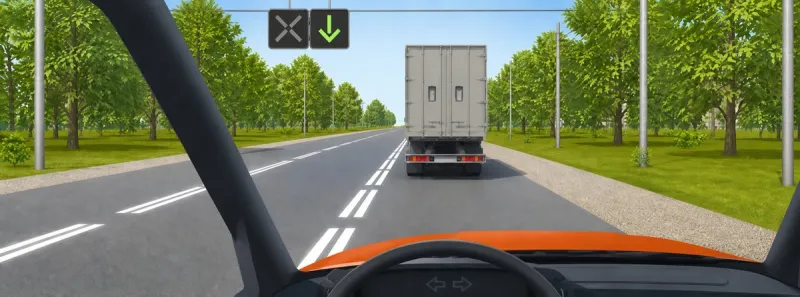
- Permitted.
- Permitted only for the purpose of passing.
- Prohibited.
Correct answer: Permitted. ABC · D/T
Why: 1.9 գծանշմամբ սահմանված գոտու վերևի դարձափոխային լուսացույցը դեպի ներքև ուղղված կանաչ սլաք է ցույց տալիս, որը թույլատրում է երթևեկությունն այդ գոտիով (կետ 13). մուտքը թույլատրված է։
In tests: ABC 38
93. Proceeding straight ahead from the indicated lane is:
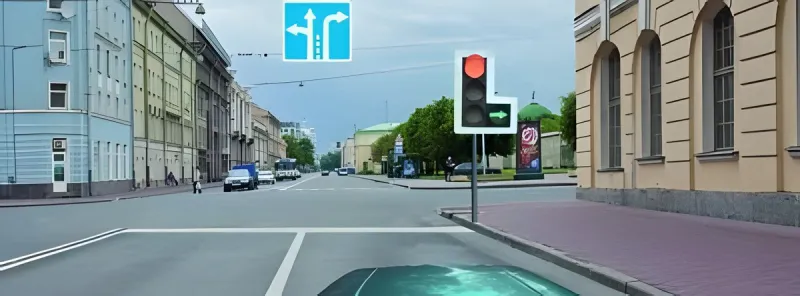
- Permitted.
- Permitted only after the main green signal turns on.
- Prohibited.
Correct answer: Prohibited. ABC · D/T
Why: Հիմնական կարմիր՝ միայն աջ սլաքով սեկցիան միացված,
5.15.1 «Երթևեկության ուղղությունները գոտիներով» նշան, առջևում
1.12 «Կանգ-գիծ»։ Կարմիրն արգելում է ուղիղ երթևեկությունը (կետ 7, 5-րդ ենթակետ), սլաքը թույլատրում է միայն աջ (կետ 8). նշված գոտուց ուղիղ երթևեկությունն արգելված է։
Signs in this question: 5.15.1
In tests: ABC 11, D/T 34
94. Traffic is permitted:
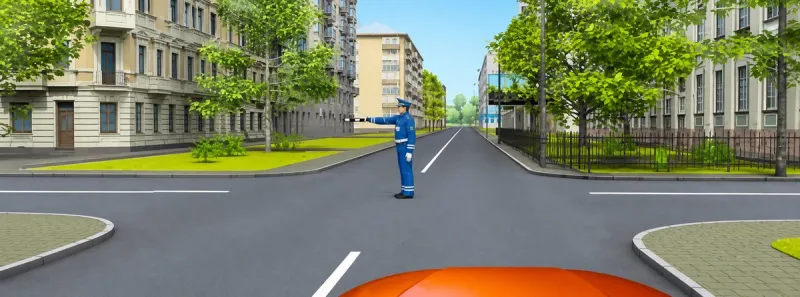
- Straight ahead and to the right.
- To the right only.
- In all directions.
Correct answer: In all directions. ABC · D/T
Why: Կարգավորողի աջ ձեռքը պարզված է առաջ, մենք մոտենում ենք նրա ձախ կողմից, լուսացույց և նշաններ չկան։ Ձախ կողմից ոչ ռելսագնաց միջոցներին թույլատրվում է բոլոր ուղղություններով (կետ 16, 3-րդ ենթակետ «ա»)։
In tests: ABC 2, D/T 3
95. In this situation, traffic is:
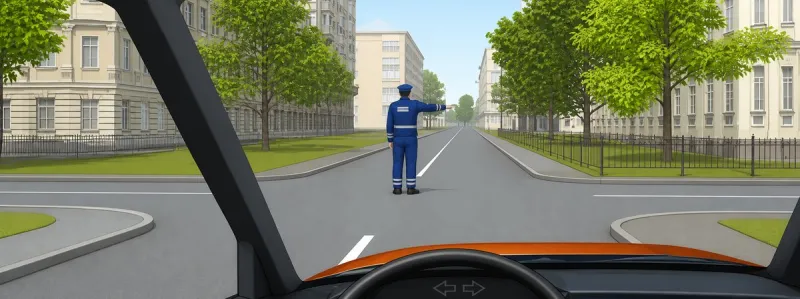
- Permitted.
- Prohibited.
Correct answer: Prohibited. ABC · D/T
Why: Կարգավորողը թիկունքով դեպի մեզ է կանգնած, լուսացույց և նշաններ չկան։ Կարգավորողի թիկունքի կողմից բոլոր տրանսպորտային միջոցների երթևեկությունն արգելված է, լինեն նրա ձեռքերը կողմ պարզված (կետ 16.2 «բ»), թե աջ ձեռքն առաջ պարզված (16.3 «գ»), ուստի երթևեկությունն արգելվում է։
In tests: ABC 14, D/T 33
96. This traffic signal prohibits traffic:
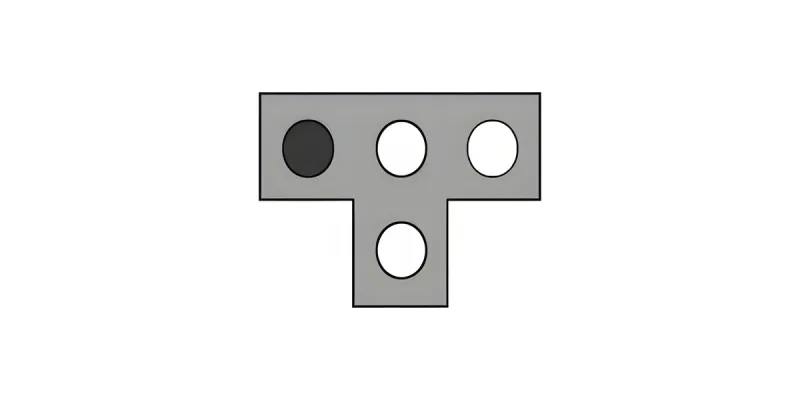
- To the left only.
- Straight ahead and to the left.
- Straight ahead and to the right.
- To the right only.
Correct answer: To the left only. D/T
Why: Չորս լուսնասպիտակ ազդանշաններով «T»-աձև տրամվայի լուսացույց. ներքևի, միջին և աջ ազդանշանները միացված են՝ թույլատրելով ուղիղ և աջ, իսկ վերևի ձախ ազդանշանն անջատված է, ուստի կետ 14-ով դեպի ձախ երթևեկությունն արգելված է։
97. This traffic signal is used to regulate traffic:
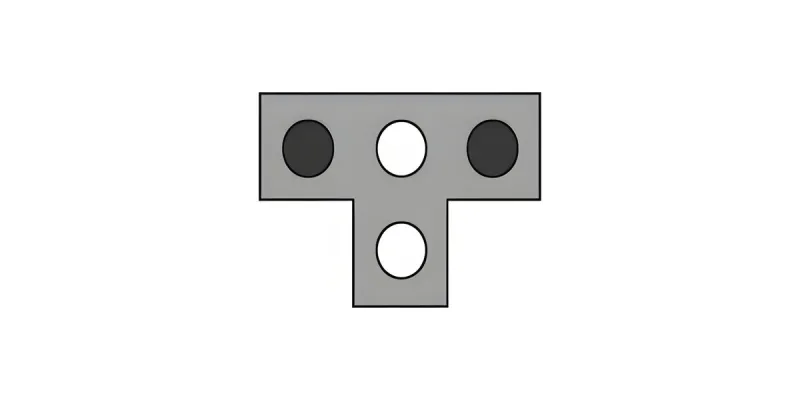
- For trams and trolleybuses.
- For trams only.
- For trams, as well as other public transit vehicles proceeding in designated lanes.
Correct answer: For trams, as well as other public transit vehicles proceeding in designated lanes. D/T
Why: Չորս լուսնասպիտակ ազդանշաններով «T»-աձև լուսացույցը կիրառվում է տրամվայների, ինչպես նաև առանձնացված գոտով երթևեկող ընդհանուր օգտագործման այլ տրանսպորտային միջոցների երթևեկությունը կարգավորելու համար (կետ 14)։
In tests: D/T 7
98. In this situation, is the bus driver permitted to proceed straight ahead?
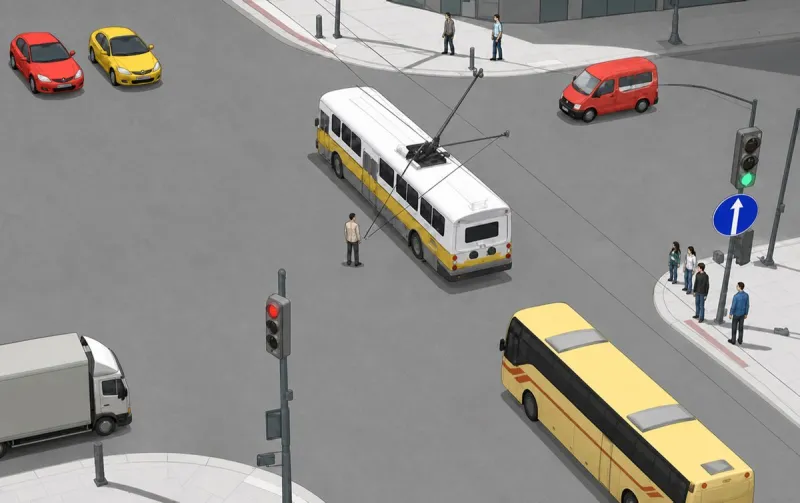
- Yes.
- No.
- Yes, if the bus is operating on an established route.
Correct answer: No. D/T
Why: Տրոլեյբուսի ուղղության լուսացույցը կարմիր է, որն արգելում է երթևեկությունը՝ անկախ երթուղուց (կետ 7, 5-րդ ենթակետ). աջի
4.1.1 «Երթևեկությունն ուղիղ» նշանը և հատվող ուղղության կանաչը դա չեն փոխում։ Ոչ։
Signs in this question: 4.1.1
In tests: D/T 50
99. Before starting to move or performing a maneuver, a bus driver must make sure that:
- There are no other vehicles in the driver’s lane at that moment.
- The maneuver is safe and will not create an obstruction for other road users.
- The maneuver will be completed as quickly as possible to clear the road.
Correct answer: The maneuver is safe and will not create an obstruction for other road users. D/T
Why: Կետ 36-ով երթևեկությունն սկսելիս կամ մանևր կատարելիս ազդանշան տալը պարտադիր է, իսկ մանևրը չպետք է խոչընդոտ ստեղծի երթևեկության մյուս մասնակիցների համար, ուստի վարորդը պետք է համոզված լինի, որ մանևրն անվտանգ է։
In tests: D/T 55
100. Is it permitted to proceed on tram tracks in the same direction located on the left side of the roadway at the same level as the roadway if all lanes in that direction are occupied?
- Permitted if no other traffic arrangement is established by appropriate signs and if this does not interfere with tram traffic.
- Permitted only when the vehicle is passing.
- Prohibited in all cases because tram tracks are intended exclusively for rail vehicles.
Correct answer: Permitted if no other traffic arrangement is established by appropriate signs and if this does not interfere with tram traffic. D/T
Why: Կետ 59-ով երթևեկելի մասի ձախ կողմում նույն մակարդակի վրա գտնվող համընթաց տրամվայի գծերով երթևեկել թույլատրվում է, եթե այդ ուղղությամբ բոլոր գոտիները զբաղված են, պայմանով, որ դա խոչընդոտ չստեղծի տրամվային և նշաններով այլ կարգ սահմանված չլինի։
In tests: D/T 3
101. If the roadway is divided into lanes by pavement markings, when is a driver permitted to cross the broken lines separating the lanes?
- Only when changing lanes.
- The driver may cross and proceed along the broken line at any time if there are no other vehicles on the road.
- In both cases.
Correct answer: Only when changing lanes. D/T
Why: Կետ 60-ով, եթե երթևեկելի մասը գծանշմամբ բաժանված է գոտիների, ընդհատվող գծերը կարելի է հատել միայն վերադասավորվելիս։
In tests: D/T 26
102. What following distance must a bus driver maintain from the vehicle ahead?
- A distance sufficient to avoid a collision with it.
- A distance that allows vehicles passing the bus to complete the passing maneuver and change back into the lane ahead without obstruction.
Correct answer: A distance sufficient to avoid a collision with it. D/T
Why: Կետ 62-ով վարորդն առջևից ընթացող տրանսպորտային միջոցի հետ պետք է պահպանի այնպիսի տարածություն, որ հնարավորություն ունենա խուսափել դրա հետ բախվելուց։
103. What lateral distance must a bus driver maintain from a vehicle traveling alongside?
- A distance sufficient to avoid a collision with it.
- At least 0.5 meters.
- At least 1 meter.
Correct answer: A distance sufficient to avoid a collision with it. D/T
Why: Կետ 62-ով կողքով ընթացող տրանսպորտային միջոցներից պետք է պահպանել այնպիսի միջկողային տարածություն, որ հնարավոր լինի խուսափել դրանց հետ բախվելուց. կանոնները կոնկրետ մետրեր չեն սահմանում։
In tests: D/T 53
104. Outside populated areas, on two-way roads with one lane in each direction, what distance must drivers of buses longer than 7 meters maintain from the vehicle ahead?
- At least 50 meters, regardless of speed and road conditions.
- A distance sufficient to allow drivers passing them to change back into the previously occupied lane without obstruction if necessary.
- At their discretion, based on traffic safety.
Correct answer: A distance sufficient to allow drivers passing them to change back into the previously occupied lane without obstruction if necessary. D/T
Why: Կետ 63-ով բնակավայրից դուրս յուրաքանչյուր ուղղությամբ մեկ գոտի ունեցող ճանապարհին 7 մ-ից երկար տրանսպորտային միջոցների վարորդները պետք է պահպանեն այնպիսի տարածություն, որ իրենց վազանցողները կարողանան առանց խոչընդոտի վերադառնալ նախկինում զբաղեցրած գոտի։
In tests: D/T 9
105. Before beginning to pass, among other requirements, a bus driver must make sure that:
- After completing the passing maneuver, the driver can return to the previously occupied lane without interfering with the vehicle being passed.
- The driver of the vehicle ahead has noticed the maneuver and is yielding by reducing speed.
- In both cases.
Correct answer: After completing the passing maneuver, the driver can return to the previously occupied lane without interfering with the vehicle being passed. D/T
Why: Կետ 73.3-ով վազանցն սկսելուց առաջ վարորդը պետք է համոզվի, որ այն ավարտելիս կկարողանա առանց վազանցվողին խոչընդոտելու վերադառնալ նախկինում զբաղեցրած գոտի։
106. Before beginning to pass, among other requirements, a bus driver must make sure that:
- Vehicles behind are maintaining sufficient distance, and the vehicle ahead has already begun to reduce speed to yield.
- A vehicle traveling behind in the same lane has not started passing, and the vehicle ahead has not signaled an intention to pass, turn left, or make a U-turn.
- In both cases.
Correct answer: A vehicle traveling behind in the same lane has not started passing, and the vehicle ahead has not signaled an intention to pass, turn left, or make a U-turn. D/T
Why: Կետ 73.2-ով վազանցից առաջ վարորդը պետք է համոզվի, որ իր հետևից նույն գոտով ընթացողը վազանց չի սկսել, իսկ առջևից ընթացողը վազանցի, ձախ շրջադարձի կամ հետադարձի ազդանշան չի տվել։
In tests: D/T 19
107. Are non-rail vehicles permitted to pass on the right?
- Permitted when the driver of the vehicle ahead has given a left-turn signal and begun the maneuver.
- Prohibited in all cases because passing must be performed only on the left for safety reasons.
Correct answer: Permitted when the driver of the vehicle ahead has given a left-turn signal and begun the maneuver. D/T
Why: Կետ 74-ով ոչ ռելսագնաց տրանսպորտային միջոցին վազանցել թույլատրվում է միայն ձախ կողմից, բայց եթե առջևի վարորդը տվել է ձախ շրջադարձի ազդանշան և սկսել է մանևրը, նրան վազանցում են աջից։
In tests: D/T 1
108. When it is difficult to pass a large bus outside a populated area, what must the bus driver do?
- Proceed as far to the right as possible and, if necessary, stop to allow vehicles traveling behind to pass.
- Activate the hazard warning lights and continue at the same speed until reaching a section where passing is permitted.
Correct answer: Proceed as far to the right as possible and, if necessary, stop to allow vehicles traveling behind to pass. D/T
Why: Կետ 76-ով, եթե բնակավայրից դուրս մեծ եզրաչափերով տրանսպորտային միջոցին վազանցելը դժվար է, դրա վարորդը պետք է երթևեկի հնարավորինս աջով, իսկ անհրաժեշտության դեպքում կանգ առնի և բաց թողնի հետևից ընթացողներին։
109. Is a bus driver permitted to pass several vehicles at the same time?
- Permitted if the maneuver is safe for other road users.
- Prohibited; after passing each vehicle, the driver must return to the previously occupied lane before beginning the next passing maneuver.
- Permitted only when passing slow-moving vehicles.
Correct answer: Permitted if the maneuver is safe for other road users. D/T
Why: Կանոնները չեն արգելում միանգամից մի քանի տրանսպորտային միջոցի վազանցելը. կետ 73-ով պետք է միայն համոզվել, որ հանդիպակաց գոտին բավարար տարածությամբ ազատ է և մանևրն անվտանգ կավարտվի։
In tests: D/T 16
110. Is it permitted to begin passing a vehicle whose driver has given a left-turn signal and begun the maneuver?
- Permitted.
- Prohibited.
- Permitted only if the passing maneuver is performed on the right.
Correct answer: Permitted only if the passing maneuver is performed on the right. D/T
Why: Կետ 74-ով, եթե առջևի վարորդը տվել է ձախ շրջադարձի ազդանշան և սկսել մանևրը, նրան վազանցում են միայն աջ կողմից։
111. Is making a U-turn prohibited at locations where visibility in at least one direction is less than 100 meters?
- Prohibited only within populated areas.
- Prohibited outside populated areas.
- Prohibited on all roads.
- Not prohibited.
Correct answer: Prohibited on all roads. D/T
Why: Կետ 50.5-ով հետադարձն արգելվում է ճանապարհի թեկուզ և մեկ ուղղությամբ 100 մ-ից պակաս տեսանելիության տեղերում՝ բոլոր ճանապարհներին։
In tests: D/T 18
112. What must a bus driver do to ensure safety when reversing?
- Continuously use the audible warning signal.
- Activate the marker lights and proceed at the lowest possible speed.
- If necessary, seek assistance from other persons.
- Perform all of the listed actions.
Correct answer: If necessary, seek assistance from other persons. D/T
Why: Կետ 48-ով հետընթացը թույլատրվում է, եթե այն անվտանգ է և խոչընդոտ չի ստեղծում, իսկ անհրաժեշտության դեպքում վարորդը պետք է դիմի այլ անձանց օգնությանը։
In tests: D/T 6
113. How must a driver determine the number of traffic lanes if pavement markings and the appropriate mandatory signs establishing directions of travel are absent?
- If there are no pavement markings, the road is considered to have one lane regardless of its width.
- The number of lanes is determined taking into account the width of the roadway, the dimensions of vehicles, and the necessary lateral distance between them.
Correct answer: The number of lanes is determined taking into account the width of the roadway, the dimensions of vehicles, and the necessary lateral distance between them. D/T
Why: Կետ 51-ով, գծանշման և համապատասխան նշանների բացակայության դեպքում, գոտիների քանակը որոշում են վարորդները՝ հաշվի առնելով երթևեկելի մասի լայնությունը, տրանսպորտային միջոցների եզրաչափերը և դրանց միջև անհրաժեշտ միջկողային տարածությունը։
In tests: D/T 26
114. On roads with three or more lanes in the same direction, when may buses performing regular transportation occupy the leftmost lane?
- During heavy traffic if all other lanes are occupied.
- Only for passing other vehicles or driving around an obstruction.
- Only for making a left turn or U-turn.
- In any case.
Correct answer: Only for making a left turn or U-turn. D/T
Why: Կետ 57-ով միևնույն ուղղությամբ երեք և ավելի գոտի ունեցող ճանապարհներին ուղևորների կանոնավոր փոխադրում իրականացնող տրանսպորտային միջոցներին ձախ եզրային գոտին թույլատրվում է զբաղեցնել միայն ձախ շրջադարձ կամ հետադարձ կատարելու համար։
In tests: D/T 8
115. A bus cannot exceed 40 km/h for technical reasons. Is it permitted to leave the occupied rightmost lane in order to stop on the left side?
- Prohibited, because vehicles traveling at no more than 40 km/h must proceed exclusively in the rightmost lane and may not leave it.
- Permitted if the stop is made at a location where stopping is allowed by the rules.
Correct answer: Permitted if the stop is made at a location where stopping is allowed by the rules. D/T
Why: Կետ 58-ով 40 կմ/ժ-ից արագ չերթևեկող տրանսպորտային միջոցները պետք է երթևեկեն աջ եզրային գոտով, բացի շրջանցման, վազանցի, ձախ շրջադարձի, հետադարձի և թույլատրված դեպքերում ձախ կողմում կանգառ կատարելուց առաջ վերադասավորվելու դեպքերից։
In tests: D/T 35
116. During heavy traffic within a populated area, when is changing lanes permitted?
- Only when making left or right turns.
- Only when making a U-turn.
- Only before driving around an obstruction or stopping.
- In all of the listed cases.
- Only in cases 1 and 3.
Correct answer: In all of the listed cases. D/T
Why: Կետ 56-ով բնակավայրում ինտենսիվ երթևեկության ժամանակ, երբ բոլոր գոտիները զբաղված են, գոտին թույլատրվում է փոխել ձախ և աջ շրջադարձերից, հետադարձից, արգելքը շրջանցելուց կամ կանգառից առաջ՝ բոլոր թվարկված դեպքերում։
In tests: D/T 27
117. Is bus traffic on shoulders, sidewalks, and pedestrian paths prohibited when no other option is available?
- Prohibited.
- Permitted for buses of road-maintenance and municipal-service organizations, provided they do not interfere with pedestrians and traffic safety is ensured.
Correct answer: Permitted for buses of road-maintenance and municipal-service organizations, provided they do not interfere with pedestrians and traffic safety is ensured. D/T
Why: Կետ 61-ով կողնակներով, մայթերով և հետիոտնային արահետներով երթևեկությունն արգելվում է, բայց այլ հնարավորության բացակայության դեպքում թույլատրվում է ճանապարհային և կոմունալ սպասարկման ծառայությունների մեքենաներին՝ անվտանգությունն ապահովելով և հետիոտներին չխոչընդոտելով։
In tests: D/T 42
118. Outside a populated area, in which lane must buses proceed?
- As close as possible to the right edge of the roadway.
- In any lane except the leftmost lane.
- At the driver’s discretion, while ensuring traffic safety.
Correct answer: As close as possible to the right edge of the roadway. D/T
Why: Կետ 55-ով բնակավայրերից դուրս վարորդները պետք է տրանսպորտային միջոցները վարեն երթևեկելի մասի աջ եզրին հնարավորինս մոտ։
In tests: D/T 23
119. Within a populated area, on a road marked with the “Road for Motor Vehicles” sign, in which lane must buses proceed?
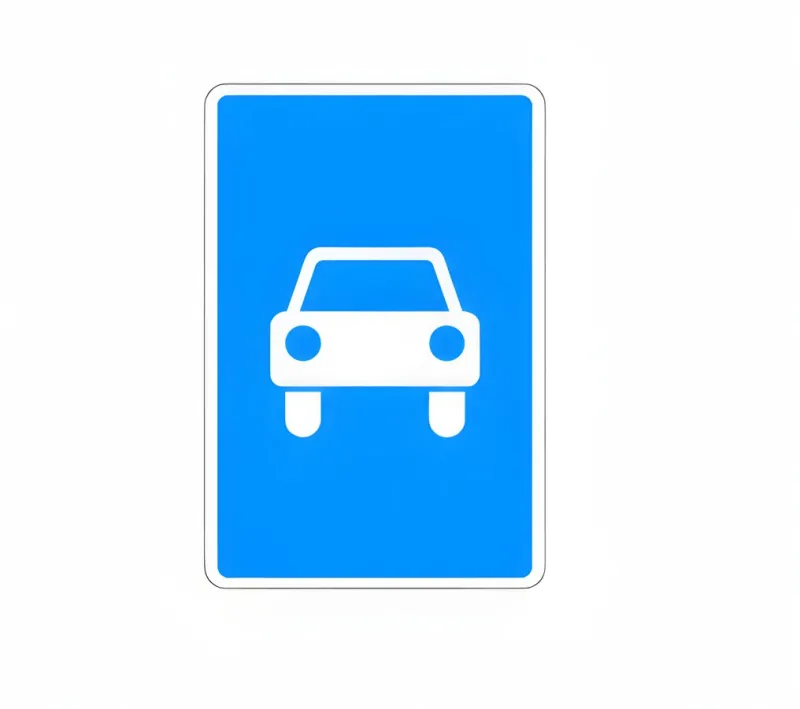
- As close as possible to the right edge of the roadway.
- In any lane except the leftmost lane.
Correct answer: As close as possible to the right edge of the roadway. D/T
Why: Նշանը
5.3 «Ճանապարհ ավտոմոբիլների համար»-ն է։ Կետ 55-ով այդ նշանով ճանապարհներին բնակավայրում նույնպես պետք է երթևեկել երթևեկելի մասի աջ եզրին հնարավորինս մոտ։
Signs in this question: 5.3
In tests: D/T 28
120. On a road with three lanes in the same direction, in which lanes may buses performing regular passenger transportation proceed?
- Only in the first and second lanes.
- In any lane if traffic is heavy and the other lanes are occupied.
Correct answer: Only in the first and second lanes. D/T
Why: Կետ 57-ով միևնույն ուղղությամբ երեք գոտի ունեցող ճանապարհին ուղևորների կանոնավոր փոխադրում իրականացնող ավտոբուսները ձախ եզրային գոտին կարող են զբաղեցնել միայն ձախ շրջադարձի կամ հետադարձի համար, ուստի երթևեկում են առաջին և երկրորդ գոտիներով։
In tests: D/T 17
121. Is a bus driver permitted to proceed at an unnecessarily low speed?
- Permitted if the driver is tired.
- Prohibited if doing so impedes the movement of other vehicles.
- Permitted only when proceeding through intersections or complying with traffic controller signals.
Correct answer: Prohibited if doing so impedes the movement of other vehicles. D/T
Why: Կետ 72.4-ով վարորդին արգելվում է առանց անհրաժեշտության ընթանալ շատ ցածր արագությամբ՝ խոչընդոտելով մյուս տրանսպորտային միջոցների երթևեկությունը։
In tests: D/T 46
122. When selecting a speed, a bus driver is prohibited from:
- Exceeding the speed specified by the “Speed Limit” identification sign displayed on the vehicle.
- Proceeding at less than 60 km/h on all roads where no minimum-speed sign is installed.
- In both cases.
Correct answer: Exceeding the speed specified by the “Speed Limit” identification sign displayed on the vehicle. D/T
Why: Կետ 72.2-ով վարորդին արգելվում է գերազանցել տրանսպորտային միջոցի վրա տեղադրված «Արագության սահմանափակում» ճանաչման նշանով նախատեսված արագությունը։ 60 կմ/ժ-ից ցածր երթևեկելու ընդհանուր արգելք չկա։
In tests: D/T 49
123. When selecting a speed, a bus driver is prohibited from:
- Transporting luggage at the maximum permitted speed established for that road section if no specific speed limit is indicated in the cargo documents.
- Exceeding the speed specified by the “Speed Limit” identification sign displayed on the vehicle.
- In both cases.
Correct answer: Exceeding the speed specified by the “Speed Limit” identification sign displayed on the vehicle. D/T
Why: Կետ 72.2-ով վարորդին արգելվում է գերազանցել տրանսպորտային միջոցի վրա տեղադրված «Արագության սահմանափակում» ճանաչման նշանով նախատեսված արագությունը։
In tests: D/T 52
124. While driving, a bus driver is prohibited from:
- Braking suddenly unless necessary to prevent a road traffic crash.
- Braking when the vehicle behind is not maintaining a safe distance.
- In both cases.
Correct answer: Braking suddenly unless necessary to prevent a road traffic crash. D/T
Why: Կետ 72.5-ով վարորդին արգելվում է կտրուկ արգելակել, եթե դա անհրաժեշտ չէ ճանապարհատրանսպորտային պատահարը կանխելու համար։
In tests: D/T 11
125. Within a populated area, when the “Maximum Speed Limit” sign is used, what is the highest maximum permitted speed that may be established by the competent authorities?
- 80 km/h.
- 90 km/h.
- Any speed that is safe for that road section.
Correct answer: 80 km/h. D/T
Why: Կետ 70-ով
3.24 նշանով սահմանված բարձր արագությունը բնակավայրում չի կարող գերազանցել 80 կմ/ժ-ը։
Signs in this question: 3.24
126. Outside populated areas, when the “Maximum Speed Limit” sign is used, what is the highest maximum permitted speed that may be established by the competent authorities?
- 100 km/h.
- 110 km/h.
- Any speed that is safe for that road section.
Correct answer: 110 km/h. D/T
Why: Կետ 70-ով
3.24 նշանով սահմանված բարձր արագությունը բնակավայրից դուրս չի կարող գերազանցել 110 կմ/ժ-ը։
Signs in this question: 3.24
In tests: D/T 37
127. Within a populated area, the maximum permitted speed has been set at 80 km/h by a “Maximum Speed Limit” sign. What is the maximum speed permitted for an automobile carrying people in an equipped cargo body and for an automobile transporting an organized group of children?
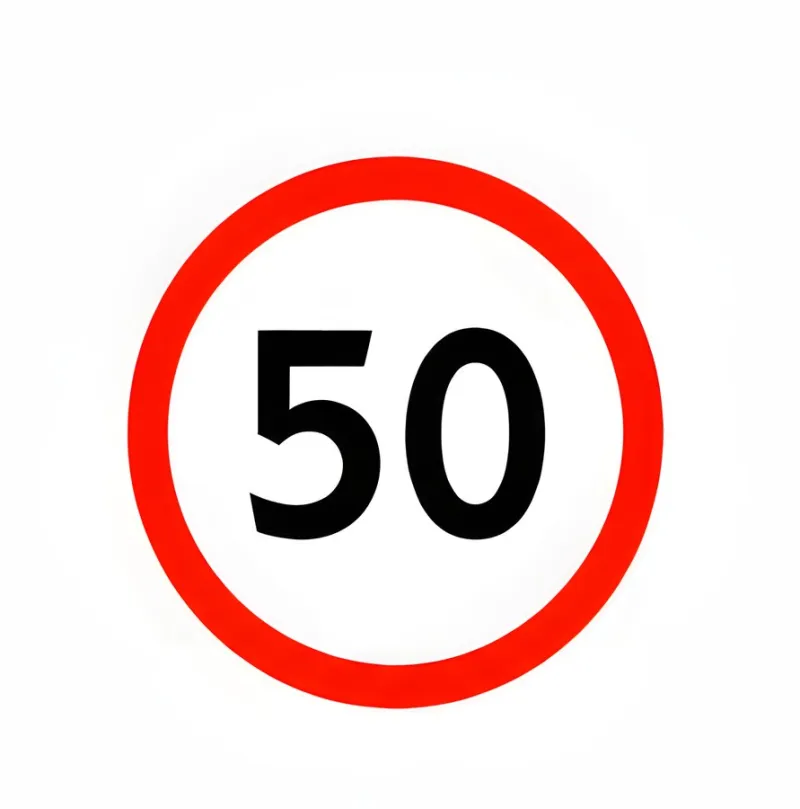
- 80 km/h.
- 50 km/h.
- 60 km/h.
Correct answer: 60 km/h. D/T
Why: Կետ 71.1-ով կահավորված թափքում մարդ փոխադրող բեռնատարներին և երեխաների կազմակերպված խմբեր փոխադրողներին թույլատրվում է ոչ ավելի, քան 60 կմ/ժ, նույնիսկ եթե
3.24 նշանով սահմանված է 80 կմ/ժ։ Նկարի նշանը միայն ցույց է տալիս
3.24 նշանի տեսքը. հաշվարկը կատարվում է հարցում նշված 80 կմ/ժ-ով։
Signs in this question: 3.24
In tests: D/T 51
128. What is the maximum speed permitted for a bus driver when towing a passenger car?
- 50 km/h.
- 60 km/h.
- 90 km/h.
Correct answer: 50 km/h. D/T
Why: Կետ 71.2-ով միմյանց կցված մեխանիկական տրանսպորտային միջոցներով քարշակելիս թույլատրվում է ոչ ավելի, քան 50 կմ/ժ։
In tests: D/T 24
129. What is the maximum speed permitted within populated areas for a bus transporting an organized group of children?
- 50 km/h.
- 60 km/h.
- 40 km/h.
Correct answer: 60 km/h. D/T
Why: Կետ 71.1-ով երեխաների կազմակերպված խմբեր փոխադրող տրանսպորտային միջոցներին թույլատրվում է ոչ ավելի, քան 60 կմ/ժ, որը համընկնում է բնակավայրերի սահմանի հետ (կետ 68)։
130. What is the maximum speed permitted outside populated areas for a bus transporting an organized group of children?
- 60 km/h.
- 90 km/h.
- 110 km/h.
Correct answer: 60 km/h. D/T
Why: Կետ 71.1-ով երեխաների կազմակերպված խմբեր փոխադրող տրանսպորտային միջոցներին թույլատրվում է ոչ ավելի, քան 60 կմ/ժ, այդ թվում՝ բնակավայրից դուրս։
131. What is the maximum speed permitted outside populated areas for buses that are not performing suburban, interregional, or intercity transportation?
- 70 km/h.
- 90 km/h.
- 60 km/h.
Correct answer: 70 km/h. D/T
Why: Կետ 69.3-ով բնակավայրից դուրս մերձքաղաքային, միջմարզային և միջքաղաքային փոխադրումներ չիրականացնող («մնացած») ավտոբուսներին թույլատրվում է ոչ ավելի, քան 70 կմ/ժ։
In tests: D/T 39
132. A bus driver must select a speed that:
- Allows the driver to maintain full control of the vehicle.
- Allows the driver to stop only when another vehicle or an obstruction is present within the visible distance.
- Ensures both of the above conditions.
Correct answer: Allows the driver to maintain full control of the vehicle. D/T
Why: Կետ 66-ով վարորդը պետք է ընտրի այնպիսի արագություն, որը հնարավորություն է տալիս ապահովելու տրանսպորտային միջոցի լիարժեք կառավարումը։
133. If a “Speed Limit” identification sign is displayed on a bus, the bus driver:
- May exceed that speed only on a road section where the speed limit has been increased by an appropriate road sign.
- Is prohibited from exceeding the speed indicated on the identification sign.
- May exceed the speed indicated on the sign when proceeding on a motorway.
- May exceed the indicated speed by 20 km/h if necessary to complete a passing maneuver.
Correct answer: Is prohibited from exceeding the speed indicated on the identification sign. D/T
Why: Կետ 72.2-ով արգելվում է գերազանցել տրանսպորտային միջոցի վրա տեղադրված «Արագության սահմանափակում» ճանաչման նշանով նախատեսված արագությունը՝ անկախ ճանապարհի տեսակից կամ վազանցից։
134. Is the driver of a fixed-route bus permitted to proceed at a very low speed?
- Permitted if this does not impede the movement of other vehicles.
- Prohibited because it would disrupt the route schedule.
- Prohibited in all cases.
Correct answer: Permitted if this does not impede the movement of other vehicles. D/T
Why: Կետ 72.4-ը արգելում է շատ ցածր արագությամբ ընթանալ միայն այն դեպքում, երբ դա առանց անհրաժեշտության խոչընդոտում է մյուս տրանսպորտային միջոցներին, ուստի առանց խոչընդոտելու դա թույլատրվում է։
135. When must a bus driver switch off the signal given by the direction indicator when changing lanes for the purpose of overtaking?
- After completing the manoeuvre.
- Immediately after passing the vehicle being overtaken.
- After returning to the previously occupied lane.
Correct answer: After completing the manoeuvre. D/T
Why: Կետ 36-ով շրջադարձի ցուցիչով ազդանշանը դադարեցվում է մանևրն ավարտելուց անմիջապես հետո, այսինքն՝ ձախ գոտի վերադասավորվելն ավարտելուց հետո։
136. Is a bus driver permitted to pass a vehicle that has reduced speed immediately before an intersection?
- Permitted if there are no pedestrians crossing the roadway at that moment.
- Prohibited.
- Permitted if visibility at the intersection is sufficient to perform the maneuver safely.
Correct answer: Prohibited. D/T
Why: Խաչմերուկից անմիջապես առաջ արագությունը նվազեցրած տրանսպորտային միջոցին վազանցելը կկատարվեր խաչմերուկում, իսկ կետ 77.1-ով խաչմերուկներում վազանցն արգելվում է։
In tests: D/T 21
137. Is a bus driver permitted to pass at the crest of a hill if the passing maneuver is performed without entering the oncoming traffic lane?
- Permitted.
- Prohibited.
Correct answer: Permitted. D/T
Why: Կետ 77.8-ով վերելքի վերջում վազանցն արգելվում է միայն այն դեպքում, երբ այն կատարվում է հանդիպակաց երթևեկության գոտի դուրս գալով, ուստի առանց դրա թույլատրվում է։
In tests: D/T 20
138. Is a bus driver permitted to pass at the crest of a hill if the passing maneuver requires entering the oncoming traffic lane?
- Permitted.
- Prohibited.
- Permitted if there are no vehicles in the oncoming lane.
Correct answer: Prohibited. D/T
Why: Կետ 77.8-ով վերելքի վերջում հանդիպակաց երթևեկության գոտի դուրս գալով վազանցն արգելվում է՝ անկախ հանդիպակաց միջոցների առկայությունից։
139. Is a bus driver permitted to pass on sections of road with limited visibility when the maneuver requires entering the oncoming traffic lane?
- Permitted.
- Prohibited.
- Permitted if the driver is sure the maneuver can be completed safely.
Correct answer: Prohibited. D/T
Why: Կետ 77.8-ով սահմանափակ տեսանելիությամբ հատվածներում հանդիպակաց երթևեկության գոտի դուրս գալով վազանցն արգելվում է։
In tests: D/T 53
140. Is a bus driver permitted to pass on sections of road with limited visibility when the maneuver is performed without entering the oncoming traffic lane?
- Permitted.
- Prohibited.
Correct answer: Permitted. D/T
Why: Կետ 77.8-ի արգելքը վերաբերում է միայն հանդիպակաց գոտի դուրս գալով վազանցին, ուստի սահմանափակ տեսանելիությամբ հատվածում առանց դրա վազանցը թույլատրվում է։
In tests: D/T 22
141. Is a bus driver permitted to pass on sections of road with limited visibility?
- Permitted if the passing maneuver is performed without entering the oncoming traffic lane.
- Prohibited regardless of visibility and whether the maneuver requires entering the oncoming lane.
- Permitted at any time.
Correct answer: Permitted if the passing maneuver is performed without entering the oncoming traffic lane. D/T
Why: Կետ 77.8-ով սահմանափակ տեսանելիությամբ հատվածներում վազանցն արգելվում է միայն հանդիպակաց գոտի դուրս գալու դեպքում, ուստի առանց դրա թույլատրվում է։
In tests: D/T 4
142. Is a bus driver permitted to pass on narrow sections of road?
- Permitted if the passing maneuver is performed without entering the oncoming traffic lane.
- Prohibited.
- Permitted if the driver is sure the maneuver can be completed safely.
Correct answer: Prohibited. D/T
Why: Կետ 77.5-ով վազանցն արգելվում է ճանապարհների նեղացումներում՝ անկախ հանդիպակաց գոտի դուրս գալու հանգամանքից։
143. Is a bus driver prohibited from passing when the driver of the vehicle being passed is:
- Passing.
- Driving around an obstruction.
- In both cases.
Correct answer: In both cases. D/T
Why: Կետ 77.4-ով վազանցն արգելվում է, եթե վազանցվող տրանսպորտային միջոցի վարորդը կատարում է վազանց կամ շրջանցում է արգելքը՝ երկու դեպքում էլ։
In tests: D/T 37
144. Is bus parking permitted in residential zones outside places designated, signed, and marked for parking?
- Prohibited because only passenger cars belonging to residents of that area may park in a residential zone.
- Permitted for all buses.
- Permitted only for minibuses.
Correct answer: Permitted only for minibuses. D/T
Why: Նշանը
5.21 «Բնակելի գոտի»-ն է։ Կետ 121.4-ով բնակելի գոտում 3,5 տ-ից ծանր բեռնատարներին և ավտոբուսներին (բացառությամբ միկրոավտոբուսների) արգելվում է կայանել նախատեսված և նշված տեղերից դուրս, ուստի դա թույլատրվում է միայն միկրոավտոբուսներին։
Signs in this question: 5.21
In tests: D/T 18
145. During daylight hours, to warn of passing, instead of or together with an audible signal, a light signal may be given by:
- Repeatedly switching the headlights from low beam to high beam.
- Repeatedly switching the headlights on and off.
- In both cases.
Correct answer: Repeatedly switching the headlights on and off. D/T
Why: Կետ 137-ով վազանցի մասին լուսային ազդանշանը օրվա լուսավոր ժամանակ լապտերների լույսի պարբերաբար միացումն ու անջատումն է, իսկ մութ ժամանակ՝ մոտակայից հեռահարի բազմակի փոխարկումը։
In tests: D/T 10
146. What is the maximum permitted speed outside populated areas on all roads for buses performing interregional and intercity passenger transportation?
- 90 km/h.
- 110 km/h.
- 60 km/h.
Correct answer: 90 km/h. D/T
Why: Կետ 69.2-ով միջմարզային և միջքաղաքային փոխադրումներ իրականացնող ավտոբուսներին բնակավայրերից դուրս բոլոր ճանապարհներին թույլատրվում է ոչ ավելի, քան 90 կմ/ժ։
In tests: D/T 49
147. Is the driver of an intercity bus permitted to exceed 70 km/h outside populated areas?
- Permitted up to 110 km/h on motorways.
- Permitted provided the speed does not exceed 90 km/h.
- Prohibited.
Correct answer: Permitted provided the speed does not exceed 90 km/h. D/T
Why: Կետ 69.2-ով միջքաղաքային ավտոբուսներին բնակավայրերից դուրս բոլոր ճանապարհներին, այդ թվում՝ ավտոմայրուղիներով, թույլատրվում է մինչև 90 կմ/ժ, ուստի 70 կմ/ժ-ը գերազանցելը թույլատրվում է, եթե 90 կմ/ժ-ը չի գերազանցվում։
In tests: D/T 44
148. Are tourist buses permitted to travel at 70 km/h outside populated areas?
- Permitted.
- Prohibited.
Correct answer: Permitted. D/T
Why: Կետ 69.3-ով բնակավայրերից դուրս «մնացած» ավտոբուսներին, այդ թվում՝ զբոսաշրջայիններին, թույլատրվում է մինչև 70 կմ/ժ, ուստի 70 կմ/ժ արագությամբ երթևեկելը թույլատրվում է։
In tests: D/T 25
149. Traffic is permitted:
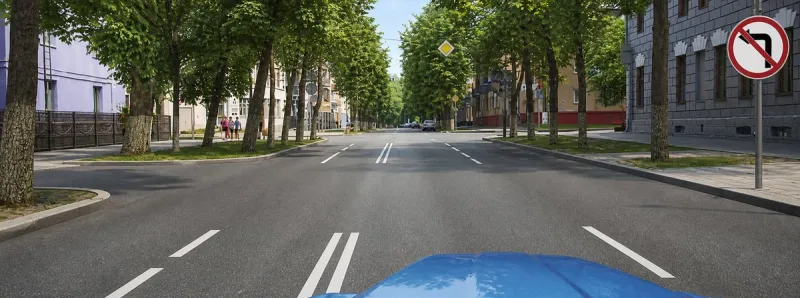
- Only in the opposite direction.
- Straight ahead only.
- Straight ahead and in the opposite direction only.
Correct answer: Straight ahead and in the opposite direction only. D/T
Why: Նշանը
3.18.2 «Ձախ շրջադարձն արգելվում է»-ն է. այն արգելում է միայն ձախ շրջադարձը, իսկ հետադարձն արգելում է այլ նշան՝
3.19-ը։ Աջ թեքվելու ճանապարհ այստեղ չկա, ուստի թույլատրվում է ուղիղ և հակառակ ուղղությամբ։
Signs in this question: 3.18.2
In tests: D/T 40
150. If you are driving a bus, may you begin passing?
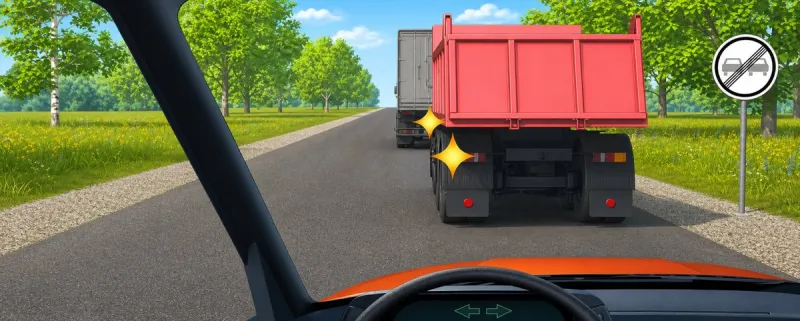
- Yes.
- No.
- Only after passing the sign.
Correct answer: No. D/T
Why: Նշանը
3.21 «Վազանցի արգելման գոտու վերջ»-ն է, բայց առջևի բեռնատարը տվել է ձախ շրջադարձի ազդանշան։ Կետ 73.2-ով վազանց սկսելուց առաջ վարորդը պետք է համոզվի, որ առջևից ընթացողը վազանցի կամ ձախ շրջադարձի ազդանշան չի տվել, ուստի վազանց սկսել չի կարելի։
Signs in this question: 3.21
In tests: D/T 5
151. Is the driver of a bus weighing more than 5 metric tons permitted to begin passing in this situation?
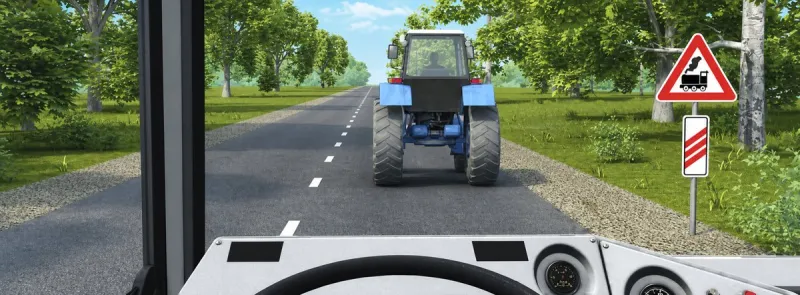
- Yes.
- No.
- Yes, if the driver is sure the maneuver will be completed before reaching a point 100 meters from the railroad crossing.
Correct answer: Yes, if the driver is sure the maneuver will be completed before reaching a point 100 meters from the railroad crossing. D/T
Why: Նշան
1.2 «Երկաթուղային գծանց առանց ուղեփակոցի» և
1.4 ցուցանակը նախազգուշացնում են գծանցի մոտենալու մասին։ Կետ 77.3-ով վազանցն արգելվում է գծանցի վրա և դրանից 100 մ առաջ, ուստի այն կարելի է սկսել, եթե վարորդը համոզված է, որ մանևրը կավարտի մինչև գծանցից 100 մ հեռավորությունը։
Signs in this question: 1.2, 1.4.1
In tests: D/T 1
152. This sign does not apply to:
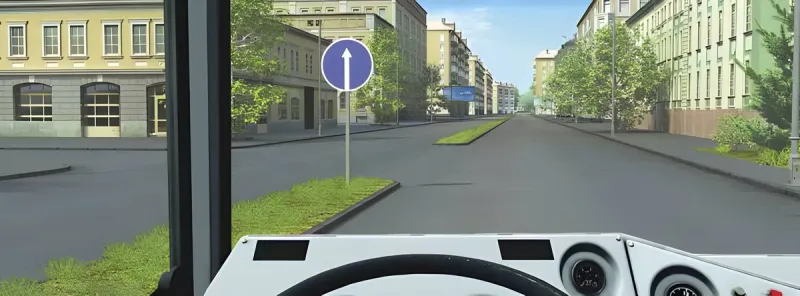
- Public transit vehicles only.
- Drivers of all buses.
- Public transit vehicles and taxis only.
Correct answer: Public transit vehicles only. D/T
Why: Նշանը
4.1.1 «Երթևեկությունն ուղիղ»-ն է։ Նշանների հավելվածի համաձայն՝
4.1.1–
4.1.6 նշանների ազդեցությունը չի տարածվում ընդհանուր օգտագործման տրանսպորտային միջոցների վրա։
Signs in this question: 4.1.1
153. Passing along the indicated path is:
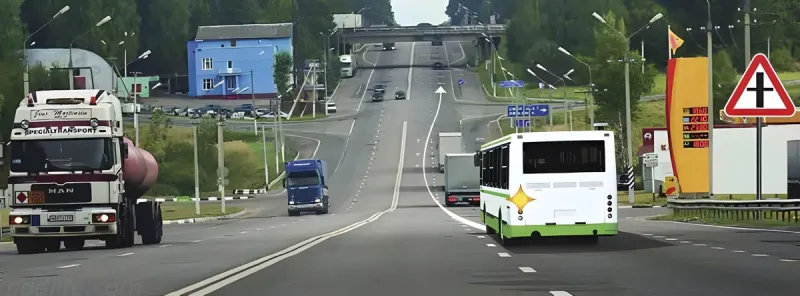
- Prohibited.
- Permitted.
- Permitted only for drivers of public transit buses.
Correct answer: Prohibited. D/T
Why: 2.3.1 «Հատում երկրորդական ճանապարհի հետ» նշանը նախազգուշացնում է խաչմերուկի մասին, և նշված հետագծով վազանցը կկատարվեր խաչմերուկում։ Կետ 77.1-ով խաչմերուկներում վազանցն արգելվում է բոլորին, այդ թվում՝ ընդհանուր օգտագործման ավտոբուսներին։
Signs in this question: 2.3.1
154. Within a populated area, when there are two lanes in the same direction, are public transit vehicles permitted to occupy the leftmost lane?
- Permitted when passing.
- Permitted when making a left turn or U-turn.
- Permitted in all cases.
Correct answer: Permitted in all cases. D/T
Why: Կետ 56-ով բնակավայրում վարորդները կարող են երթևեկել իրենց համար հարմար գոտով, իսկ ձախ եզրային գոտու սահմանափակումը (կետ 57) գործում է միայն միևնույն ուղղությամբ երեք և ավելի գոտի ունենալու դեպքում։ Երկու գոտու դեպքում ձախը թույլատրվում է զբաղեցնել բոլոր դեպքերում։
In tests: D/T 30
155. On roads marked with this sign, drivers of interregional buses may proceed at no more than:
- 90 km/h.
- 70 km/h.
- 60 km/h.
Correct answer: 60 km/h. D/T
Why: Սպիտակ
5.23.1 «Բնակավայրի սկիզբ» նշանից հետո գործում են բնակավայրով երթևեկության կանոնները, ուստի կետ 68-ով միջմարզային ավտոբուսների արագությունը ոչ ավելի, քան 60 կմ/ժ է։
Signs in this question: 5.23.1
In tests: D/T 30
156. On roads marked with this sign, drivers of intercity buses may proceed at no more than:
- 90 km/h.
- 70 km/h.
- 60 km/h.
Correct answer: 90 km/h. D/T
Why: Կապույտ
5.25 «Բնակավայրի սկիզբ» նշանով նշված բնակավայրում բնակավայրով երթևեկության կանոնները չեն գործում, ուստի կիրառվում է կետ 69.2-ը՝ միջքաղաքային ավտոբուսներին ոչ ավելի, քան 90 կմ/ժ։
Signs in this question: 5.25
In tests: D/T 12
157. What is the maximum speed at which the driver of a suburban bus may proceed in this situation?
- 60 km/h.
- 70 km/h.
- 90 km/h.
Correct answer: 90 km/h. D/T
Why: Բնակավայրից դուրս ենք (ուղղության ցուցանակ M5 մայրուղու վրա)։ Կետ 69.2-ով մերձքաղաքային փոխադրումներ իրականացնող ավտոբուսներին բոլոր ճանապարհներին թույլատրվում է ոչ ավելի, քան 90 կմ/ժ։
In tests: D/T 8
158. What is the maximum permitted speed for buses in areas marked with the “Residential Zone” and “End of Residential Zone” signs?
- 60 km/h.
- 20 km/h.
- 40 km/h.
Correct answer: 20 km/h. D/T
Why: Կետ 68-ով
5.21 «Բնակելի գոտի» և
5.22 «Բնակելի գոտու վերջ» նշաններով նշված տարածքներում բոլոր տրանսպորտային միջոցների, այդ թվում՝ ավտոբուսների, արագությունը 20 կմ/ժ ոչ ավելի է։
Signs in this question: 5.21, 5.22
In tests: D/T 44
159. At what speed may a bus driver continue proceeding within the zone marked by this road sign?
- At not less than 60 km/h but not more than 90 km/h.
- At not less than 60 km/h but not more than 70 km/h.
- At no more than 60 km/h.
Correct answer: At not less than 60 km/h but not more than 90 km/h. D/T
Why: Նշան
4.6 «Նվազագույն արագության սահմանափակում»-ը
8.14 ցուցանակով այս գոտում պահանջում է առնվազն 60 կմ/ժ, իսկ
5.26 նշանով բնակավայրն ավարտվել է։ Կետ 69.2-ով միկրոավտոբուսներին բնակավայրից դուրս թույլատրվում է մինչև 90 կմ/ժ, ուստի ոչ պակաս 60, ոչ ավելի 90 կմ/ժ։
Signs in this question: 4.6, 8.14, 5.26
In tests: D/T 45
160. When these signs are present, which vehicle is prohibited from turning right?
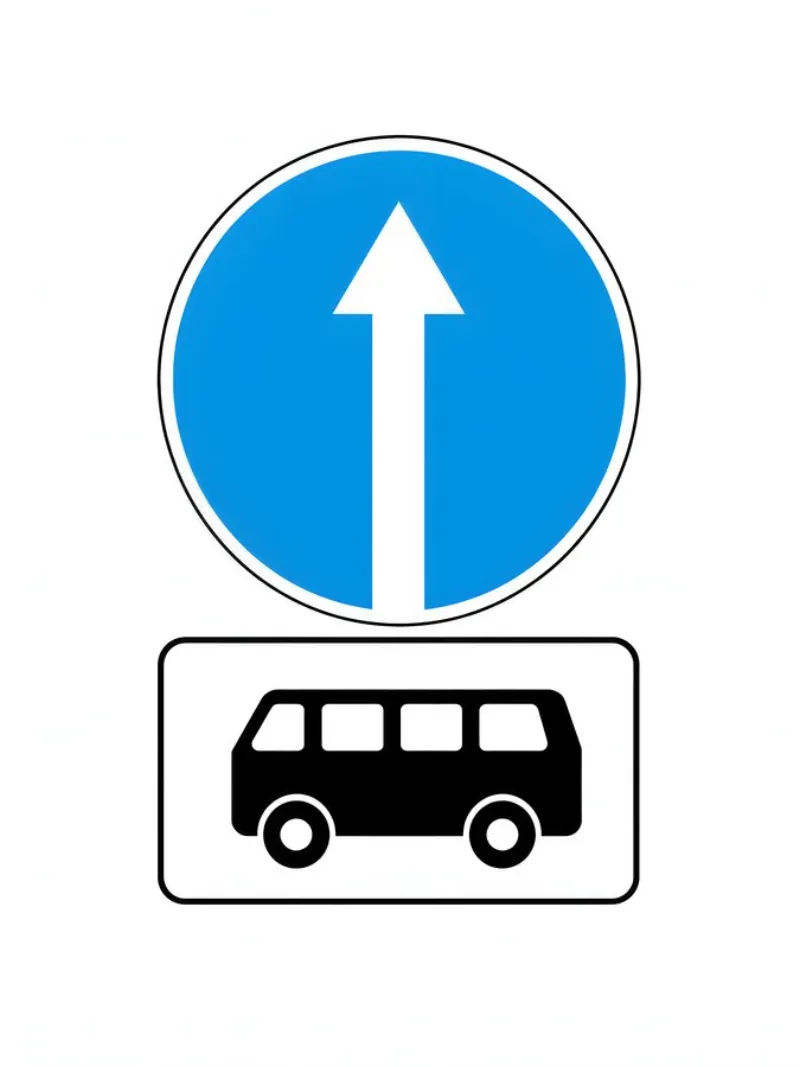
- All buses.
- Trolleybuses.
- Trucks.
Correct answer: All buses. D/T
Why: 4.1.1 «Երթևեկությունն ուղիղ» նշանը
8.4.4 «Տրանսպորտային միջոցի տեսակ» (ավտոբուս) ցուցանակով տարածվում է միայն ավտոբուսների վրա. ավտոբուսներին թույլատրվում է միայն ուղիղ, ուստի աջ շրջադարձն արգելվում է բոլոր ավտոբուսներին։
Signs in this question: 4.1.1, 8.4.4
161. Outside a populated area, is a bus driver permitted to pass the trucks along the indicated path?
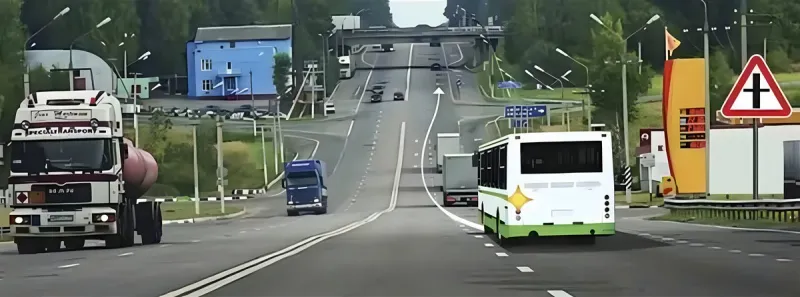
- Permitted.
- Permitted if the trucks are traveling at less than 30 km/h.
- Not permitted.
Correct answer: Not permitted. D/T
Why: 2.3.1 «Հատում երկրորդական ճանապարհի հետ» նշանը նախազգուշացնում է խաչմերուկի մասին, և նշված հետագծով վազանցը կկատարվեր խաչմերուկում։ Կետ 77.1-ով խաչմերուկներում վազանցն արգելվում է՝ անկախ բեռնատարների արագությունից։
Signs in this question: 2.3.1
162. Is passing permitted in a tunnel?
- Permitted.
- Permitted only if artificial lighting is present.
- Prohibited.
Correct answer: Prohibited. D/T
Why: Կետ 77.5-ով վազանցն արգելվում է թունելներում՝ անկախ լուսավորությունից։
In tests: D/T 48
163. You are driving a bus. With the traffic signal flashing yellow, must you yield to the tram?
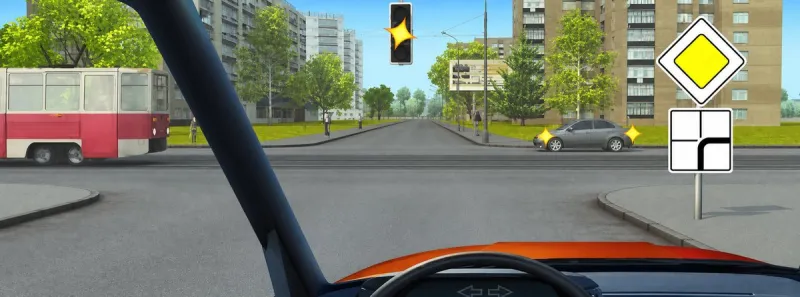
- Must yield, because at any intersection a tram has the right-of-way over non-rail vehicles.
- Not required, because the tram is on a secondary road.
Correct answer: Not required, because the tram is on a secondary road. D/T
Why: Դեղին թարթող ազդանշանի դեպքում խաչմերուկը չկարգավորվող է (կետ 95), և գործում են նշանները.
2.1 նշանը
8.13 ցուցանակով ցույց է տալիս, որ ավտոբուսը գլխավոր ճանապարհին է, իսկ տրամվայը՝ երկրորդականին։ Կետ 96-ով երկրորդական ճանապարհից եկողը, այդ թվում տրամվայը, զիջում է գլխավորով ընթացողներին, ուստի զիջել պարտավոր չենք։
Signs in this question: 2.1, 8.13
164. Must the bus driver yield to the motorcycle?
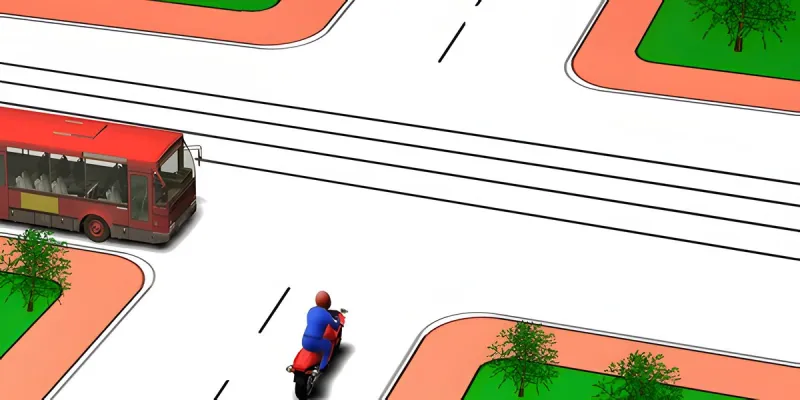
- Not required, because the bus has larger dimensions, which gives it priority over the motorcycle.
- Must yield.
Correct answer: Must yield. D/T
Why: Նշաններ և լուսացույց չկան, ուստի խաչմերուկը հավասարազոր է։ Կետ 98-ով ոչ ռելսագնաց տրանսպորտային միջոցի վարորդը զիջում է աջից մոտեցողին. մոտոցիկլը ավտոբուսի աջ կողմից է, ուստի ավտոբուսը պարտավոր է զիջել. եզրաչափերը առավելություն չեն տալիս։
In tests: D/T 42
165. May the tram pass through the intersection first, simultaneously with the green automobile?
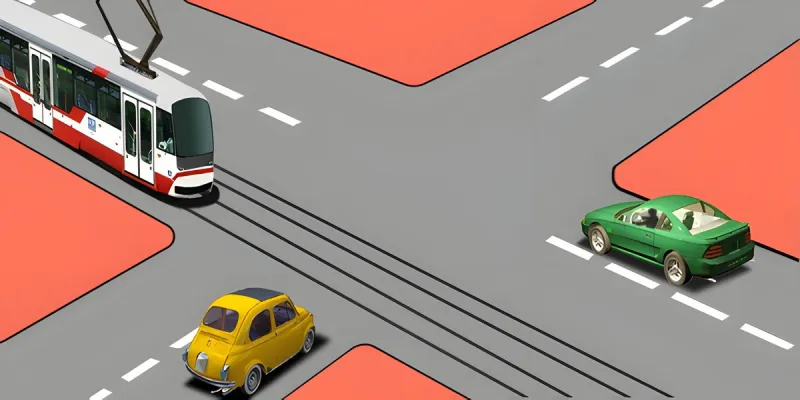
- Yes.
- No, the tram must yield to the yellow automobile.
Correct answer: Yes. D/T
Why: Նշաններ և լուսացույց չկան, ուստի խաչմերուկը հավասարազոր է։ Կետ 98-ով (և 100-ով) տրամվայը, անկախ ուղղությունից, առավելություն ունի ոչ ռելսագնաց տրանսպորտային միջոցների նկատմամբ, իսկ կանաչ ավտոմոբիլը աջից է մոտենում դեղինին, ուստի տրամվայն ու կանաչն անցնում են առաջինը՝ միաժամանակ։
In tests: D/T 27
Take this test in the app
In Varordakan Tester the same tests are taken without hints, wrong answers are collected automatically, and there is an exam simulation (20 questions, 30 minutes, pass at 18), a 3D intersection simulator, video lessons and an AI assistant that cites the Traffic Rules point. Free.
Sources: questions from the official bank of the Road Police of Armenia (roadpolice.am, edition of 2 October 2026); rule points from the Traffic Rules of the Republic of Armenia (arlis.am). Varordakan Tester is an independent educational app, not affiliated with the Police of Armenia.
Explanations © 2026 Suren Galoyan, all rights reserved; reproduction without permission is prohibited. Questions and pictures are from the official bank of the Road Police of Armenia.
